forced abayas senate
| |

No forced abayas, Senate panel tells banks

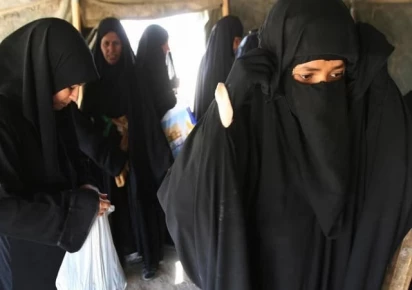
A Senate committee has directed Islamic banks not to force female employees to wear abayas and instructed all banks to adopt a modest dress policy without making any specific attire compulsory.

The Senate Standing Committee on Finance and Revenue, chaired by Senator Saleem Mandviwalla, discussed complaints regarding dress code policies at banks, particularly those offering Islamic banking services.

During the meeting, Senator Dr Zarqa Suharwardy Taimur said some female employees had complained that they were being required to wear abayas while male staff were not subject to similar restrictions.

Senator Sherry Rehman said no employee should be compelled to wear a particular dress. She said Pakistan already has a recognised national dress and a modest dress code should apply equally to everyone, regardless of gender.

State Bank of Pakistan (SBP) Governor Jameel Ahmad informed the committee that similar guidelines had been issued previously and communicated to all banks.

The committee clarified that it supported a decent and professional dress code but opposed making any specific clothing mandatory. It directed all banks to submit their dress code policies and instructed the SBP to issue fresh guidelines to ensure employees are not subjected to unnecessary restrictions.

The committee also reviewed complaints about charges imposed on ATM withdrawals, Visa card transactions and SMS banking alerts.

Members expressed concern over customers being charged for SMS alerts even when they did not request the service. Senator Abdul Qadir claimed that banks were collecting significant amounts through SMS charges.

The SBP governor explained that SMS charges were collected by telecom operators rather than banks. However, committee members questioned the level of charges imposed on customers.

The panel directed that SMS notifications should only be provided to customers who choose to receive them and unnecessary alerts should be discontinued.

The committee also sought details about dollar-denominated charges on ATM and Visa card transactions and asked the relevant authorities to review the matter.

Separately, lawmakers discussed taxes collected through electricity bills. Some members argued that electricity consumers were paying a heavy tax burden, making household bills increasingly difficult to afford.

Federal Board of Revenue Chairman Rashid Mahmood Langrial said most of the tax collected through electricity bills consisted of sales tax, which is applied under the country’s taxation system. He added that several exemptions were already available for electricity consumers.

Similar Posts

  • |

    Riteish Deshmukh slams Yogesh Rawat, ends Lock Upp journey

    A dramatic turn of events unfolded on Lock Upp after contestant Yogesh Rawat returned to the reality show by defeating Dheeraj Dhoopar in a challenge. However, his comeback was short-lived as co-host Riteish Deshmukh confronted him over remarks about the show’s popularity and ultimately asked him to leave the competition. After re-entering the jail, Yogesh was seen interacting with fellow contestants Akanksha Choudhary, Ram Kapoor, Akanksha Chamola, and Pamala. During the conversation, he claimed that the show’s TRP had dropped after his eviction and suggested that the makers had no choice but to bring him back because of his popularity. His comments did not go unnoticed. Riteish Deshmukh, who had been listening from outside, addressed the contestants and questioned Yogesh over his statements. The actor appeared visibly upset and challenged Yogesh’s claim that the show depended on his presence. Riteish reminded him of the exact remarks he had made, saying that Yogesh had implied the show suffered after his exit and that his fans had forced the makers to bring him back. He strongly objected to the attitude behind those comments and asked Yogesh whether he genuinely believed the show existed because of him. The host further clarified that Yogesh’s elimination had not been a personal decision. He pointed out that the contestant had lost a task and was evicted based on the format of the game, not because of any individual choice made by the hosts or the platform. When Yogesh tried to explain that he had merely expressed his personal feelings, Riteish interrupted and stressed that every statement made on the show reflected not only on the contestants but also on the hosts, the streaming platform, and the program itself. He said that claiming the show’s ratings had fallen and would rise again because of one contestant showed an inappropriate level of arrogance. Riteish then delivered a firm response, telling Yogesh that the show did not need him and announcing that he was being terminated from the house. He added that contestants must take responsibility for every word they speak and understand the impact of their public statements. The confrontation marked the climax of an already tense episode. Earlier, Yogesh had also clashed with Riteish during a separate exchange. As the contestant questioned the way events had unfolded, saying, “Sir, if this was what you wanted to do, then…,” Riteish immediately cut him off. The host firmly replied, “Don’t tell me. Don’t put this act with me,” making it clear that he was not willing to entertain further arguments. The heated exchange quickly became one of the episode’s biggest talking points among viewers, with fans reacting strongly to the unexpected termination. Yogesh’s dramatic return, bold claims about the show’s ratings, and his confrontation with Riteish Deshmukh ensured that the episode remained packed with controversy and intense emotions, making it one of the most talked-about moments of the current season of Lock Upp.

  • | |

    Shah Rukh Khan overtakes Virat Kohli in brand rankings

    Shah Rukh Khan has reclaimed the top position as India’s most valuable celebrity brand, surpassing cricketer Virat Kohli in the latest Kroll India Celebrity Brand Valuation Report 2025. The report values Khan’s brand at $177.9 million, marking a significant rise from his third-place ranking in 2024. The increase reflects the commercial success of his recent films, strong audience appeal and continued popularity among advertisers and major brands. Actor Ranveer Singh secured second place with the same estimated brand value of $177.9 million, while Kohli dropped to third with a valuation of $158.4 million after recording a notable decline over the past two years. The rankings evaluate celebrities based on endorsement deals, brand partnerships, public image, media visibility and influence across digital and social media platforms. Khan’s brand value has grown by $57.2 million during the last two years, highlighting his strong comeback and renewed commercial strength. Among female celebrities, Alia Bhatt remained the highest-ranked woman, securing sixth place with a brand value of $93.9 million. She was followed by Deepika Padukone in seventh with $89.2 million. The top 10 also includes Hrithik Roshan, Amitabh Bachchan and Akshay Kumar, reflecting the continued commercial influence of Bollywood’s biggest names. Further down the rankings, Ranbir Kapoor and Salman Khan retained places among India’s leading celebrity brands, while younger stars including Ananya Panday, Janhvi Kapoor and Shraddha Kapoor continued to strengthen their commercial presence. The latest rankings underline the growing importance of box office performance, digital influence and public engagement in determining the market value of celebrities, with Shah Rukh Khan once again emerging as India’s most sought-after brand ambassador.

  • |

    Spokane wildfires destroy 700 homes, force 64,000 to flee

    SPOKANE: Devastating wildfires sweeping across the outskirts of Spokane, Washington, have destroyed more than 700 buildings, displaced 64,000 residents, and prompted fears that fatalities may be discovered as emergency crews struggle to contain the fast-moving infernos. The cluster of three major wildfires, which erupted over the weekend, has become the highest firefighting priority in the United States, with more than 1,100 firefighters deployed to battle the flames. Despite their efforts, officials confirmed that none of the fires had been contained by Monday. The blazes have scorched over 8,000 acres (3,200 hectares) on the northern edge of Spokane, Washington’s second-largest city, located near the Idaho border. Thick smoke has blanketed the region, reducing visibility and worsening air quality across large parts of the Pacific Northwest. Dramatic aerial footage showed firefighting aircraft repeatedly dropping fire retardant over forests as towering flames raced toward residential neighborhoods. Entire communities have been reduced to ashes, with officials warning that another 400 structures may also have been damaged or destroyed. For many families, the evacuation came with little warning. Among them was Kami Fehlig, who fled her home with her husband, two daughters and family dog after watching flames leap across the Spokane River and race toward their neighborhood. “We knew we had to leave immediately,” she recalled. “We grabbed our wedding album, baby books, pet supplies and whatever we could carry before the power went out.” Hours later, the family learned that their home and surrounding neighborhood had been completely destroyed. Authorities said thousands more residents remain under mandatory evacuation orders as shifting winds continue to threaten additional communities. Emergency officials also warned that the full scale of the disaster may not yet be known. Several people have been reported missing, while search teams have been unable to access some of the hardest-hit areas because of intense fire activity. “There is a high probability that fatalities will be found once crews can safely enter devastated neighborhoods,” incident command spokesperson Benjamin Cossel said. The cause of the fires remains under investigation. The Spokane fires are part of an exceptionally severe wildfire season gripping the Pacific Northwest. Washington alone is battling 15 major wildfires, with more than 250,000 acres already burned. Across the United States, officials have recorded over 44,700 wildfires so far this year, consuming nearly 5.2 million acres, making it one of the worst fire seasons in recent years. Neighboring British Columbia, Canada, is also experiencing intense wildfire activity fueled by record drought conditions and extreme heat. Fire managers hope a brief period of cooler temperatures and lighter winds will help firefighters make progress before another round of scorching weather arrives later this week. Scientists say increasingly frequent and intense wildfire seasons across North America and Europe are being driven by prolonged drought, rising temperatures and other effects linked to human-caused climate change, leaving communities facing ever-growing environmental and economic challenges.

  • | |

    Austria opens police station at house where Hitler…

    Austria has opened a police station inside the house in Braunau am Inn where Adolf Hitler was born, closing out years of debate over how to handle the building’s dark history. The 17th century structure once operated as an inn and served as the birthplace of the Nazi dictator in April 1889. Authorities have now completed a substantial renovation that changed the building’s facade, though managing the site has posed a persistent challenge for Austrian officials determined to prevent it from turning into a destination for neo Nazi pilgrimage. Hitler lived in the building, located at Salzburger Vorstadt 15, for only a few weeks before his family relocated to another address in Braunau. The family left the town permanently when Hitler was three years old. He briefly returned to Braunau in 1938 while traveling to Vienna after annexing Austria into Nazi Germany. Interior Minister Gerhard Karner attended the opening ceremony alongside other local officials, which featured police musicians performing on tuba and other brass instruments. Karner said Austria is taking responsibility for what he called the terrible legacy of the past, adding that although deciding the building’s fate proved difficult, he believes the new police station represents a fresh chapter for the site. He said the building will now stand as a place representing democracy, the rule of law, security, freedom and human dignity. A Catholic police chaplain then blessed two crosses that will hang inside the new station. For decades, Austria’s interior ministry rented the building from its former owner, a local woman named Gerlinde Pommer, paying her generous rent in an effort to keep the property from becoming a site for far right tourism. A local charity used the building for years as a day center and workshop for people with special needs, but the organization had to vacate in 2011 after Pommer blocked planned renovations. She also repeatedly declined to sell the property to the government, leaving the building empty for several years while she and authorities disputed terms. In 2016, Austria’s parliament passed legislation allowing the government to seize the property from Pommer, paying her compensation of 812,000 euros. She later challenged the amount in court, arguing it was too low, but ultimately lost the case. Wolfgang Sobotka, who served as interior minister at the time, suggested the building should be demolished and replaced with a new structure altogether, echoing an earlier proposal from a Russian lawmaker who had offered to purchase the house and destroy it. Both ideas drew significant criticism, with opponents arguing that tearing down the building would amount to denying Austria’s Nazi era history. In 2019, the government unveiled plans to convert the building into a police station and launched an EU wide competition inviting architects to submit design proposals. Officials subsequently spent millions of euros renovating the structure, transforming its appearance dramatically from its earlier state. The building, now painted white both inside and out, features extensive oak woodwork throughout, while an original winding staircase and arched entrance hall have been preserved from the earlier structure. The transformation marks a stark contrast to the building’s condition decades ago, when the Lebenshilfe charity operated a small shop in one of its front rooms. Police Chief Inspector Ludwig Heise said he feels fortunate to work in such a modern facility, noting the additional space compared to previous quarters, though he added that beyond its size, the station functions just like any other police facility in Austria. The reopening marks the culmination of a long and often contentious effort by Austrian authorities to neutralize the symbolic weight of Hitler’s birthplace, transforming a site once feared as a potential magnet for extremist sympathizers into a functioning symbol of the democratic institutions Austria has built in the decades since the Second World War.

  • |

    Saudi, US officials discuss rising regional tensions

    Saudi Crown Prince Mohammed bin Salman and US Central Command chief Admiral Brad Cooper have discussed efforts to contain escalating tensions in the Middle East, with the two sides also reviewing defence cooperation and regional security. According to Saudi state media, the meeting focused on developments across the region and measures aimed at reducing tensions. Officials also discussed ways to strengthen security and stability amid the continuing US-Iran conflict and growing concerns over maritime traffic. The talks came as Saudi Arabia announced progress toward activating a multinational defensive maritime alliance. Representatives from 39 countries attended the alliance’s latest planning meeting in Jeddah, while 13 countries have joined the initiative. Saudi authorities described the meeting as an important step toward putting the maritime alliance into operation. The initiative comes as security concerns continue to grow around the Strait of Hormuz, one of the world’s most important energy routes. Tensions around the strategic waterway have intensified during the US-Iran conflict. Disruptions to shipping have raised concerns about global supplies of oil and liquefied natural gas, while diplomatic efforts to secure freedom of navigation remain uncertain. US Vice President JD Vance has said that keeping energy prices affordable for American consumers is currently Washington’s top priority in the conflict. Vance said the administration wanted to maintain lower oil and gas prices while also ensuring that Iran could not acquire a nuclear weapon. His remarks came as the prolonged conflict continued to affect energy markets and increase pressure on the US economy. Meanwhile, US Treasury Secretary Scott Bessent warned that Washington was preparing unprecedented economic measures against Tehran. He said the United States would combine intensified economic pressure with restrictions linked to Iran’s control of the Strait of Hormuz. US Defence Secretary Pete Hegseth also said Washington had the military capability to maintain its naval blockade of Iran for an extended period. He said American ships could be rotated to sustain the operation. The confrontation has severely affected Iran’s economy and disrupted its access to international trade. Tehran, meanwhile, has sought to use the Strait of Hormuz as leverage in negotiations with Washington. Iran has demanded the removal of economic sanctions and the release of frozen assets as part of conditions for restoring normal maritime traffic. Commercial traffic through the Strait has fallen sharply since the conflict began. The decline has heightened fears that a prolonged disruption could further affect global energy supplies. Two vessels linked to Abu Dhabi National Oil Company were reportedly attacked while passing through the waterway, prompting condemnation from the UAE. The situation has also kept oil markets volatile. Although crude prices declined recently amid concerns over weaker demand and rising US inventories, renewed attacks and threats of further escalation have continued to unsettle investors. The International Energy Agency has revised its forecast for global oil supply, projecting a larger decline than previously expected. Economists have warned that a prolonged conflict could weaken global economic growth and increase the risk of recession in some regions. US President Donald Trump has faced growing domestic pressure over the conflict, particularly as higher fuel costs weigh on American consumers. Washington has continued imposing sanctions on Iran, while efforts to bring Tehran back to negotiations have so far produced limited results.

  • | | |

    Nawaz Sharif urges PML-N leaders to ignore Naqvi&#…

    Pakistan Muslim League-Nawaz (PML-N) President Nawaz Sharif has reportedly directed party leaders to avoid reacting to recent remarks made by Interior Minister Mohsin Naqvi, stressing that national unity and institutional harmony are essential in the current political and security environment. According to sources, Nawaz Sharif described coordination between the federal government and state institutions as a critical national requirement at a time when Pakistan is facing significant economic, political, and security challenges. He reportedly advised party leaders to exercise restraint and refrain from making statements that could create the impression of differences between the government of Prime Minister Shehbaz Sharif and Chief of Army Staff Field Marshal Syed Asim Munir. The development comes after Mohsin Naqvi’s recent remarks regarding the country’s political system reportedly prompted concerns within sections of the PML-N leadership. Senior party members are said to have conveyed their reservations to Nawaz Sharif during internal consultations. Sources said Nawaz Sharif instructed party leaders to ignore the statement and avoid escalating the matter publicly. He emphasised that the country’s national interest requires maintaining close cooperation and mutual understanding among all state institutions. According to the sources, the PML-N president believes that unnecessary public controversy over individual statements could undermine confidence at a time when the country is confronting multiple internal and external challenges. Nawaz Sharif reportedly maintained that preserving institutional harmony is essential for political stability, effective governance, and addressing the country’s economic and security priorities. He also urged party leaders to remain focused on governance and public service rather than engaging in political disputes that could create perceptions of divisions within the state structure.

Leave a Reply

Your email address will not be published. Required fields are marked *