darwish rasooli lead
|

Darwish Rasooli to lead Afghanistan’s Young Asian Games squad

KABUL: Afghanistan have handed top-order batter Darwish Rasooli the captaincy for their 2026 Asian Games campaign, naming a largely inexperienced 15-member squad for the tournament in Aichi-Nagoya, Japan.

The squad reflects Afghanistan’s desire to give emerging players a bigger stage, with six players yet to make their international debuts. Five other members have played fewer than 10 international matches.

The Asian Games will take place from September 24 to October 3, with Afghanistan choosing to rest several of their biggest names.

Regular captain Rashid Khan has been left out, along with explosive opener Rahmanullah Gurbaz and all-rounder Azmatullah Omarzai. Their absence creates an opportunity for younger players to step into important roles.

Afghanistan have, however, retained some experience. Najibullah Zadran and Karim Janat are included and are expected to provide leadership and stability around the younger members of the squad.

Much of the selection was influenced by performances in the recently completed 11th edition of the Shpageeza Cricket League. Several players impressed enough in the domestic tournament to earn their opportunity on the Asian stage.

Top-order batter Mohammad Akram was among the leading performers, scoring 339 runs in eight innings, including one century and two half-centuries.

All-rounder Ismat Alam also caught the selectors’ attention. He scored 294 runs and took nine wickets, earning the Shpageeza Cricket League’s best-player award.

Wicketkeeper-batter Mohammad Ishaq, Hassan Eisakhil, Khalid Taniwal and Imran Mir are among the other promising youngsters selected.

Rasooli will now face the challenge of guiding a relatively inexperienced group through a major multi-sport event. His leadership could prove crucial as Afghanistan look to turn their emerging talent into international performers.

The Asian Games assignment comes soon after Afghanistan’s scheduled three-match T20I series against India in Delhi. The series is expected to be played in the week leading into the continental competition, giving several players valuable preparation before they travel to Japan.

Afghanistan Asian Games squad:

Darwish Rasooli (c), Mohammad Ishaq (wk), Mohammad Akram, Hassan Eisakhil, Khalid Taniwal, Imran Mir, Faisal Khan Shinozada, Najibullah Zadran, Farmanullah Safi, Ismat Alam, Karim Janat, Nangyal Kharoti, Arab Gul Momand, Faridoon Dawoodzai, Abdullah Ahmadzai.

Similar Posts

  • | |

    Armed men storm prison van, free murder suspect on…

    JHELUM: In a major security lapse, armed men intercepted a prison van on the busy GT Road near Mandra and forcibly freed a murder suspect who was being taken back to District Jail Jhelum after appearing in court. The escape involved Malik Hamad, who is facing a murder case registered with Saddar Beruni police. He had initially been held at Adiala Central Jail before being transferred to Jhelum following the recovery of a mobile phone and other prohibited items during a surprise inspection. Hamad was brought to Rawalpindi on Tuesday for a court hearing. While the prison van was returning to Jhelum, it slowed near Galaxy Hotel at Bacha Stop, where another vehicle approached the van. According to sources, the occupants told prison officials that Hamad’s mother was seriously ill and requested a brief meeting with him. Taking advantage of the confusion, several armed men surrounded the van with their vehicles, pulled Hamad out and escaped. The incident immediately triggered a security alert, with senior police and jail officials rushing to the location. Police teams were subsequently formed to track down and arrest the escaped suspect. The incident has raised fresh concerns about the security arrangements for transporting prisoners. It comes weeks after 14 high-risk prisoners escaped from another prison van while returning from Kahuta in late June. All of them were later recaptured following an extensive search operation, while cases were registered against the policemen responsible for their security. Following that escape, Rawalpindi police introduced new standard operating procedures aimed at strengthening prisoner transportation security. The latest incident, however, has renewed questions about whether those measures are being properly implemented. Four policemen reportedly assigned to guard Hamad have been detained for questioning. Sources also claimed that the suspect had links with an influential individual associated with a private housing society. Despite the seriousness of the incident, senior police officials declined to comment publicly, while a search operation to recapture Hamad remained underway.

  • | | | |

    Petrol down to Rs336.03, diesel to Rs392.38

    The federal government has announced a slight reduction in the prices of petrol and high-speed diesel for the next fortnight. According to a notification issued by the Petroleum Division, the price of high-speed diesel has been reduced by Rs0.66 per litre. Following the latest revision, the new price of diesel has been fixed at Rs392.38 per litre. The government has also lowered the price of petrol by Rs0.12 per litre. After the reduction, the new retail price of petrol now stands at Rs336.03 per litre. The revised fuel prices came into effect after the issuance of the official notification by the Petroleum Division. Petrol is widely used by private vehicles, motorcycles and small transport operators across the country, while high-speed diesel is mainly consumed by heavy transport, agricultural machinery and industrial sectors. Any change in fuel prices directly affects transportation costs, production expenses and the overall cost of living. Although the latest reduction is modest, it provides some relief to consumers and businesses that rely on petroleum products for their daily operations. The government reviews petroleum prices periodically, taking into account fluctuations in international oil markets, exchange rate movements and applicable taxes and levies before announcing revised rates. The latest adjustment reflects the government’s routine fuel price review mechanism.

  • |

    Former Turkish PM Davutoglu quits politics

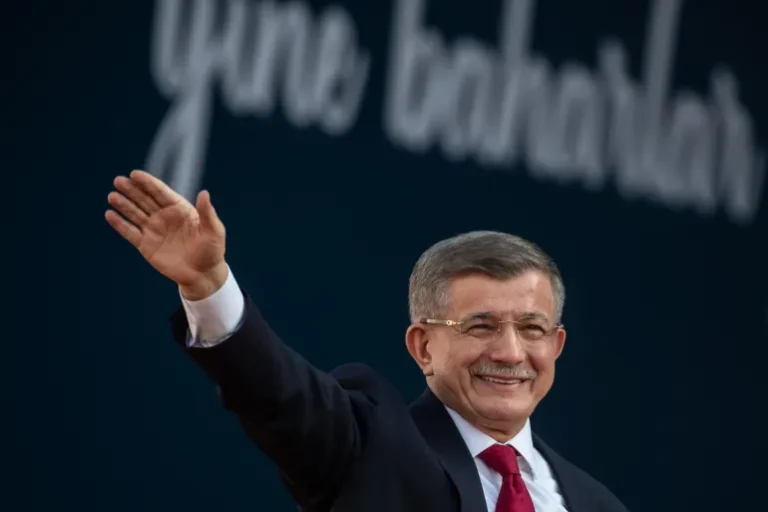
    ISTANBUL: Former Turkish prime minister Ahmet Davutoglu has announced his decision to step away from politics and dissolve his Future Party, ending a decades-long political career that saw him rise as one of President Recep Tayyip Erdogan’s closest allies before becoming a vocal critic. Davutoglu announced the decision this week, saying he wanted to distance himself from what he described as a “dirty political climate” in Turkiye. He said the move was not a surrender but a step taken on moral grounds and a call for a broader rethink of politics. The former premier criticized issues including corruption, favouritism and weak accountability, saying these challenges had damaged public trust. He also raised concerns over the country’s presidential system introduced in 2018, arguing that it weakened checks and balances. Davutoglu began his career as an academic before entering politics. Born in Konya in 1959, he studied political science and international relations at Bosphorus University and later earned a doctorate in the same field. Before joining government, he worked as a professor and wrote several books on foreign policy. His academic reputation helped him become a key figure in shaping Turkiye’s international strategy. After the Justice and Development Party (AKP) came to power in 2002, Davutoglu joined the party and became a close adviser to Erdogan. He played an influential role in developing the “zero problems with neighbours” foreign policy approach, which aimed to improve relations with regional countries. He served as Turkiye’s foreign minister from 2009 to 2014 and became prime minister after Erdogan moved to the presidency in 2014. However, relations between the two leaders gradually weakened due to differences over governance, foreign policy and the distribution of political power. In 2016, Davutoglu resigned as prime minister and was replaced by Binali Yildirim. Three years later, Davutoglu left the AKP and launched the Future Party, presenting it as a conservative alternative focused on democracy and reforms. However, the party struggled to gain major public support and received a small share of votes in the 2024 elections.

  • | | |

    One missed bill enough for Lesco to pull the plug?…

    The month of July brings heat and humidity to Lahore. It also brings frequent power cuts, mainly from weather related issues. When it rains, and the atmosphere is muggy, power breakdown occurs and people expect that power will return soon after it goes. But there is a different kind of fear. This fear grows when a house sits dark while every other house on the street still has light. This means the power meter has been disconnected. Recent reports say that field staff of the Lahore Electric Supply Company (LESCO), have been harassing consumers. These reports say that officials are disconnecting power for people who have missed just one month of bill payment. This goes against the normal rule. Under the normal rule, a meter can only be disconnected after two months of non-payment. LESCO spokesperson Rabia Qadir has denied these reports. She said the company has not received any complaint about this issue. She said that rules made by the National Electric Power Regulatory Authority (Nepra), protect the rights and safety of consumers. Under these rules, a meter cannot be disconnected simply because one month of bill payment was missed. She also said that Lesco has not received any formal complaint against any sub-divisional officer, executive engineer, or lineman of any of its circle regarding such incidents. However, she said that some linemen may try to scare or pressure consumers. These linemen may threaten to disconnect a meter if the consumer does not pay the outstanding bill right away. She said this could happen in some cases and this was not the company’s policy. But she stressed that Lesco has a consumer complaint cell. All complaints are recorded there. She said that according to these records, no such complaint has come in. The situation on the ground appears more complicated. This reporter visited the consumer cell at the office of the Lesco chief officer. Several consumers were present there. Their complaints were about different issues. Some wanted correction of industrial bills. Others reported broken meters. When asked about the reports of meters being cut for a single month of default, one officer gave an important detail. They said this practice usually happens in June or July. They said the ministry gives instructions during these months to speed up bill recovery. The goal is to reduce financial losses. Staff at the office suggested that a proper response should come from Lesco Chief Executive Officer Ramzan Butt or his public relations office. However, the public relations office said that Ramzan Butt was in Islamabad for a meeting at the time. This problem is not limited to LESCO areas. Similar reports have come from areas covered by the Multan Electric Power Company. In Muzaffargarh, consumers who missed one month of payment received strict warnings from field staff. These staff members told consumers to avoid another default. If they defaulted again, they were told, their meters would be disconnected. According to the rules, a power connection cannot be cut through meter removal unless bills for both the current and the previous month remain unpaid. Yet for several months now, Lesco teams have continued cutting connections even when only one month of payment was missing. Other than power severe threats, the other main issue people face is take notice of a major problem in the new electricity bill format. The Pakistan Hosiery Manufacturers and Exporters Association in a letter to the prime minister said the revised bill has removed a lot of information that consumers used to see. He said this makes it hard for people to check their meter readings, units consumed, tariff calculations and other charges on their own. They say the changes seem to have been made without following the proper process set by the National Electric Power Regulatory Authority, known as NEPRA. No formal request for changing the bill format was filed with NEPRA and that consumers were never asked for their objections, nor were they given a chance to take part in a public hearing before the change was made. They say that bills are supposed to show the date when the connection or meter was installed, but this information is now missing. The removal of the meter reading snapshot is a serious problem, because consumers can no longer check if the reading used for their bill matches the actual reading at their home. Also, information about the meter reader, along with the date and time of the reading, has also disappeared. They say that when a meter is changed, the bill should show a snapshot of the final reading from the old meter, but distribution companies are not properly doing this. The new bills carry a QR code instead, but this cannot replace information that should be clearly printed on the bill itself. Many senior citizens, people living in rural areas, and low income households may not have smartphones or the internet access needed to scan a QR code. Economist and corporate lawyer Dr Ikramul Haq commented on this situation. He said that the conduct of power distribution companies is not simply a small technical mistake. He called it as a form of pressure against ordinary citizens. These citizens are already struggling with rising prices, high electricity rates, and falling purchasing power. He said that reports of field teams arriving at homes, treating consumers badly, and threatening immediate disconnection show the real human cost of this careless approach. He added that in some cases, meters were removed without any prior notice being given. Dr said explained that the legal position on this matter is very clear. Under the revised Consumer Service Manual issued by Nepra, electricity cannot be disconnected only because the bill for the current or previous month remains unpaid. A notice of seven days must be given along with the bill for the second month of default. Only after this notice period passes, and the default continues, can disconnection take place. He said that removing a meter involves even more safeguards under the rules. He

  • | |

    Pakistan standing tall: realising Jinnah’s visio…

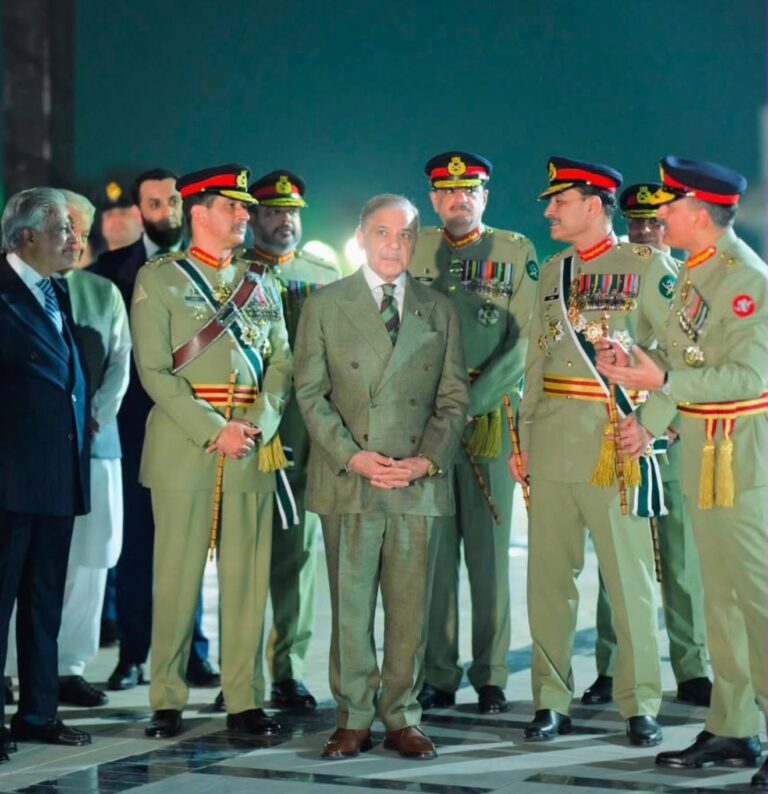
    Shehbaz Sharif and Asim Munir: Advancing the Vision of Quaid-e-Azam As Pakistan celebrates its 79th Independence Day, there is a growing sense that the country is witnessing a moment that would have deeply pleased its founding father, Quaid-e-Azam Muhammad Ali Jinnah. For decades, Pakistanis have carried Jinnah’s vision of a strong, sovereign and respected Pakistan in their hearts. Today, as Pakistan’s diplomatic and strategic importance continues to grow, that vision appears increasingly visible on the international stage. Prime Minister Muhammad Shehbaz Sharif and Field Marshal Syed Asim Munir are working together to translate that vision into reality. Their close coordination has provided Pakistan with a sense of direction, unity and confidence at a time when the world itself is undergoing profound geopolitical change. The Pakistan of today is increasingly being recognised as a country whose voice matters. Jinnah envisaged a Pakistan that would not merely exist on the world map, but would stand with dignity, sovereignty and confidence among the nations of the world. His vision was of a country capable of determining its own destiny and making a meaningful contribution to international affairs. There is a powerful resonance between that vision and the Pakistan we are witnessing today. Jinnah once spoke of a future in which the world’s decisions would be influenced by Pakistan. For many years, that aspiration seemed distant. But recent developments suggest that Pakistan is moving closer to that position. From facilitating dialogue between major powers to strengthening strategic partnerships with Türkiye, Saudi Arabia and China, Pakistan is demonstrating that it can engage with countries across different geopolitical blocs while protecting its own national interests. The country’s ability to host US-Iran talks is particularly significant. In an increasingly polarised world, being trusted to provide a platform for dialogue is itself an indication of diplomatic relevance. Pakistan’s relationship with China remains a cornerstone of its foreign policy, while ties with Türkiye and Saudi Arabia continue to deepen. At the same time, engagement with the United States has entered a phase in which Washington is once again recognising Pakistan’s strategic importance. The positive remarks by US President Donald Trump about Prime Minister Shehbaz Sharif and Field Marshal Asim Munir have also attracted international attention. Perhaps most importantly, Pakistan is projecting itself with greater confidence. The scenes in Islamabad surrounding the inauguration of Yadgar-e-Fateh, commemorating the sacrifices and achievements associated with Operation Bunyan-un-Marsoos, captured this changing mood. Political and military leaders standing together alongside the families of martyrs and veterans conveyed a powerful message that Pakistan’s strength lies in unity. As an overseas Pakistani who has lived in the West for more than two decades, this transformation is particularly striking. I have witnessed different phases of Pakistan’s image abroad. There were years when Pakistan was frequently discussed through the prism of instability, terrorism and political uncertainty. Today, the conversation is different. Pakistan is increasingly being discussed in terms of its strategic importance, diplomatic role, defence capabilities, regional influence and economic potential. This should make every Pakistani proud—but it should also make us more responsible. International recognition alone cannot build a prosperous Pakistan. The next challenge is to convert diplomatic and strategic gains into economic prosperity, stronger institutions, better education, employment opportunities and an improved quality of life for ordinary Pakistanis. That is where Jinnah’s vision must ultimately lead. At 79, Pakistan has every reason to celebrate. The country is standing taller on the world stage, and the partnership between Prime Minister Shehbaz Sharif and Field Marshal Asim Munir has helped project a message of unity and national purpose. But this is not the end of the journey. It is the beginning of a new chapter. Jinnah gave Pakistan a dream. The responsibility of this generation is to turn that dream into a lasting reality. Pakistan Zindabad.

  • | |

    HR Committee raises alarm over violence against wo…

    Islamabad: Concerns over increasing cases of gender based violence and the protection of women and children came under discussion as the National Assembly Standing Committee on Human Rights reviewed government efforts to prevent crimes, improve investigations and provide better support to victims. The committee questioned whether existing systems are strong enough to protect victims and ensure quick justice, while calling for clearer laws, wider awareness campaigns and improved access to support services. The 13th meeting of the committee reviewed the performance of the National Commission on the Status of Women (NCSW), government measures against violence and progress on previous recommendations. The meeting was chaired by Committee Chairperson Asiya Naz Tanoli, with Federal Parliamentary Secretary for Information and Broadcasting Barrister Danyal Chaudhry serving as co chair.   During the briefing, NCSW informed the committee that its complaint management system has been active for the last five months to help women report problems and receive support. Officials said consultants working on the complaint system received special training with support from Rozan to improve complaint handling. The committee was also informed that gender based data is being updated through the National Gender Data Portal to help the government make better policies based on facts. Officials said the first Gender Parity Report has already been published and future reports will include provincial level information. The committee was informed that NCSW has also conducted media training sessions to improve reporting of rape and gender violence cases. Officials said journalists were trained to report such sensitive cases with responsibility, dignity and care for victims. The Ministry of Human Rights told the committee that reported cases of gender based violence increased between 2022 and 2024, leading authorities to strengthen special investigation units and women and child protection units. Officials said police officers and relevant staff received specialised training while complaint systems were improved to provide faster support to victims. Barrister Danyal Chaudhry stressed that awareness about harassment laws is necessary in both public and private institutions. He said people must understand their rights and responsibilities so that victims can seek help and legal procedures remain clear for everyone involved. He also called for removing confusion around the definition of harassment so that both complainants and accused persons understand their legal position. The parliamentary secretary recommended wider promotion of the Ministry of Human Rights 1099 helpline and the 1121 child helpline through newspapers, pamphlets and other awareness campaigns. He said many people are unaware of available support services and greater publicity can help victims reach authorities quickly. Committee member Shahida Rahmani suggested presenting a real rape case as a case study before the committee. She said studying actual cases could help lawmakers prepare practical recommendations to improve the justice system. The Secretary of the Ministry of Human Rights informed the committee that some countries provide free trial systems for rape victims. He suggested that Pakistan should examine the possibility of introducing a similar system to make justice safer, easier and more accessible for victims.

Leave a Reply

Your email address will not be published. Required fields are marked *