pakistan batting woes
|

Pakistan batting woes deepen ahead of crucial second Test

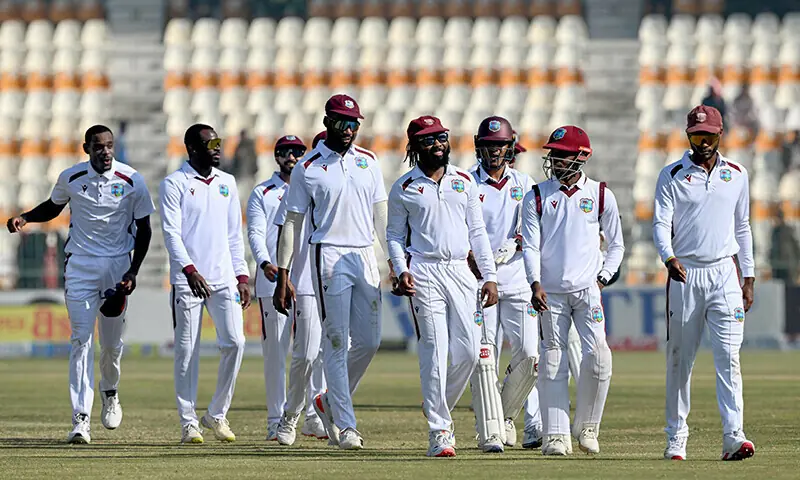
Pakistan’s batting frailties remain a major concern after a disappointing display in the opening Test against the West Indies, where the visitors failed to chase a modest target and suffered a heavy defeat.

Set 211 runs for victory, Pakistan’s batting lineup crumbled under pressure and was dismissed for just 120, raising fresh questions about the team’s ability to perform in challenging conditions. The collapse exposed familiar weaknesses against disciplined fast bowling, with only former captain Babar Azam showing resistance. Remaining unbeaten on 58, Babar stood firm while wickets continued to tumble around him, but his lone effort was not enough to keep Pakistan in the contest.

The batting unit struggled to build partnerships from the outset as the West Indies bowlers exploited the conditions brilliantly. The pace attack maintained consistent line and length, making the most of the bowler-friendly surface to keep the Pakistani batters under constant pressure. Regular breakthroughs prevented Pakistan from gaining any momentum during the chase.

Apart from Babar’s fighting knock, no batter managed to make a meaningful contribution. Several players got starts but failed to convert them into significant scores, allowing the West Indies to dominate throughout the innings. Poor shot selection and an inability to adapt to the conditions further compounded Pakistan’s problems.

The defeat also highlighted the struggles of Pakistan’s middle order. Captain Salman Ali Agha endured a disappointing outing, failing to make an impact in either innings of the Test. His inability to anchor the innings or guide the lower order placed additional pressure on the rest of the batting lineup.

Experienced wicketkeeper-batter Mohammad Rizwan also had a forgettable match. Known for his resilience and ability to perform under pressure, Rizwan was unable to deliver in both innings, leaving Pakistan without the stability they often rely on in difficult situations. His lack of runs was a significant setback for the visitors.

With the series now moving to Port of Spain, Pakistan will need a much-improved batting performance if they hope to level the contest. The top and middle order must take greater responsibility, particularly against a confident West Indies bowling attack that has already shown its ability to exploit weaknesses.

Babar Azam’s unbeaten half-century remains one of the few positives from the defeat, demonstrating that success is possible even in demanding conditions with the right approach. However, Pakistan cannot depend on one batter alone. Greater contributions are needed from senior players, especially Salman Ali Agha and Mohammad Rizwan, if the team is to bounce back.

As the second Test approaches, Pakistan face a crucial opportunity to respond. A stronger batting display will be essential if they are to challenge the West Indies, keep the series alive, and restore confidence after a disappointing start.
Similar Posts

  • |

    Sheheryar Munawar shares snapshots from London to Spain getaway

    Actor Sheheryar Munawar and his wife, Maheen Siddiqui, have been treating fans to glimpses of their latest European trip. The couple shared a series of snapshots from their travels across London and Spain. Sheheryar kicked things off with a photo of himself wearing a beret while taking in the sights. In another shot, the couple posed together at a gift shop in London’s Notting Hill, with Maheen smiling beside him. A separate photo captured Sheheryar sharing a lighthearted moment with children, though he kept their faces hidden in the post. He captioned the carousel with a playful note about the clouds catching his attention. Maheen also documented parts of the trip herself, sharing photos from Malaga, Spain. In one post, she’s seen soaking up the sunshine in a yellow outfit, set against the city’s scenic coastal backdrop. Sheheryar later added more photos from Spain, jokingly declaring he’d entered his “cowboy era.” The pictures showed him hiking under the sun in a grey tank top, along with another shot posing beside an off-road vehicle. He also showed off a fresh tan while exploring various Spanish cities, sampling local food and taking in traditional flamenco performances. His caption played on the tan itself, adding a playful touch to the post. The couple also shared a more relaxed side of the trip, posing together on an electric bike during one of their outings. Together, the series of posts gave followers a colourful look into their summer getaway, spanning London’s streets, coastal Spain, outdoor adventures, local cuisine and quieter, laid-back moments. Sheheryar and Maheen married in December 2024 and have continued sharing glimpses of their life together on social media since. Their latest travel updates offer fans another warm look into their journey as a married couple, blending sightseeing, adventure and everyday affection throughout the trip.

  • |

    Pakistan explores digital assets, tokenisation to expand access to finance

    ISLAMABAD: Pakistan is examining the potential use of digital assets and tokenisation in areas including real estate and other investment instruments as part of broader efforts to accelerate digital transformation and expand access to financial services. The matter came under discussion during a meeting between Federal Minister for Finance and Revenue Senator Muhammad Aurangzeb and Pakistan Digital Authority (PDA) Chairperson Dr Sohail Munir on Thursday. The meeting focused on digital finance, technology-driven economic activity and measures aimed at making financial services more accessible and efficient. According to the Finance Division, the participants reviewed the emerging role of digital assets and tokenisation, particularly their possible application in real estate and other investment-related assets. The discussion also stressed the need for an appropriate regulatory and institutional framework to ensure that such technologies are adopted in a responsible and sustainable manner. Tokenisation generally involves representing ownership or economic rights in an asset through digital tokens. The approach has attracted growing international attention because it can potentially make certain investment opportunities easier to access, improve transaction efficiency and broaden participation in financial markets. The finance minister stressed that Pakistan’s regulatory and institutional arrangements must keep pace with rapid developments in digital technology and new business models. He emphasised that emerging technologies should be supported by clear rules and mechanisms that provide certainty to businesses, investors and financial institutions. The meeting also examined the need to create an enabling environment for electronic transactions and encourage the wider adoption of digital processes across trade and financial activities. Aurangzeb highlighted the importance of using technology to reduce procedural barriers and improve access to finance. In this regard, the participants discussed simplifying customer onboarding procedures, strengthening mechanisms for sharing financial data and improving interoperability among different financial systems. Greater connectivity between banks and capital markets was also identified as an important area for development. The participants considered how digital platforms and simplified account-opening procedures could encourage more people to participate in the capital market and gain access to a broader range of investment opportunities.   The finance minister also called for stronger integration of banking and capital-market systems, noting that better-connected digital infrastructure could help improve financial inclusion while making investment processes more convenient and efficient. Another key area discussed during the meeting was the use and interoperability of data across government institutions. Aurangzeb noted that better integration of government data could improve the quality and speed of policymaking, planning and decision-making. The meeting also considered the growing role of Artificial Intelligence (AI) and other digital technologies in strengthening government systems and improving the delivery of public and financial services. The participants reviewed opportunities to enhance Pakistan’s digital infrastructure so that government departments, financial institutions and businesses can operate through more efficient and interconnected systems. Aurangzeb appreciated the initiatives being undertaken by the Pakistan Digital Authority and stressed the need to prioritise practical projects capable of delivering measurable improvements in efficiency, financial access and digital capacity. He further emphasised continued coordination among government institutions, regulators, financial-sector stakeholders and technology organisations to ensure that digital initiatives translate into tangible economic benefits. The discussions form part of wider efforts to strengthen Pakistan’s digital economy by modernising financial processes, expanding technology-based services and creating an environment in which emerging financial technologies can develop within an appropriate regulatory framework. With digital assets, tokenisation, artificial intelligence and data-driven financial services developing rapidly worldwide, Pakistan’s efforts to establish suitable frameworks could play an important role in determining how effectively the country participates in the next phase of digital financial development.

  • | |

    Wedding joy turns to mourning, Rickshaw falls into…

    Muzaffargarh: A wedding celebration turned into a tragedy after an overloaded rickshaw carrying members of a wedding party plunged into a canal on Monday evening, leaving at least seven people dead and several others missing. According to rescue officials, the incident occurred when the rickshaw, which was carrying a large number of passengers including women and children, reportedly lost control while travelling along the canal-side road. The vehicle skidded off the road and fell into the water. Local residents and rescue divers immediately launched an operation to search for the passengers. Nine people were rescued alive and shifted to a nearby hospital for medical treatment. Some of those rescued were reported to be in critical condition. Rescue teams have so far recovered the bodies of seven people. The deceased have been identified as 14-year-old Dilawar, son of Abdul Rasheed; seven-year-old Muneeb, son of Rashid; 58-year-old Sakina Bibi, wife of Allah Ditta; 15-year-old Sameera Bibi, daughter of M Shafiq; M Saim, son of M Iqbal; seven-year-old M Sabtain, son of Musharraf; and nine-year-old Raju, son of M Iqbal. Several passengers are still believed to be missing. Those reported missing include M Bilal, son of M Iqbal; M Yasir, son of Fida Hussain; M Ali, son of M Shafiq; Usman, son of Ghulam Fareed; Shakir, son of Ashiq Hussain; Hassnain, son of Musharraf Ali; Iqbal Bibi, daughter of Fida Hussain; Kaleem Ullah, son of Basheer Ahmad; and Zareef, son of Wazeer Ahmad. The rickshaw was reportedly carrying far more passengers than its permitted capacity, raising concerns about dangerous overloading. Rescue teams continued their search operation on Tuesday as authorities feared the death toll could increase. The incident has cast a pall of grief over the families of the wedding party, with relatives anxiously awaiting information about their loved ones as the recovery operation continues.

  • |

    Coal drops below half of China’s power mix for first time ever

    China has reached a turning point in its energy story. For the very first time, coal supplied less than half the country’s electricity over a six-month stretch, according to officials who spoke on Thursday. Between January and June, coal made up 49.7 percent of total power generation. That figure came from Xing Yiteng, a senior official at the energy administration’s planning office. It marks a steep fall from 65.5 percent back in 2016, based on earlier government data. Clean energy sources picked up the slack. Renewables reached 41.2 percent of the total mix, crossing the 40 percent line for the first time ever. Wind and solar alone made up nearly a quarter of all power generated, a huge leap from just under 10 percent in 2020. The remaining share came from natural gas and nuclear plants. Despite this progress, experts warn that coal use in raw terms might actually increase this year. Electricity demand across China is rising quickly, driven by more electric vehicles on the road, a boom in AI-related data centers, and steady growth in exports. Beijing has pledged that coal use will peak no later than 2030, with wind and solar expected to reach 30 percent of the power mix by then. Gao Yuhe, who works as a project manager at Greenpeace East Asia, thinks that milestone might actually arrive two years early, by 2028. She credited this to the rapid spread of home solar systems paired with battery storage, along with more flexible electricity markets that make better use of renewable supply. China still burns far more coal than most major economies, mainly because it has large domestic reserves and limited natural gas access. For comparison, coal accounted for just 17 percent of America’s utility-scale power output last year, with natural gas covering 41 percent. China’s coal reliance, though, remains lower than India’s, where coal and lignite made up 69 percent of electricity generation last year. Interestingly, China still imported close to 500 million metric tons of coal last year, even with domestic output reaching 4.83 billion tons, mostly to supply power plants along the coast. If coal consumption keeps falling, major exporters like Indonesia, Mongolia, Australia, and Russia could feel the impact, depending on global price trends. Meanwhile, coal remains central to China’s coal-to-chemicals industry, where many facilities continue relying on cheap, locally produced coal to stay competitive.

  • |

    Kashmir activist and journalist released on bail after years in custody

    Indian authorities have released Kashmiri human rights activist Khurram Parvez and journalist Irfan Mehraj on bail after they spent years in custody under terrorism related charges. Their families confirmed that both men were released from a prison in New Delhi late on Wednesday following a court order, although strict bail conditions will keep them in the capital while their trial continues. Parvez, a well known human rights defender and programme coordinator of the Jammu Kashmir Coalition of Civil Society, was arrested by India’s National Investigation Agency in November 2021 from his home in Srinagar. Mehraj, a freelance journalist who also worked with the same rights organisation, was arrested in 2023. Both men have been charged under India’s anti terrorism laws with allegedly financing terrorism and promoting separatist activities. The legislation allows authorities to detain suspects for long periods without trial and has frequently been criticised by rights organisations for its broad powers. Although they have now been granted bail, their freedom remains limited. Court conditions require both Parvez and Mehraj to stay in New Delhi during the legal proceedings. They are not permitted to return to Kashmir and must arrange their own accommodation in the capital while attending court hearings. Indian investigators had challenged the decision to grant bail, but a higher court upheld the order. The Jammu Kashmir Coalition of Civil Society has spent many years documenting alleged human rights violations in the region. The organisation has published reports on cases involving torture, unlawful killings, enforced disappearances, and unmarked graves in areas affected by the long running conflict. Its work has often drawn international attention and placed it at the centre of debates over human rights in Kashmir. Parvez has received support from several international human rights organisations that have repeatedly called for his release. In 2023, the United Nations Working Group on Arbitrary Detention described his arrest as retaliation for his human rights activities. The UN experts said the detention appeared intended to silence both Parvez and wider civil society efforts in Kashmir. The case has also renewed attention on press freedom in the region. Journalists working in Indian administered Kashmir have reported increasing restrictions, surveillance, and legal action since the Indian government revoked the region’s special constitutional status in 2019. Several media workers and activists say they have faced questioning, arrests, or pressure while reporting on political and security issues. The Indian government maintains that its actions are necessary to combat terrorism and protect national security. Officials argue that the anti terrorism laws are an essential tool in dealing with militant groups operating in the region. However, critics say the legislation has increasingly been used against journalists, activists, and civil society members who peacefully document human rights concerns. Government figures show that more than 3,600 people were arrested under anti terrorism laws in Kashmir between 2019 and 2023. More than half of those detained remain in prison while awaiting legal proceedings, highlighting concerns over lengthy pre trial detention. The release of Parvez and Mehraj has been welcomed by rights advocates, but legal proceedings against both men continue. They will remain in New Delhi under the conditions set by the court until their trial reaches its conclusion. Their cases are expected to remain closely watched by international human rights organisations and press freedom groups as they continue to raise concerns about civil liberties and legal protections in Indian administered Kashmir.

  • | |

    Brilliant comeback by Pakistan as West Indies fold…

    Pakistan produced an impressive bowling performance on the second day of the opening Test in Tarouba, dismissing West Indies for 311 in their first innings after the hosts had looked firmly in control at the end of Day 1. West Indies resumed play on 194 for 3, but Pakistan’s pace attack maintained disciplined lines and lengths to trigger a dramatic collapse. The home side managed to add only 117 more runs before losing their remaining seven wickets. Shai Hope played the leading role for West Indies with a well-crafted 92, narrowly missing out on a century. Kevlon Hodge also made an important contribution with 84 runs. Shamar Joseph scored 23, while Tagenarine Chanderpaul and Amir Jangoo added 21 runs each. Justin Greaves made 15, Brandon King contributed 12, and Roston Chase scored 10. Mohammad Ali was the standout performer for Pakistan, finishing with impressive figures of 4 wickets for 50 runs. Mohammad Abbas provided excellent support by claiming three wickets, while Khurram Shahzad picked up two. Aamir Jamal also chipped in with one wicket to complete the innings. West Indies had ended the opening day in a strong position at 194 for 3, but Pakistan’s bowlers turned the match around with a disciplined and determined display on the second morning. Their efforts prevented the hosts from posting a significantly bigger total and handed Pakistan valuable momentum heading into their first innings

Leave a Reply

Your email address will not be published. Required fields are marked *