pakistan begins commonwealth
|

Pakistan begins Commonwealth Games 2026 campaign with hopes pinned on Arshad Nadeem

GLASGOW: The 2026 Commonwealth Games have officially begun in Glasgow and will continue until August 2, bringing together nearly 3,000 athletes from 74 countries to compete across multiple sporting disciplines.

Pakistan has sent a 36-member contingent, including 20 athletes, along with coaches and officials, to participate in this year’s event.

The national team will compete in six sports: athletics, boxing, judo, gymnastics, lawn bowls and swimming.

Pakistan’s biggest medal hope is Olympic javelin champion Arshad Nadeem, who will defend his Commonwealth Games title. Having achieved historic success for Pakistan on the international stage in recent years, Arshad is widely regarded as the country’s strongest contender for a gold medal.

In athletics, Pakistan will be represented by Arshad Nadeem, Faiqa Riaz, Ansar Abbas, Muhammad Akhtar, Muhammad Ismail, Muhammad Yasir and Noreen Hussain.

The boxing squad includes Afzal Khan, Fatima Zahra, Malaika Zahid, Qudratullah and Samama Rehman. Shah Hussain Shah will compete in judo, while Shehzad Ali will represent Pakistan in gymnastics.

In lawn bowls, Maqsood Waseem Khan and Muhammad Ayub Qureshi will compete, while Hamza Asif, Hareem Malik, Jehanara Nabi and Muhammad Ahmed Durrani will represent Pakistan in swimming.

Sports analysts believe Pakistan’s brightest medal prospect is Arshad Nadeem in the men’s javelin throw. If he performs at his best, he is considered a leading favourite to win gold.

Pakistan could also challenge for medals in boxing, although the competition is expected to be tough. In judo, Shah Hussain Shah is viewed as another strong contender, given Pakistan’s previous success in the sport at the Commonwealth Games.

In gymnastics, lawn bowls and swimming, the main objective for Pakistani athletes will be to reach the final rounds and achieve personal best performances.

Overall, experts believe Pakistan has the potential to win one to three medals, with the strongest possibility being a gold medal through Arshad Nadeem. A standout performance in boxing or judo could further improve the country’s medal tally.

As the Games get underway, Pakistani fans will be closely following Arshad Nadeem, whose achievements have made him one of the country’s most celebrated athletes and an inspiration for the next generation of sportsmen and women.

Similar Posts

  • | |

    Punjab launches drone flood surveillance

    The Punjab government has introduced drone-based monitoring for the first time to strengthen its flood management system and improve early warning capabilities across the province. The new initiative is aimed at detecting flood surges before they reach populated areas, allowing authorities to take timely preventive measures and reduce the risk of damage to lives, property and infrastructure. According to a spokesperson for the Punjab government, the drone surveillance programme has been launched on the directions of Chief Minister Maryam Nawaz. The operation covers all major barrages, rivers and headworks in Punjab. Officials are using drones to monitor water levels, river flow and changing conditions in real time. The spokesperson said the technology will help authorities identify any sudden increase in water flow and provide advance warnings to disaster management agencies. This will improve emergency planning and allow local administrations to respond more quickly if flood conditions develop. As part of the monitoring campaign, drones surveyed Trimmu Barrage, where water levels were found to be within the normal range. Drone inspections were also carried out along the Ravi and Sutlej rivers in Pakpattan. Officials reported that water levels in both rivers remained stable and did not pose any immediate threat. Further drone surveillance was conducted at Talibwala Bridge over the Chenab River in Sargodha. Authorities observed that the river’s flow was normal. Similar monitoring was also carried out at Head Sidhnai, where officials reviewed water movement and overall river conditions through aerial imaging. At Head Marala, drones recorded a water flow of 174,000 cusecs. Authorities also monitored water conditions at Rasul Barrage in Mandi Bahauddin to assess the overall flood situation in the region. The provincial government said drone technology will play a key role in modernising Punjab’s flood monitoring system. Real-time aerial surveillance will help officials detect changes in river conditions more accurately and improve coordination among disaster response agencies.

  • | | |

    Iran says every threat will strengthen its militar…

    TEHRAN: Iran’s acting Defence Minister, Seyed Majid Ibn al-Reza, has declared that Tehran will continue strengthening its military capabilities by treating every threat from its adversaries as genuine, even as the United States signals a renewed diplomatic effort. His remarks came after US President Donald Trump announced that Washington had postponed a planned military strike against Iran in favour of restarting negotiations aimed at reducing tensions in the Middle East. In a statement posted on social media platform X on Monday, Ibn al-Reza said Iran viewed recent statements from its enemies as part of a broader campaign of psychological and cognitive warfare. However, he stressed that Tehran would not dismiss any warning, regardless of its nature. “We consider every threat to be real and deserving of a serious response,” the acting defence minister said, adding that Iran’s strategy was to transform every external challenge into an opportunity to reinforce its military preparedness and national defence. He said the Iranian armed forces would neither be caught off guard nor remain passive in the face of rising regional tensions. Instead, every warning or hostile statement would serve as a catalyst for expanding the country’s defensive capabilities and maintaining operational readiness. The comments underscore Iran’s continued emphasis on deterrence at a time when uncertainty surrounds the future of US-Iran relations and broader security dynamics across the Gulf. Earlier, President Trump announced that the United States had suspended plans for military action against Iran after requests from Tehran and several Middle Eastern countries to give diplomacy another chance. Writing on his social media platform, Truth Social, Trump claimed the US military had been fully prepared for an operation of unprecedented scale, describing it as one of the largest potential military actions since the Second World War. According to Trump, the proposed negotiations focus on two key objectives: ensuring the immediate and uninterrupted reopening of the Strait of Hormuz for global shipping and addressing concerns over Iran’s nuclear programme. The Strait of Hormuz remains one of the world’s most strategically important maritime routes, carrying a significant share of global oil exports. Any disruption in the waterway has the potential to affect international energy markets and regional stability. While Washington has presented the renewed talks as an opportunity to prevent further escalation, Iranian officials continue to insist that the country will not relax its military vigilance during the diplomatic process. The latest exchange of statements reflects the delicate balance between diplomacy and deterrence, with both sides signalling a willingness to negotiate while simultaneously emphasizing military preparedness amid persistent regional tensions.

  • | |

    Vicky Kaushal prepares for major transformation in Mahavatar

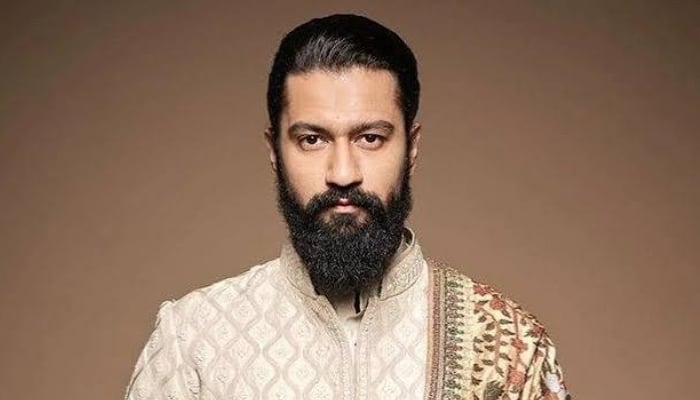
    Vicky Kaushal is reportedly preparing for one of the most demanding physical transformations of his career as he gears up to play the legendary warrior sage Parashurama in the upcoming mythological film Mahavatar. According to recent reports, the actor will undergo an intensive fitness programme that includes gaining more than 25 kilograms to achieve the larger-than-life physique required for the role. As reported by Mid-Day, Kaushal is set to reunite with celebrity fitness coach Tejas Lalwani, who previously helped him transform for the historical blockbuster Chhaava. The actor reportedly plans to begin training in September, nearly three months before the film goes on floors in December. The makers are said to be aiming for a transformation even more challenging than the one he underwent for Chhaava. For Chhaava, Kaushal increased his weight from 80 kg to 105 kg to portray Chhatrapati Sambhaji Maharaj. However, Mahavatar will reportedly require an even bigger and more muscular frame to accurately portray Parashurama, one of Hindu mythology’s most powerful warrior sages. According to the report, the character demands a commanding screen presence and the physical strength to convincingly perform intense action sequences involving the iconic parashu (battle axe). The report states that Kaushal’s preparation will focus on three key areas: training, nutrition and recovery. Fitness coach Tejas Lalwani and nutritionist Alkesh Sharotri have reportedly designed a rigorous programme to help the actor build size and strength while maintaining overall fitness. His workout routine is expected to revolve around compound exercises, including squats, deadlifts, bench presses and pull-ups, with the intensity gradually increasing over the training period. Alongside the workouts, Kaushal is reportedly expected to consume an additional 250 to 500 calories daily, following a protein-rich diet that includes nuts, dairy products and whole grains to support healthy muscle gain. Recovery is also expected to play a crucial role in the transformation. According to the report, Kaushal will follow a strict recovery schedule that includes eight hours of sleep every night and 48-hour rest periods for each muscle group to minimise fatigue and maximise muscle growth during the demanding preparation. Mahavatar reunites Kaushal with Tejas Lalwani after their successful collaboration on Chhaava, a performance that earned widespread praise for the actor’s commitment to physically embodying the Maratha ruler. The upcoming film is expected to present an even greater challenge as Kaushal steps into a mythological role requiring extraordinary physical presence. While Mahavatar remains one of his most anticipated future projects, Kaushal’s next major theatrical release will be Sanjay Leela Bhansali’s period drama Love & War, scheduled to arrive in cinemas on January 21, 2027. Fans are now eagerly waiting to see the actor’s dramatic transformation once filming for Mahavatar begins.

  • | | | |

    US launches heavy strikes on Iran after missile at…

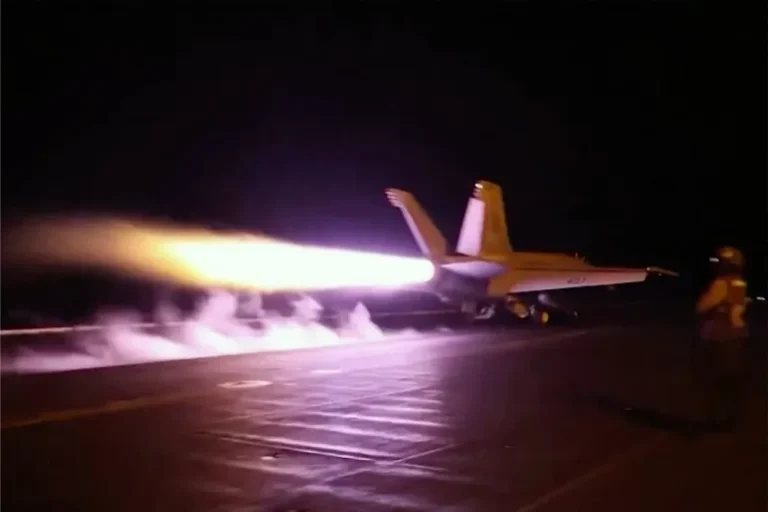
    The United States has resumed large-scale military operations against Iran, launching what officials described as a “heavy wave” of precision strikes after a five-night pause, dramatically escalating tensions across the Middle East and raising fresh concerns over the security of the Strait of Hormuz. According to the US Central Command (CENTCOM), the overnight operation targeted dozens of sites linked to Iran’s Islamic Revolutionary Guard Corps (IRGC), including military command centres, missile and drone facilities, coastal defence systems and maritime infrastructure. The strikes came in response to Iranian missile attacks a day earlier on American forces stationed at a US military base in Jordan. US President Donald Trump had warned that Washington would respond “very hard” to any attack on American troops, and the latest operation marked one of the most extensive US offensives since the conflict intensified earlier this year. Iranian state media reported that at least three civilians were killed in the strikes, including a couple and their two-year-old child after a residential building on Qeshm Island was hit. The IRGC also confirmed that three of its personnel were killed during the attacks. Explosions were reported across several southern Iranian cities, including Ahvaz, Abadan, Bushehr, Kazerun and Farashband. Iranian media said power outages affected parts of Ahvaz following strikes in the oil-rich Khuzestan province, while local officials confirmed that multiple locations in Abadan had also been targeted. The confrontation quickly spread beyond Iran. Jordan said its air defence systems intercepted five Iranian missiles launched toward its territory after Tehran targeted a US airbase and command headquarters inside the kingdom. No casualties were reported. Meanwhile, Kuwait confirmed that an Iranian strike hit a building belonging to a Chinese company in the country’s north, killing one worker and causing significant damage. Saudi Arabia condemned Iran’s attacks on Jordan, describing them as a violation of international law and regional stability. Despite the renewed fighting, diplomatic contacts continue behind the scenes. Pakistan’s Foreign Ministry said negotiations between Tehran and Washington remain active, particularly over the Strait of Hormuz and efforts to reduce tensions. Iranian officials also confirmed that discussions with Omani mediators regarding the future of the strategic waterway are continuing. The Strait of Hormuz remains at the heart of the crisis. Iran insists the waterway remains closed because of US military actions, while Washington accuses Tehran of threatening global shipping and using maritime pressure to strengthen the IRGC’s influence. Adding economic pressure, the US Treasury imposed fresh sanctions on two Iranian companies accused of supporting an IRGC-backed maritime insurance network. Security analysts say Washington now faces a critical decision: continue targeting Iran’s military infrastructure around Hormuz or expand attacks on key national infrastructure. While the latest strikes signal a tougher military posture, experts believe both sides still have incentives to leave the door open for diplomacy, even as the risk of a wider regional war continues to grow.

  • |

    Afghan fathers struggle as girls remain barred from secondary schools

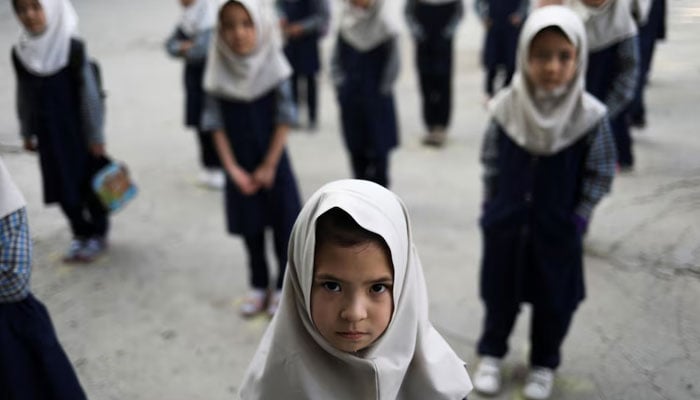
    KABUL: Afghan fathers are facing growing distress as their daughters remain unable to continue their education beyond primary school under restrictions imposed by the Taliban authorities. Families across Afghanistan say the education ban is creating deep emotional and financial pressure. Some fathers are openly questioning the policy, despite their religious beliefs and support for other government measures. The Taliban administration has defended the restrictions as temporary and based on its interpretation of religious principles. However, many Afghan men say they cannot understand why girls should be prevented from receiving secondary education. A United Nations survey conducted last year found that about nine out of 10 Afghan men considered it important for girls to attend secondary school. Nearly two-thirds also viewed supporting a daughter’s education as a religiously commendable act. Girls were barred from secondary schools after the Taliban returned to power in 2021. Women were later also prohibited from attending universities. The restrictions have affected a large number of young Afghan women and girls. For many families, the approaching end of primary education has become a source of fear. Fathers worry that their daughters will lose their chance to pursue higher education and build professional careers. One father, identified as Ahmad, said he had never imagined that his daughters could be forced to stop studying. His wife is a mathematics teacher who is also unable to continue teaching secondary-level students. Ahmad said his eldest daughter is approaching the end of primary school. The family has considered private and underground educational options, but the cost is difficult to manage. Another father, a doctor identified as Mohammad, said he had always wanted his daughters to attend leading universities. He believes women are essential to Afghanistan’s development and should have opportunities beyond household responsibilities. His daughters are approaching the age when they will be forced to leave formal schooling. The family has considered sending them abroad, including to Pakistan, but changing regional circumstances have made that option difficult. Some families have turned to private schools that secretly provide general education alongside religious studies. These institutions often charge high fees and may not provide recognised graduation certificates. Parents also fear that authorities could take action against schools operating outside official restrictions. This leaves families caught between protecting their children and trying to continue their education. Another father from Kandahar said his young daughter has a strong interest in astronomy. She asks questions about the solar system, gravity and science. The girl reportedly asked her father how she could continue learning if she could not study beyond the sixth grade. Her question has become a painful reminder of the limited opportunities available to girls. Some families have moved to Kabul in search of better educational opportunities. Others are relying on online courses, home schooling and secret classes. The restrictions are also affecting children emotionally. Parents say many girls feel frustrated, isolated and uncertain about their future. One father said his teenage daughter often stays at home and becomes deeply upset when she thinks about her education. He said he sometimes leaves the room because he cannot control his emotions and ends up crying privately. Another family has created a home-schooling routine using old secondary-school textbooks. The parents try to maintain a school-like schedule so their daughters can continue learning. However, the parents say home education cannot fully replace a formal school environment. They worry about the lack of recognised qualifications, social interaction and access to trained teachers. Some girls have also begun attending secret classes. Their families remain concerned about possible consequences if the authorities discover them. The prolonged restrictions have created uncertainty for an entire generation of Afghan girls. Parents fear that years without formal education will limit their daughters’ future opportunities

  • |

    US says it will deepen security role in Asia

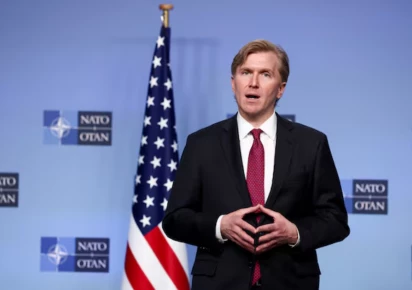
    The United States has rejected suggestions that it is reducing its involvement in Asia. A senior Pentagon official said Washington plans to strengthen its position in the Indo-Pacific and maintain what it considers a favourable balance of power in the region. US Undersecretary of Defense for Policy Elbridge Colby made the remarks during a speech in Manila on Monday. He said the United States was not leaving Asia. Instead, Washington was increasing its focus on the region. Colby also called on US allies and partners to take greater responsibility for their own defence. He said Washington wanted stronger partnerships rather than relationships based on dependence. According to Colby, the United States expects its regional allies to increase defence spending and strengthen their own military capabilities. He said greater responsibility from partner countries should not be interpreted as a sign that Washington is abandoning the region. Colby argued that stronger allies would contribute to stronger deterrence and help maintain regional stability. The Pentagon official said the US strategy includes maintaining a credible military presence along the First Island Chain. The strategic area stretches from Japan through Taiwan and the Philippines toward Borneo. It is considered important to US efforts to deter potential military threats in the Indo-Pacific. Colby said the United States was committed to maintaining a balance of power in the region. He also emphasised the need for allies to contribute more to regional security. His comments come amid continuing questions about the long-term US security commitment to Asia. Some regional governments and analysts have expressed concerns about whether Washington will remain as deeply involved in the Indo-Pacific as it has been in previous years. Colby sought to address those concerns by stressing that the United States intends to remain engaged. The Philippines is the first stop on Colby’s Southeast Asian tour. He is also scheduled to visit Indonesia, Thailand and Cambodia. The Philippines is a longstanding US treaty ally and has strengthened defence cooperation with Washington in recent years. The Pentagon official’s remarks are likely to be closely watched by US partners across the region. Washington is seeking to strengthen cooperation with allies while encouraging them to invest more heavily in their own defence. The approach reflects a broader US strategy of sharing the security burden with regional partners while maintaining a strong American military presence. Colby said the goal was to build capable partners rather than create countries that depend entirely on US protection. He maintained that stronger regional partners would make the overall US deterrence strategy more effective.

Leave a Reply

Your email address will not be published. Required fields are marked *