pakistan8217s envoy hits
| |

Pakistan’s UN envoy hits back at India in Se…

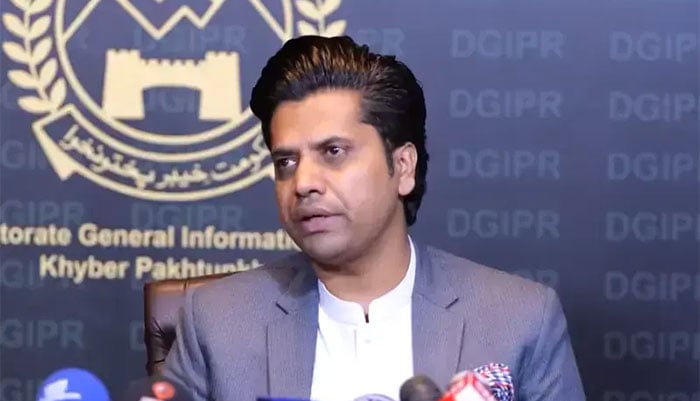
Pakistan’s Counsellor at the United Nations, Saima Saleem, strongly criticised India during a meeting of the UN Security Council. She accused New Delhi of violating international law, ignoring UN Security Council resolutions and pursuing policies that threaten regional peace and stability.

In her address, Saleem said it was contradictory for India to present itself as a supporter of peace while, according to Pakistan, it continues to violate international law and fail to implement UN Security Council resolutions related to the Kashmir dispute. She also alleged that India has pursued aggressive policies toward neighbouring countries and has been involved in activities that undermine regional security.

The Pakistani diplomat highlighted what she described as a clear difference between the situations in Azad Jammu and Kashmir (AJK) and Indian Illegally Occupied Jammu and Kashmir (IIOJK). She said people in AJK enjoy political freedoms, while residents of IIOJK continue to face restrictions, arrests and alleged human rights violations.

Saleem said the denial of basic rights in the disputed territory cannot be ignored. She stressed that political freedom and the suppression of civil liberties cannot be viewed as the same. According to her, the people of Jammu and Kashmir continue to possess an inalienable right to self-determination under relevant UN resolutions.

She further stated that Jammu and Kashmir is not an integral part of India and cannot be treated solely as its internal matter. She said India’s position does not change the internationally recognised status of the dispute and called for implementation of the relevant UN Security Council resolutions.

The Pakistani representative also said that India had originally taken the Kashmir issue to the United Nations and is now distancing itself from the resolutions adopted by the Security Council. She maintained that the dispute remains on the UN agenda and requires a peaceful resolution in accordance with international law.

Referring to the Indus Waters Treaty, Saleem criticised India’s decision to suspend the agreement. She said the move violates international legal obligations and warned that water should never be used as a political or military tool. She described the Indus River system as a lifeline for millions of people and stressed that international agreements must be respected.

She also alleged that terrorism networks linked to India have expanded beyond the region. In addition, she claimed that the rise of Hindutva ideology has contributed to increasing Islamophobia in India and accused the Indian government of promoting discriminatory policies against Muslims.

Similar Posts

  • | |

    Sihala Police Chief calls for sensitive rape case …

    RAWALPINDI: Commandant Sihala Police College Ashfaq Ahmad Khan has called upon police officers to adopt a compassionate, respectful and impartial attitude towards victims of rape and sexual violence. He was addressing sub-inspectors who successfully completed the one-month SSIOU course at Sihala Police College, Rawalpindi. Speaking at the concluding ceremony, Ashfaq Ahmad Khan said that rape victims, particularly women, children and girls, are already in a highly vulnerable situation, and it is the responsibility of police officers to protect their dignity and self-respect throughout the investigation process. He stressed that investigations into rape cases must be conducted professionally, sensitively and impartially. The identity and personal information of victims must be kept strictly confidential so that their dignity and reputation in society are not compromised. The Commandant urged the newly trained officers to ensure that every stage of an investigation is carried out while respecting the privacy and dignity of victims. At the same time, he said, investigations must be thorough, transparent and evidence-based so that perpetrators can be brought to justice and face the consequences of their crimes under the law. Ashfaq Ahmad Khan said the police have a crucial responsibility to provide victims with justice, protection and confidence. He added that a compassionate approach, combined with professional investigation, would help ensure that victims are treated with dignity while criminals are brought to justice. make it proper title

  • | |

    Punjab cybercrime crackdown, 28 suspects arrested

    LAHORE: Authorities have arrested 28 suspects in Lahore, Faisalabad and Multan as part of a major crackdown on organised online fraud, exposing alleged schemes that relied on impersonation, fake investment opportunities and fabricated official identities to deceive citizens. The arrests were made during a province-wide operation by the National Cyber Crime Investigation Agency (NCCIA) Punjab, directed by Punjab Director Muhammad Ali Wasim, officials said. Investigators also seized 24 mobile phones and a laptop, which are now being examined for evidence that could lead to other members of the alleged network. The investigation has revealed how fraudsters allegedly manipulated trust to convince victims to hand over large sums of money. Millions allegedly lost in Lahore scam In Lahore, 18 suspects were arrested in separate operations. Investigators said the suspects allegedly impersonated relatives, visa agents, government officials and personnel associated with the Punjab Safe Cities Authority. In one case, suspects allegedly posed as both a relative and a visa agent and persuaded a victim to transfer Rs25.86 million. The case has highlighted how scammers can combine apparently familiar identities with urgent requests to make their schemes appear legitimate. Rs54.66m trading fraud uncovered Three suspects were arrested in Faisalabad in connection with alleged online trading fraud and unauthorised access to a company email account. According to investigators, a victim was shown fabricated trading records, digital-wallet balances and purported profit statements to create the impression that substantial returns were being generated. After being persuaded to invest, the victim allegedly lost Rs54.66 million, investigators said. The case demonstrates the growing sophistication of investment scams, where criminals allegedly use manipulated digital information to make fraudulent platforms appear genuine. Multan arrests expose impersonation tactics In Multan, seven suspects were arrested for allegedly posing as relatives, bank employees and individuals claiming to be based in Britain. Officials said victims were approached with various demands, including payments supposedly required for prize money, customs clearance, taxes and visa renewals. Such tactics typically create a sense of urgency, leaving victims with little time to verify the identity of the caller or the authenticity of the demand. Digital evidence now under forensic examination NCCIA investigators are examining the seized devices through forensic analysis. Financial transactions, call records and digital communications are also being reviewed to establish the full extent of the alleged operation and identify other people who may be connected to it. The crackdown comes amid growing concern over online financial fraud in Pakistan. The NCCIA’s own statistics identify financial fraud as a major category of reported cybercrime. The latest arrests underscore a simple but increasingly important warning: an apparently familiar voice, official-looking message or promising investment opportunity may not be what it seems. Authorities are expected to continue the investigation as they trace the alleged network and follow the digital and financial trails left behind.

  • | | |

    KPITB selected for Global Digital Government award

    The Khyber Pakhtunkhwa Information Technology Board (KPITB) has been selected for an international award in recognition of its efforts to promote digital governance and technology-driven public services in the province. Khyber Pakhtunkhwa Information Minister Shafi Jan announced that KPITB will receive the Digital Government Award during a summit scheduled to take place in Jakarta, Indonesia, from October 5 to 7. According to Shafi Jan, the international recognition reflects KPITB’s growing contribution to digital transformation and the provincial government’s efforts to modernise governance through technology. He said Khyber Pakhtunkhwa has been strengthening its position as a leading example of digital development in Pakistan. The minister described KPITB’s selection for the award as an acknowledgment of the province’s initiatives aimed at improving digital governance, expanding technology-based services and creating a more digitally connected public sector. Shafi Jan also credited Chief Minister Sohail Afridi with giving greater attention to the province’s digital transformation agenda. He said the government remains focused on developing a “Digital Khyber Pakhtunkhwa” by promoting technology, innovation and modern digital solutions across different sectors. He added that international recognition for KPITB would further highlight Khyber Pakhtunkhwa’s efforts to use technology to improve governance and enhance public service delivery.

  • | | | |

    Iran sets six conditions for reopening Strait of Hormuz

    Iran has set six conditions for the United States to allow the full reopening of the Strait of Hormuz. The demands were presented by Mohammad Bagher Zolghadr, secretary of Iran’s Supreme National Security Council. He warned that Tehran would not reopen the strategic waterway unless Washington changed its policy towards Iran. Zolghadr said the first condition was that the United States must not threaten Iran under any circumstances. He also said Washington must avoid any language or action that insults the dignity of the Iranian people. The second condition calls for a permanent end to what Iran describes as war and aggression against the country and its allies. These include Lebanon, Palestine, Yemen and Iraq. Iran’s third demand is the lifting of the naval blockade imposed on the country. Tehran has also called for the withdrawal of US forces from areas surrounding Iran. The fourth condition concerns compensation for damage caused to Iran during the war. Zolghadr said Iran must receive full compensation for the losses it suffered. The fifth demand is the removal of what Tehran considers unfair and illegal sanctions imposed on the Iranian people. Iran’s sixth condition calls for the unconditional release of Iranian assets that have been seized or frozen abroad. Tehran wants these assets returned to the Iranian people. The Strait of Hormuz is a key international shipping route. It connects the Persian Gulf with the Gulf of Oman and the wider Arabian Sea. A disruption in the waterway could have major consequences for global energy supplies and international trade. Iran has repeatedly stressed the strategic importance of the strait. Any decision regarding its reopening could therefore have wider regional and international implications. Zolghadr also said Iran would maintain its position regardless of whether the situation develops into further conflict or diplomatic negotiations.

  • |

    Houthi Red Sea blockade threat raises fears of wider global energy disruption

    A new threat by Yemen’s Houthi movement to impose a maritime blockade on Saudi Arabia has raised concerns about global energy supplies as tensions across the Middle East continue to escalate. The announcement comes at a time when shipping through the Strait of Hormuz has already been disrupted, increasing fears that two of the region’s most important oil routes could be affected at the same time. The Iran aligned Houthi group said it plans to target Saudi Arabia through a blockade in the Red Sea. While the group has not explained how it intends to enforce the measure, the warning has intensified concerns over the security of international shipping and energy exports. The Bab el Mandeb Strait at the southern entrance to the Red Sea is one of the world’s most important maritime routes. It connects the Red Sea with the Gulf of Aden and serves as a key passage for oil shipments travelling between the Middle East, Europe and Asia. Since disruptions in the Strait of Hormuz, Saudi Arabia has redirected much of its crude oil exports to its Red Sea port of Yanbu. From there, shipments bound for Europe pass through the Suez Canal, while cargo heading to Asian markets travels south through the Bab el Mandeb Strait. Industry data shows that oil exports from Yanbu have increased sharply over the past year, making the Red Sea an increasingly vital route for global energy markets. Millions of barrels of petroleum now pass through the Bab el Mandeb every day, helping to stabilise international oil supplies despite ongoing tensions elsewhere in the region. Analysts warn that any serious disruption in the Red Sea could significantly affect global energy prices by restricting another major export route from the Gulf. Saudi Arabia is reportedly considering expanding its pipeline network to the Red Sea coast to reduce dependence on vulnerable sea lanes. The Houthis have been involved in conflict with Yemen’s internationally recognised government for more than a decade and have previously launched missile and drone attacks against Saudi Arabia. Although a truce reached in 2022 reduced fighting, tensions have risen again following recent military strikes around Sanaa. The latest escalation began after Yemen’s recognised government said it had targeted Sanaa airport to prevent an Iranian aircraft from landing. The Houthis blamed Saudi Arabia for the attack and responded by firing missiles towards Abha airport in southern Saudi Arabia. A senior Houthi official later warned that continued escalation could lead to the closure of the Bab el Mandeb Strait. Although the Houthis maintain that they make their own military decisions, the United States has long accused Iran of supplying the group with weapons, funding and training. The Houthis reject claims that they act as an Iranian proxy. The movement previously disrupted international shipping after the outbreak of the Gaza war in late 2023. It launched attacks on commercial vessels in the Red Sea, saying the operations were intended to support Palestinians. Those attacks forced many major shipping companies to reroute vessels around southern Africa, increasing transport costs and delaying deliveries worldwide. Although Red Sea traffic had begun recovering after attacks eased, shipping through the Suez Canal remains well below previous levels. The latest Houthi threat has renewed fears that instability could once again disrupt one of the world’s busiest trade routes. During the recent conflict involving Iran, the Houthis played a more limited military role than other armed groups aligned with Tehran. However, their latest announcement suggests they may now be prepared to increase pressure on regional rivals, raising fresh concerns over the security of global energy supplies and international trade.

  • | |

    Oil surges above $100 as Red Sea attacks stokes fe…

    Oil prices have surged above $100 a barrel for the first time since May, following Houthi attacks on oil tankers in the Red Sea that have stoked fears of a wider regional conflict. Brent crude spiked more than 5% on Thursday, as the Middle East conflict teeters on the edge of an “unimaginable spread of conflict.” Until Wednesday, oil was hovering around $90 per barrel, but the strikes in the Red Sea have put energy markets on edge. West Texas Intermediate, the US benchmark, was up almost 5% to $90.98 per barrel. The price surge comes after Yemen’s Houthi rebels announced a naval blockade on Saudi Arabia earlier this week, threatening the kingdom’s ability to bypass the Strait of Hormuz. The Houthis have targeted oil tankers in the Red Sea, disrupting shipping through the Bab el-Mandeb strait, a vital alternative route for Saudi oil exports. The attacks have raised concerns about global oil supply disruptions, with fears of a supply crunch intensifying as the conflict escalates. In response to the attacks, President Donald Trump issued a stern warning on Truth Social, stating: “If they do this again, the U.S. will hold Iran responsible, in that the Houthis are a Surrogate and/or Proxy of Iran, and major military punishment will be inflicted upon Iran and, of course, the Houthis, themselves.” The warning underscores the growing tensions between the US and Iran, as the Houthis’ actions are seen as part of Tehran’s broader regional strategy. Gas prices have also risen steadily over the past month, with average US gas prices surging to $4.09 per gallon. The spike in energy costs is expected to have a ripple effect on global economies, with inflationary pressures already mounting in many countries. The International Energy Agency has warned that the disruption to oil supplies could exacerbate the global energy crisis, particularly if the conflict in the Red Sea continues to escalate. The Houthi attacks come amid a broader escalation of the US-Iran war, with Iran launching attacks on US allies in the Gulf region and the US conducting strikes on Iranian targets. The conflict has already disrupted shipping through the Strait of Hormuz, and the Red Sea attacks add a new dimension to the crisis, threatening a key alternative route for oil exports. The international community has urged restraint, but the situation remains volatile, with both sides showing little willingness to de-escalate. As oil prices continue to climb, the economic impact of the conflict is being felt around the world, with consumers and businesses facing higher energy costs. The coming days will be critical in determining whether diplomatic efforts can prevent a wider conflict or whether the region will slide further into chaos, with devastating consequences for global energy markets and the world economy. The surge in oil prices serves as a stark reminder of the fragility of global energy supplies and the interconnected nature of modern economies. As the conflict continues, the world watches with concern, hoping for a de-escalation that would restore stability to energy markets and prevent further economic disruption.

Leave a Reply

Your email address will not be published. Required fields are marked *