pakistan removed lloyd8217s
| |

Pakistan removed from Lloyd’s war risk insur…

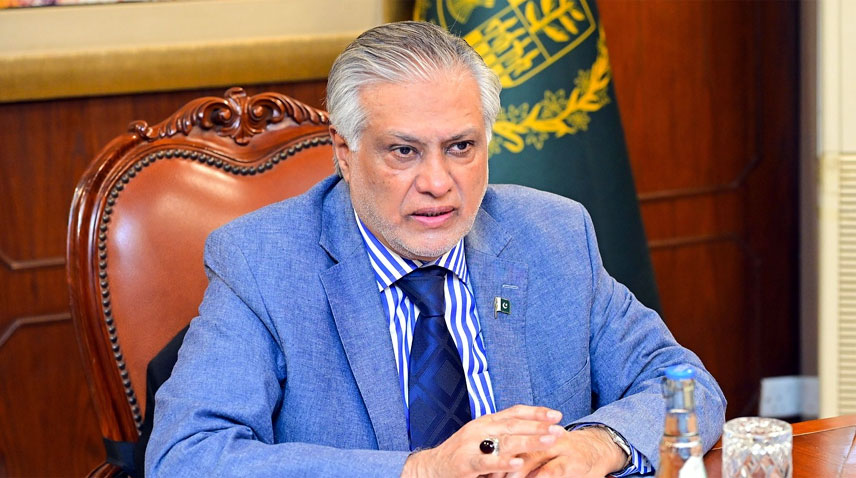
Pakistan’s Deputy Prime Minister and Foreign Minister, Ishaq Dar, has welcomed the decision by the Lloyd’s Market Association’s Joint War Committee to remove Pakistan from its list of regions classified as high-risk for war insurance. The announcement marks a significant development for the country’s maritime and trade sectors and is being viewed as a positive sign of increasing international confidence in Pakistan’s security and economic environment.

Sharing his reaction on the social media platform X, Ishaq Dar described the decision as an important milestone that reflects the international community’s growing trust in Pakistan. He said the move demonstrates recognition of the country’s improving security situation and its continued efforts to strengthen economic stability and regional connectivity.

The removal of Pakistan from the war risk insurance list is expected to provide several economic benefits. Ships entering Pakistani ports will no longer face the additional insurance premiums that are typically imposed on vessels operating in areas considered vulnerable to conflict or instability. As a result, shipping companies are likely to experience lower operational costs, making maritime trade with Pakistan more cost-effective and attractive.

According to Ishaq Dar, reduced insurance expenses are expected to lower overall shipping costs, which will benefit both importers and exporters. Businesses engaged in international trade may see reduced transportation expenses, helping Pakistani products become more competitive in global markets while also decreasing the cost of imported goods. These developments could contribute to increased trade activity and support the country’s broader economic growth.

The Deputy Prime Minister emphasized that the decision is not only an economic achievement but also a reflection of Pakistan’s improving international image. He noted that the country’s efforts to maintain stability, enhance security, and build stronger relations with international partners have helped restore confidence among global institutions and businesses.

Ishaq Dar also expressed appreciation to the Lloyd’s Market Association for its constructive engagement throughout the review process. He acknowledged the organization’s professional approach and thanked its Joint War Committee for carefully assessing the situation before making its decision. He said the outcome reflects a balanced evaluation based on changing ground realities and demonstrates confidence in Pakistan’s progress.

Industry experts believe that the removal of Pakistan from the war risk list could encourage greater commercial shipping activity at the country’s ports, including Karachi, Port Qasim, and Gwadar. Lower insurance costs may also attract more international shipping lines and investors, strengthening Pakistan’s position as an important regional trade hub.

The development is expected to complement the government’s ongoing efforts to improve trade, attract foreign investment, and boost economic recovery. Reduced logistics costs could benefit multiple sectors of the economy, including manufacturing, agriculture, and exports, while creating a more favorable environment for business and investment.

Overall, the decision by the Lloyd’s Market Association’s Joint War Committee is being regarded as a major positive step for Pakistan. It not only reduces financial burdens on international shipping but also sends a strong message that the country’s security and business environment are gaining international recognition. Government officials hope this milestone will further enhance investor confidence, promote trade, and contribute to long-term economic development.

Similar Posts

  • | |

    Pakistan increases Diyat amount by 97% to over Rs….

    The federal government has significantly increased the value of diyat (blood money) for the fiscal year 2026-27, setting the amount at more than Rs. 19 million due to a sharp rise in silver prices. The new value represents an increase of nearly 97 percent compared to the previous year. According to a notification issued by the Ministry of Finance, the official value of diyat has been fixed at Rs. 19,352,390 in accordance with the provisions of the Pakistan Penal Code (PPC), 1860. Under Pakistani law, diyat refers to the compensation paid by an offender to the heirs of a person killed in a criminal case. The amount is determined based on the value of 30,630 grams of silver, as outlined in Section 323 of the PPC. The latest increase is mainly linked to the significant rise in silver prices. The diyat amount for the fiscal year 2025-26 was Rs. 9,828,670, meaning the new figure has almost doubled within one year. The value of diyat has continued to rise in recent years due to fluctuations in precious metal prices. For the fiscal year 2023-24, the amount was fixed at Rs. 6,757,902, which was already a 56 percent increase from Rs. 4,318,524 in 2022-23. Section 323 of the Pakistan Penal Code states that courts must determine the diyat amount while considering Islamic injunctions from the Quran and Sunnah, as well as the financial circumstances of both the convicted person and the victim’s heirs. However, the amount cannot be lower than the value of 30,630 grams of silver. The law also requires the federal government to announce the value of silver through an official notification each year. This declared value becomes the basis for calculating the minimum diyat amount for that financial year. The increase has renewed discussion over the method used to calculate blood money. In July 2025, a proposed amendment was introduced in the Senate suggesting that the minimum diyat calculation should be changed from 30,630 grams of silver to either 2,000 grams of gold or one-fourth of the assets owned by the convicted person. The latest notification highlights how changes in precious metal markets can directly affect legal compensation amounts in Pakistan. As silver prices continue to fluctuate, the annual revision of diyat remains an important financial and legal matter affecting victims’ families and the criminal justice system.

  • |

    Shreya Kalra wins Lock Upp season 2 after dramatic finale

    Digital creator and actress Shreya Kalra has emerged as the winner of Lock Upp Season 2, defeating a strong lineup of finalists after an intense grand finale. Television actress Shivangi Joshi finished as the runner-up, while Yogesh Rawat, Shilpa Shinde and Ram Kapoor also reached the final stage of the competition. The finale, hosted by Farah Khan and Riteish Deshmukh, featured several challenging rounds designed to test the contestants’ strategy, resilience and decision-making skills. The finalists also faced the Janta Ki Jury segment, where a panel of 25 audience members questioned them about their gameplay, relationships inside the house and controversies that unfolded during the season. Kalra’s victory marked the end of a journey filled with emotional moments, heated confrontations and controversial incidents that kept viewers engaged throughout the season. From the beginning of the competition, she established herself as one of the strongest contestants, earning both praise and criticism for her outspoken personality. Originally from Indore, Madhya Pradesh, Shreya Kalra first gained popularity as a digital content creator before expanding her career into acting, podcasting and reality television. Her growing online fan base helped her become one of the most recognizable contestants when she entered Lock Upp Season 2. One of the earliest moments that drew attention came during the premiere episode when Kalra confronted fellow contestant Ram Kapoor over remarks he had made in the past. The exchange quickly became one of the season’s most discussed moments and set the tone for her fearless approach inside the competition. As the weeks progressed, Kalra found herself involved in several arguments with contestants including Yogesh Rawat, Akanksha Choudhary, Dheeraj Dhoopar and Sufi Motiwala. While these clashes often divided viewers, they also kept her at the center of the show’s biggest storylines. Among the season’s most controversial incidents was a conversation in which Kalra disclosed fellow contestant Akanksha Chamola’s sexual orientation. Kalra later claimed she revealed the information after Akanksha had filed a chargesheet against her inside the game. The incident sparked widespread debate among viewers, with many questioning issues related to privacy, consent and personal boundaries. Kalra also faced backlash for making personal remarks about actor Harshad Chopda during the season. Despite the criticism, she continued to survive eliminations and remained one of the most talked-about contestants until the finale. Throughout the competition, Shreya balanced emotional moments with strategic gameplay, building alliances while also standing firm during conflicts. Her determination, confidence and willingness to express her opinions helped her maintain a strong presence inside the house. After weeks of challenges, rivalries and public scrutiny, Kalra was ultimately crowned the winner of Lock Upp Season 2. Her victory concluded a season packed with drama, controversy and high-stakes competition, while runner-up Shivangi Joshi and the other finalists also earned praise for their performances throughout the reality show.

  • | |

    NSPP conducts 5th three-day directors’ training …

      LAHORE: The Executive Development Institute (EDI) of the National School of Public Policy (NSPP), Lahore, successfully conducted the fifth course of its three-day Directors’ Training Program (DTP) for State-Owned Enterprises (SOEs) from August 19 to 21, 2026. The training initiative was approved by the Securities and Exchange Commission of Pakistan (SECP) and focused on enhancing corporate governance, leadership and institutional performance within SOEs. A total of 21 participants from across Pakistan attended the program, representing federal and provincial governments as well as the private sector. Participants included officials and executives from the Ministry of Industries and Production, SECP, Pakistan Civil Aviation Authority, Pakistan Airports Authority, NESPAK, PASSCO, Northern Power Generation Company Limited, WAPDA, Water and Sanitation Services Company Haripur, Punjab Mineral Company, Punjab Police, Universal Service Fund, Pakistan Kidney and Liver Institute and Research Center, and Lahore Development Authority. Rector NSPP Mr. Farhan Aziz Khawaja welcomed the participants and highlighted the importance of strengthening corporate governance through quality professional training. He said the program aimed to establish a new benchmark in governance training with the support of SECP. He also emphasized the importance of transparency, accountability and responsible leadership in public-sector organizations. Dr. Naveed Elahi, Dean EDI, provided an overview of the training program and explained its focus on improving SOE governance and performance through effective leadership. He said the course addressed contemporary governance requirements, including directors’ legal responsibilities, board effectiveness, risk management and ethical decision-making. He encouraged participants to actively engage in case studies, simulations, discussions and networking opportunities throughout the training. The program featured a distinguished panel of guest speakers, including Mr. Abdul Rehman Warraich former SECP Commissioner; Dr. Ishrat Hussain, former Advisor to the Prime Minister; Mr. Kashif Ahmad Noor Military Accountant General; Mr. Farhan Aziz Khawaja, Rector NSPP/DG CSA; Dr. Irum Saba Director, IBA Karachi; Mr. Muhammad Anwar Sheikh retired Federal Additional Secretary, Finance Division; Mr. Mairaj A. Ariff, former Director General, NIPA Quetta; Dr. Kashif Zafar Dean-SST, UMT Lahore; Mr. Imtiaz Mahmood Company Secretary, SNGPL; Mr. Tariq Bajwa former Governor State Bank of Pakistan and Ex-SAPM on Finance; and Mr. Salman Amin Member, Competition Commission of Pakistan. The three-day course covered a wide range of topics, including principles of corporate governance, SOE reforms and legal frameworks, government stewardship, directors’ selection and performance evaluation, external and internal audits, audit committees, organizational culture, Islamic finance, financial risk governance, public service obligations, competitive neutrality, business planning, cybersecurity, digitization, reporting and disclosure, board composition and structure, as well as board simulations and case studies. During the closing session, Rector NSPP thanked the participants for their active participation and valuable contributions. He also appreciated the efforts of the Dean EDI and his team in successfully organizing the program. Participants showed keen interest throughout the course and actively participated in question-and-answer sessions. At the conclusion of the training, Rector NSPP, along with the Dean EDI, distributed certificates among the participants, formally marking the successful completion of the fifth Directors’ Training Program for State-Owned Enterprises.

  • | | |

    Iran and Oman discuss temporary shipping corridor …

    Iran and Oman are discussing a proposal to establish a temporary joint shipping corridor through the Strait of Hormuz one of the world’s most important routes for oil and gas shipments. The proposal was discussed during a meeting in Tehran between Omani Foreign Minister Badr Al-Busaidi and Iranian Foreign Minister Abbas Araghchi. A joint statement described their talks as constructive and said both sides discussed developments surrounding the strategic waterway. The discussions come as tensions remain high between Iran and the United States. US President Donald Trump said Tuesday that mines had been removed or destroyed in international waters around the Strait of Hormuz. He warned that any vessel found placing new mines would face immediate military action. Trump also said the United States was closely monitoring the waterway and maintained a zero-tolerance policy toward further mine placement. The Strait of Hormuz is a crucial global energy route with roughly one-fifth of the world’s crude oil and liquefied natural gas flows passing through it before the conflict. Shipping activity has fallen sharply during the current crisis, with only two commodity vessels reportedly using the waterway on Monday. Iran has also communicated its position on the strait through Pakistan. Iranian officials reportedly want provisions of an earlier Islamabad memorandum to be implemented including arrangements requiring safe passage for commercial shipping and consultation with Oman over the waterway’s future management. Meanwhile, Washington has expanded economic pressure on Tehran. US Treasury Secretary Scott Bessent announced additional sanctions targeting Iranian individuals entities and vessels warning that countries continuing to support Iran’s economy could face consequences. China has criticized the new US measures saying unilateral sanctions could disrupt global economic and financial stability. Beijing is a major buyer of Iranian oil and has urged Washington and Tehran to return to negotiations. The United States has also warned that military action against Iran remains possible. Defence Secretary Pete Hegseth said Washington would use military force if necessary and did not rule out further strikes around Iran or the Strait of Hormuz. Iran, meanwhile, has promised to respond to the expanded sanctions and warned that threats to its infrastructure could trigger attacks against US interests and regional energy routes. The diplomatic discussions involving Iran, Oman and Pakistan could therefore become important for restoring commercial shipping through the Strait of Hormuz. However, continued military threats, sanctions and tensions between Tehran and Washington remain major obstacles to a lasting agreement.

  • | |

    Man climbs electricity pole in Peshawar to steal P…

      A man climbed an electricity pole in Peshawar in an alleged attempt to steal power cables, according to the Peshawar Electric Supply Company (PESCO). The unusual incident took place in the Shahibagh Sub-Division area, where electricity supply had already been suspended because maintenance work was underway. According to PESCO officials, the man climbed onto the pole while power was switched off in the area. The incident reportedly occurred during a period when electricity lines were not operational due to repair and maintenance work being carried out by the power distribution company. PESCO said that the man appeared to have taken advantage of the temporary suspension of electricity supply. He reportedly climbed the pole with the intention of removing electrical wires. The incident was noticed by people in the area, who alerted the relevant authorities. Officials reached the location and took action to prevent the situation from becoming more serious. The man was eventually brought down safely from the electricity pole. The incident occurred in the Shahibagh Sub-Division, an area served by PESCO as part of its electricity distribution network in Peshawar. Authorities said that the power supply had been deliberately shut down because repair work was being conducted on the network. The temporary power outage may have created an opportunity for the suspect to attempt the alleged theft. Electricity cables and other equipment belonging to power distribution companies are frequently targeted by thieves because the materials can be sold as scrap or for their metal value. However, climbing an electricity pole can be extremely dangerous even when the power supply has been switched off. Electrical systems can contain residual risks, and unexpected restoration of electricity can also create a serious threat to anyone working on or near power lines. PESCO officials did not immediately provide further details about whether the man had successfully removed any cables before being stopped. It was also not immediately clear whether a formal case had been registered against him or what legal action would be taken. The incident highlights the challenges faced by electricity distribution companies in protecting their infrastructure from theft and illegal interference. Power cables, transformers and other equipment are essential for maintaining electricity supplies, and their theft can cause additional outages and financial losses. Authorities regularly warn members of the public against approaching electricity poles, wires and other electrical equipment without proper training or authorisation. Such actions can result in serious injuries or even death. Residents in the area reportedly alerted officials after noticing the man on the pole. His safe removal prevented a potentially dangerous situation from escalating. PESCO has been carrying out maintenance and repair activities in different parts of its service area to improve the reliability of electricity supplies. Planned outages are sometimes necessary to allow technical teams to safely work on power lines and related infrastructure. Officials have advised consumers to cooperate with maintenance schedules and report suspicious activity involving electricity infrastructure to the relevant authorities. The Peshawar incident serves as a reminder that electricity infrastructure remains vulnerable to theft, particularly during planned outages. It also demonstrates the dangers associated with attempting to interfere with electrical equipment. While the man was successfully brought down from the pole, authorities are expected to investigate the incident further and determine whether he intended to steal cables and whether any electricity infrastructure was damaged during the attempt.

  • | |

    Ishaq Dar to attend Jerusalem ministerial meeting …

    Deputy Prime Minister and Foreign Minister Ishaq Dar will travel to Jordan to participate in a ministerial meeting focused on the worsening situation in occupied Jerusalem, reaffirming Pakistan’s diplomatic support for the Palestinian cause. According to the Foreign Office, the meeting, scheduled for August 5, will bring together foreign ministers from Arab League member states and several Islamic countries to discuss recent developments in Jerusalem and coordinate a unified response to the evolving situation. The Foreign Office said Dar is attending the meeting at the invitation of Jordan’s Deputy Prime Minister and Foreign Minister Ayman Safadi. During the visit, participating foreign ministers are also expected to meet Abdullah II to discuss regional developments and ongoing efforts aimed at addressing the challenges facing the Palestinian people. On the sidelines of the conference, Ishaq Dar is expected to hold bilateral meetings with several foreign ministers to exchange views on regional issues, including the humanitarian situation in Palestine and broader Middle East developments. The Foreign Office described Pakistan’s participation as a reflection of its longstanding and principled support for the Palestinian people. It reiterated Pakistan’s position in favor of an independent, sovereign and contiguous State of Palestine based on the pre-1967 borders, with East Jerusalem (Al-Quds Al-Sharif) as its capital. Pakistan has consistently condemned actions that it says threaten the historical and legal status of Islamic and Christian holy sites in Jerusalem, including repeated incursions into the Al-Aqsa Mosque compound.

Leave a Reply

Your email address will not be published. Required fields are marked *