pdic lost p107b
| |

PDIC lost P107B. Why is only P57B in the 2027 proposed budget — and not guaranteed?

MANILA, Philippines – The government took P107.23 billion from the Philippine Deposit Insurance Corporation (PDIC) in 2024, money that had formed part of the resources of the state corporation responsible for protecting bank depositors when banks fail.

Now, as the government prepares to replenish that fund, it’s setting aside only P57 billion in the proposed 2027 budget — and even that amount is not guaranteed to reach PDIC.

The proposed P57-billion restoration is lodged under Unprogrammed Appropriations (UA), meaning it will only be released if there are excess revenues or collections identified by the government. (READ: 1Sambayan urges DOF, Treasury to return P107B to PDIC)

The Department of Budget and Management (DBM) said Monday, August 17, that restoring the entire P107.23 billion in one year would eat into limited fiscal space and could displace funding already programmed for other priorities.

That means the P57-billion figure appears to reflect how much the national government believes it can afford to return for now, rather than what PDIC actually needs.

PDIC lost P107B. Why is only P57B in the 2027 proposed budget — and not guaranteed?

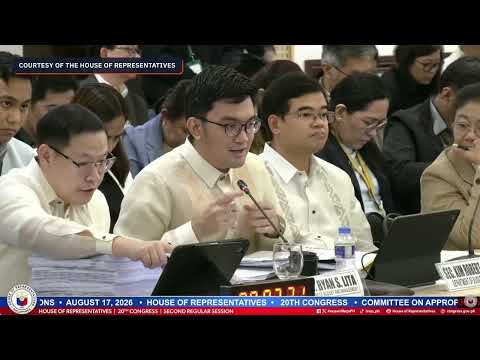
During the opening hearing on the proposed 2027 budget, LPGMA Representative Allan Ty pressed economic managers on that point.

Finance Secretary Frederick Go confirmed that the Department of Finance itself had requested the original P107.23-billion remittance pursuant to a special provision of the 2024 budget. The PDIC board subsequently approved the transfer.

Go, who was not yet the finance secretary at the time, said his understanding was that the money came from the “unrestricted” portion of PDIC’s Deposit Insurance Fund and had been considered excess to what the corporation needed to cover insured depositors in the event of bank failures. 

PDIC itself, however, has maintained that the depletion has not left it unable to insure bank deposits. PDIC president and CEO Roberto Tan said the corporation continued to meet its minimum targets despite the smaller capital base and was ensuring that the transfer would not impair its ability to cover both expected and unexpected bank failure, according to a report by Manila Bulletin.

But when Ty asked whether returning just P57 billion was acceptable to PDIC, officials seemed a bit less sure.

Bangko Sentral ng Pilipinas Deputy Governor Zeno Abenoja, asked because the Bangko Sentral governor chairs the PDIC board, said: “We will have to confer with PDIC. Although we are chair of the board, this is something that the PDIC is looking into.”

Ty then turned to Go, who sits as vice chairman on PDIC’s board.

“I think it’s a question that really should be asked of perhaps not us,” Go initially replied.

“Mr. Secretary, you sit [on] the board of PDIC,” Ty retorted.

Go then deferred to the DBM’s assessment of fiscal space, saying that if P57 billion was the figure the budget department arrived at, then “that’s the fiscal space that they can afford to return to the PDIC this year.”

Must Read

[Vantage Point] How the treasury drained PDIC’s shield – right when we needed it strongest


[Vantage Point] How the treasury drained PDIC’s shield – right when we needed it strongest

DBM Secretary Kim Robert De Leon likewise told lawmakers that government could not necessarily restore the entire amount at once because the money would have to come from excess revenues. He said the Executive had contemplated restoring it in “at least two tranches” if the Supreme Court requires the government to return the funds.

In a press statement released after De Leon’s comment, DBM said the remaining P50.23 billion has no fixed timetable for restoration. Its treatment would depend on a final court ruling or legal directive, government finances, revenue performance, and succeeding national budgets.

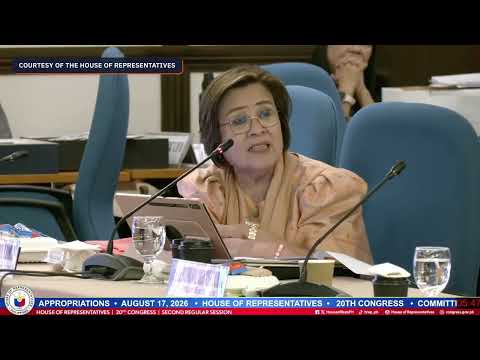
ML party-list Representative Leila de Lima separately questioned why the P57 billion was placed in UA at all when its beneficiary and amount were already identified.

PDIC lost P107B. Why is only P57B in the 2027 proposed budget — and not guaranteed?

Bakit po hindi ito nakalagay sa programmed appropriations na lang (Why wasn’t this placed in programmed appropriates instead)?” De Lima asked, while raising “very serious” constitutional questions over the use of unprogrammed funds.

De Leon said the P57 billion is merely a standby provision because, unlike in the PhilHealth case, there is currently no Supreme Court directive ordering the return of PDIC’s money. – Rappler.com

Similar Posts

  • | | |

    US-Pakistan trade surpasses $8 billion, says Natal…

    US Chargé d’Affaires in Pakistan Natalie Baker has said that bilateral trade between the United States and Pakistan exceeded $8 billion in 2025. Baker visited Lahore on August 11 and 12, where she held meetings with Punjab Chief Minister Maryam Nawaz Sharif, Adviser Ali Dar, business leaders and technology experts. According to the US Embassy, discussions during the visit focused on artificial intelligence (AI), higher education, innovation, trade and investment opportunities between the two countries. Baker said the United States remained committed to working with Pakistan’s private sector, universities, innovators and government institutions to strengthen economic and technological cooperation. She noted that Pakistan’s technology sector was expanding rapidly, creating opportunities for greater collaboration in trade, investment, AI and emerging technologies. The US diplomat highlighted software development, digital services and artificial intelligence as areas with significant potential for cooperation between the two countries. Emphasising the importance of stronger commercial ties, Baker said bilateral trade had crossed the $8 billion mark in 2025. She also stressed the potential of US educational expertise to create new opportunities for Pakistani students while contributing to stronger economic ties between Pakistan and the United States. Baker’s Lahore visit focused on exploring new areas of partnership and strengthening existing economic and technological links. Discussions with government officials, business representatives and technology experts also highlighted the growing role of innovation and digital industries in Pakistan’s economy. The US diplomat said continued cooperation between the two countries could help expand investment, support technological development and create new opportunities for businesses and students in both countries.

  • | | |

    Pakistani envoy highlights investment opportunitie…

    Pakistan’s Ambassador to the United States, Rizwan Saeed Sheikh, has held a series of meetings with American business leaders. The discussions focused on expanding economic and investment ties between Pakistan and the United States. The ambassador encouraged US investors to explore opportunities in Pakistan. He particularly highlighted the country’s mining and surgical instruments sectors. Sheikh said American investment could play an important role in developing Pakistan’s mineral resources. He stressed the need to add greater value to these resources through modern technology and investment. The ambassador also highlighted opportunities in Pakistan’s mineral sector. He said stronger cooperation with American companies could help improve processing and value addition. During the meetings, Sheikh welcomed an ongoing $200 million joint venture related to the export of Pakistani pink salt. He described such projects as an important step towards expanding trade and investment links between the two countries. He also called for increased US investment in Pakistan’s surgical instruments industry. The sector has significant potential for growth, particularly through modern production methods, advanced technology and international market access. As part of his engagements, Sheikh visited a facility in Naperville involved in the finishing, packaging and distribution of Pakistani surgical instruments. During the visit, he discussed the need to further develop the sector. He said Pakistani businesses could benefit from modern technology, better training and improved technical skills. The ambassador stressed that investment in skills and technology was important for increasing the quality and competitiveness of Pakistani surgical products. Sheikh also met officials of the Pakistan-American Chicago Land Chamber of Commerce. The meeting focused on strengthening commercial links between Pakistani and American businesses. He encouraged closer interaction between business communities in both countries. He said stronger business-to-business connections could help identify new investment opportunities and expand bilateral trade. The ambassador’s engagements form part of efforts to promote Pakistan as an attractive destination for foreign investment. The focus on minerals, surgical instruments and other export-oriented sectors is aimed at creating stronger commercial partnerships with US businesses.

  • | | | | | |

    ABS-CBN talks up its ‘new’ future, but its new owners weren’t in the room

    (1st UPDATE) Hours after Wednesday’s stockholders’ meeting, ABS-CBN discloses that its board had approved the corporate changes needed to accommodate the P6 billion in fresh equity that could substantially alter who owns the company

  • |

    Electricity tariff may rise by Rs1.34 per unit under quarterly adjustment

    ISLAMABAD: Electricity consumers may face higher power bills for the next three months as the National Electric Power Regulatory Authority (Nepra) considers a proposal seeking to recover an additional financial burden from consumers through the quarterly tariff adjustment mechanism. Nepra has reserved its decision on a request submitted by electricity distribution companies seeking to pass on around Rs34 billion in additional costs to consumers. According to sources, the proposed adjustment could increase the electricity tariff by approximately Rs1.34 per unit each month for three months. If approved, the additional charge would be reflected in consumers’ electricity bills during the applicable period. The quarterly tariff adjustment is used to account for changes in various costs incurred by power distribution companies, including fluctuations in generation and other sector-related expenses. The adjustment is subsequently passed on to consumers after regulatory scrutiny. Sources said Nepra has not yet issued its final decision on the request. The regulator will examine the financial details and relevant data submitted by the distribution companies before determining whether the proposed increase should be approved in full, partially accepted or rejected. The final decision is expected to clarify the exact amount to be recovered from consumers and the period over which the additional charges will apply. Until Nepra announces its decision, the proposed Rs1.34 per-unit increase remains under consideration and should not be treated as a final tariff hike.

Leave a Reply

Your email address will not be published. Required fields are marked *