chiang rai governor

Chiang Rai Governor Launches 2026 Trade Push to Boost Local Businesses

CHIANG RAI – The northern provinces of Chiang Rai, Phayao, Phrae, and Nan are teaming up to launch a major trade and investment project for the 2026 fiscal year. This exciting move will help local business owners grow their skills and find new markets both at home and abroad. The plan aims to build strong business networks across the Upper Northern region.

Chiang Rai Governor Chucheep Pongchai proudly opened the press event on July 10, 2026, at the Central Chiang Rai shopping center. Local government leaders, private business owners, and members of the media gathered to hear the details of this regional teamwork.

Key Takeaways

  • Officials expect the new trade project to generate at least 20 million baht in sales.
  • Organizers aim to create a minimum of 20 successful business matches between sellers and investors.
  • The campaign will feature over 180 merchant booths across two major shopping events in Nan and Bangkok.

The joint effort highlights the unique strengths of the four northern provinces. Officials want to promote local culture, tourism, quality farming, and special handmade crafts to a wider audience. This strategy includes a strong focus on products that have special geographic indication (GI) tags.

Leaders hope to push small and medium businesses into larger corporate supply chains. By connecting small local sellers with big buyers and investors, the region can build a much stronger economy. This smart approach will help drive long-lasting, creative growth for local families.

Upcoming Business Events

The project features two main shopping and business events this year. First, the “Northern Best Deal” market will run from July 15 to 19, 2026. This large border trade event takes place at Nong Nam Khrok in Nan province.

The second major event, called the “Northern Business Hub,” brings the charm of the mountains to the big city. It will take place from July 29 to August 2, 2026, at The Mall Lifestore Bangkapi in Bangkok.

Together, these two trade shows will host more than 180 merchant booths. Shoppers can easily find local foods, rich coffee, tea, woven clothes, and unique regional goods. Business matching sessions will also take place to help merchants meet buyers and importers from across the country.

There will also be fun activities and chances to win great prizes at both shows. Visitors can enjoy live music from famous artists and traditional northern cultural dances. Shoppers might even score huge discounts during “golden minute” sales that offer up to 80% off.

The northern provincial group expects these exciting events to create new jobs and boost local income. Officials invite tourists, investors, and everyday shoppers to support these local sellers. Buying these quality goods directly helps the regional economy grow steadily.

With strong teamwork, these four provinces are truly ready to step into the spotlight. This new trade project clearly proves that local northern products have a very bright future on the national stage. Everyone involved looks forward to seeing the local economy thrive and create lasting wealth in 2026 and beyond.

Trending News:

Chiang Rai Launches East-Northern Industrial Fair 2026

Chiang Rai Railway Station Makes Steady Progress: Massive Rail Project Hits 66% Completion
 

Similar Posts

  • | | |

    Pakistan expects US response on $10bn stabilisatio…

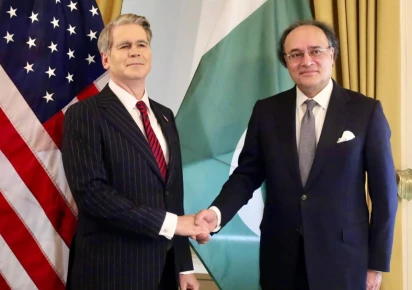
    ISLAMABAD: Pakistan expects to receive a response from the United States within the next few months on its request for a proposed $10 billion bilateral exchange stabilisation facility. The proposed arrangement is aimed at strengthening confidence in Pakistan’s currency and foreign exchange market. It could also help the country improve access to international capital markets and attract more private investment. Adviser to the Finance Minister Khurram Schehzad said discussions between Pakistan and the US over the proposed facility had been constructive. He said the facility could act as a financial backstop for Pakistan and send a positive signal to investors about the stability of the country’s currency market. Pakistan formally approached US Treasury Secretary Scott Bessent last month for the proposed Bilateral Exchange Stabilisation Support Facility. The arrangement could have a maturity period of up to five years. Finance Minister Muhammad Aurangzeb has clarified that the proposed $10 billion arrangement should not be viewed as a conventional loan or credit line. He said the main objective was to provide confidence regarding exchange-rate and currency stability. Such a signal, he added, could help Pakistan return to international markets to raise funds. The finance minister said the request was being considered by the US Treasury Department and that progress was expected by September. If approved, the facility could strengthen Pakistan’s foreign exchange reserves and ease pressure on the rupee. It could also reduce the country’s dependence on multilateral financing. The proposed support comes as Pakistan continues efforts to improve its external financial position under an International Monetary Fund programme. The IMF programme has required the government to implement difficult fiscal and monetary measures, including higher taxes, spending controls and structural reforms. Pakistan has also been seeking to improve its economic and diplomatic engagement with Washington. Its recent diplomatic role in regional developments has increased expectations that stronger relations with the United States could lead to greater economic cooperation. Meanwhile, Pakistan’s credit outlook received a boost after Moody’s upgraded its sovereign rating from Caa1 to B3. However, the rating agency maintained that Pakistan continues to face challenges related to governance, rule of law, corruption control and government effectiveness. Although the B3 rating represents an improvement, it remains well within the speculative category and is several levels below investment grade.

  • | | |

    Pakistan unveils major construction reforms to boo…

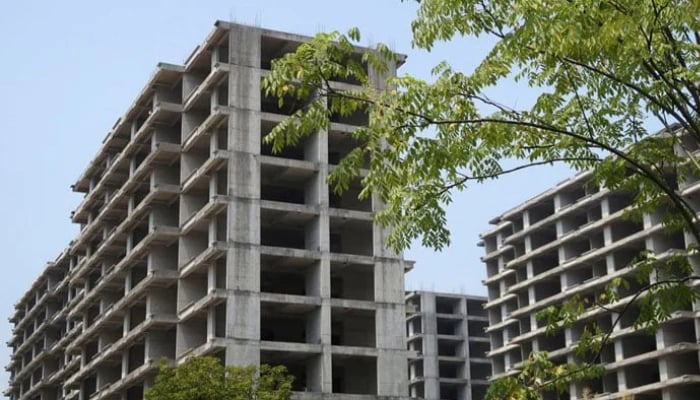
    ISLAMABAD: The federal government is preparing a wide-ranging reform package aimed at revitalising Pakistan’s construction industry, improving regulatory oversight and attracting greater investment in modern infrastructure. The proposed measures include the establishment of a Construction Industry Development Board (CIDB), consideration of a specialised Construction Development Bank (CDB), targeted tax reforms and changes to import and export policies. The proposals were discussed during a high-level meeting chaired by Federal Minister for Economic Affairs and Establishment Division Senator Ahad Khan Cheema. The meeting brought together senior government officials, representatives of the Construction Association of Pakistan and other stakeholders to examine the sector’s financial, regulatory and operational challenges. Under the proposed framework, the CIDB would promote the development of the construction industry while also regulating contractors, consultants and industry standards. The body would include representatives from both the public and private sectors and would seek to establish more consistent construction standards across the country. Senator Cheema said the government and the Construction Association of Pakistan were in agreement over the need for a dedicated regulatory and development body. The proposed framework will be presented to Prime Minister Shehbaz Sharif for approval. The government also plans to introduce targeted tax incentives and rationalise import and export policies to encourage the use of modern construction technologies and strengthen local production capacity. In a significant move to improve the quality and durability of public infrastructure, the standard Defect Liability Period for public development projects is expected to increase from one year to three years, with a longer-term plan to extend it to five years. The proposed reforms would also increase accountability for consultants. Unlike contractors, who can face penalties for poor performance, consultants currently have limited direct legal accountability. Under the new framework, consultants could be subjected to regulatory oversight and held financially and legally responsible for design defects and technical errors. The government is also examining the construction industry’s difficulties in obtaining financial and performance guarantees. Senator Cheema directed Minister of State for Finance Bilal Azhar Kayani to consult the State Bank of Pakistan and Pakistan Banks Association on these issues and assess the feasibility of establishing a dedicated Construction Development Bank. The government says the reforms are intended to ensure that public infrastructure projects deliver better value for money, remain durable and meet higher technical standards. Officials believe stronger regulation and accountability could reduce disputes, improve construction quality and bring Pakistan’s industry closer to international standards.

  • |

    PSX rallies above 181,000 as investors return to key sectors

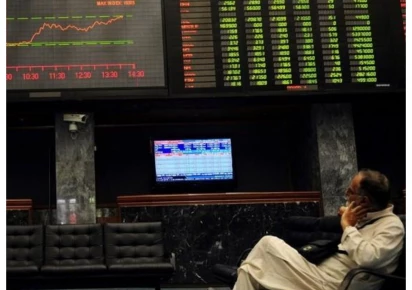
    KARACHI: Positive momentum returned to the Pakistan Stock Exchange (PSX) on Monday as investors stepped up buying activity across major sectors, pushing the benchmark KSE-100 Index above the 181,000-point mark during the opening phase of trading. At around 9:40am, the benchmark index was trading at 181,066.59 points, showing an increase of 961.98 points, or 0.53%, compared with the previous close. The early-session recovery reflected renewed investor interest in large-cap and index-heavy companies. Buying was particularly visible across automobile assemblers, cement, commercial banking, fertiliser, oil and gas exploration, oil marketing companies (OMCs), power generation and refinery sectors. Among the major stocks supporting the upward movement were Mari Petroleum (MARI), Oil and Gas Development Company (OGDC), Pakistan Petroleum Limited (PPL), Pakistan Oilfields Limited (POL), Hub Power Company (HUBCO), Habib Bank Limited (HBL), MCB Bank, Meezan Bank Limited (MEBL) and United Bank Limited (UBL). Most of these index-heavy shares traded in positive territory during the initial hours. The recovery came after a difficult week for the domestic equity market. The KSE-100 Index had closed the previous week at 180,104.61 points, declining by 1,325.41 points, or 0.7% on a week-on-week basis. Market sentiment had been affected by heightened geopolitical uncertainty, particularly concerns over the future of the US-Iran ceasefire and the potential impact of regional tensions on international energy supplies. Investors also remained cautious over developments affecting shipping activity around the Strait of Hormuz and the Red Sea, both of which are critical routes for global energy and trade. Despite the pressure on equities, Pakistan’s domestic fiscal position and external-sector indicators had provided some support to investor confidence. However, geopolitical developments continued to dominate trading decisions, particularly because any prolonged disruption to oil supplies could raise import costs and increase inflationary pressures. Global markets remain cautious The cautious mood was also evident across international markets on Monday. Asian equities moved largely sideways as investors monitored developments in the Middle East and assessed the implications for energy prices and global inflation. Oil prices recorded significant gains during the previous week as uncertainty surrounding efforts to end the Iran conflict increased concerns about potential supply disruptions. Investors remained particularly focused on developments concerning the strategic Strait of Hormuz, where tanker traffic had remained disrupted amid the continuing tensions. Iran on Saturday called on the United States to acknowledge defeat, while US President Donald Trump warned Americans that higher gasoline prices could persist as long as the conflict continued. The situation in the wider region also remained volatile. In southern Lebanon, Israeli strikes on Saturday killed at least 11 people, according to the Lebanese health ministry. The casualties came amid renewed tensions following an earlier US-mediated framework aimed at easing hostilities between Lebanon and Israel. Oil prices remain elevated Crude oil prices remained at elevated levels on Monday after recording strong gains during the previous week. Brent crude was trading around $88.50 per barrel, little changed during the session after climbing approximately 6% last week. Meanwhile, US West Texas Intermediate (WTI) crude slipped around 0.3% to $82.12 per barrel, following a weekly gain of about 5.4%. Higher international oil prices remain a key concern for oil-importing economies such as Pakistan because a sustained increase can widen the import bill, put pressure on the current account and contribute to domestic inflation. For investors at the PSX, developments in global energy markets are particularly important because oil and gas companies have significant representation in the benchmark index, while higher fuel costs can also affect the profitability of other industries. Asian equities mixed In regional markets, MSCI’s broadest index of Asia-Pacific shares outside Japan was broadly flat on Monday. Japan’s Nikkei 225, meanwhile, gained around 0.4%. The mixed performance reflected investor caution as markets continued to assess the potential economic consequences of prolonged geopolitical tensions. Concerns over energy prices, inflation and interest-rate expectations remained central to global market sentiment. At the PSX, however, the strong opening suggested that domestic investors were willing to look beyond short-term geopolitical concerns and accumulate fundamentally strong stocks. Whether the KSE-100 can sustain its early gains will depend on developments in global oil markets, regional tensions and trading activity in heavyweight sectors as the session progresses.

  • |

    Pakistan, Iran agree to boost bilateral trade to $10 billion

    ISLAMABAD: Pakistan and Iran have reaffirmed their commitment to significantly strengthen economic cooperation by increasing bilateral trade to $10 billion and accelerating efforts to finalize a long-awaited Free Trade Agreement (FTA). The understanding was reached during the 10th meeting of the Pakistan-Iran Joint Trade Committee, held in Islamabad on Tuesday. The session was jointly chaired by Federal Minister for Commerce Jam Kamal Khan and Iranian Minister for Industry, Mine and Trade Dr. Mohammad Atabak, with senior officials from both countries participating in discussions aimed at expanding trade and investment ties. During the meeting, both sides reviewed the current state of bilateral trade and explored practical measures to unlock its full potential. The two countries agreed that stronger economic integration, improved connectivity, and enhanced cross-border cooperation are essential for achieving the ambitious trade target of $10 billion. Speaking on the occasion, Commerce Minister Jam Kamal said Pakistan and Iran enjoy longstanding historical, cultural, and religious ties, but stressed that these relations should now be translated into a robust economic partnership. He emphasized that expanding trade and investment would bring mutual economic benefits and contribute to regional prosperity. The minister underscored the importance of completing the Pakistan-Iran Free Trade Agreement at the earliest opportunity, describing it as a key step toward facilitating commerce between the neighboring countries. He also called for the removal of bottlenecks affecting border logistics, customs procedures, and cargo movement to ensure smoother and faster trade flows. Jam Kamal noted that bilateral trade could be further enhanced through the development of joint border markets, greater use of electronic data interchange systems, and closer coordination between relevant government agencies. He said modernizing trade infrastructure and simplifying customs procedures would help businesses on both sides benefit from increased commercial activity. The Joint Trade Committee also agreed to formulate a practical roadmap aimed at strengthening economic cooperation across multiple sectors. The roadmap will focus on trade facilitation, infrastructure development, logistics, and investment opportunities while encouraging closer collaboration between the public and private sectors. Iranian Minister Dr. Mohammad Atabak described Pakistan as one of Iran’s key long-term strategic trade partners and expressed confidence that bilateral economic relations could expand considerably in the coming years. He highlighted the importance of increasing regional trade and logistics cooperation, particularly by utilizing Pakistan’s Karachi and Gwadar ports to improve connectivity and facilitate the movement of goods. Dr. Atabak also voiced optimism about the early conclusion of the Pakistan-Iran Free Trade Agreement, saying it would create new opportunities for businesses in both countries. He added that cooperation in electricity trade, transport networks, and regional connectivity projects could open new avenues for economic growth and strengthen commercial links across the region.

  • |

    Pakistan sets record with 5,438 companies registered in July

    Islamabad – A new business record has been set in Pakistan with thousands of new companies registered with the Securities and Exchange Commission of Pakistan (SECP) in a single month. Business activity in Pakistan’s corporate sector has witnessed a significant acceleration as the SECP set a new record for the registration of new companies during July. According to official figures, 5,438 new companies were registered across the country in July marking the highest number of registrations recorded in a single month. During the same period, five international companies also established their offices in Pakistan including companies from Malaysia, the United Arab Emirates and China. According to the report, 112 newly registered companies have foreign directors on their boards indicating growing foreign investment and international business interest in Pakistan. The newly registered companies include 3,148 private limited companies while Punjab remained at the top with 2,756 new companies registered. This was followed by Islamabad with 1,053, Sindh with 864, Khyber Pakhtunkhwa with 450, Gilgit-Baltistan with 180 and Balochistan with 135 newly registered companies. IT sector leads new registrations A sector-wise analysis shows that Information Technology (IT) remained the leading sector with 1,008 new companies registered. Other sectors also recorded significant registrations including 845 companies in trading, 638 in services, 348 in construction, 256 in food and beverages, 207 in tourism, 181 in e-commerce, 165 in education, 162 in real estate development and 145 in corporate agriculture. According to business experts, the increasing number of new company registrations reflects growing private-sector investment, business confidence and new economic activity in the country. The rapid growth in registrations in the IT sector is also being viewed as a positive sign for the expansion of Pakistan’s digital economy.

Leave a Reply

Your email address will not be published. Required fields are marked *