
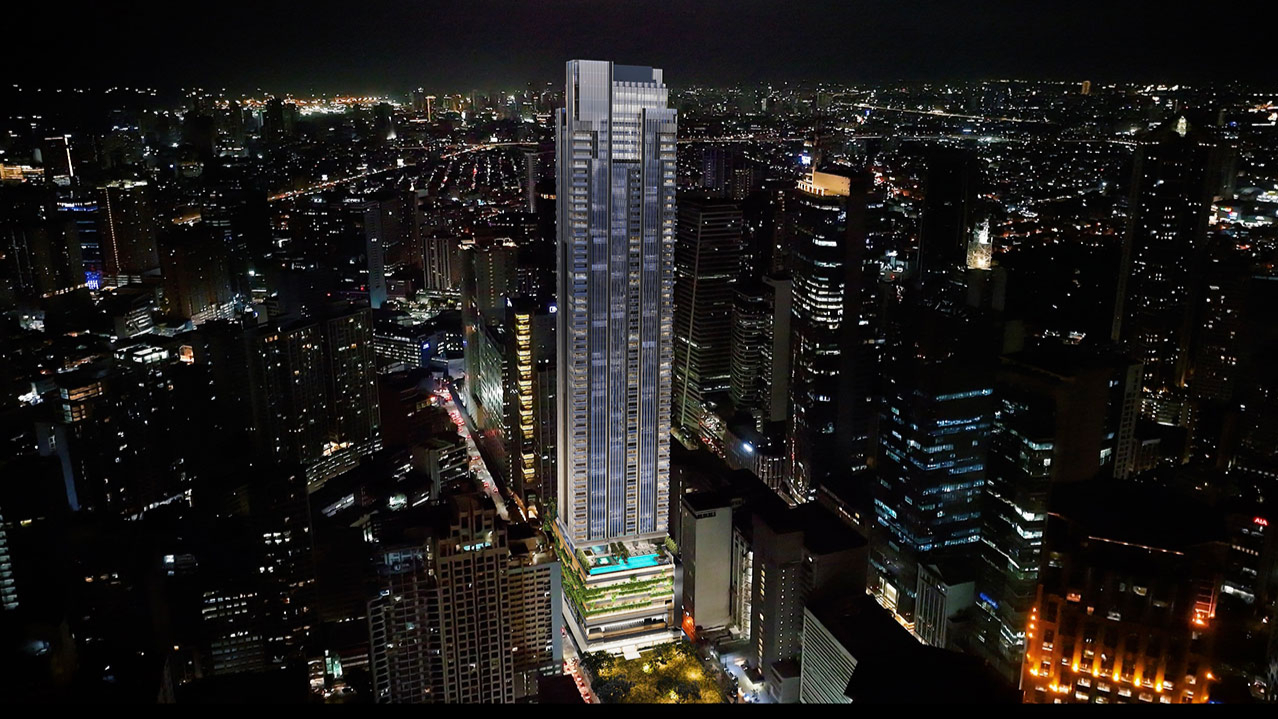
luxury condo resilience
| |

Luxury condo resilience: Half of Ayala’s Laurean buyers staying despite pause

MANILA, Philippines – Ayala Land (ALI) put one of its boldest luxury bets on pause this year. And yet many of the people who had already bought into it are willing to wait it out.

Around half of the buyers of Laurean Residences have chosen to stick with the project, ALI chief operating officer Raquel Cruz said during the property giant’s H1 briefing on Monday, August 10. When the Makati tower was suspended, ALI earlier gave buyers the option to refund or transfer their payments to other Ayala Land developments. (A previous version of this report incorrectly identified the COO as Mikhail Cruz. The error has been corrected.)

ALI president and chief executive officer Margarita Bautista-Dy previously said they could revisit the Laurean project by the middle of 2027, as reported by The Philippine Star

The decision to stay on — despite there being no definite plans yet on when construction will restart — gives evidence that the very top end of the residential market may be proving more resilient than the broader condominium market.

Ayala’s own numbers show the importance of its higher-end segment. Its premium residential sales reservations reached P31.5 billion in the first half, down just 8% year-on-year, while its core segment plunged 38% to P14.9 billion. Cruz said premium demand “continues to be resilient.”

There is also evidence beyond ALI’s projects. Metro Manila ranked third globally for luxury residential price growth in 2025. Luxury home prices in the capital region rose 17.5% year-on-year, behind Dubai’s 25.1% and Tokyo’s 58.5%, according to Knight Frank.

From carpark to P28-billion luxury tower

The spot that is now ground zero for the soon-to-rise Laurean Residences was once the Dela Rosa 2 Carpark, a decidedly less glamorous but daily fixture for people working in the Makati central business district.

The redevelopment began in 2024. Along with the demolition of the parking structure went a portion of the Dela Rosa Elevated Walkway attached to it, breaking a familiar pedestrian route through the CBD. The 1.1-kilometer walkway historically connected Greenbelt toward Makati Medical Center. Through SM and Ayala’s network of malls and walkways, commuters could continue toward the Ayala Station of the Metro Rail Transit Line 3.

For the thousands of commuters who used that route every day, what replaces the old carpark has a lot to live up to.

GREEN. Artist’s rendition of the Dela Rosa Gardens mixed-use redevelopment, which includes an urban park. Photo from Ayala Land

Ayala’s answer is Dela Rosa Gardens, a 1.3-hectare mixed-use redevelopment planned around the new Bank of the Philippine Islands headquarters, Laurean Residences, retail and civic spaces, and a 2,700-square-meter urban park.

Laurean itself was conceived as one of Ayala Land Premier’s biggest Makati bets, with an estimated P28-billion sales value.

The 65-storey tower was planned to contain just 388 residences, ranging from 72-square-meter suites to two- to four-bedroom homes as large as 402 square meters, along with “rare” bi-level villas. More than half a hectare was set aside for club-like exclusive amenities.

In its initial announcement for Laurean, which has since been taken down from Ayala Land’s website, the developer pitched the project as an “urban sanctuary” for a particularly discerning slice of the luxury market. Ayala said Laurean was designed to offer the feel of a private in-city club while remaining right at the heart of Makati’s business district.

And the old walkway? Ayala said Laurean would eventually reconnect to it, with direct access to the Dela Rosa elevated walkway forming part of the project’s pitch on walkability and connectivity.

Buyers initially came quickly. Laurean had already generated around P10.4 billion in presales by the time Ayala broke ground in February 2026, as reported by the Inquirer.  Latest presales figures have since hit P11 billion, ALI confirmed to Rappler as of Tuesday, August 11.

Only months after its strong start, construction and sales were paused.

Ayala blamed worsening uncertainty from the Middle East conflict, saying rising cost pressures and increasingly unpredictable delivery timelines made it difficult to execute Laurean with the certainty it promises customers.

Must Read

[Vantage Point] Ayala Land: The urban machine


[Vantage Point] Ayala Land: The urban machine

ALI trims residential inventory

Laurean aside, ALI has also made progress in working down its broader residential inventory.

The value of its unsold residential stock, excluding Laurean, has fallen steadily from P214 billion in 2024 to P110 billion by June 2026. That is equivalent to about 15 months of inventory, already better than the roughly 18 months Ayala carried before the pandemic.

Still, there is plenty left to sell. In terms of value, about 75% of the remaining inventory is in premium developments.

Ayala launched no residential projects in the first half specifically so its sales teams could work through existing stock. Despite having nothing new to launch, they generated P22.3 billion in second-quarter residential take-up, a performance that management called encouraging in a “hyper-competitive” market. – Rappler.com

Similar Posts

  • |

    Pakistan’s total debt burden nears Rs84 trillion as government borrowing rises

    Pakistan’s total government debt stock climbed to a record level of nearly Rs84 trillion by the end of June 2026, highlighting the growing financial burden facing the country amid continued reliance on domestic and external borrowing. According to the latest data released by the State Bank of Pakistan (SBP), the federal government’s total debt increased by 7.4% on a year-on-year basis during the fiscal year ended June 2026. The central government’s debt stood at Rs83,642 billion in June 2026, compared with Rs77,888 billion recorded in June 2025. The debt stock also increased significantly on a monthly basis, rising from Rs81,955 billion in May 2026. The latest figures indicate that the government’s debt increased by around Rs5,754 billion, or Rs5.75 trillion, over the course of the fiscal year. Domestic debt remains major component Domestic borrowing accounted for the largest portion of the government’s total debt. According to SBP data, the federal government’s domestic debt rose by 9.1% year-on-year to Rs59,441 billion by June 2026. The increase reflects continued dependence on the domestic financial market to meet the government’s financing requirements, including budgetary needs and debt-servicing obligations. Meanwhile, the federal government’s external debt increased by 3.3% during the year, reaching Rs24,201 billion by June 2026. Although the growth in external debt remained comparatively lower than domestic borrowing, the foreign-currency component continues to place pressure on the country’s external financing position, particularly when debt repayments coincide with periods of weak foreign exchange inflows. Debt servicing poses growing challenge The continued rise in the debt stock is also raising concerns about the government’s ability to manage debt-servicing costs while creating fiscal space for development spending and public services. A growing share of government revenues is required to meet interest and principal repayment obligations, limiting the resources available for infrastructure, social development and other productive investments. Economic experts have warned that if the debt trajectory is not brought under control, the rising burden could turn into a “debt trap” for the economy. They argue that reducing dependence on borrowing would require stronger revenue mobilisation, greater fiscal discipline, higher exports and sustained economic growth. Improving the efficiency of public spending and reducing reliance on debt-financed expenditures could also help contain the pressure.

  • | | |

    China donates $2m health supplies to Pakistan

    ISLAMABAD: China, in partnership with the United Nations Population Fund (UNFPA), has provided Pakistan with reproductive health and family planning supplies and medical equipment valued at $2 million to improve maternal and newborn healthcare services across the country. The assistance was formally handed over to the Ministry of National Health Services, Regulations and Coordination during a ceremony held at the Rural Health Centre (RHC) Tarlai in Islamabad. The donation is aimed at expanding access to essential reproductive health services and family planning facilities in 10 underserved districts, where healthcare resources remain limited. The initiative is expected to enhance the availability of critical medical supplies, improve maternal and infant health outcomes, and strengthen Pakistan’s healthcare system by supporting vulnerable communities. Officials described the collaboration between China and UNFPA as an important step towards improving reproductive healthcare and ensuring greater access to quality medical services for women and families in underserved regions.

  • |

    Pakistan, Malaysia agree to strengthen counter-terrorism and security cooperation

    ISLAMABAD: Pakistan and Malaysia have agreed to deepen cooperation in security and law enforcement, with particular emphasis on intelligence sharing, counter-terrorism, drug trafficking, human smuggling and other transnational crimes. The understanding was reached during a meeting between Federal Interior Minister Mohsin Naqvi and Malaysian Minister of Home Affairs Saifuddin Nasution Ismail in Islamabad on Saturday. The two sides reviewed a range of issues related to bilateral security cooperation and agreed to strengthen institutional coordination between the relevant agencies of both countries. During the meeting, the ministers discussed ways to develop more effective mechanisms for exchanging intelligence and coordinating efforts against terrorist networks, narcotics trafficking and human trafficking. They also agreed to enhance cooperation aimed at preventing illegal immigration and tackling cybercrime, which has emerged as a growing challenge for law enforcement agencies worldwide. The two countries also discussed expanding collaboration in the fields of coast guard operations and professional training. Pakistan expressed interest in learning from Malaysia’s experience in strengthening maritime security and developing the capabilities of its coast guard institutions. A key outcome of the meeting was an agreement to improve cooperation between Pakistan’s National Police Academy and the Royal Malaysia Police College. The initiative is expected to facilitate the exchange of expertise, training programmes and professional experiences between law enforcement personnel from the two countries. The ministers also agreed that a high-level Pakistani delegation would visit Malaysia in the near future. The proposed visit is expected to provide an opportunity to advance discussions on bilateral security cooperation and explore new areas of collaboration between the two countries. Naqvi said Pakistan attached great importance to its relations with Malaysia and was keen to further expand cooperation in areas of mutual interest. He said Malaysia’s experience in the Coast Guard sector could provide valuable lessons for Pakistan and expressed confidence that the Malaysian minister’s visit would help take bilateral relations to a new level. The interior minister also highlighted the potential for increasing people-to-people contacts between Pakistan and Malaysia. He described Malaysia as one of the rapidly developing Muslim-majority countries and an attractive destination for Pakistani tourists. Naqvi stressed the importance of facilitating legitimate travel between the two countries, saying that an increase in employment opportunities and work quotas for Pakistanis in Malaysia could encourage more people to use legal channels for travelling and working abroad. Tourism promotion and the facilitation of visa procedures also formed part of the discussions. Both sides emphasized the need to make travel easier while ensuring that immigration systems remain secure and effective. The meeting comes as Pakistan and Malaysia seek to broaden cooperation beyond traditional diplomatic and economic ties, particularly in dealing with security challenges that increasingly cross national borders. Officials from Pakistan’s Interior Ministry and law enforcement institutions also attended the meeting. Participants included State Minister for Interior Talal Chaudhry, the Interior Secretary, Director General of the Federal Investigation Agency (FIA), Inspector General of the Federal Constabulary (FC), the National Coordinator of the National Counter Terrorism Authority (NACTA), and other senior officials. The two countries are expected to continue consultations through their respective institutions, with the planned Pakistani delegation’s visit to Malaysia likely to provide further momentum to cooperation in counter-terrorism, law enforcement, immigration and maritime security.

  • | |

    SBP reserves fall $229m, gold prices rise

    The State Bank of Pakistan’s (SBP) foreign exchange reserves fell by $229 million in the week ending July 24, 2026, to $17.03 billion, mainly due to external debt repayments. Pakistan’s total liquid foreign exchange reserves stood at $22.4 billion during the week. The SBP held $17.03 billion, while commercial banks maintained net reserves of around $5.4 billion. Meanwhile, the Pakistani rupee edged up against the US dollar, closing at Rs277.81 in the interbank market on Thursday compared with Rs277.82 a day earlier. The dollar remained stable in early Asian trading after the US Federal Reserve kept interest rates unchanged. Gold prices in Pakistan also increased, following gains in international markets. The All-Pakistan Gems and Jewellers Sarafa Association said the price of 24-carat gold rose by Rs1,000 to Rs427,436 per tola. The price of 10 grams increased by Rs857 to Rs366,457. Internationally, spot gold gained 0.8% to $4,098.98 per ounce, while US gold futures for August delivery rose 1.4% to $4,097.70. The Federal Reserve maintained its current interest rates on Wednesday, while softer US inflation data reduced market expectations of a rate hike in September. Analysts, however, warned that the ongoing conflict in the Middle East could put renewed pressure on inflation. Silver prices moved lower in the domestic market, declining by Rs76 to Rs6,215 per tola. Interactive Commodities Director Adnan Agar said the gold market remained range-bound. Bullion traded between $4,028 and $4,120 before settling near $4,107, which he described as a “danger zone.”

Leave a Reply

Your email address will not be published. Required fields are marked *