Phetchaburi archaeological site reveals 2,000-year-old finds
A major Phetchaburi archaeological site has revealed a gold bracelet worn by an ancient skeleton, along with bronze drums, pottery and other valuable objects believed to date back around 2,000 years.
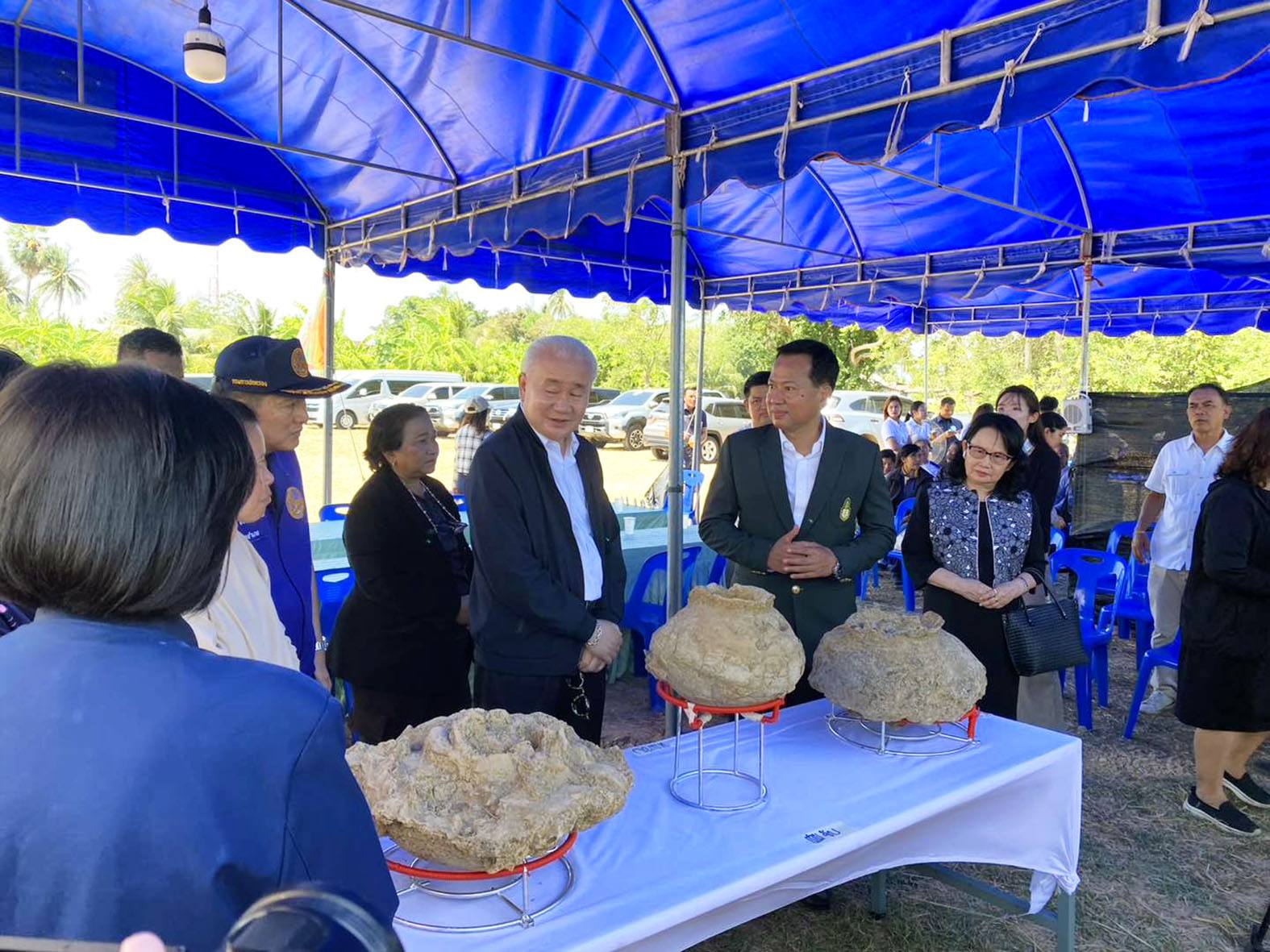
Mr Phanombut Chantarachoti, Director-General of the Fine Arts Department, visited the Don Yai Thong archaeological site in Ban Don Phlap, Samo Phlue Subdistrict, Ban Lat District, on April 30 to inspect the excavation work.
The excavation is being carried out by the 1st Regional Office of Fine Arts, Ratchaburi. The site is located in a rice field belonging to Mrs Khanang Phetsut, where bronze kettle drums were first discovered.
Mr Phanombut was welcomed by Ms Nipha Sangkanakhin, Director of the 1st Regional Office of Fine Arts, Ratchaburi; Dr Phatcharasak Alai, President of Phetchaburi Rajabhat University; Mr Preecha Anantworanat, Ban Lat District Chief; Pol Col Chern Praimee, Chief Executive of Samo Phlue Subdistrict Administrative Organisation; Ms Prachin Khrueachan, Director of Phra Nakhon Khiri National Museum; archaeologists; and members of the local community.
Phetchaburi archaeological site yields major finds

Ms Kannika Premjai, a professional-level archaeologist from the 1st Regional Office of Fine Arts, Ratchaburi, briefed the Director-General on the work carried out at the Don Yai Thong site since excavation began on February 9.
Archaeologists have so far found six bronze kettle drums, which are believed to have been used for ritual purposes. A large number of pottery vessels, including round-bottomed pots of various sizes, have also been discovered.
The excavation has also uncovered burial pits containing eight human skeletons.
Each skeleton was found with grave goods, including bronze vessels placed near the feet, beneath the bodies and over the heads. Bronze ornaments were also discovered.
One of the most significant finds was connected to skeleton number 1, where archaeologists found several gold ornaments. These included gold bracelets worn on the arms, three gold rings, two gold pendants, gold beads and stone beads.
More than 12,000 blue-green glass beads were also found beside skeleton number 5.
The discovery of a gold bracelet still worn by an ancient skeleton, along with a large ritual drum and other artefacts, has made the Don Yai Thong site one of the most important archaeological finds in Phetchaburi in recent years.
The Fine Arts Department said the evidence suggests the site dates from the late prehistoric period. No evidence of cremation has been found, indicating that the people buried at the site were laid to rest in burial pits.
Mr Phanombut said the Fine Arts Department would continue the excavation until the work is completed. He said the department would provide funding, equipment and personnel to support further study and ensure the site is properly examined.
He said the ancient objects found at the site would be conserved using proper scientific methods. A decision on where the artefacts will be displayed in the future will be made later, based on what is considered most appropriate.
Mr Phanombut said the site was a source of pride for the people of Ban Lat and Phetchaburi. He thanked the landowner, residents of Samo Phlue Subdistrict and all agencies involved for their cooperation and support.
During the visit, the Director-General also viewed the ancient ornaments discovered during the excavation. The items are currently being kept at Phra Nakhon Khiri National Museum before being sent for scientific conservation.
The Fine Arts Department said it will hold an official press conference soon to announce the discovery and the results of the archaeological work at Don Yai Thong.