pope leo back
|

Pope Leo back on his feet after shock cancer diagnosis

VATICAN – Pope Leo‘s recovery from surgery is progressing as expected and he has begun walking in his hospital room and eating normally, the Vatican said on Wednesday, after doctors announced the 71-year-old pontiff was being treated for lung cancer.

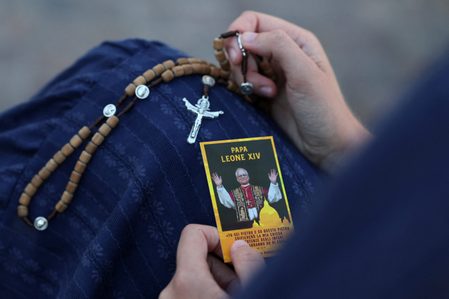
World leaders, Catholics across the globe and senior cardinals at the Vatican have offered prayers for Leo after he had part of his right lung removed in an operation on Tuesday, October 13.
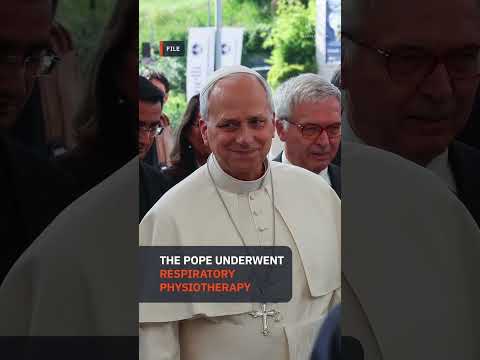

Pope Leo back on his feet after shock cancer diagnosis

Blood tests and a chest X-ray carried out on Wednesday, October 14, showed normal post-operative results, the Vatican said, adding that the pontiff had undergone respiratory physiotherapy.
Must Read

Pope Leo had peaceful night in hospital after lung cancer surgery


Pope Leo had peaceful night in hospital after lung cancer surgery

The cancer diagnosis for a pope known to be relatively young and energetic and who was elected only in May 2025 caused shock and raised questions about the future shape of his papacy as he deals with the illness.

Leo normally follows a very busy schedule. He is due to make a tour of Uruguay, Argentina and Peru from November 6 to 17 and the Vatican press office said on Wednesday that “nothing has changed” regarding the planned trip.

However, Peruvian President Keiko Fujimori said on Wednesday that the dates could change because of the amount of time his recovery would take.
Must Read

What is lung adenocarcinoma, the cancer diagnosed in Pope Leo?


What is lung adenocarcinoma, the cancer diagnosed in Pope Leo?

The pope is the ultimate earthly authority for the world’s 1.4 billion Catholics and does not have a deputy who steps in when he is sick. When a pope is incapacitated, the business of the Vatican’s vast bureaucracy carries on as usual, holding off on any decisions that require papal approval.

Prayers for Leo

A prayer was recited for Leo to have a good convalescence and complete healing during an open-air Mass in St. Peter’s Square on Wednesday following the surgery.

The pope has been diagnosed with lung adenocarcinoma, the most common form of lung cancer, and doctors removed the lower lobe of his right lung during Tuesday’s operation in an effort to eliminate all cancerous tissue.

Human lungs have five lobes — three in the right lung and two in the left.

The operation lasted about 90 minutes and was completed without complications, the pope’s lead surgeon, Professor Stefano Margaritora, and his personal physician, Dr. Luigi Carbone, said late on Tuesday.

The Vatican has not disclosed the size of the tumor or whether the disease had spread to nearby lymph nodes, key factors in determining prognosis.

Dr. Serena Ricciardi, a lung cancer specialist at Rome’s San Camillo Forlanini Hospital, said that if the cancer had not spread to Leo’s lymph nodes, the surgery may have been sufficient for treatment.

“If there are no further issues or lymph node involvement, we could consider the surgery curative,” she told Reuters. “The disease has been completely removed.”

Leo is relatively young for a Church leader. He enjoys sports, including tennis, and is not known to be a smoker or to have had recent health issues.

Engagements canceled until next week

The Vatican said this week that the pope was expected to remain in hospital for about a week and that all his public engagements had been canceled until October 20.

The Mass on Wednesday was the closing act of an assembly of bishops called by Leo to discuss the Church’s family life teachings, the largest gathering of Church leaders so far during this papacy.

Filipino Cardinal Luis Tagle led the service in place of Leo. The pope last week approved Tagle as the dean of the Church’s College of Cardinals, in the first selection of an Asian cleric to the elite role.

Political leaders offered messages of support.

US Secretary of State Marco Rubio said he and his wife Jeanette were praying for the pope, an American who was born in Chicago.

“May the Lord give him strength and the Holy Spirit guide the medical professionals taking care of the Holy Father,” he said on X. Rubio met Leo at the Vatican in May.

US President Donald Trump, who has criticized the Roman Catholic Church leader, said on Wednesday he hoped that Pope Leo would “get better fast.”

“I want to see Pope Leo get well,” Trump told reporters. “I just want to wish him well, get better fast.” – Rappler.com
Similar Posts

  • | | | | |

    Iran warns US of retaliation if nuclear sites are …

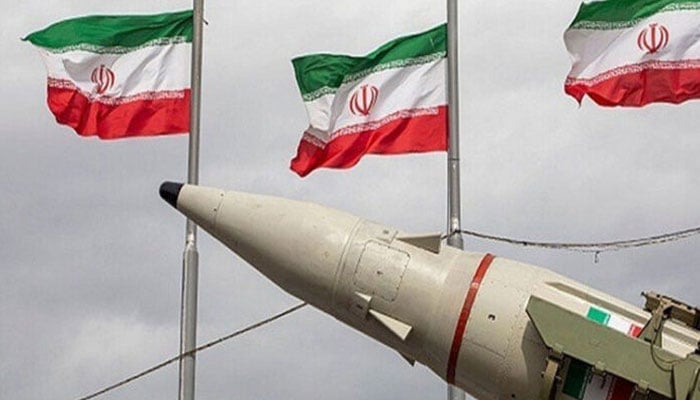
    TEHRAN: Iran has issued a fresh and stern warning to the United States, declaring that any military strike on its nuclear facilities would trigger a direct response against American interests and those of its allies across the Middle East, raising fears of a wider regional conflict. The warning came on Tuesday from Iran’s Khatam al-Anbiya Central Headquarters, the country’s top joint military command, amid growing tensions following recent statements by US President Donald Trump. In an official statement, the military command said that any attack targeting Iran’s nuclear infrastructure would not remain limited in scope and would instead lead to a dangerous expansion of conflict throughout the region. Iranian commanders stressed that the United States and its regional allies would bear the consequences of such military action, warning that their strategic interests could become legitimate targets if Iranian nuclear sites were attacked. The latest warning follows remarks by President Trump, who recently threatened military action against Iran’s nuclear facilities, particularly the underground nuclear complex near Natanz. Trump claimed that an attack on the site could happen soon and asserted that Iran would be unable to stop it. His comments have further heightened tensions between Washington and Tehran, which have remained locked in a prolonged confrontation over Iran’s nuclear programme and regional security issues. While Iranian officials insist their nuclear activities are for peaceful purposes, Western governments have repeatedly expressed concerns over Tehran’s uranium enrichment programme, leading to years of sanctions and diplomatic disputes. Security analysts believe that any direct strike on Iran’s nuclear facilities could dramatically escalate instability across the Middle East, potentially drawing multiple regional actors into a broader conflict and disrupting global energy markets. The latest exchange of threats underscores the fragile security situation in the region, with the international community closely monitoring developments amid growing fears that miscalculation by either side could spark a larger military confrontation.

  • |

    Israel approves entry of International Stabilizati…

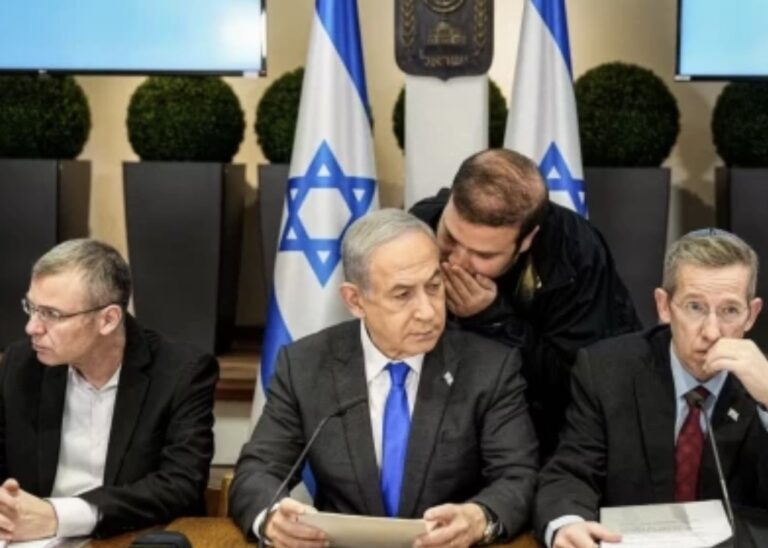
    The Israeli security cabinet has voted to approve the entry of the International Stabilization Force (ISF) into Gaza, advancing a key component of the US-backed peace plan for the enclave despite opposition from a far-right minister . The decision, announced on Sunday, paves the way for the deployment of a multinational force under the Board of Peace (BoP) plan, which was endorsed by the UN Security Council in November 2025 . The ISF is intended to oversee security and support reconstruction efforts in the war-torn territory . National Security Minister Itamar Ben-Gvir was the sole dissenting voice in the cabinet vote . According to Israeli media, Ben-Gvir argued that Hamas has failed to meet its commitments to demilitarize and disarm, meaning Israel is not obligated to proceed with the plan . He reportedly advocated for encouraging the migration of Palestinians out of Gaza as an alternative solution . Following the approval, a senior Israeli official outlined key conditions for the ISF’s operation. The force will receive legal immunity under Israeli law and will operate in “full coordination” with the Israeli military in areas outside the military’s control zones . Stringent conditions have also been placed on which nations can contribute troops. The security cabinet decided that only countries that maintain diplomatic relations with Israel and do not act against it in international forums will be eligible to participate . This clause reportedly excludes nations like Indonesia, which had previously shown interest . The initial force is expected to comprise approximately 200 personnel from “friendly” nations such as Uganda and Morocco . Israeli officials have further stressed that the military will continue to hold the “yellow line” demarcating its controlled areas in Gaza and will not withdraw further unless Hamas is fully disarmed and the Strip is demilitarized . The ISF deployment is part of a scaled-back pilot project initially focused on a humanitarian zone near Rafah in southern Gaza .

  • | |

    Europe encounters greatest solar eclipse in decade…

    Daylight dissolved across the United Kingdom and continental Europe as millions of onlookers turned to witness the most spectacular solar eclipse the region has seen since 1999. From packed coastal beaches in southwestern England to historical strongholds in northern Spain, the cosmic alignment delivered an breathtaking celestial display that left crowds cheering, whispering, and in some places, standing in complete, awestruck silence. The majority of the UK experienced a deep partial eclipse with the Moon blocking out over 90% of the Sun’s face. A sselected orridor running through Iceland and northern Spain was treated to the coveted prize: a rare total solar eclipse. A Shared Experience Across the British Isles Across Britain, ordinary routines came to a sudden halt as people gathered on hilltops, city plazas, and seafront promenades equipped with protective eclipse glasses and homemade pinhole projectors. In Cornwall, the atmosphere at a seaside beach cafe was described by locals as absolutely buzzing. As the lunar shadow gradually bit deeper into the solar disk, the bright summer sunlight faded into an uncanny, metallic haze, accompanied by a noticeable drop in temperature. Further north in Scotland, grey weather initially threatened to ruin the party. Hundreds had gathered on Edinburgh’s iconic Castle Rock, anxiously watching a thick blanket of cloud. Just as the peak of the eclipse approached, a sudden break in the overcast weather revealed the glowing crescent Sun above, prompting a massive roar of applause and collective relief from the crowd below. Chasing Totality: 84 Seconds of Pure Wonder For those who traveled to the narrow path of totality in Western Europe, the event transformed from a impressive atmospheric novelty into a profoundly emotional moment. In the town of Benavente, located in northwestern Spain, an estimated 84 seconds of complete totality turned day directly into night. As the Moon entirely covered the Sun, revealing the ghostly white halo of the solar corona, the cheering crowd fell completely silent. For nearly a minute and a half, the town stood wrapped in twilight, suspended in a collective hush before the sun’s edge re-emerged and brought back the day. Nearby in Burgos, science journalists and eclipse chasers found themselves caught up in the raw emotion of the event. Even veterans who had traveled the world noted that watching the horizon glow in a 360-degree sunset never loses its magic. They described the sudden arrival of the Moon’s umbral shadow as an experience that triggers goosebumps. A Once-in-a-Generation Celestial Event Solar eclipses themselves are not inherently rare. However, having a total shadow track across populated European landmasses is an event that occurs only a few times a century. For many young observers, this was their very first taste of a major astronomical event. On contrary, older generations recalled the legendary 1999 eclipse that captivated the continent previously.

  • | | | |

    Saudi-led coalition hits Houthi military sites nea…

    The Saudi-led military coalition announced on Saturday that it had carried out precision strikes against Houthi military positions in Yemen’s Al Hudaydah governorate, saying the operation was aimed at neutralizing threats to commercial shipping in the Red Sea. In a statement, the coalition said the strikes targeted military sites linked to the Houthi movement and stressed that Al Hudaydah Port was not targeted during the operation. It added that all Yemeni ports remain open to maritime traffic and international shipping. According to the coalition, the destroyed targets were associated with activities that posed a threat to commercial vessels navigating the Red Sea, one of the world’s busiest maritime trade routes. Officials said the operation was part of ongoing efforts to safeguard regional security and ensure the uninterrupted flow of global trade. The coalition warned that it would continue to respond if Houthi forces carried out further hostile actions against shipping or Saudi interests. It also reiterated its commitment to protecting merchant vessels and the Kingdom’s strategic interests, saying military operations would continue whenever necessary to counter security threats. The latest strikes come amid heightened tensions across the Middle East, where attacks on commercial shipping have raised concerns among international maritime operators and governments. The Red Sea remains a vital corridor for global energy supplies and cargo traffic, making any disruption a matter of international concern. There was no immediate response from the Houthi movement regarding the coalition’s claims or the reported strikes. The situation in Yemen continues to be closely monitored, with regional and international observers warning that any escalation around key shipping lanes could have wider implications for global trade and security. Despite the latest military action, the coalition maintained that navigation through Yemeni ports and the Red Sea remains unaffected and commercial vessels can continue operating normally.

  • |

    Former Chinese premier Zhu Rongji dies at 97

    BEIJING: Former Chinese Premier Zhu Rongji, a key figure in the country’s economic transformation during the 1990s, has died at the age of 97. Zhu was known for his direct speaking style and his strong support for economic reform. His tenure was marked by major changes aimed at restructuring China’s state-dominated economy and opening it further to global markets. He served as China’s vice premier from 1991 to 1998 before becoming premier, a position he held until early 2003. Zhu’s political career began decades earlier. He graduated from Tsinghua University and joined the Communist Party in 1949. During the Cultural Revolution, he was sent to work in the countryside and experienced a period of political hardship. He was later rehabilitated and gradually returned to senior government positions. In 1987, Zhu became mayor of Shanghai. During his tenure, he helped guide the city through early economic reforms and development that eventually contributed to its emergence as a major international financial centre. He moved to Beijing in 1991 after joining the central government. As vice premier and later premier, Zhu became closely associated with efforts to tackle economic overheating, inflation and financial instability. His government introduced wide-ranging reforms to state-owned enterprises. Many inefficient state companies were closed, restructured or privatised, while large numbers of workers were laid off. Zhu also strengthened the central government’s control over taxation and introduced reforms that encouraged private home ownership. Those changes played a major role in reshaping China’s housing market. One of his most significant achievements was helping China secure membership of the World Trade Organization in 2001, following years of difficult negotiations. China formally joined the organisation in December that year. The WTO accession accelerated China’s integration into the global economy and helped expand international trade and investment. However, Zhu’s reform programme also had critics. Some observers argued that changes to agricultural policy, tax arrangements and state-owned enterprises created difficulties that later governments had to address. Despite those criticisms, Zhu remained widely regarded as one of the most influential economic reformers in modern Chinese history. His reputation for blunt remarks became particularly prominent after a collection of his speeches was published in 2011. The books contained unusually candid assessments of corruption, government debt, banking problems and weaknesses in public administration. The speeches attracted significant public attention because they addressed many of the economic and social challenges facing China at the time. Zhu warned about corruption, inequality and problems created by local officials. His comments continued to attract interest among reform-minded officials, academics and members of the public long after he left office. His death marks the passing of a leader who played a central role in one of the most consequential periods of China’s economic development. Zhu’s legacy is closely linked to the difficult reforms of the 1990s, when China moved towards a more market-oriented economy while maintaining the political control of the Communist Party.

  • |

    Crimean residents struggle with power cuts as Ukrainian strikes disrupt daily life

    Residents across Crimea are facing growing hardship after repeated Ukrainian attacks on energy infrastructure disrupted electricity and fuel supplies across the peninsula. Long power outages have forced many families to rely on community kitchens for hot meals as daily life becomes increasingly difficult. Crimea, which Russia annexed from Ukraine in 2014, has experienced months of pressure on its energy network following Ukrainian strikes targeting power plants and other strategic facilities. Ukrainian officials say the campaign is aimed at weakening Russia’s military capabilities and bringing the effects of the war closer to Russian controlled territory. The attacks come as Ukraine continues to endure regular missile and drone strikes on its own cities since Russia launched its full scale invasion in 2022. In the town of Massandra, local authorities have organised public meal services for residents who are unable to cook because of prolonged electricity cuts. Large pots of buckwheat and reheated canned beef are prepared each day and distributed to around 200 people. Officials say many households depend entirely on electric stoves, leaving them without a way to prepare food when the power goes out. Massandra town administration head Oksana Madyud said the community kitchens were set up to support families facing ongoing disruptions. She explained that many residents have no alternative cooking methods and need access to hot meals until electricity supplies become more stable. Local workers continue preparing food every day to help elderly residents and vulnerable families cope with the difficult conditions. The prolonged outages have created serious challenges for many people, particularly those living in high rise apartment buildings. Marina, a local resident, said she was forced to search for a gas stove and fuel cylinders after losing electricity in her apartment. She explained that climbing down from her tenth floor flat has become painful because of a leg injury, yet she had little choice because her home has only an electric cooker that cannot be used during blackouts. Another resident, Alexandra, said she had spent ten days without electricity before power was finally restored. She joined the queue for a hot meal after being drawn by the smell of freshly prepared food. Although electricity had returned that afternoon, she remained uncertain whether the supply would continue once she reached home, reflecting the uncertainty many families now face. Fuel shortages have added to the difficulties across towns and cities in Crimea, making transport and everyday activities more challenging. The continuing disruption has increased pressure on local authorities to provide emergency support while residents adjust to frequent interruptions in essential services. As the conflict between Russia and Ukraine continues, civilians on both sides are increasingly feeling the consequences. While Ukraine says its strikes are intended to weaken Russia’s military infrastructure, residents in Crimea are left dealing with power shortages, limited fuel supplies and an uncertain daily routine as the war continues to affect civilian life far from the front lines.

Leave a Reply

Your email address will not be published. Required fields are marked *