serbias student movement
|

Serbia’s student movement toppled a political giant. Can it now govern the country?

BELGRADE, Serbia – By unseating longtime leader Aleksandar Vucic in Sunday’s election on October 25, Serbia’s student protest movement did what demonstrators in other European capitals can only dream of. Now, though, comes the gritty business of governing — something neither the students nor their handpicked candidates have any experience of.

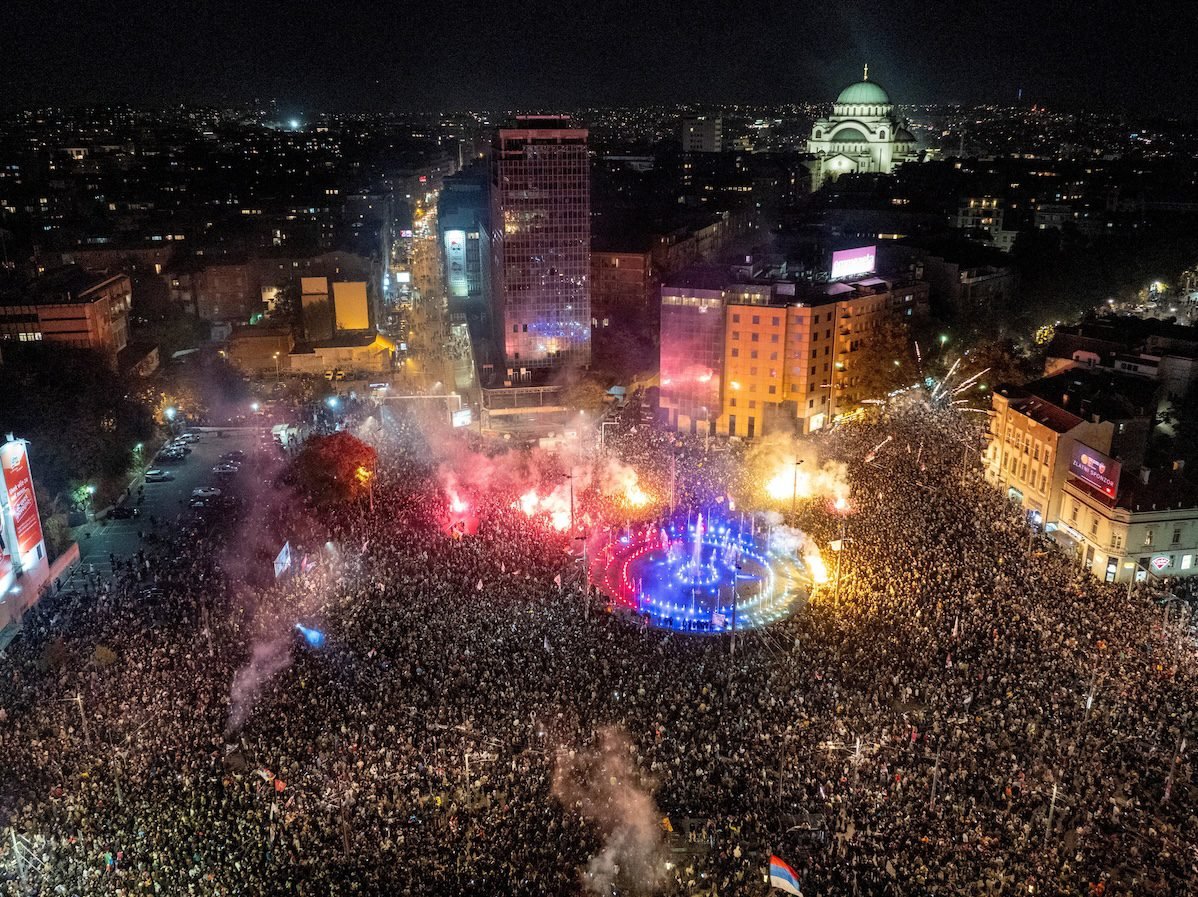
Tens of thousands of people took to the streets across the country to celebrate when Vucic conceded defeat late on Sunday in a historic poll that capped two years of peaceful anti-government protests.

But as the jubilant crowd lit flares and fireworks, sang and danced, questions lingered: who will emerge from this leaderless movement as prime minister, what exactly will their policies be, and can a bunch of political unknowns with no previous affiliation stick together to shore up the economy, root out graft and juggle complex international relations?

The answers will determine the political stability of Serbia, the largest economy in the Western Balkans, and its relations with China, Russia, and its largest trading partner, the European Union.

The students’ victory “is likely to trigger broad institutional and policy changes centered on anti-corruption, the rule of law, and better public services. However, bureaucratic resistance to reforms and the movement’s limited governing experience could make the transition challenging,” Teneo Global Research said in a report on Monday, October 26.

Winners, but can they stick together?

The protest movement began after 16 people died when a railway station canopy collapsed in the northern city of Novi Sad in 2024, and the student-led demonstrations called for accountability and an end to corruption.

Despite not having a figurehead, the students won widespread support before choosing 250 academics, lawyers, doctors, actors, farmers and musicians to represent them in the election.

The movement and some of the top candidates on its list have given some idea of what it stands for, promising a domestic anti-corruption program centered on institutional overhauls.

It does not recognise Kosovo, Serbia’s former southern province which declared independence in 2008, but wants to hold a referendum on Serbia’s accession to the EU, with which relations have frayed in recent years.

Prominent figures include the head of the students’ candidate list, cardiologist Ilija Srdanovic, former central bank governor Dejan Soskic and Radomir Sajcic, a professor at Belgrade University, who spoke on behalf of the students following their victory. But there is no certainty that any of them will hold a ministerial post, and it remains to be seen whether the candidates can form a cohesive government that can agree on policy long enough to use their comfortable parliamentary majority to enact change.

“(The student movement created) such a shift in Serbia’s culture; we will just have to see if it lasts,” said Katarina Popovic, also a professor at the University of Belgrade.

“We just hope that there are big goals that can keep them together long enough to deconstruct the system.”

Reforming public institutions

Under Serbia’s constitution, the students’ candidates have 90 days to form a government once parliament is convened after the announcement of final results by the state election commission.

Time matters, especially with a budget to pass before year-end amid growing public and private debt levels, while any attempt to end corruption will require an overhaul of the police and intelligence services and judicial reform.

State institutions require “detoxification” after 14 years of Vucic, said Bozo Prelevic, a Belgrade-based lawyer and former co-minister of the interior.

Prelevic warned that Vucic’s Serbian Progressive Party (SNS), will pose a strong opposition, and that the new government would have to fight its corner.

Vucic and the SNS repeatedly denied accusations of repression and corruption.

International relations

In Russia, Serbia’s traditional ally and principal supplier of natural gas, Kremlin spokesman Dmitry Peskov praised Vucic, but stopped short of congratulating the students.

“We respect Russia both as a great power and as our historically important partner and, in many cases, protector,” Student List representative Jovo Bakic, a sociologist and a university lecturer, told Russia’s RT Balkan TV, adding that there would be no change in Serbia’s foreign policy towards Russia, including not introducing sanctions against Moscow.

Also closely watching is Ukraine, which has been an indirect beneficiary of Serbian weapons in its fight to repel Russia’s four-year-long invasion.

European officials congratulated the students and said they stood ready to help the country in its fight against corruption.

“I am sure (the Student List) will find a way, just as they have so far, to choose someone capable of governing — someone who will have the privilege, but also the immense responsibility, to lead Serbia through these reforms,” said Savo Manojlovic of the student-friendly Move-Change movement. – Rappler.com

Similar Posts

  • | |

    Renowned mountaineer Nirmal Purja among 10 killed …

    British Nepali mountaineer Nirmal Purja has died along with nine other climbers in an avalanche on Broad Peak in Pakistan, according to his expedition company. Elite Expeditions confirmed the death of the 43 year old climber on social media, saying the news came with profound sadness and heartbreak following Thursday’s avalanche. Purja, who was born in Nepal and later served in the British army, had earned global recognition for climbing the world’s 14 highest peaks in just over six months in 2019. Pakistani officials had earlier reported the recovery of the bodies of three other climbers from the same expedition, identified as American Mallory Geis, Nadhira Ahmed Abdullah Al Harthy from Oman and Pur Bahadur Gurung from Nepal. Nepal’s Prime Minister Balendra Shah also confirmed Purja’s death, saying the loss of six Nepali climbers and four foreign climbers, including world record holder Purja, in Pakistan’s Karakoram range had shocked the nation. Shah said the climbers’ courage and contributions would continue to inspire others. Naila Kiani, a spokesperson for the Alpine Club of Pakistan, which is coordinating rescue operations, told a British broadcaster that Purja had led numerous expeditions she had personally taken part in and described him as an extremely experienced and fearless climber with strong leadership skills. Kiani said the Alpine Club would only formally confirm his death once his body has been recovered, though she acknowledged rescuers fear all members of the group have died. She said search teams have spotted some bodies but have not yet been able to reach them. Rescue teams in Pakistan have been searching for the missing climbers on the world’s 12th highest peak following the avalanche, which struck the 8,047 meter summit in the Karakoram mountain range. Purja was leading the multinational climbing group at the time. Also known as Nims, Purja rose to international fame in 2019 after climbing all 14 of the world’s peaks above 8,000 meters in 189 days, breaking the previous record by more than seven years. His achievement later became the subject of a Netflix documentary titled 14 Peaks: Nothing Is Impossible. At the time of his historic climb, he described the effort as grueling but humbling, and said he hoped to show that determination, self belief and positivity could make anything possible. Purja served in the British military for 16 years, including a decade in the special forces, and received an MBE from the late Queen in 2018 in recognition of his extreme high altitude mountaineering achievements. He lived in Hampshire in southern England with his wife and three year old daughter, and was also known as the first Gurkha soldier to climb Everest while still serving in the British military. In his final social media post, shared on Monday, Purja wrote that he had not originally planned to climb Broad Peak. He said his trip had initially been focused solely on Gasherbrum II, another peak in the Karakoram range, but that he realized shortly before departing for Pakistan that summiting Broad Peak as well would leave him needing just one more mountain to become the first person in history to climb all 14 peaks above 8,000 meters twice without supplemental oxygen. He described the added goal as something that emerged unexpectedly rather than as part of a plan, writing that opportunities tend to present themselves quietly to those already putting in the work. He added that he was asking Broad Peak for nothing more than safe passage up and back down, saying he never took any mountain for granted. Broad Peak is widely regarded as one of the more difficult peaks for climbers to summit. The mountain was first successfully climbed in 1957 by an Austrian expedition, and while many climbers have reached its summit since then, dozens have died attempting the ascent. One of its deadliest recorded years was 2013, when at least six climbers lost their lives on the mountain.

  • |

    Six candidates prepare for first televised debate in UN leadership race

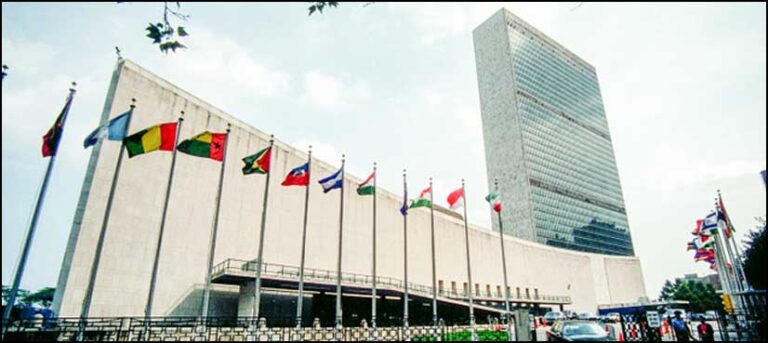
    The six candidates competing to become the next Secretary General of the United Nations are set to take part in a televised debate ahead of the official selection process, offering diplomats, UN staff, and the public a chance to hear their plans for leading the organisation through one of the most challenging periods in its history. The debate will be held in the United Nations General Assembly Hall in New York and comes just one week before the Security Council begins formally considering candidates to succeed Secretary General Antonio Guterres, whose term ends later this year. The 90 minute event will feature questions from diplomats, United Nations employees, and representatives of civil society, and will be broadcast live. The six candidates are former Chilean President Michelle Bachelet, former Ecuadorian Foreign Minister Maria Fernanda Espinosa, Argentine diplomat Rafael Grossi, Costa Rican economist Rebeca Grynspan, Guyanese Foreign Minister Carolyn Rodrigues Birkett, and former Senegalese President Macky Sall. Each is seeking to lead the global organisation at a time when it faces financial pressures, political divisions, and increasing criticism from member states. General Assembly President Annalena Baerbock said the debate provides a valuable opportunity for the candidates to present their leadership vision and priorities before the selection process begins. She stressed that the next Secretary General must not only improve the efficiency of the United Nations but also defend the principles of the UN Charter, including peace and security, human rights, and sustainable development. The organisation is currently facing one of its most difficult periods in recent years. The administration of US President Donald Trump has criticised the United Nations for what it describes as excessive spending, expanding beyond its core responsibilities, and failing to produce effective results. Washington has called for the organisation to focus more closely on maintaining international peace and security, while many other member states argue that protecting human rights and promoting development remain equally important responsibilities. Over recent weeks, each candidate has already answered several hours of questions from representatives of the UN’s 193 member states. During those discussions, most pledged to continue reform efforts aimed at making the organisation more efficient, transparent, and responsive to global challenges. Many also emphasised the need for a more active diplomatic role for the Secretary General in preventing conflicts and supporting peace negotiations. The formal selection process begins on July 30 when the 15 members of the UN Security Council hold their first confidential straw poll. During these informal votes, council members anonymously indicate their preferred candidates. Several rounds of voting may take place until one candidate secures the required support of at least nine council members without being vetoed by any of the five permanent members, namely the United States, China, Russia, the United Kingdom, and France. Once the Security Council agrees on a candidate, the recommendation will be sent to the General Assembly for final approval. The successful candidate will officially begin serving as Secretary General on January 1, 2027. Diplomats say the race remains highly competitive with no clear favourite. Rafael Grossi is widely viewed as one of the strongest contenders because of his international profile and experience leading the International Atomic Energy Agency. However, several diplomats believe Rebeca Grynspan and Carolyn Rodrigues Birkett also enjoy significant support among member states. Speculation continues over whether another candidate could still emerge before the final decision is made. Reports have also mentioned the name of FIFA President Gianni Infantino as a possible outsider, although he is not among the officially declared candidates. This year’s contest has also renewed calls for the United Nations to appoint its first female Secretary General. Many member states argue that after eight decades of male leadership, the organisation should choose a woman for its highest office. Latin American countries are also pressing their case under the informal tradition of rotating the position among different world regions, making the current race one of the most closely watched leadership contests in recent UN history.

  • | |

    Harper’s brisk knock powers Galle to strong total against Dambulla

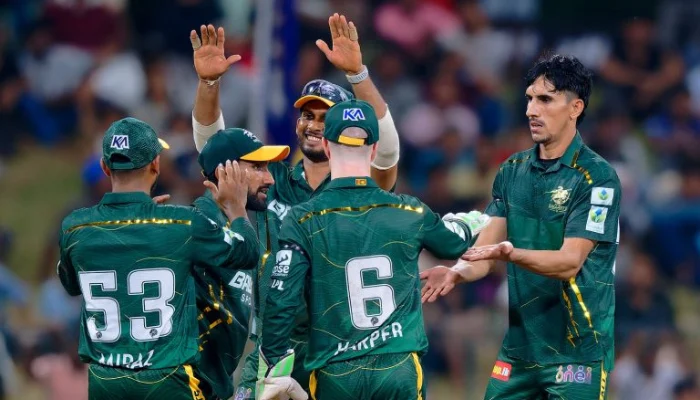
    Sam Harper struck a quickfire 40 off just 22 balls to lay the foundation for a strong total from Galle Gallants against Dambulla Sixers in the eighth fixture of the Lanka Premier League 2026 at the Rangiri Dambulla International Stadium on Wednesday. Batting first after winning the toss, Galle posted 178 for 8 across their full 20 overs, with Harper’s early aggression setting the tone for the innings. Dambulla Sixers named a playing eleven of Marques Ackermann, Niroshan Dickwella as wicketkeeper, Reeza Hendricks, Pavan Rathnayake, Gulbadin Naib, Vishva Lahiru, Sachitha Jayatillake, Ramesh Mendis, Maheesh Theekshana, captain Dushmantha Chameera and Fazalhaq Farooqi. Galle Gallants fielded Lasith Croospulle, Sam Harper as wicketkeeper, Mehidy Hasan Miraz, Charith Asalanka, captain Dasun Shanaka, Mohammad Nawaz, Chamika Karunaratne, Dinura Kalupahana, Sahan Arachchige, Akif Javed and Vijayakanth Viyaskanth. More details on the match are expected to follow as the innings progresses.

Leave a Reply

Your email address will not be published. Required fields are marked *