
seven killed including
|

Seven killed, including two police officers, in crash during pursuit near Middlesbrough


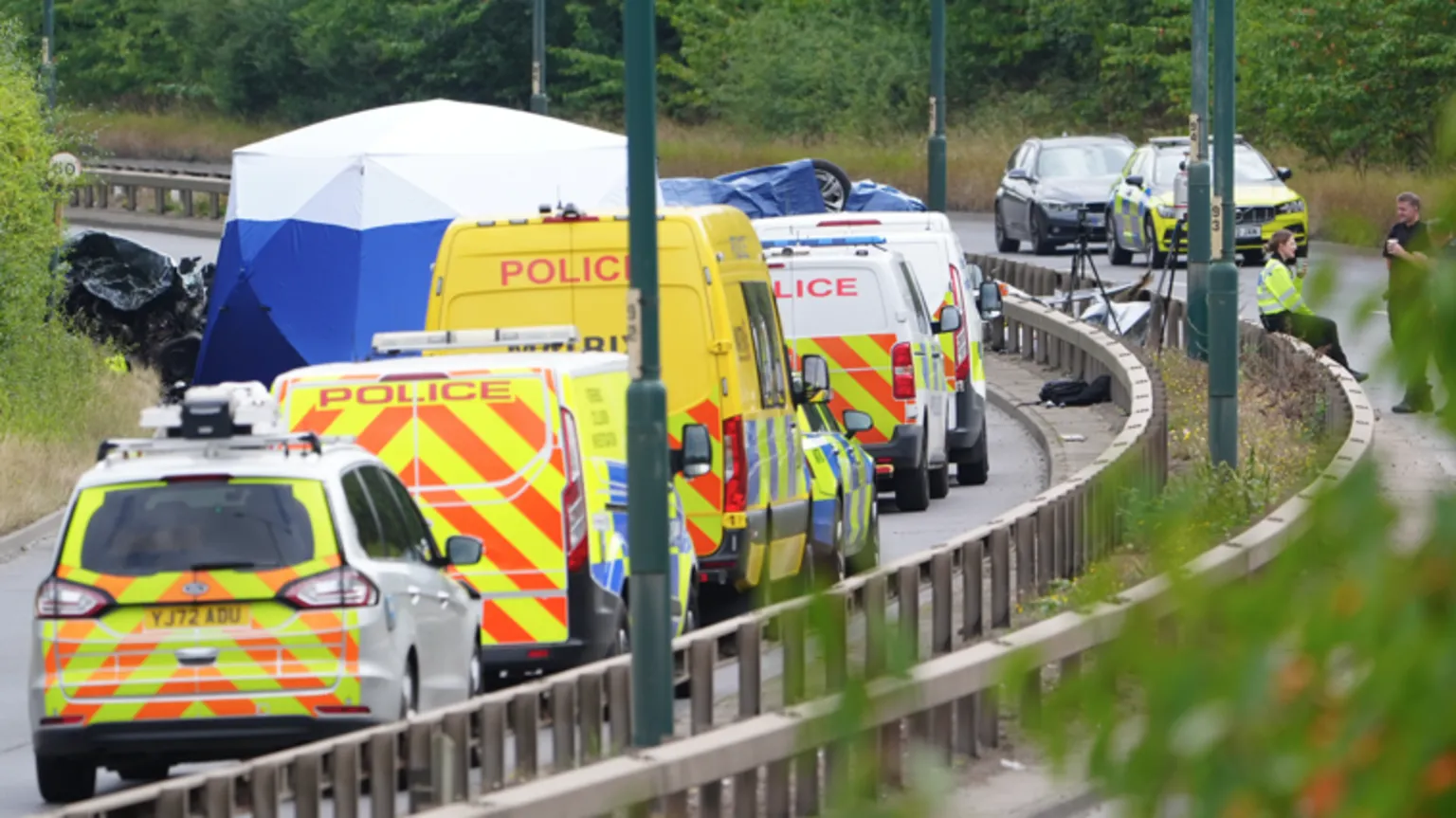
MIDDLESBROUGH: Seven people, including two police officers, have died in a serious road crash during a police pursuit involving a “suspicious” vehicle travelling in the wrong direction on a dual carriageway in northeastern England.

The collision occurred at around 3:39am BST on the A66 in South Bank, near Middlesbrough in Teesside. Cleveland Police said the crash involved a marked police vehicle and a Volkswagen Passat.

According to police, the marked police car had been travelling in the correct direction on the road when the collision occurred. Emergency services rushed to the scene, but all occupants of both vehicles were pronounced dead at the location.

Cleveland Police Chief Constable Victoria Fuller expressed her condolences to the victims and their families, saying that no one should leave their home without being able to return safely, including police officers who serve and protect their communities.

The force said the families of those identified had been informed and were being offered specialist support. Fuller described the incident as a tragedy that would have a profound impact on communities across Cleveland and the wider policing family.

The Independent Office for Police Conduct (IOPC), the police watchdog, has launched an investigation into the circumstances surrounding the crash.

The watchdog said that, based on information available at the early stage of the inquiry, Cleveland Police had spotted a suspicious vehicle and a pursuit subsequently began.

Investigators will examine the circumstances leading up to the pursuit, including why the vehicle was considered suspicious, how the pursuit developed and what happened immediately before the fatal collision.

The A66 is one of the main roads running through the Teesside region. The area surrounding the crash site includes a number of industrial buildings and factories.

Following the incident, the road was closed in both directions between Normanby Road and Church Lane. Police said the closure was expected to remain in place for the rest of the day while emergency crews and investigators worked at the scene.

Police vehicles and officers could be seen along the road as a major emergency response continued. Motorists were advised to avoid the area and use alternative routes.

The North East Ambulance Service said it deployed 14 ambulance resources as part of the major emergency response.

Despite the efforts of emergency responders, several patients died at the scene. The ambulance service expressed its condolences to everyone affected by the tragedy and thanked those who worked through the night in response to the crash.

Cleveland Police said a significant number of emergency service vehicles remained at the scene and urged members of the public not to speculate about the circumstances while the investigation was still developing.

Home Secretary Shabana Mahmood described the incident as “devastating” and expressed her support for Cleveland Police as officers worked to identify everyone involved.

She paid tribute to police officers who put their safety at risk every day to protect the public and offered her condolences to the victims’ families, friends, emergency responders and the wider police community.

Local MP Anna Turley also expressed deep sadness over the deaths. She extended her sympathies to the families and loved ones of those who lost their lives and thanked emergency services personnel who worked throughout the night.

The investigation remains ongoing, with authorities expected to examine forensic evidence, witness accounts and other information to establish the exact sequence iof events that led to the fatal crash.
Similar Posts

  • | |

    Oman oil spill spreads dramatically, nearing scale…

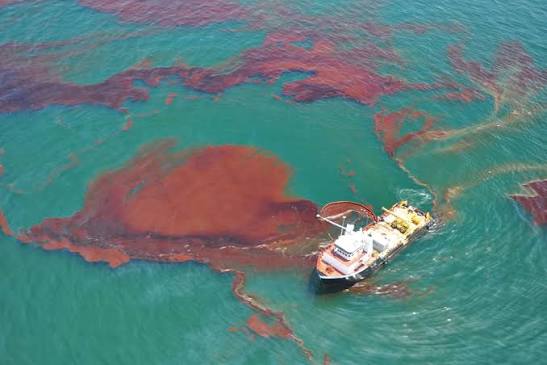
    An oil spill off the coast of Oman is rapidly expanding into one of the worst maritime environmental disasters in years after weeks of largely unchecked spread, according to international agencies, satellite imagery and environmental organizations. The slick, which originated from a grounded tanker carrying Russian crude, had reached Oman’s mainland by Wednesday, the United Nations shipping agency confirmed. John Amos, an oil spill specialist who reviewed satellite imagery, said the affected area now covers more than 2,000 square kilometers. The vessel involved, the Caroline Bezengi, was carrying an estimated 800,000 barrels of Russian oil and operates under international sanctions. It ran aground on June 30 near an Omani island that forms part of a protected marine nature reserve. The tanker first reported trouble off the coast of Yemen on June 8, and maritime sources said an explosion appeared to have occurred on board. No party has claimed responsibility for any attack, though the ship was navigating waters tied to two separate conflicts during its voyage from Russia to India. The tanker departed the Black Sea port of Novorossiysk in April, a region central to the ongoing war between Russia and Ukraine. Ukrainian forces have targeted vessels belonging to the so called shadow fleet used to transport Russian oil, a network that includes the Caroline Bezengi. Ship tracking data shows the tanker then passed through the Suez Canal in late May before sailing near Yemen, where Iran aligned Houthi forces have become entangled in the broader regional conflict involving the United States, Israel and Iran. A tangled set of war related and sanctions related shipping regulations is already complicating the emergency response and could further delay efforts to contain the disaster, according to insurers and analysts. The IOPC Funds, the intergovernmental body responsible for compensating tanker spill damages, told a foreign news agency it will not cover cleanup costs since the incident is being classified as an act of war rather than an ordinary accident. The 25 year old tanker also lacks coverage from any recognized Western insurer. Amos, who serves as chief executive of the environmental nonprofit SkyTruth, said the worst case outcome would involve no adequate response capable of preventing further damage. He said the spill’s scale could ultimately rival the 1989 Exxon Valdez disaster and noted that the tanker is comparable in size to the Sanchi, an Iranian vessel that collided with a freighter off China in 2018 in what became the world’s worst tanker disaster in decades. Slick accelerates toward mainland The spill was first identified by analysts in early July and has since begun reaching Oman’s mainland, according to the International Maritime Organization. A spokesperson for the agency said oil is drifting offshore northeast of Al Qibliyyah Island, with some already washing ashore, and confirmed that contingency planning for the spill is underway. The IMO said seasonal monsoon weather has restricted access to the tanker and delayed salvage efforts. Satellite images show the vessel grounded at Al Qibliyyah Island, part of a nature reserve that includes the Hallaniyat Islands and provides habitat for endangered sea turtles, humpback whales and coral reef ecosystems, all of which now face heightened risk from the spreading oil. Omani officials said Monday the slick covers nearly 400 square kilometers, though they have not responded to requests for additional detail on containment efforts beyond confirming the use of booms to limit the spread. Environmental groups and independent specialists estimate the true size at several times that figure, and say the rate of spread has accelerated sharply since early August. Greenpeace reported Tuesday that the affected area grew from around 45 square kilometers at the end of July to 150 square kilometers by early August, then quadrupled to roughly 600 square kilometers within just two days, according to Hanen Keskes, the group’s political campaigns lead for the Middle East. Amos’s estimate of 2,000 square kilometers suggests the spill has grown more than 40 times larger since the start of August alone. Amos said containing the disaster will require more than floating booms, including stabilizing the grounded vessel and transferring any remaining crude to another tanker. He warned that delays in salvage operations will only worsen the tanker’s condition and make the eventual recovery effort more complicated and dangerous.

  • |

    Hundreds arrested in France as destructive wildfires spread across Europe

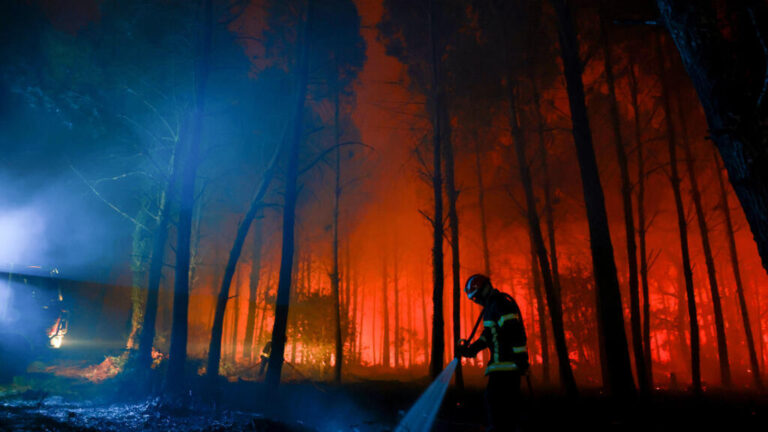
    European emergency services are battling fierce wildfires triggered by a record-breaking heatwave, with French authorities arresting nearly 500 individuals on suspicion of starting blazes since July 1. France’s interior ministry reported that 474 people, including 183 minors, have been detained, with approximately 70% suspected of intentional arson. In south-west France, a rapid blaze in the Landes region consumed nearly 1,100 hectares of pine forest in under 24 hours, prompting the emergency evacuation of more than 525 residents from the village of Luglon. The severe weather conditions have caused destruction and displacement across multiple European countries. In Croatia, a gale-driven wildfire swept through the coastal tourist town of Lokva Rogoznica, leaving one person dead, 40 injured, and forcing 1,200 people to evacuate to emergency shelters. In western Germany, over 2,000 residents fled the village of Gey as a forest fire advanced, while emergency crews faced additional hazards from detonating Second World War ammunition buried in the terrain. Elsewhere on the continent, military personnel in north-east Spain evacuated the historical remains of three 11th-century kings from the San Juan de la Peña monastery as flames threatened the site. In northern Greece, a fleet of small boats rescued approximately 500 holidaymakers stranded on beaches along the Halkidiki peninsula after a two-mile fire front threatened local resorts. Firefighters in the UK also faced severe conditions, as wildfires across the West Midlands destroyed several residential properties.

  • |

    Suspect in Berlin pride attack shot dead by police

    The suspect accused of driving a minivan into a crowd near Berlin’s annual LGBTQ Pride gathering, killing one person and injuring 29 others, was shot dead by police in the city’s Spandau district on Sunday, authorities confirmed . The ramming attack occurred at approximately 10 pm (2000 GMT) on Saturday in Tiergarten park, near the Brandenburg Gate and close to one of Europe’s largest LGBTQ celebrations, Christopher Street Day . Berlin police identified the suspect as Abdul B, a 21-year-old German citizen of Lebanese heritage, born in Germany in 2005 . According to Interior Minister Alexander Dobrindt, the suspect had “attracted attention in the past through a high number of criminal offences and was known to be radicalised” . Police located the suspect at an allotment garden complex in Spandau at around 6 pm (1600 GMT) on Sunday . “According to initial findings, he ran towards officers while armed with a bladed weapon; police subsequently opened fire,” Berlin police wrote on X . Despite immediate resuscitation efforts by the Berlin Fire Department, the suspect was pronounced dead, a federal prosecutor’s spokesperson confirmed . Earlier, police had published the suspect’s picture and appealed to the public for information on his whereabouts . The attack marks the latest in a series of vehicle-ramming incidents on crowds in Germany in recent years, which have intensified debate around security and immigration amid a surge in support for the far-right . A memorial service was planned at St Mary’s Church in Berlin, with Chancellor Friedrich Meuthen expected to attend . The Christopher Street Day parade, which was called off following the attack, had been expected to draw hundreds of thousands of participants and spectators to the German capital .

  • | |

    Congo tightens grip on mineral exports with ban on…

    The Democratic Republic of Congo has prohibited exports of copper concentrate and cobalt concentrate, according to a government order reviewed on Thursday, marking the latest step in an ongoing push to force more mineral processing to happen inside the country and capture a larger share of the value generated by its mining sector. News of the ban sent benchmark three month copper prices on the London Metal Exchange up by as much as 1.8 percent to $14,369.50 a metric ton, the highest level since January 29, when the metal touched an all time peak of $14,527.50. Prices stood at $14,300 as of 0930 GMT following the report. Congo holds the position of the world’s largest cobalt supplier and ranks among the top sources of copper and other minerals critical to the global energy transition. The government is using that leverage to encourage the build out of domestic processing capacity rather than allowing raw or partially processed materials to leave the country. The order, dated June 29 and signed jointly by Mines Minister Louis Kabamba Watum, Foreign Trade Minister Julien Paluku Kahongya and Economy Minister Daniel Mukoko Samba, states plainly that exporting copper and cobalt concentrates is now prohibited. The prohibition took effect immediately, though the order allows for one year export waivers to be granted under unspecified strategic circumstances. The same order also establishes a new tax structure covering economically significant mining by products, with a three month transition period built in before the new rules take full effect. Officials said the export ban aims to push mining companies toward marketing or exporting higher value processed mineral products rather than raw concentrate. This marks the fourth time Congo has restricted concentrate exports, following similar bans imposed in 2013, 2019 and 2023, each of which included waivers in cases where domestic smelting capacity could not keep pace with output. The new order formally repeals the 2023 measure and its associated exemptions, replacing it with a broader regulatory framework governing both mineral exports and taxation of significant by products recovered during processing. Congo already exports the vast majority of its copper in refined form. During the first quarter of 2026, the country shipped 696,725 tons of copper cathodes, compared with just 53,926 tons of copper concentrate containing roughly 18,863 tons of copper metal, according to official figures. Over the same period, Congo exported 51,940 tons of cobalt hydroxide containing about 17,054 tons of cobalt metal. Christian Geraud Neema, a mining analyst with the nonprofit China Global South Project, said the new ban is unlikely to significantly disrupt most mining operators since the bulk of Congo’s copper and cobalt already undergoes domestic refining before export. He said the operation most likely to feel the impact is the Kamoa Kakula venture, jointly owned by Ivanhoe Mines, China’s Zijin Mining and the Congolese government, which still exports some volume of concentrate under existing exemptions. Neither Ivanhoe nor Zijin responded immediately to requests for comment, and the Congolese chamber of mines also did not respond. The newly introduced tax regime applies broadly across mineral categories, extending to trace and ultra trace minerals recovered during the refining process. These by products will be taxed using a 55 percent valuation coefficient, with royalties applied alongside those already charged on the primary mineral being extracted. The policy fits into a broader pattern across resource rich African nations seeking to move beyond raw material exports and capture more manufacturing and processing value domestically, a shift that has gained momentum as global demand for energy transition minerals like copper and cobalt continues to grow.

  • | | |

    1,300-year-old shipwreck hides incredible gold tre…

    Archaeologists have uncovered an extraordinary collection of gold coins and precious jewelry from a sunken Byzantine-era ship near Croatia’s southern coastline, offering new insights into the empire’s maritime history and suggesting that a high-ranking official may have been among the passengers. The ancient shipwreck was first discovered more than a decade ago, but researchers spent several years conducting detailed underwater excavations before releasing their findings. The results, announced on Thursday, indicate that the vessel most likely dates back to the seventh or eighth century AD, making it one of the region’s most significant archaeological discoveries in recent years. According to experts, the remarkable collection of valuables recovered from the wreck suggests that the ship was far more than an ordinary merchant vessel. Instead, archaeologists believe it may have been transporting an influential government official, noble, or other prominent figure, accompanied by attendants or security personnel. Among the most valuable discoveries are gold coins minted during the reigns of four Byzantine emperors from the Heraclian dynasty, which ruled between AD 610 and 711. Researchers also recovered ornate gold fittings from luxury boxes decorated with rubies, emeralds, and pearls, highlighting the wealth and status of those on board. The quality and rarity of the artifacts provide important clues about the Byzantine Empire’s political, economic, and cultural life during the early medieval period. Experts say the recovered objects demonstrate the sophisticated craftsmanship of the era and reveal the importance of maritime travel for government officials and elite members of society. The ongoing archaeological investigation is expected to deepen historians’ understanding of Byzantine trade routes, royal travel, and naval activity across the Adriatic Sea. Researchers hope that further analysis of the ship’s structure, cargo, and recovered artifacts will help reconstruct the vessel’s final journey and explain the circumstances that led to its sinking centuries ago. Officials involved in the excavation described the discovery as a major milestone in underwater archaeology. As conservation work continues, many of the recovered treasures are expected to be carefully preserved and studied, providing valuable information for future research into the Byzantine Empire and its influence across southeastern Europe. The discovery underscores the importance of underwater archaeological exploration and demonstrates how centuries-old shipwrecks continue to reveal remarkable stories about ancient civilizations, their rulers, and the maritime networks that connected them across the Mediterranean world.

Leave a Reply

Your email address will not be published. Required fields are marked *