north korea fires
|

North Korea fires missile ahead of US-South Korea drills

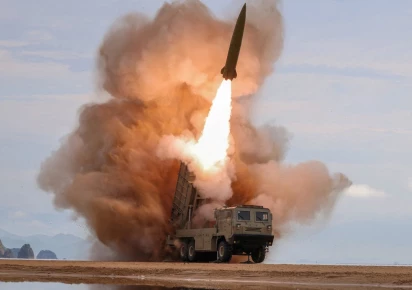
SEOUL: North Korea launched a suspected ballistic missile into waters off the Korean Peninsula’s eastern coast on Wednesday, raising tensions just days before major military exercises between South Korea and the United States.

South Korean and Japanese authorities detected the launch from the Wonsan area on North Korea’s east coast at around 6am local time.

The missile travelled approximately 700 kilometres before falling into the sea, according to South Korean and Japanese defence officials.

The launch came only days before the annual Ulchi Freedom Shield exercises, scheduled to begin on August 17 and continue through August 27. The drills are designed to strengthen the allies’ ability to respond to security threats from North Korea.

Pyongyang has repeatedly criticised the exercises, describing them as preparations for a potential attack. Seoul and Washington maintain that the drills are defensive and necessary to improve their combined military readiness.

South Korean officials said Wednesday’s launch was the latest in a series of weapons tests conducted by North Korea this year. It was assessed as the country’s 11th suspected ballistic missile test of 2026.

North Korea had also launched a missile from the Wonsan region on August 6. Pyongyang did not publicly acknowledge that test.

Analysts said the latest launch could have been part of North Korea’s ongoing weapons development programme. However, its timing may also have been intended to send a political and military message ahead of the upcoming US-South Korean exercises.

South Korean authorities have not yet confirmed the exact type of missile involved. Officials said a detailed analysis was under way to determine its specifications.

The missile’s reported range and launch location have prompted speculation that it could have been a hypersonic weapon or another advanced missile system. Officials have not confirmed those assessments.

Seoul and Tokyo condemn launch

South Korea and Japan strongly criticised the missile test.

South Korean authorities convened an emergency security meeting and called on Pyongyang to stop activities that violate United Nations Security Council resolutions.

South Korea’s military said it remained fully prepared to respond to any further provocation and would maintain its combined defence posture with the United States.

Japan also lodged a formal protest through diplomatic channels. Japanese Defence Minister Shinjiro Koizumi condemned the launch and said Tokyo was closely monitoring developments.

The latest test follows growing tensions over North Korea’s expanding weapons programme and Japan’s plans to strengthen its defence capabilities.

North Korean state media had criticised Japan’s latest defence policy document a day earlier, accusing Tokyo of using the North Korean threat to justify an increase in military spending and capabilities.

The US Indo-Pacific Command said it was coordinating closely with South Korea and Japan. Its initial assessment was that the missile launch did not pose an immediate threat to US territory, American personnel or its allies.

Similar Posts

  • | |

    US revokes over 600 visas in crackdown on birth to…

    The United States has revoked more than 600 visas from foreign nationals over the past month as part of a sweeping campaign against birth tourism operations, the State Department announced Wednesday. Secretary of State Marco Rubio said on social media that American citizenship is not for sale, accusing criminal organizations of profiting by coaching foreign nationals to defraud the visa system and forge documents in order to secure citizenship for their children. He said these networks have systematically exploited weaknesses in US immigration law for financial gain. The State Department recently launched a dedicated Birth Tourism Prevention Task Force tasked with identifying and dismantling these networks. Rubio said the unit will continue reviewing the activities of visa holders to put an end to what he called a heinous abuse of national law, and said the department intends to use every tool available to dismantle birth tourism networks and protect the integrity of American citizenship. The crackdown follows an executive order President Donald Trump signed on August 6 that describes birth tourism as a calculated exploitation of immigration policy and casts it as a threat to national security. The order gives the State Department and the Department of Homeland Security authority to permanently bar entry and revoke documentation for individuals found to be facilitating these schemes. Trump signed two executive orders on August 6 in a narrower attempt to limit birthright citizenship, again testing a constitutional provision even after the Supreme Court rejected an earlier version of his effort. Curbing birthright citizenship has remained one of the central goals of Trump’s broader immigration crackdown, with the White House specifically targeting birth tourism, in which pregnant foreign nationals travel to the United States specifically to give birth on American soil. Following the Supreme Court setback on June 30, Trump initially urged Congress to pass legislation addressing the issue before ultimately turning to executive orders instead, a route that allows the administration to set policy directly but carries less legal weight than legislation passed by Congress.

  • | |

    PM directs MDCAT delay, admission test rescheduled…

    ISLAMABAD: The Pakistan Medical and Dental Council (PM&DC) has postponed the Medical and Dental College Admission Test (MDCAT) 2026 on the instructions of Prime Minister Shehbaz Sharif, giving thousands of aspiring medical students additional time before the nationwide examination. According to an official statement issued by the PM&DC, the entrance test, originally scheduled for August 16, will now be held on September 20, 2026. The council said the decision was made to ensure the examination is conducted in a more organized, secure, transparent, and candidate-friendly manner. Officials emphasized that the revised schedule is intended to improve overall arrangements while maintaining the integrity of the admission process. PM&DC clarified that, apart from the change in the examination date, all previously announced terms, conditions, and examination arrangements will remain unchanged. Any further revisions, if required, will be communicated through a separate official notification. The council has advised candidates, parents, educational institutions, and other stakeholders to regularly monitor its official website and communication channels for updated information, instructions, and announcements related to the examination. Expressing regret over any inconvenience caused by the postponement, PM&DC thanked students and stakeholders for their patience and cooperation.

  • |

    PTA fines CM Pak Rs77.8 Million for SIM sales Geo-fencing violation

    ISLAMABAD: The Pakistan Telecommunication Authority (PTA) has imposed a fine of Rs77.8 million on China Mobile Pakistan (CM Pak) after determining that the operator failed to ensure compliance with mandatory geo-fencing rules governing biometric verification system (BVS) devices used for SIM sales. The regulatory action followed a field inspection in which the PTA found that an authorised sales representative linked to CM Pak’s Taxila franchise was selling SIMs from a location in Islamabad that fell outside the approved geographical area of the franchise. According to the PTA’s enforcement order, the inspection was carried out on March 30, 2026. During the inspection, the regulator discovered that a Data Sales Officer (DSO) associated with the Taxila franchise was conducting SIM sales at I-10 Markaz, Islamabad. The location was not within the authorised territorial jurisdiction or designated geo-location of the franchise. The PTA also found that the sales activity had been conducted without the required Door-to-Door/Kiosk approval from the regulator. Geo-fencing requirement The PTA’s regulatory framework requires BVS devices used for SIM issuance to remain within a prescribed distance of the approved sales location. Under the mandatory geo-fencing mechanism, such devices must operate within 100 metres of the designated geo-location of an authorised sales channel. The purpose of the requirement is to ensure that biometric devices are not moved to unauthorised locations for SIM issuance. The mechanism is also designed to strengthen oversight of SIM sales, prevent misuse of biometric verification equipment and improve the traceability of subscriber registrations. The regulator made it clear that SIM sales outside an approved geo-location are not permitted unless prior approval has been obtained from the PTA. CM Pak challenges regulatory action CM Pak contested the proposed enforcement proceedings, maintaining that the incident was an isolated operational lapse involving an individual DSO rather than evidence of a broader failure in the company’s compliance system. The operator argued that the SIMs concerned had been issued only after the required biometric verification process had been successfully completed. It further stated that the transactions were properly recorded and remained traceable through the prescribed systems. CM Pak also maintained that there had been no issuance of fake or anonymous SIMs, no bypass of biometric verification and no failure in the verification process conducted through the National Database and Registration Authority (NADRA). The company told the regulator that it had taken disciplinary and corrective measures after being informed of the violation. These measures included issuing a show-cause notice and warning letter to the concerned franchise and terminating the services of the DSO involved in the incident. CM Pak also said it had circulated compliance instructions across its network and strengthened internal monitoring mechanisms to prevent similar incidents in the future. PTA rejects defence The PTA, however, did not accept the company’s argument that successful biometric verification should be treated as sufficient compliance. The authority ruled that biometric verification and geo-fencing constitute separate regulatory requirements. While biometric verification is intended to establish the identity of a subscriber, geo-fencing controls where the SIM sale and verification process can legally take place. According to the regulator, compliance with one requirement does not eliminate the obligation to comply with the other. The PTA observed that allowing BVS devices to operate beyond their authorised locations could weaken the regulatory controls established for SIM issuance, regardless of whether the subscriber’s biometric verification was successfully completed. The regulator also rejected CM Pak’s position that responsibility for the incident could primarily be attributed to the franchise or individual sales officer. Under the applicable Subscribers Antecedents Verification Regulations and licence conditions, the PTA maintained that the licensed operator carries direct responsibility for ensuring that its authorised sales network complies with regulatory requirements. Corrective action not enough to erase violation The authority further noted that steps taken by an operator after a violation has been detected can potentially serve as mitigating factors but cannot remove the violation itself. The PTA stressed that geo-fencing is a substantive regulatory safeguard rather than a procedural requirement that can be overlooked if other verification mechanisms are functioning properly. It said allowing subsequent corrective measures to effectively neutralise an established breach could undermine the purpose of mandatory compliance requirements and weaken regulatory oversight of SIM issuance. After reviewing the show-cause notice, CM Pak’s written responses, compliance report and submissions made during the hearing, the PTA concluded that the operator had failed to maintain adequate supervision and regulatory control over its authorised sales channel. Rs77.8m penalty imposed Based on its findings, the PTA held CM Pak liable under Section 23 of the Pakistan Telecommunication (Re-organization) Act, 1996. The authority subsequently imposed a penalty of Rs77.8 million (Rs77,800,000) on the company and directed it to deposit the amount within 10 days of receiving the enforcement order. The PTA warned that failure to pay the penalty within the specified period could result in further proceedings or action under the applicable law.

  • | |

    Noor Bukhari opens up about remarriage and life lessons

    Former Pakistani actress Noor Bukhari has spoken candidly about her decision to marry her former husband, Aoun Chaudhary, again and the experiences that shaped her outlook on life. In a recent interview with Ambreen Fatima, Noor discussed her personal journey, her years in the entertainment industry and the changes she made after leaving showbiz to focus on her religious life. Speaking about her relationship with Aoun Chaudhary, Noor said their reunion was not something she had planned. She described it as part of destiny and said that circumstances eventually brought the two back together. The actress explained that she and Aoun already shared a daughter, which she believed was also an important factor in their reunion. She said that after she left acting, Aoun also developed the desire to rebuild their relationship. Noor said they now have four children together and described their family life as a happy one. The actress also reflected on the difficult periods she experienced in her personal life. She has previously spoken about going through multiple marriages and divorces, experiences that she said taught her important lessons about relationships and faith. According to Noor, one of the biggest lessons she learned was that people may come and go, but Allah remains with a person through every difficult period. She said her experiences strengthened her belief that Allah never abandons those who turn to Him. Noor added that she does not like dwelling on the past. Instead, she prefers to focus on her present life and move forward. During the interview, she also shared her views about women with daughters who consider remarriage. Noor said Islam permits women to marry again, but expressed her personal concerns about raising a daughter in a new family. She suggested that women should carefully consider the impact of a second marriage on their children. She also said reconciliation with a former husband could be an option in some circumstances. Her comments generated discussion on social media, with users expressing different opinions about her views on marriage, divorce and family life. Some praised Noor for openly discussing her experiences and described her reunion with Aoun as a matter of destiny. Others questioned parts of her advice regarding remarriage and relationships.

  • | | |

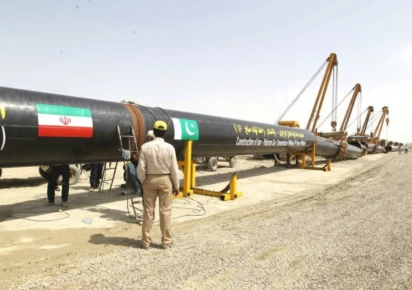
    PM forms top panel to revive Iran gas pipeline

    Prime Minister Shehbaz Sharif has formed a high-level committee to find a mutually acceptable solution to the long-delayed Pakistan-Iran gas pipeline project, which has remained stuck for more than a decade. Petroleum Minister Ali Pervaiz Malik informed the Senate that the committee is examining the legal, financial and energy implications of the project. It will assess Pakistan’s potential financial exposure in the ongoing arbitration process while also considering the country’s future energy requirements. The minister was responding to a calling-attention notice raised by Senator Talha Mahmood. He said the government was seeking a negotiated solution rather than allowing the dispute to become more complicated through prolonged litigation. Describing Iran as a “brotherly country”, Malik said the leadership of Pakistan and Iran remained in contact and was working towards an amicable settlement. He noted that Iran had already completed substantial infrastructure on its side of the project. Iranian authorities have brought gas from the South Pars field towards a major city close to the Pakistani border. The dispute over the pipeline has reached international arbitration in Paris. Pakistan is therefore assessing the possible financial consequences of the project delays and the legal proceedings before deciding its next course of action. The government is also reviewing whether the pipeline can be made commercially viable. Pakistan has previously asked Iran to cut its gas price by around 50 per cent and reduce the proposed supply volume because several domestic sectors have shown limited interest in purchasing Iranian gas at existing prices. Officials have said that domestic consumers and fertiliser plants are currently receiving gas at significantly lower prices than the cost at which imported gas could be supplied through the project. Power producers have also indicated that purchasing imported gas at prices above Rs2,000 per million British thermal units would not be commercially feasible. The government has therefore been considering a lower price as a potential benchmark for making the pipeline economically sustainable. Pakistan has also indicated that it could move ahead with the project if the United States provides a waiver allowing energy cooperation with Iran despite Washington’s sanctions regime. The Iran-Pakistan pipeline, commonly known as the Peace Pipeline, was originally designed to transport Iranian natural gas to Pakistan and help address the country’s long-term energy needs. Iran completed a substantial portion of the pipeline within its territory. Pakistan, however, did not complete its section by the agreed deadline, leaving the project largely dormant. US sanctions against Iran, difficulties in securing financing and wider geopolitical tensions have complicated Pakistan’s efforts to complete the project. The issue has also resulted in legal disputes between the two countries. Iran initiated international arbitration proceedings in Paris over delays in the implementation of the project. Meanwhile, the petroleum minister told the Senate that the government was separately addressing gas-related problems in Balochistan. He said Prime Minister Shehbaz Sharif had instructed him to engage with provincial stakeholders. Another high-level committee, headed by Deputy Prime Minister and Foreign Minister Ishaq Dar, is examining gas-related issues in the province, including technical and payment-related matters. The latest move indicates that Islamabad is attempting to balance its obligations under the Iran gas project with its financial constraints, international commitments and changing energy requirements.

Leave a Reply

Your email address will not be published. Required fields are marked *