shaheen naseem should
|

Shaheen, Naseem should play more domestic cricket, Usman Shinwari

Former Pakistan fast bowler Usman Shinwari has urged Shaheen Shah Afridi and Naseem Shah to play more domestic and first-class cricket, arguing that regular competitive cricket can help the two premier pacers maintain their pace, fitness and longevity.

Speaking to the media, Shinwari said Pakistan has traditionally placed too much emphasis on bowling speed, often overlooking the impact of workload and continuous cricket on a fast bowler’s body.

“Even if your fitness is like Cristiano Ronaldo’s, bowling continuously can eventually affect your pace,” he said.

Shinwari described Shaheen and Naseem as outstanding bowlers and said he was not in a position to offer them personal advice. However, he stressed that playing selected domestic cricket could help them retain their rhythm and speed while reducing the risk of injuries.

The former pacer also discussed Pakistan’s upcoming challenges in England, saying tours of the country have historically been difficult for Pakistan. He believes the team can still produce a strong series if it carries its current momentum forward.

Reflecting on Pakistan’s recent Test performances against the West Indies, Shinwari said the team’s first-match performance was disappointing but praised the side for making a strong comeback in the second Test.

He emphasised the importance of consistency, saying better continuity within the team would ultimately produce better results.

Shinwari also backed the decision to restore Babar Azam to the Test captaincy, describing it as a positive move and saying Babar has the ability to lead Pakistan in the longest format.

Another major point raised by Shinwari was Pakistan’s approach to selecting players across different opponents. He argued that the same combination should not automatically be used against teams with vastly different playing conditions and strengths.

Discussing Mohammad Abbas, Shinwari questioned the excessive focus on speed. He noted that Abbas had taken eight wickets at around 125kph in a recent match, arguing that the pacer’s best years were affected because too much importance had been attached to increasing his pace.

“Speed is important, but it should not be given excessive importance,” he said.

On Ihsanullah, Shinwari said the fast bowler had expressed grievances and suggested that his disciplinary issues should be addressed.

Despite his experience, Shinwari made it clear that he has no plans to become Pakistan’s national team coach. He argued that coaches, like players, should progress through a structured system rather than being appointed directly to the national side.

His comments have once again highlighted the debate over workload management, pace, domestic cricket and long-term planning in Pakistan’s fast-bowling system.

Similar Posts

  • | | |

    Thousands of migrants leave Spain’s Ceuta after …

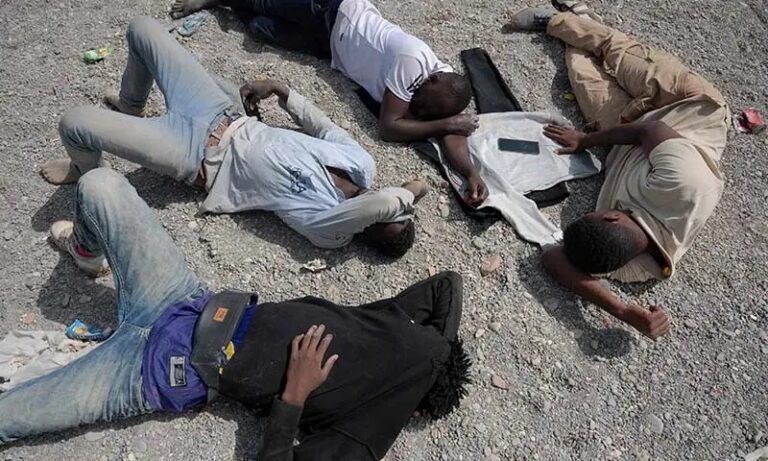
    Thousands of migrants have returned to Morocco after spending several days in Spain’s North African enclave of Ceuta following one of the largest attempted border crossings in the territory’s history. Many migrants said they left because of hunger, exhaustion, and disappointment after finding limited support and few opportunities in Ceuta. Spanish soldiers and Civil Guard officers guided groups of migrants back toward the Moroccan border crossing on Saturday. Many of those returning were young men who appeared physically exhausted after days of wandering through the city with little food or shelter. Some were barefoot, while others carried Red Cross blankets after receiving emergency assistance. Among those returning was 23-year-old Abdel Latif, who said he had hoped to find work and a better future in Europe. He explained that unemployment in Morocco pushed him to attempt the dangerous journey, but he decided to leave Ceuta after struggling to find food and support. The massive influx saw tens of thousands of migrants enter Ceuta over a period of two to three days. Local officials estimated that around 60,000 people reached the enclave, while Spain’s Interior Ministry reported a lower figure. The surge created a major humanitarian and political challenge for Spanish authorities. Many migrants attempted to reach Ceuta by swimming around border barriers in the Mediterranean Sea. Several people collapsed after completing the dangerous crossing, with Red Cross teams providing emergency treatment. At least dozens of migrants reportedly died while attempting to reach the Spanish territory. Spanish officials said that the majority of those who entered Ceuta had already returned to Morocco. Authorities have increased security measures along the maritime border, including the installation of floating barriers to prevent further crossings. Ceuta, home to around 84,000 residents, is one of only two European land borders located in Africa, along with Melilla. The territory has long been a major destination for migrants hoping to enter Europe in search of employment and improved living conditions.   Many migrants said their motivation was driven by economic hardship. Some described difficult working conditions and low wages in Morocco, saying they were searching for stability and better opportunities. Meanwhile, daily life in Ceuta has gradually returned to normal, with shops reopening and traffic resuming after the disruption caused by the migrant surge. However, some residents remain concerned about future migration pressures, while others say security improvements have restored a sense of stability. The latest events have once again highlighted the complex challenges facing Europe and North Africa in managing migration, border security, and humanitarian needs.

  • |

    Rubio warns Iran’s Hormuz demands could threaten global trade and regional security

    US Secretary of State Marco Rubio has warned that Iran’s demand to control shipping through the Strait of Hormuz could create a dangerous international precedent with serious consequences for global trade and economic stability. Speaking at a meeting of Southeast Asian foreign ministers in Manila, Rubio said allowing any country to control an international waterway and impose tolls through force would undermine international law and encourage similar actions in other regions. Rubio addressed ministers from the Association of Southeast Asian Nations at the start of their annual gathering, where concerns over renewed fighting in the Middle East dominated discussions. He assured regional partners that despite Washington’s focus on the conflict with Iran, the United States remains fully committed to its relationship with ASEAN and its security partnerships in Asia. He warned that if Iran is allowed to demand payment from ships passing through the Strait of Hormuz while threatening attacks against those that refuse, it could encourage other countries to adopt similar tactics in strategic waterways around the world. Rubio said such a development would pose a serious threat not only to the Middle East but also to the Indo Pacific region, where global shipping routes are equally vital. The US secretary also accused Iran of backing away from commitments made under an earlier ceasefire arrangement. He said Tehran has contacted Washington through both direct and indirect channels to discuss possible negotiations. While the United States remains open to a diplomatic solution, Rubio said it would not tolerate attacks on commercial shipping or American personnel in the region. The ASEAN meeting has brought together senior diplomats from major global powers including the United States, China, Russia, India, Japan, and Australia. Many participating countries expressed concern over the impact of the Iran conflict on energy supplies and international markets. Russian Foreign Minister Sergey Lavrov said Moscow hopes for a quick resolution to tensions between Washington and Tehran. He stated that continued conflict hurts the global economy and affects Russia as well. Lavrov added that stable energy prices are important for long term economic planning and said Russia supports efforts to end the crisis peacefully. Australian Foreign Minister Penny Wong also called for an immediate ceasefire and renewed negotiations. She warned that the security situation in the Middle East could worsen without warning and stressed that the reopening of the Strait of Hormuz is essential for restoring stability in global energy markets. The International Energy Agency has described the current situation as a major warning for Southeast Asia’s energy security. The region depends heavily on oil and liquefied natural gas transported through the Strait of Hormuz. According to the agency, Asian countries imported about 80 percent of the crude oil and nearly 90 percent of the liquefied natural gas passing through the waterway last year. Any prolonged disruption could increase energy prices and place additional pressure on economies across the region. On the sidelines of the summit, Rubio also met foreign ministers from the Quad partnership, which includes the United States, Australia, India, and Japan. The group reaffirmed its commitment to maintaining maritime security and ensuring freedom of navigation while expressing concern over China’s growing influence in regional waters. Japanese Foreign Minister Toshimitsu Motegi criticised attempts to change the regional balance through force, referring to disputes in the South China Sea and East China Sea. Penny Wong echoed those concerns, saying that actions increasing regional instability must be addressed through dialogue and international cooperation. Rubio also held talks with Chinese Foreign Minister Wang Yi. The two discussed a recent confrontation between Chinese and Philippine forces in disputed waters. Rubio described the incident as an escalation and said disagreements between Washington and Beijing must be managed carefully to avoid wider conflict. He added that both sides also discussed trade issues ahead of a planned meeting between US President Donald Trump and Chinese President Xi Jinping later this year. Rubio is expected to meet Russian Foreign Minister Sergey Lavrov again to discuss the war in Ukraine and explore whether there is an opportunity to revive diplomatic efforts aimed at ending the conflict. Officials said the meetings in Manila highlight the growing connection between security challenges in Europe, the Middle East, and the Indo Pacific as world leaders seek ways to prevent further instability.

  • | |

    Mahira Khan raises 180,000 pounds for Palestine

    Mahira Khan has never been a passive bystander when it comes to causes she believes in, and her latest trip to the United Kingdom has made that commitment tangible in a way that goes well beyond a social media post. The actress and UNHCR ambassador raised an extraordinary 180,000 pounds for Palestine through a series of fan meet and greet events held across the UK, with all proceeds donated directly to Palestinian relief efforts. Mahira has been among the most vocal Pakistani celebrities in speaking out about the situation in Gaza since the conflict intensified. Her advocacy has been consistent and public, spanning social media posts, interviews and now direct fundraising action that has translated her words into significant material support. The UK events were hosted by Haroon Rashid, who organised the meet and greets and shared a statement following their conclusion expressing the collective feeling of everyone involved. Mahira herself appeared in two beautiful looks across the events, meeting fans, taking photographs and spending time with the people who came out to support both her and the cause she was representing. The response from those who attended and from the wider public online has been overwhelmingly warm. Fans flooded social media with admiration and gratitude. “Love for Mahira,” wrote one follower. “Great work,” said another. A third simply noted how beautiful she looked throughout the events, a reminder that even in the midst of serious humanitarian advocacy, her public presence carries the kind of warmth and grace that has made her one of Pakistan’s most beloved figures for over a decade. The figure of 180,000 pounds is a remarkable achievement for a celebrity-led charitable initiative, and it reflects both the depth of feeling around the Palestine issue among the Pakistani diaspora in the UK and the genuine affection and respect that Mahira Khan commands from her fanbase across the world. Mahira Khan has been a UNHCR National Goodwill Ambassador since 2019, using her platform to advocate for refugees and vulnerable communities. Her Palestine fundraising adds another significant chapter to that record of humanitarian engagement, demonstrating that the commitments she expresses publicly are ones she is willing to back with real effort. For Pakistani audiences watching from home, the news of the fundraising total has prompted considerable pride. It is a reminder that the influence that comes with celebrity, when directed thoughtfully and consistently toward meaningful causes, can generate outcomes that go well beyond anything a single voice in an interview can achieve. Mahira Khan raised 180,000 pounds for Palestine not by speaking about the issue but by showing up in person, meeting her fans one by one, and turning that connection into something that will reach people who need it most.

  • | |

    Ali Khursheedi calls for transparent probe into Mi…

      Sindh Assembly Opposition Leader Ali Khursheedi has called for a transparent investigation into the Mir Raza case, saying that hundreds of similar incidents have taken place in Karachi and that the authorities must take effective steps to address the situation. Speaking to the media in Karachi, the Muttahida Qaumi Movement (MQM) leader said that the Mir Raza case was not an isolated incident. He stressed the need for a transparent and impartial inquiry so that the facts could be established and those responsible could be held accountable. “Hundreds of cases like the Mir Raza case have occurred,” Khursheedi said, adding that a transparent investigation would be necessary to determine what had happened. He also questioned the performance of the Sindh government and urged people in Karachi to assess whether the provincial government was actually delivering on its responsibilities. The opposition leader said that the concerns of Karachi’s residents should be taken seriously, particularly in relation to law and order, governance and the protection of citizens. He questioned whether the people of Karachi believed that the provincial government was working effectively for the city. Khursheedi also commented on an incident that recently took place in the Bahadurabad area. He described the incident as unfortunate and said that it was not appropriate. However, he declined to discuss the matter in detail, saying that questions regarding the issue should be directed to the party leadership. “I am a worker, and you should ask the leadership these questions,” he told reporters when asked about the Bahadurabad incident. The MQM leader further expressed frustration over what he described as the continued deterioration of Karachi. He said that the situation had gone too far and that a stop must now be put to the problems facing the city. Khursheedi alleged that Karachi was being systematically damaged through what he described as a “system” of poor governance and mismanagement. He called for an end to practices that, in his view, were contributing to the decline of the city and affecting the daily lives of its residents. The opposition leader’s remarks come amid renewed concerns over security, governance and accountability in Karachi following the Mir Raza case. The incident has attracted attention and prompted demands for a thorough investigation into the circumstances surrounding the death. Khursheedi maintained that the authorities should not treat such cases as isolated incidents. Instead, he called for broader measures to improve law and order and ensure that citizens receive justice when serious incidents occur. He also emphasized the importance of transparency in investigations, particularly in cases that generate public concern. According to him, an impartial investigation could help establish the facts, restore public confidence and ensure accountability. The opposition leader’s criticism also reflects broader political tensions between the Sindh government and opposition parties over the administration of Karachi. Opposition leaders have frequently raised questions about the city’s governance, public services and law-and-order situation. Khursheedi said that Karachi’s residents should ultimately judge the performance of the provincial government based on their everyday experiences. He suggested that the condition of the city itself provides an indication of whether the government is fulfilling its responsibilities. Calling for immediate action, he said that “enough is enough” and that the deterioration of Karachi could not continue indefinitely. He urged authorities to take concrete steps to improve governance, investigate serious cases transparently and prevent further incidents from occurring. The MQM leader’s statements have added to calls for accountability and a transparent investigation into the Mir Raza case, while also highlighting wider concerns about Karachi’s governance and security situation.

Leave a Reply

Your email address will not be published. Required fields are marked *