solar eclipse darkens
| |

Solar eclipse darkens Edgbaston during The Hundred

BIRMINGHAM: A rare celestial spectacle added an extraordinary twist to The Hundred 2026 as a partial solar eclipse darkened the sky during the clash between Birmingham Phoenix and MI London at Edgbaston Stadium on Wednesday.

The match began at 6:30pm local time, shortly after the eclipse had started at around 6:15pm. The phenomenon reached its peak at 7:11pm, when approximately 91.76 percent of the Sun was obscured, before ending at 8:05pm.

As daylight faded dramatically, Edgbaston’s floodlights were switched on to maintain visibility, allowing the match to continue without interruption. Stadium screens and the announcer repeatedly warned spectators not to look directly at the Sun because of the risk of serious eye damage.

The unusual conditions created a striking atmosphere for spectators, with the normally bright evening sky turning noticeably darker as the eclipse progressed.

On the field, MI London held their nerve to post 157 runs. Birmingham Phoenix responded with 155, falling just two runs short and handing MI London a narrow victory.

The combination of high-stakes cricket and a dramatic solar eclipse made the Edgbaston encounter one of the most unusual sporting moments of The Hundred 2026.

Similar Posts

  • | |

    Akbar Islam exposes reality of working with Sana Javed

    Sana Javed’s reputation within the Pakistani entertainment industry has been complicated for several years. Before her marriage to cricketer Shoaib Malik, a wave of allegations from colleagues and crew members described her as rude and difficult to work with on set, a controversy that temporarily cost her significant public goodwill. Following her marriage, she stepped away from acting for a period, and her return to screens in the ongoing drama Bas Tera Saath Ho has been watched closely by audiences curious about how the comeback would land. Now, a co-star from the same production has stepped forward to share his firsthand experience of working alongside her, and what he had to say runs contrary to the narrative that had built up around her. Akbar Islam, who plays a supportive neighbour uncle in Bas Tera Saath Ho, was asked directly about his experience working with Sana Javed and whether the stories about her difficult behaviour on set reflected the reality he had encountered. His response was thoughtful and contextual rather than simply defensive of the actress. He said that what people interpret as rudeness is not always what it appears to be. Actors, he explained, need to maintain a certain aura on set. A professional distance, a sense of presence and composure, is part of how performers protect the quality of the work and the integrity of their characters. What some people read as aloofness or arrogance may simply be an actor holding that professional boundary. He said this was the context in which he understood what had previously been said about Sana Javed, and about her co-star Farhan Saeed as well. As for his own experience working with them on Bas Tera Saath Ho, he described it plainly as a great one. He added that dynamics differ from set to set and production to production, suggesting that past accounts may have reflected specific circumstances rather than a fixed truth about either actor’s character. Sana Javed’s performance in Bas Tera Saath Ho has been receiving positive attention from viewers, marking a steady rehabilitation of her public image following the controversy that preceded her comeback. The drama itself has been well received, with Akbar Islam’s own performance drawing warm feedback from audiences who appreciate the warmth and depth he brings to his supporting role. His remarks offer a counterpoint to the accounts that once dominated the conversation about Sana Javed, framing the earlier criticism through the lens of professional behaviour rather than personal failing, and suggesting that the version of her colleagues have encountered during the filming of Bas Tera Saath Ho has been a different and more positive experience altogether.

  • | | |

    Iran and Oman discuss temporary shipping corridor …

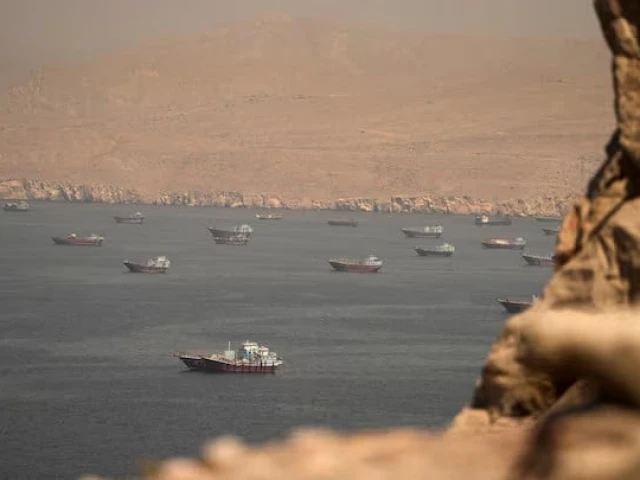
    Iran and Oman are discussing a proposal to establish a temporary joint shipping corridor through the Strait of Hormuz one of the world’s most important routes for oil and gas shipments. The proposal was discussed during a meeting in Tehran between Omani Foreign Minister Badr Al-Busaidi and Iranian Foreign Minister Abbas Araghchi. A joint statement described their talks as constructive and said both sides discussed developments surrounding the strategic waterway. The discussions come as tensions remain high between Iran and the United States. US President Donald Trump said Tuesday that mines had been removed or destroyed in international waters around the Strait of Hormuz. He warned that any vessel found placing new mines would face immediate military action. Trump also said the United States was closely monitoring the waterway and maintained a zero-tolerance policy toward further mine placement. The Strait of Hormuz is a crucial global energy route with roughly one-fifth of the world’s crude oil and liquefied natural gas flows passing through it before the conflict. Shipping activity has fallen sharply during the current crisis, with only two commodity vessels reportedly using the waterway on Monday. Iran has also communicated its position on the strait through Pakistan. Iranian officials reportedly want provisions of an earlier Islamabad memorandum to be implemented including arrangements requiring safe passage for commercial shipping and consultation with Oman over the waterway’s future management. Meanwhile, Washington has expanded economic pressure on Tehran. US Treasury Secretary Scott Bessent announced additional sanctions targeting Iranian individuals entities and vessels warning that countries continuing to support Iran’s economy could face consequences. China has criticized the new US measures saying unilateral sanctions could disrupt global economic and financial stability. Beijing is a major buyer of Iranian oil and has urged Washington and Tehran to return to negotiations. The United States has also warned that military action against Iran remains possible. Defence Secretary Pete Hegseth said Washington would use military force if necessary and did not rule out further strikes around Iran or the Strait of Hormuz. Iran, meanwhile, has promised to respond to the expanded sanctions and warned that threats to its infrastructure could trigger attacks against US interests and regional energy routes. The diplomatic discussions involving Iran, Oman and Pakistan could therefore become important for restoring commercial shipping through the Strait of Hormuz. However, continued military threats, sanctions and tensions between Tehran and Washington remain major obstacles to a lasting agreement.

  • | | | |

    Pattaya Holds Successful “King of Fight: Sand Fury by Pattaya” Beachside Muay Thai Event to Boost Soft Power and Tourism

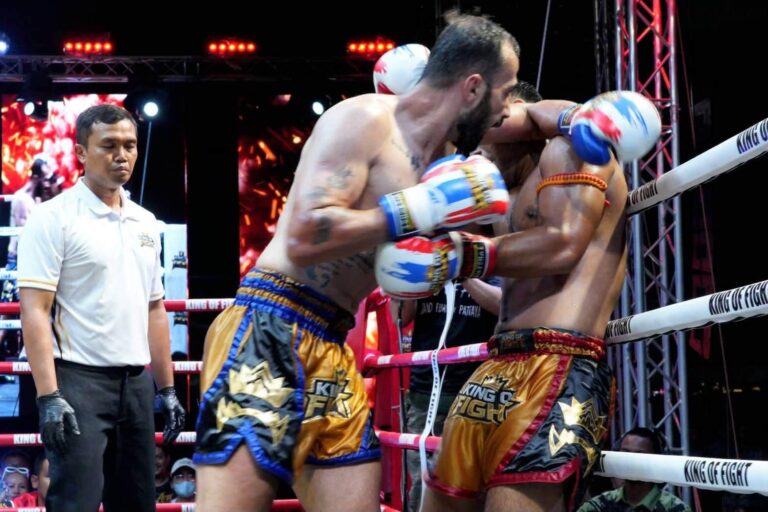
    PATTAYA, Chonburi: Pattaya City, along with the Chonburi Provincial Sports Association and the Sports and Recreation Promotion Club, staged the Muay Thai tournament “King of Fight: Sand Fury by Pattaya” on the sands of Central Pattaya Beach last night, June 25th, hoping to elevate traditional Thai boxing as a national soft power asset and stimulate […]

  • |

    Pakistan will respond if India threatens water rights: PM Shehbaz

    ISLAMABAD: Prime Minister Shehbaz Sharif has warned that Pakistan will not compromise on its water rights, describing every drop of the country’s water as a “red line” and cautioning India against any move that threatens Pakistan’s sovereignty, security or access to water. Addressing a ceremony in Islamabad following the inauguration of a monument commemorating Pakistan’s recent military success, the prime minister said India had demonstrated its disregard for regional peace by unilaterally suspending the Indus Waters Treaty. He said Pakistan desired peace and stability in the region but would not interpret its commitment to peace as a sign of weakness. “Pakistan stands for peace with honour and dignity,” the prime minister said, adding that the country had emerged as a factor of stability in the region. Referring to the military confrontation with India in May 2025, Shehbaz Sharif praised the armed forces for their role and said the country’s response had demonstrated Pakistan’s determination to defend its territorial integrity and national interests. The prime minister specifically commended Field Marshal Syed Asim Munir for his leadership, while also highlighting the contributions of the Pakistan Air Force and Pakistan Navy under their respective chiefs. He said the performance of the armed forces during the conflict had become a lasting part of the country’s history and represented a victory not only for the military but for the entire Pakistani nation. “This victory belongs to the people of Pakistan and its armed forces,” he said, describing the achievement as a source of national pride. Shehbaz Sharif maintained that Pakistan did not seek confrontation with any country. However, he stressed that Islamabad would respond firmly if its sovereignty or security were challenged in the future. He said the events of May 2025 had sent a clear message to the international community about Pakistan’s military capabilities and national resolve. According to the prime minister, the conflict had significantly strengthened Pakistan’s standing and demonstrated that any attempt to undermine the country’s sovereignty would carry serious consequences. Turning specifically to the water dispute, Shehbaz Sharif criticised India’s decision to suspend the Indus Waters Treaty, calling the move unilateral and unlawful. He warned that Pakistan’s water resources could not be treated as a bargaining tool and said Islamabad would defend its water interests. “Every drop of Pakistan’s water is a red line,” the prime minister declared, warning that if India failed to reconsider its position, Pakistan would respond directly. The prime minister’s remarks come amid heightened tensions between the two nuclear-armed neighbours, with water rights emerging as a particularly sensitive issue alongside longstanding disputes over security and regional stability. Shehbaz Sharif reiterated that Pakistan preferred dialogue and peace but would remain prepared to protect its national interests. He said the country’s policy was based on maintaining peace without compromising dignity, sovereignty or security. He further said the lessons of the May 2025 confrontation should not be forgotten and warned that any future miscalculation against Pakistan would invite a stronger response.

  • |

    Sonu Nigam admits he uses auto-tune, explains why it matters now

    Sonu Nigam has admitted to using auto-tune on some of his songs. The confession comes as a surprise, given how often the technology gets associated with less skilled singers. Speaking on the “Game Changers” podcast, the 53-year-old explained why the tool has become genuinely necessary in today’s music landscape. He didn’t shy away from addressing the topic directly. Nigam acknowledged that the rise of auto-tune has brought major changes to the industry. He said people often criticise it, but he personally believes whatever has happened has ultimately been for the good. He recalled that singers of his generation had to perform without auto-tune in earlier years. According to Nigam, that experience gave them the advantage of training their voices the traditional way, without relying on digital correction. Despite that background, he was clear about his own practices today. Nigam admitted he does use auto-tune on certain songs, depending on the requirements of the track. He explained that most modern music now follows a rigid digital pitch, unlike the live instrumentation of earlier decades. Nigam said musicians once played live sarangi and strings, which allowed some natural flexibility in vocal pitch. Now, he explained, everything is digitised and follows an exact tonal line, making raw vocals more likely to sound off. He said singers previously adjusted their voice around live musicians, but today’s productions demand more precision. Nigam did add an important caveat to his comments. He stressed that auto-tune shouldn’t be used as a way to fix the voices of people who genuinely can’t sing. He explained that the responsible use of the tool means enhancing an already strong performance, not creating one artificially. According to him, giving 99% effort and refining it to 100% with auto-tune is very different from relying on it entirely. Nigam added that many actors use auto-tune while pursuing music, which he said is completely fine for personal enjoyment. However, he made clear that trained singers still can’t be replaced by the technology. On the work front, Nigam recently lent his voice to the track “Tabassum” for Rajkumar Santoshi’s “Batwara 1947,” composed by AR Rahman and written by Javed Akhtar. The film stars Sunny Deol, Preity Zinta and Shabana Azmi in lead roles.

  • | |

    Sistrology ignored? Ahad sparks buzz

    Pakistani actor Ahad Raza Mir has become the centre of attention on social media after a behind-the-scenes video from a recent award ceremony sparked widespread discussion among fans. The actor, who is currently receiving praise for his latest television role, attended the Pakistan Influencer Awards as a guest alongside several celebrities and digital content creators. A video from the event, which later circulated across social media platforms, showed Ahad Raza Mir standing near a group of well-known influencers while remaining focused on the stage during the programme. The clip appeared to show the actor keeping to himself without engaging in conversation, a moment that quickly caught the attention of internet users. The footage generated mixed reactions online, with many fans sharing humorous comments and opinions about the brief interaction. Some social media users viewed the actor’s reserved behaviour as a reflection of his quiet personality, while others interpreted it as him choosing to remain focused on the event. Several fans praised Ahad for maintaining a low profile during the ceremony, describing his calm and composed attitude as one of the reasons he continues to enjoy a strong fan following. Others pointed out that short video clips can often be taken out of context and may not accurately represent what happened throughout the event. The discussion quickly gained momentum, with users sharing memes, comments and reactions across various social media platforms. While opinions differed, the viral clip further highlighted the actor’s popularity and the public interest surrounding his appearances. Ahad Raza Mir remains one of Pakistan’s leading television stars, with a successful career built on several acclaimed drama serials. His latest performance has also received positive reviews from viewers, adding to his continued presence in the entertainment industry.

Leave a Reply

Your email address will not be published. Required fields are marked *