south africa proposes
|

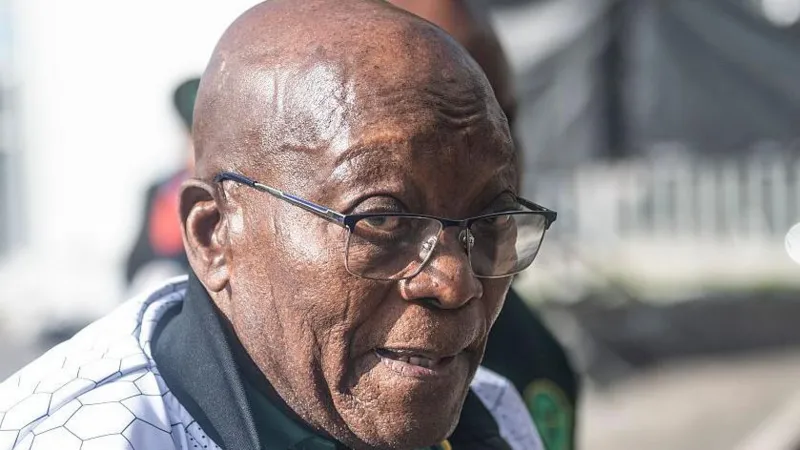
South Africa proposes stricter protocols for former leaders following Jacob Zuma’s controversial India visit

South Africa’s Department of International Relations and Cooperation has submitted formal recommendations to parliament to establish stricter rules and greater transparency regarding foreign travel undertaken by former heads of state.

The legislative push follows intense backlash over a recent visit to India by former President Jacob Zuma, during which the 84-year-old politician was photographed at a temple alongside fugitive businessman Ajay Gupta.

The Gupta family remains central to South Africa’s massive “state capture” corruption scandal, which involved allegations of systemic political influence and state asset siphonage that ultimately contributed to Zuma’s resignation in 2018.

The incident sparked severe political friction, leading South Africa’s High Commissioner to India, Anil Sooklal, to be recalled after he was also pictured alongside Zuma and Gupta. Foreign Affairs Minister Ronald Lamola confirmed that the proposed protocols would require former presidents to disclose complete details regarding international itineraries prior to departure.

The advance documentation would allow government agencies to evaluate security requirements alongside potential diplomatic, political, and reputational risks to the nation.

The controversy marks the latest diplomatic dispute involving the former president, who now leads the opposition uMkhonto we Sizwe (MK) party following his expulsion from the ruling African National Congress (ANC). Last year, the South African government issued a formal diplomatic protest to Morocco after Zuma engaged in talks supporting Moroccan sovereignty over the disputed Western Sahara region, directly contradicting official South African foreign policy.

Similar Posts

  • | | |

    Iran rejects US proposals over ‘Excessive Demands’

    Iran has rejected proposals put forward by the United States during indirect negotiations, Iranian Deputy Foreign Minister Kazem Gharibabadi said, citing what Tehran described as excessive and unacceptable demands from Washington. Speaking about the recent diplomatic contacts, Gharibabadi said the talks initially began in Islamabad through intermediaries. According to him, the US side presented a plan that included demands Iran could not accept, prompting the Iranian delegation to reject the proposal outright. Gharibabadi said Washington had warned that rejecting the plan would effectively end the negotiations and lead to the withdrawal of the US delegation. He added that the talks ultimately ended in exactly that manner, with the American delegation leaving the discussions. The Iranian deputy foreign minister stressed that Tehran neither insisted on continuing the negotiations nor asked the US delegation to remain at the table. He described Iran’s position as an example of what he called “dignified diplomacy,” arguing that Tehran would not compromise on what it considers its fundamental principles. Gharibabadi also discussed developments surrounding the Strait of Hormuz, a vital international shipping route. He said diplomatic discussions also took place in Oman after Iran moved to close the strait. According to the Iranian official, an Omani delegation proposed keeping a southern route open to allow ships to pass while Iran and Oman continued discussions. The proposal reportedly suggested that the route could later be closed depending on the outcome of the talks. However, Gharibabadi said Iran did not accept the proposal. He maintained that Iran had made its position clear from the beginning of the conflict and would not agree to arrangements that it believes undermine its stated principles. Gharibabadi further said Iran’s policy of keeping the Strait of Hormuz closed remains unchanged. He presented the decision as another example of Tehran’s approach to what he described as “dignified diplomacy,” signalling that Iran intends to maintain its position despite continued diplomatic efforts and international pressure.

  • | |

    Priyanka reveals Nick Jonas won her heart

    LOS ANGELES: Actress Priyanka Chopra has opened up about her marriage to singer Nick Jonas, saying mutual respect and kindness have played an important role in keeping their relationship strong. Priyanka discussed her relationship while attending the New York premiere of The Cycle of Love on August 20. She is also an executive producer of the documentary, which tells the extraordinary story of Indian street artist PK Mahanandia and his 6,000-mile bicycle journey to reunite with his love, Charlotte Von Schedvin. The couple’s decades-long love story appeared to resonate with Priyanka, who described it as an inspiring and heartwarming example of enduring love. Speaking about her own marriage, the actress highlighted the importance of respecting cultural backgrounds in a multicultural relationship. She said Nick’s willingness to embrace her Indian heritage has been an important part of their bond. Priyanka said understanding and respecting a partner’s roots can strengthen a relationship, particularly when two people come from different cultural backgrounds. Nick has embraced several aspects of Indian culture and traditions. The couple has also made efforts to ensure their four-year-old daughter, Malti, remains connected to her Indian heritage through family traditions and Hindu celebrations. Priyanka also shared a simple piece of advice for couples hoping to maintain a strong relationship. According to the actress, kindness towards one’s partner is one of the most important elements of a lasting marriage. The actress and Nick Jonas married in 2018 after a whirlwind romance. Since then, the couple has frequently spoken about their family life and their efforts to balance their professional commitments with raising their daughter.

  • | |

    Iqra Aziz shares first photos of daughter Sophia

    Pakistani actor Iqra Aziz has delighted fans by revealing the face of her daughter, Sophia Hussain, for the first time through a heartwarming family photoshoot shared on social media. The actress posted a series of adorable pictures featuring her son, Kabir Hussain, and daughter Sophia. The siblings were dressed in matching white outfits, creating a charming and elegant look that quickly captured the attention of fans online. Iqra and her husband, actor and director Yasir Hussain, welcomed their daughter earlier this year. While announcing Sophia’s birth in January, the actress had shared the happy news with her followers but chose not to reveal the baby’s face at the time. The newly shared photographs mark Sophia’s first public appearance on Iqra’s social media accounts. Fans flooded the comments section with congratulatory messages, praising the children’s adorable bond and calling Sophia a striking resemblance to her mother. Known for her performances in several hit television dramas, Iqra Aziz has remained one of Pakistan’s most admired actors. Alongside her successful acting career, she often shares glimpses of her family life with fans, making her social media updates widely followed.

  • |

    Sarfaraz defends selection after Pakistan defeat

    Pakistan red-ball head coach Sarfaraz Ahmed has hinted at possible changes to the playing XI for the second Test following the team’s 90-run defeat to the West Indies in the series opener. Speaking after the match, Sarfaraz admitted that Pakistan’s batting performance fell well below expectations, particularly in the second innings, where the side once again failed to build meaningful partnerships. He described the batting collapse as the biggest factor behind the defeat and stressed that the team must improve if it hopes to level the series. The coach said Pakistan had a valuable opportunity to take control of the match by securing a first-innings lead but failed to capitalize on the advantage. According to him, the missed opportunity shifted the momentum in favour of the hosts and made the chase in the fourth innings significantly more difficult. Sarfaraz also reflected on the dismissal of opener Imam-ul-Haq, saying the left-hander had looked comfortable at the crease and was batting well before losing his wicket. He believed that had Imam shown a little more patience, Pakistan could have built a stronger foundation and put themselves in a better position to challenge the target. The head coach also expressed disappointment with the team’s bowling effort on the third day of the Test. He pointed to the 61-run partnership for the eighth wicket by the West Indies, saying Pakistan should not have allowed the lower-order batters to add crucial runs. He noted that those extra runs eventually proved significant in the context of the match. Despite criticism over Pakistan’s team selection, Sarfaraz defended the decision to field five specialist bowlers. He said the management had carefully assessed the playing conditions before finalizing the combination and believed it was the right approach based on the nature of the pitch. “We selected the side after evaluating the conditions and felt that playing five bowlers gave us the best chance of taking 20 wickets,” he said, adding that the execution on the field ultimately mattered more than the team composition. Looking ahead to the second Test, Sarfaraz confirmed that changes remain a possibility as the coaching staff reviews the team’s performance. He revealed that middle-order batter Saud Shakeel and opener Abdullah Shafique are still under consideration for selection. However, he made it clear that no final decision has been taken regarding the playing XI. The coaching staff will assess the match situation, the expected pitch conditions and the overall balance of the side before naming the team for the second Test. Pakistan will now look to regroup quickly after the disappointing start to the series, with the second Test offering an opportunity to bounce back and keep the contest alive. Team management will be hoping that both the batting and bowling units respond positively after a below-par performance in the opening match.

  • |

    Iranian footballers become Australian citizens

    Two Iranian women footballers who refused to publicly support their government’s stance during an international tournament have officially become Australian citizens after seeking protection in Australia earlier this year. Atefeh Ramezanisadeh, 34, and Fatemeh Pasandideh, 22, received their Australian citizenship at a ceremony in Brisbane on Wednesday, marking the end of a journey that began when they chose not to return to Iran following the Women’s Asian Cup. The pair were among seven members of Iran’s national women’s football team who were granted humanitarian visas while in Australia. However, five of the players later returned to Iran, while Ramezanisadeh and Pasandideh remained, citing concerns about their safety. The players drew international attention after refusing to sing Iran’s national anthem before their opening match during the tournament. Their silent protest came amid heightened tensions following the conflict involving Iran, the United States and Israel, raising fears they could face punishment if they returned home. Australian authorities allowed the athletes to seek asylum after appeals from members of the Iranian community living in Australia. Their citizenship was formally granted at a ceremony attended by Australia’s Interior Minister, Tony Burke. Speaking after the ceremony, Pasandideh described becoming an Australian citizen as the beginning of a new chapter in her life, while Ramezanisadeh said the moment reflected years of hardship and sacrifice. Both expressed gratitude for the opportunity to build a future in Australia. The footballers are now training with Brisbane Roar FC Women and hope to continue their professional football careers in the country. Their decision to remain in Australia followed reports that Iranian state media criticised members of the national team for remaining silent during the anthem, with some commentators branding them disloyal. Human rights advocates also voiced concerns that players who returned to Iran may have faced pressure through threats directed at their families.

  • |

    Xi backs Brazil against foreign interference in call with Lula

    Chinese President Xi Jinping expressed support for Brazil’s efforts to protect its sovereignty and resist foreign interference during a phone conversation with Brazilian President Luiz Inacio Lula da Silva, according to Chinese state media. The discussion took place just months before Brazil’s closely watched presidential election and against the backdrop of growing trade and diplomatic tensions with the United States. According to China’s Xinhua news agency, Xi praised Brazil’s role on the international stage and said Beijing values the country’s influence in global affairs. He stated that China supports Brazil in defending its independence, rejecting outside interference, and contributing to regional and international peace and stability. The phone call comes less than three months before Brazilians head to the polls in an election expected to be highly competitive. President Lula is seeking another term and faces a challenge from right wing candidate Flavio Bolsonaro, the son of former president Jair Bolsonaro. The Brazilian presidency said the two leaders also discussed strengthening economic cooperation. Both sides agreed on the importance of accelerating negotiations for a trade agreement between China and Mercosur, the South American trade bloc that includes Brazil, Argentina, Paraguay, and Uruguay. Such an agreement could expand trade opportunities between the region and the world’s second largest economy. During the conversation, which lasted more than an hour, Lula reaffirmed his commitment to expanding Brazil’s international trade network. He said his government is working to diversify export markets and reduce dependence on a limited number of trading partners, particularly as Brazil faces increased tariff pressure from the United States. Relations between Brasilia and Washington have become more strained in recent months. The United States introduced two additional rounds of tariffs on a range of Brazilian products this month, following a significant tariff increase imposed last year. The measures were linked to political tensions surrounding the legal case that resulted in former president Jair Bolsonaro being sentenced to prison over an alleged coup plot. Lula has strongly criticized the tariffs, arguing that they amount to political pressure during an election year. He has accused Washington of attempting to influence Brazil’s domestic affairs through economic measures, an allegation the United States has rejected. Diplomatic tensions have also surfaced over election related issues. According to diplomatic sources, Brazil recently refused entry visas for two American officials who planned to visit the country’s election authorities ahead of the October vote. The move reflected growing sensitivity within the Brazilian government over foreign involvement in electoral matters. Meanwhile, Flavio Bolsonaro has continued to question the reliability of Brazil’s electronic voting system despite repeated assurances from election officials that it is secure. His claims have echoed similar allegations made by US President Donald Trump regarding American elections, although no credible evidence has supported those accusations. While the Chinese government highlighted Xi’s support for Brazil in resisting external interference, the official statement released by the Brazilian presidency did not specifically mention that part of the discussion. Instead, it focused on economic cooperation and the importance of strengthening trade ties between Brazil, China, and the Mercosur bloc. The conversation underscores the increasingly close relationship between Beijing and Brasilia at a time when Brazil is balancing political challenges at home with shifting economic and diplomatic dynamics on the global stage.

Leave a Reply

Your email address will not be published. Required fields are marked *