goodbye spnec mvp
| | | | |

Goodbye, SPNEC: MVP rebrands Leviste’s solar firm, lines up P5-B deal

Manuel V. Pangilinan is giving Leandro Leviste’s old solar crown jewel quite the makeover. First, shed the SPNEC name. Next, bring in nearly P5 billion worth of other renewable energy businesses.

And perhaps, pitch the shiny new thing to stock market investors all over again.

inside track logo

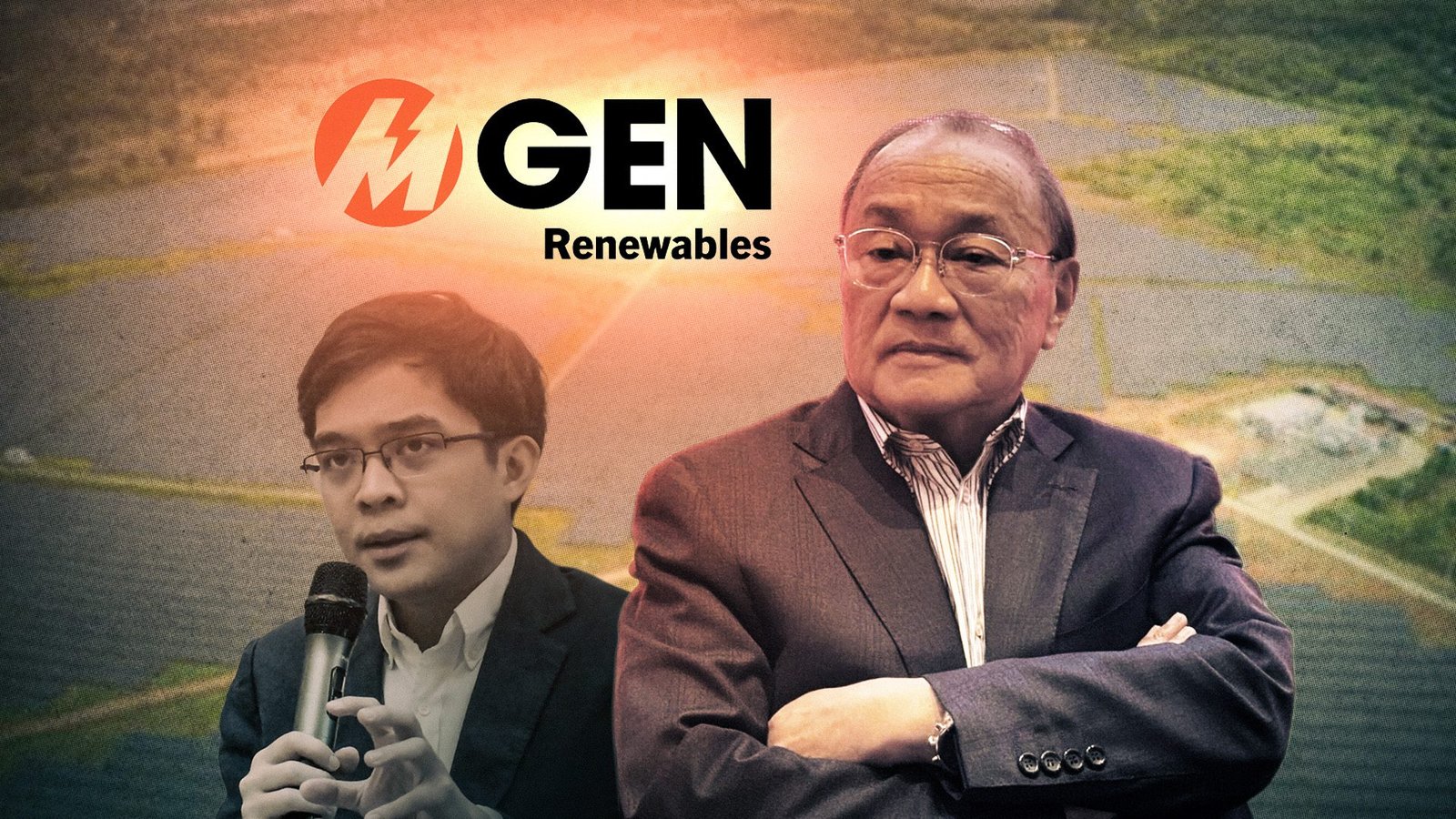
SP New Energy Corporation (SPNEC) is now officially MGEN Renewables Inc., (MGENR) after securing Securities and Exchange Commission approval on Monday, October 26; its stock ticker is also set to change to MGENR. 


Goodbye, SPNEC: MVP rebrands Leviste’s solar firm, lines up P5-B deal

Officially, the renaming is part of the Meralco group’s broader rebranding strategy. Conveniently, it also removes a reminder of Solar Philippines, the controversial empire Leviste built before Pangilinan’s group took control.

And there’s quite a history behind SPNEC.

FROM SPNEC to MGENR. This Rappler diagram shows the ownership of the rebranded solar company as of September 1, 2026 and before the proposed share swap. Diagram by Raphael Reyes/Rappler.

Leviste made his fortune assembling landholdings and securing solar development rights that attracted deep-pocketed investors, including Pangilinan himself. Industry sources that Rappler spoke with describe the young billionaire as a talented “flipper.” 

But getting the rights to build solar farms and actually getting them built are two different businesses.

The Department of Energy (DOE) terminated 33 contracts tied to Leviste’s wider Solar Philippines group, covering around 11,400 megawatts of proposed capacity, and sought around P24 billion in financial obligations. His camp disputes the claims.

While much of the P24-billion mess relates to Leviste’s other companies, SPNEC is dragged into this too.

In a December 23, 2025 letter seen by Rappler, Energy Secretary Sharon Garin terminated the service contract for SPNEC’s 280-megawatt Santa Rosa Nueva Ecija 2 project and demanded P10.34 billion.

The DOE cited missed work-program commitments, an unrenewed performance bond, and missing documents, including a feasibility study and proof of land rights. Most of the demand came from P12.38 billion in work-program commitments, less P2.04 billion credited for reported accomplishments.

MGEN insists SPNEC is legally separate from Solar Philippines and not liable for the wider group’s P24 billion obligation. But it acknowledges that Santa Rosa belongs to SPNEC and says that it invoked force majeure over transmission delays and sought reconsideration.

Separately, Leviste and his mother, Senator Loren Legarda, face graft and plunder complaints involving solar contracts awarded to Leviste-linked companies. Both deny wrongdoing.

Leviste himself has kept his distance from his now Meralco-controlled company, resigning from the board in January and cashing out P3-billion worth of shares, leaving his holding company with an 11.51% stake.

Must Read

[Vantage Point] As Leandro Leviste cashes out of SPNEC, his private companies remain at the table


[Vantage Point] As Leandro Leviste cashes out of SPNEC, his private companies remain at the table

New name, new MGENR

So, what’s next for MGENR?

On Tuesday, October 27, MGEN Renewables’ board approved a proposed P4.98-billion deal to take in stakes in five solar businesses from its controlling shareholder, MGEN Renewable Energy Inc., another Meralco subsidiary.

The companies have interests in operating solar plants across Luzon:

  • Greenergy for Global Inc. – 52.7-megawatt solar plant in Isabela
  • Greentech Solar Energy Inc. – 19.8-megawatt solar plant in Nueva Ecija
  • CACI Power Corporation – Linked to an 80.1-megawatt solar plant in Rizal
  • Nuevo Solar Energy Corporation – 68.7-megawatt solar plant in Ilocos Norte
  • PowerSource First Bulacan Solar Inc. – 55-megawatt solar plant in Bulacan

Instead of paying cash, MGEN Renewables will issue around 3.1 billion new shares to its controlling shareholder. If completed, the share swap deal would strengthen Meralco’s control while further diluting Leviste and other investors.

Then comes the more intriguing possibility, a “re-IPO” targeted for March 2027.

Since Leviste already took SPNEC public in 2021, this would be another share offering in the now bigger company under Meralco’s control, rather than a second listing. Nothing has been finalized.

This time, there’s more to show investors. Its P200-billion MTerra Solar project began commercial operations in August, while MGEN Renewables forecasts P774 million in profit for 2026, reversing a P4.1-billion loss in 2025.

The group also plans to invest up to another P7.815 billion in Terra Solar, subject to lender and investor approvals. – Rappler.com

Must Read

Who comes after MVP? Pangilinan has successors in mind.


Who comes after MVP? Pangilinan has successors in mind.

Similar Posts

  • |

    Punjab cotton crop in satisfactory shape as rice cultivation surpasses target

    LAHORE: The cotton crop in Punjab is currently showing a generally satisfactory condition, while rice cultivation in the province has exceeded the government’s target by a significant margin, with growers sowing the crop over more than six million acres against the planned five million acres. The latest assessment was shared at a high-level meeting held in Multan on Saturday to review the progress of major standing crops, agricultural extension services and measures aimed at strengthening farming activity across Punjab. The meeting was chaired by Additional Chief Secretary Punjab Iftikhar Ali Sahoo and brought together senior officials from the Agriculture and Irrigation departments, representatives of the farming community and experts from the agricultural sector. Among those attending were Muhammad Nawaz Sharif University of Agriculture Vice Chancellor Professor Dr Asif Ali, Special Secretary Agriculture South Punjab Sarfraz Hussain Magsi, Agriculture Department Directors General Abdul Hameed, Naveed Asmat Kahloon, Dr Aamir Rasool and Dr Sajid-ur-Rehman, as well as Kissan Ittehad President Khalid Mahmood Khokhar, Syed Hassan Raza and Dr Muhammad Iqbal Bandesha. Additional Secretary Task Force Shabbir Ahmed Khan, Director General Crop Reporting Dr Abdul Qayyum and Agriculture Department Consultant Dr Muhammad Anjum Ali participated in the meeting through a video link. Officials briefed the meeting on the condition of major crops and the progress of field-level initiatives designed to assist farmers. Cotton remained a major focus of the discussion because of its importance to Pakistan’s textile-based economy and its contribution to agricultural incomes. The participants were informed that the cotton crop across Punjab was in a satisfactory condition. However, officials stressed the need for continued field monitoring and timely technical support to protect the crop from potential threats during its critical growth stages. Cotton is considered one of Pakistan’s most important cash crops and serves as a major source of raw material for the country’s textile industry. Its performance has a direct bearing on farmers, ginners, textile manufacturers and export-oriented businesses. In recent years, cotton production has faced challenges from changing weather patterns, pest attacks, input costs and competition from alternative crops. Sahoo emphasised that the government was giving priority to agricultural development and the economic well-being of farmers. He directed agriculture officials and field formations to maintain regular contact with growers and ensure that technical advice reached farmers in a timely manner. He said the strategy prepared for the revival and strengthening of cotton cultivation should be implemented in letter and spirit. Officials were also asked to remain active in the field and assist growers in dealing with crop-related issues. Highlighting cotton’s wider economic significance, the additional chief secretary said the country’s economy and textile sector could not be viewed separately from the performance of the cotton crop. He stressed the need for coordinated efforts to improve productivity and strengthen the position of cotton growers. The meeting also reviewed the progress of rice cultivation. According to the officials, rice had already been planted over more than six million acres in Punjab, exceeding the season’s target of five million acres. Sahoo directed agricultural authorities to intensify technical guidance for rice growers, particularly to help them improve productivity, maintain crop quality and adopt better farming practices. He called for greater involvement of regional agricultural forums and professional experts in addressing issues faced by farmers at the local level. Such platforms, he said, should use their technical expertise to help improve agricultural performance and provide practical solutions to growers. The additional chief secretary also appreciated the efforts of Agriculture Department field teams for their role in supporting farmers and monitoring crop conditions across the province. Later, Sahoo visited the Model Agriculture Mall in Multan to inspect arrangements for the provision of agricultural inputs to farmers. During the visit, he reviewed the availability of fertilisers and other essential inputs and sought information from officials regarding stocks and farmer demand. He directed the relevant authorities to ensure uninterrupted availability of fertiliser at the facility so that farmers did not face shortages during the ongoing crop season. Officials said crop conditions would continue to be monitored closely in the coming weeks. With rice cultivation entering the final stages of the transplantation period and cotton moving into an important phase of its growth cycle, timely field intervention and availability of agricultural inputs would remain crucial to determining overall crop performance. The government is expected to maintain its focus on farmer guidance, crop monitoring and input availability as the province moves further into the agricultural season.

  • | |

    US imposes tariffs on Pakistan and more than 60 trading partners

    The United States has introduced a new round of tariffs on imports from more than 60 trading partners, including Pakistan, as part of a broader effort to strengthen measures against goods allegedly linked to forced labour. The new duties officially came into effect on July 24 and are expected to affect trade between the United States and a large number of countries. Under the latest policy, Pakistan has been placed in the group of countries whose exports to the United States will face a 10% tariff. The same tariff rate has also been imposed on imports from countries including India, Bangladesh, the United Kingdom, Canada, Argentina, Cambodia, Ecuador, El Salvador, Guatemala, Honduras, Indonesia, Jordan, Malaysia, Mexico, Sri Lanka and Trinidad and Tobago. Another group of 38 countries will face a 12.5% tariff on goods exported to the US under the same policy. The US administration said the decision was taken because these countries had failed to effectively prevent the import or production of goods allegedly made through forced labour. According to American officials, stronger enforcement of labour laws and better monitoring of supply chains are needed to stop products made under forced labour conditions from entering international markets. The new measures are part of President Donald Trump’s trade agenda, which focuses on using tariffs to address trade and labour-related concerns. The administration has introduced the tariffs under Section 301 of the US Trade Act, a legal provision that allows the United States to take trade action against countries it believes are engaging in unfair trade practices. The latest action follows a major legal setback earlier this year. In February 2026, the US Supreme Court blocked the implementation of an earlier tariff package introduced by the Trump administration. That policy had proposed additional duties ranging from 10% to 50% on imports from several countries. Following the court’s decision, the administration adopted a different legal mechanism to introduce the current tariffs. The decision has drawn criticism from several US trading partners. Australia and Brazil have described the new tariffs as unfair and said they will continue diplomatic efforts to have the measures withdrawn. Norway also rejected the allegations behind the tariffs, saying the decision was based on unsubstantiated claims. Despite the broad scope of the new policy, several important products have been excluded. The tariffs do not apply to imports of crude oil, natural gas, selected agricultural commodities and fertilisers. Goods that are already subject to separate Section 232 national security tariffs, including steel, aluminium, automobiles and copper, are also exempt from the latest duties.

  • |

    Pakistan seeks $1.3 billion Chinese loan refinancing to strengthen forex reserves

    Pakistan has formally approached China to refinance a $1.3 billion commercial loan, as the government continues efforts to strengthen the country’s foreign exchange reserves and meet its external financing obligations. According to officials familiar with the matter, negotiations between Pakistani and Chinese authorities are currently in progress to finalise the terms and conditions of the refinancing arrangement. Once the discussions are completed, the funds are expected to be disbursed later this month. The anticipated inflow is expected to provide much-needed support to Pakistan’s foreign exchange reserves, which remain under pressure due to significant external debt repayments and ongoing financing requirements. The refinancing would also help ease short-term liquidity pressures while supporting the country’s broader macroeconomic stability. Sources revealed that Pakistan repaid approximately $2.2 billion in external debt during July, including the settlement of the $1.3 billion Chinese commercial loan. The government’s request for refinancing is aimed at replacing the repaid amount, ensuring that reserve levels remain stable without placing additional strain on the country’s external account. The move comes as Islamabad continues to pursue a strategy of securing rollover agreements and refinancing facilities from friendly countries and international partners to meet its debt servicing commitments. Maintaining adequate foreign exchange reserves has remained a key priority for economic managers as Pakistan seeks to strengthen investor confidence and sustain financial stability. Economic experts believe that successful refinancing of the Chinese loan would provide temporary relief to the country’s external financing position while allowing policymakers greater flexibility in managing upcoming debt obligations. Officials said talks with Chinese financial institutions are progressing positively, although the final timeline will depend on the completion of documentation and agreement on financing terms. The refinancing request also reflects Pakistan’s ongoing efforts to manage its external debt profile prudently amid global economic uncertainties and higher financing costs in international markets.

  • | | |

    Pakistan car sales jump 141% in July

    ISLAMABAD: Car sales in Pakistan recorded a strong increase in July 2026. Sales rose by 141.28% compared with the same month last year. According to data released by the Pakistan Automotive Manufacturers Association (PAMA), manufacturers sold 17,216 vehicles in July 2026. The figure was significantly higher than the sales recorded in July 2025. A total of 7,135 vehicles were sold during that month. The latest figures show that vehicle demand improved sharply at the beginning of the new financial year. The increase also indicates stronger activity in Pakistan’s automobile market. The year-on-year rise was recorded despite continued challenges facing the automobile sector. Higher vehicle prices and financing costs have affected the market in recent years. The latest sales figures, however, show a notable recovery in demand. Industry data also showed an increase in electric vehicle sales during July. The growth points to rising interest in electric vehicles in the local market. The increase in electric vehicle sales could also reflect changing consumer preferences. Buyers are gradually showing greater interest in newer and more fuel-efficient technologies. Automobile manufacturers and dealers are expected to closely monitor the trend in coming months. Sustained growth in sales could provide a positive signal for the broader automotive industry.

Leave a Reply

Your email address will not be published. Required fields are marked *