syrian court sentences
|

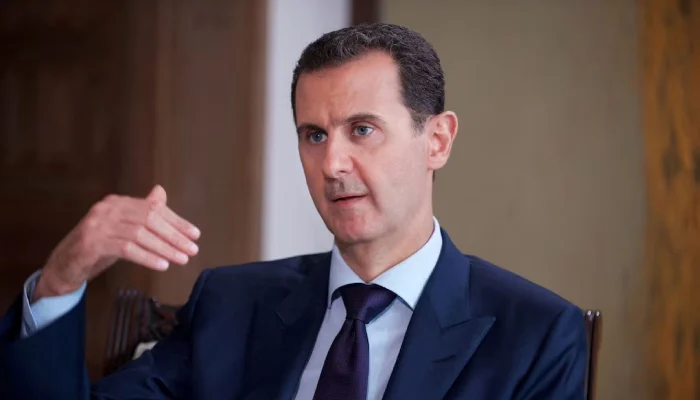
Syrian court sentences ousted president Bashar al-Assad to death in absentia

A court in Damascus has sentenced ousted leader Bashar al-Assad to death in absentia after convicting him of war crimes, crimes against humanity, intentional murder, torture, and arbitrary arrest during the country’s civil war.

The ruling marks the first Syrian conviction against Assad following his removal from power by opposition forces in December 2024, ending his family’s 54-year rule.

The court handed down identical death sentences in absentia to Assad’s brother, Maher al-Assad, who commanded the Fourth Armoured Division. Former security official Atef Najib, a cousin of the Assads, was tried in person following his capture in early 2025 and also received a death sentence.

Crowds gathered in Damascus and Deraa to celebrate the verdict, carrying photos of relatives killed or detained during the conflict. Assad and his brother currently reside in Russia under political asylum. Legal experts note that the capital sentence makes future extradition from foreign jurisdictions highly unlikely.

Similar Posts

  • |

    Moroccan businessman’s death reignites Italy migration debate

    BOLOGNA: The death of a Moroccan businessman during a police restraint in the Italian city of Bologna has reignited Europe’s heated debate over migration, policing and the treatment of immigrants, with the case exposing the deeply personal human stories often overshadowed by political rhetoric. The incident comes as European governments face mounting pressure over migration policies. Just days after thousands of migrants crossed from Morocco into Spain’s North African enclave of Ceuta, Italian Prime Minister Giorgia Meloni announced plans to suspend a free-movement agreement with Spain, reinforcing her government’s tough stance on immigration. Amid the political storm, the death of Abderrahim Fakir, a 42-year-old Moroccan-born entrepreneur who had spent most of his life in Italy, has become a symbol of the broader tensions surrounding migration and law enforcement. Videos recorded by local residents on July 19 showed police officers restraining Fakir face down on the ground for several minutes after responding to reports of a distressed man behaving erratically in a residential area. The footage, which quickly spread across social media, sparked widespread public outrage and renewed scrutiny of police conduct. Authorities said officers were responding to emergency calls about a man shouting, kicking garage doors and striking a vehicle. An autopsy and official investigations into the officers’ actions remain ongoing, while four Red Cross volunteers who were present are also under review. The tragedy triggered thousands of peaceful protesters to gather in Bologna, demanding accountability and justice for Fakir’s family. However, demonstrations later turned violent when a small group clashed with police, leaving dozens of officers injured and further intensifying political divisions. Friends, relatives and lawyers describe Fakir as far more than the image portrayed in political debates. Having arrived in Italy from Morocco at the age of six, he built a successful life, eventually owning a small metalworking company after years of hard work. Behind that success, however, he had been battling severe anxiety. According to his lawyer, Fakir feared deportation after complications involving his residency permit, despite living in Italy for nearly four decades. He had also been struggling financially as his business declined, forcing him to lay off several employees. Family members said he concealed his emotional pain, insisting everything was fine even as he sought psychiatric assistance weeks before his death. Sociologists argue that Fakir’s story highlights the dangers of reducing migration to political slogans while ignoring the human lives behind the headlines. As Italy awaits the outcome of official investigations, his family says they continue to trust the country’s justice system and hope the full truth surrounding his final moments will emerge.

  • | |

    PTI changes venue for August 5 rally in Peshawar

    Peshawar: Pakistan Tehreek-e-Insaf (PTI) has changed the venue for its August 5 public rally, with party leaders announcing that the gathering will now take place at an open ground near the Peshawar Motorway instead of the previously planned location. The decision was made during a PTI parliamentary party meeting held at the Chief Minister’s House in Peshawar. The meeting was chaired by Khyber Pakhtunkhwa Chief Minister Sualeh Afridi and attended by members of the National Assembly and the Provincial Assembly. Addressing the meeting, Afridi said preparations for the rally were in full swing and responsibilities had been assigned to party lawmakers to ensure the event’s success. He described the August 5 rally as a “semi-final” and a decisive gathering, saying the party would present its future political strategy to the public. According to the chief minister, the venue was shifted to an open ground near the Peshawar Motorway to improve public access and accommodate a larger number of participants. Afridi also reviewed the party’s political efforts since October 15, 2025, stating that PTI had pursued constitutional and legal avenues to resolve political issues through dialogue. He said the party leadership had sought meetings with PTI founder Imran Khan through legal channels, including approaching the Islamabad High Court and the Supreme Court, but those efforts had not produced the desired outcome. He reiterated that PTI remained committed to peaceful political activity and maintained that peaceful protest was the party’s final constitutional option. Afridi also called for better access to Imran Khan by his family, sisters, and personal doctors, while urging authorities to ensure he receives appropriate medical care. The meeting, however, was not without internal disagreements. According to party sources, several lawmakers expressed concerns over the timing of the rally and suggested holding a workers’ convention before launching the movement. Some members argued that the main protest should be organized in Punjab rather than Khyber Pakhtunkhwa to increase political pressure on the federal government. The reported differences led to a heated exchange during the meeting, with some dissatisfied lawmakers leaving before it concluded. Party sources said the chief minister assured members that their concerns would be addressed. The August 5 rally is expected to be one of PTI’s most significant political events in recent months as the party seeks to outline its next phase of political action.

  • | |

    KP CM directs comprehensive review of hospital saf…

    PESHAWAR: Khyber Pakhtunkhwa Chief Minister Sohail Afridi and Chief Secretary Shahab Ali Shah contacted the provincial Health Secretary and directed him to conduct a comprehensive review of security and safety arrangements at hospitals across the province. During the discussion, it was also decided to establish monitoring teams to inspect and assess safety measures at hospitals. The teams will be tasked with checking whether hospitals are adequately prepared to deal with emergencies and whether the required safety protocols are being properly implemented. According to sources in Peshawar, the monitoring teams will include officials from several departments, including Civil Defence, the Health Department, Rescue services, the Provincial Disaster Management Authority (PDMA), and other relevant departments. The involvement of multiple departments is aimed at ensuring a coordinated assessment of hospital safety arrangements. Sources said the monitoring teams will particularly examine fire safety arrangements and other precautionary measures at hospitals. The teams will assess whether hospitals have adequate arrangements to prevent and respond to fire incidents and other emergencies. The move comes as the provincial government focuses on strengthening safety standards in healthcare facilities and ensuring that hospitals are properly equipped to deal with any untoward incident. The Health Department has also called a meeting to discuss safety arrangements at hospitals across Khyber Pakhtunkhwa. According to sources, the meeting will review the preparations in place to deal with any untoward incident or emergency situation at healthcare facilities. Officials will also examine existing safety procedures and identify areas where improvements may be required. The meeting is expected to focus on ensuring that hospitals follow appropriate safety protocols and that relevant departments are prepared to respond quickly in case of an emergency. Khyber Pakhtunkhwa Health Secretary Fayyaz Ali Shah said that standard operating procedures (SOPs) would be developed for all hospitals across the province. He stressed the importance of ensuring proper safety arrangements at healthcare facilities and said that negligence regarding fire safety measures would not be tolerated. The Health Secretary further made it clear that hospital administrations would be expected to comply with the safety requirements and take all necessary precautions to protect patients, attendants, doctors, nurses and other hospital staff. The provincial government’s decision to establish monitoring teams is expected to provide a mechanism for regularly assessing safety arrangements and identifying shortcomings at hospitals. The teams will inspect facilities and report on the condition of fire safety systems and other emergency preparedness measures. The inclusion of Civil Defence, Rescue, PDMA and other departments in the monitoring process is also intended to improve coordination between institutions responsible for emergency response and disaster management. The government has directed the Health Department to ensure that safety standards are implemented effectively across all hospitals in the province. The development of province-wide SOPs is expected to provide hospitals with clear guidelines regarding fire prevention, emergency preparedness and response procedures. Officials have reiterated that no negligence will be tolerated when it comes to fire safety arrangements in hospitals. The upcoming inspections and departmental meeting will help determine whether existing measures are sufficient and what additional steps may be required to improve safety. The initiative reflects the provincial government’s efforts to strengthen emergency preparedness and ensure safer healthcare facilities throughout Khyber Pakhtunkhwa.

  • | | | | |

    Trump drops major statement on Iran: what China an…

    Washington: U.S. President Donald Trump has said he does not believe that China or Russia are supplying weapons to Iran, citing assurances he received from the leaders of both countries. Speaking to reporters, Trump said Chinese President Xi Jinping had assured him that Beijing would not provide weapons to Iran under any circumstances. According to Trump, the Chinese leader also stated that the policy applies to Chinese companies, preventing them from supplying arms to Tehran. Trump said he trusts President Xi’s commitment in the context of U.S.-China relations and believes China is adhering to that position. The U.S. president also said Russian President Vladimir Putin had informed him that Moscow would not sell weapons to Iran. Trump’s remarks come amid continued international attention on Iran’s military capabilities and regional security. However, he did not provide additional details or evidence to support the statements, nor did he elaborate on whether the assurances were part of recent diplomatic discussions. The comments reflect Washington’s ongoing focus on limiting the transfer of advanced military equipment to Iran as regional tensions and global security concerns continue to evolve.

  • |

    93% admissions at top colleges go to private-schoo…

    Concern has been raised over the quality of education in Karachi’s government schools and the ability of their students to gain admission to the city’s leading government colleges. According to admission data, the overwhelming majority of students admitted to Karachi’s top 10 government colleges completed their matriculation from private schools. Despite these institutions being government colleges, around 93 out of every 100 students admitted to them are graduates of private schools, while only about seven come from government schools. Data obtained from the colleges shows that a total of 13,211 students were admitted to these institutions. Of them, 12,264 had completed their matriculation from private schools, while only 947 were graduates of government schools. This means that 92.8% of admissions were secured by students from private schools, while government school students accounted for just 7.2%. In other words, for every 100 students admitted to these government colleges, approximately 93 come from private schools and only seven from government schools. At Adamjee Government Science College, 613 students were admitted. Among them, 585 had completed matriculation from private schools, while only 28 came from government schools. Similarly, Government D.J. Sindh Science College admitted a total of 1,258 students. Of these, 1,214 were graduates of private schools and only 44 had studied at government schools. At Delhi Government Science College, 801 students were admitted. The figures show that 773 came from private schools, while only 28 were graduates of government schools. Government Boys College for Men, Nazimabad, admitted a total of 1,317 students. Of these, 1,257 had completed their matriculation from private schools, while only 60 came from government schools. The same trend is even more visible among government girls’ colleges. Government Sir Syed Girls College admitted 2,507 students. Among them, 2,266 had completed matriculation from private schools, while only 241 were graduates of government schools. At St Lawrence Government Girls College, 691 students were admitted. Of these, 631 came from private schools and only 60 from government schools. Similarly, at PECHS Government College for Women, 1,517 students were admitted. A total of 1,420 had studied at private schools, while only 97 had completed matriculation from government schools. At Khatoon-e-Pakistan Government College for Women, 2,107 students were admitted. Of these, 1,876 were graduates of private schools, while only 231 came from government schools. The figures for boys and girls at Government Degree College Malir Cantonment were also included. According to the data provided, 402 students were counted in the combined figures, while the reported breakdown listed 1,316 students from private schools and 86 from government schools. Meanwhile, Government Degree Boys and Girls College Stadium Road admitted a total of 998 students. Of these, 926 had completed matriculation from private schools, while only 72 were graduates of government schools. The situation at government girls’ colleges is similarly concerning. At Sir Syed Girls College, 2,266 students from private schools secured admission compared with only 241 from government schools. At PECHS Government College for Women, the ratio was 1,420 private-school graduates against 97 government-school graduates. At Khatoon-e-Pakistan Government College for Women, 1,876 private-school graduates were admitted compared with just 231 from government schools.

  • | | |

    Viral protest turns Indian model into symbol of resistance

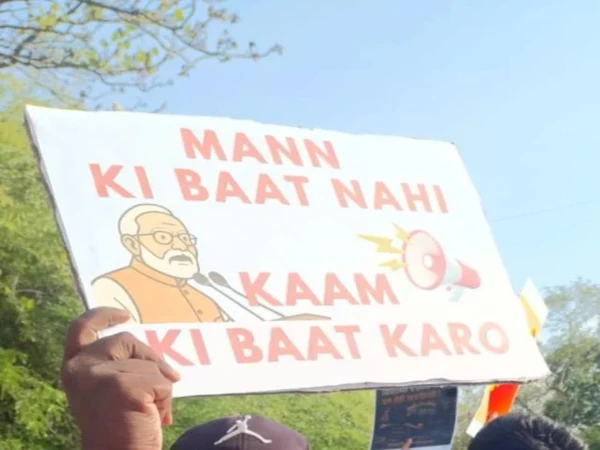
    Indian model and social media personality Riya Aher has become a symbol of resistance after standing in front of a police van during a student protest in Mumbai. Her action, captured on video and widely shared online, has drawn nationwide attention and sparked debate over the handling of student demonstrations in India. The incident took place on Wednesday at Shivaji Park in Mumbai’s Dadar area, where students had gathered to protest alleged irregularities in examinations. The demonstrators were demanding greater transparency in the examination process and calling for the resignation of India’s Education Minister Dharmendra Pradhan. According to Indian media reports, 27-year-old Riya Aher arrived at the protest to express solidarity with the students. As she approached the demonstration site, she noticed a police van carrying a large number of detained students. Concerned about the situation, she questioned police officers about the legal basis for the arrests and asked whether they had arrest warrants for those taken into custody. Riya said the officers did not provide a clear answer. Believing that the students were being treated unfairly, she decided to stand directly in front of the police vehicle, preventing it from moving. She later said she could not remain silent because she believed it was her responsibility as a citizen to speak out against what she considered an injustice. Her action quickly attracted the attention of other protesters and passersby. More people gathered around the police vehicle and joined the demonstration. Protesters raised slogans demanding justice for the students and called for the resignation of Education Minister Dharmendra Pradhan. According to Riya, the public resistance eventually led to the release of the detained students. While officials have not publicly commented on her claim, videos of the confrontation spread rapidly across social media platforms, where many users praised her courage and peaceful protest. Speaking about the viral video, Riya said mobile phone cameras play an important role in documenting events and ensuring accountability. She noted that although young people are often criticised for recording videos on their phones, such recordings can become valuable evidence during public demonstrations and other important incidents. Riya also criticised the government’s response to the student protests, calling the action against demonstrators a serious mistake. She repeated her demand for the education minister’s resignation and urged authorities to respect the democratic right to peaceful protest.

Leave a Reply

Your email address will not be published. Required fields are marked *