
#Kashmiri organization

  • |

    The aftermath of Free (Azad) Kashmir

    For centuries, poets have romanticized Kashmir. The famous Persian couplet claimed: “Agar firdaus bar roo-e-zameen ast, hameen ast-o, hameen ast-o, hameen ast” If there is a paradise on earth, it is this, it is this, it is this. Our national rhetoric held this idea and declared Azad Jammu and Kashmir (AJK) as an Eden of resilient souls. We were taught to view the region through a single prism from our classrooms to our living rooms. Kashmir is a land of dignity waiting for liberation. We rightly raised our voices in moral outrage against Indian state violence.  We condemned the pellet guns in Srinagar. We  called out internet blackouts as crimes against basic humanity. Yet today, as the late Kashmiri poet Agha Shahid Ali lamented: “Kashmiri people are being rowed through Paradise in a river of Hell.” When the same heavy boots, digital blockades, and live gunfire echo through Rawalakot, Kotli, and Mirpur, our collective morality falls into a deafening silence. Finally, the elections have settled down with Pakistan Muslim League-Nawaz (PML-N) securing its lead amid heavy security deployments. Still, the official state narrative speaks of democratic continuity and institutional order.  Beyond the victory speeches lies a darker reality. Elections held under the shadow of civil crackdowns are not a triumph of democracy. In fact, they are an exercise in management. The citizens of Azad Kashmir have not taken to the streets over abstract political games. Their demands were fundamental, human, and modest organized under grassroots movements like the Jammu Kashmir Joint Awami Action Committee (JAAC). They protested peacefully for affordable flour, fair electricity tariffs, local economic dignity, and genuine political representation. Instead of earnest dialogue, the state answered by banning civil rights, mobile internet access, and deploying paramilitary forces. The cost of this refusal to listen is written in blood. Over months of recurring unrest, clashes between security forces and civilian demonstrators have left dozens dead. The deaths consumed local traders, young protesters, and security personnel alongside over 100 people wounded across the region. Reports of continuous firing near Rawalakot confirm a tragic pattern. Whenever citizens ask for basic constitutional rights, they are met with gunshots.  It is painful to admit this hypocrisy, but honesty demands it. As ordinary citizens living in Punjab, we cannot spend our lives idealizing human rights movements across the border while remaining selectively blind to Kashmir. When Delhi cut the internet in the Kashmir Valley, we rightfully called it authoritarian. What name do we give to the blackouts imposed on Muzaffarabad and Poonch? When Indian police opened fire on demonstrators, we called it state violence. How do we rationalize our forces opening fire on citizens asking for fair economic treatment? We must acknowledge that living outside the valley does not grant us the privilege of silence. True solidarity cannot be a convenient geopolitical slogan. Azad (Free) Kashmir must’ve to be anything more than an empty prefix. Its people must possess the freedom to speak, to dissent, to connect, and to live without fear of a bullet. There mustn’t be such an electoral victory that carries legitimacy at the expense of Kashmiri lives. These political wins will remain hollow until the blockades are lifted and the state listens with humility rather than force.  
  • |

    Kashmir’s nightingale Habba Khatoon

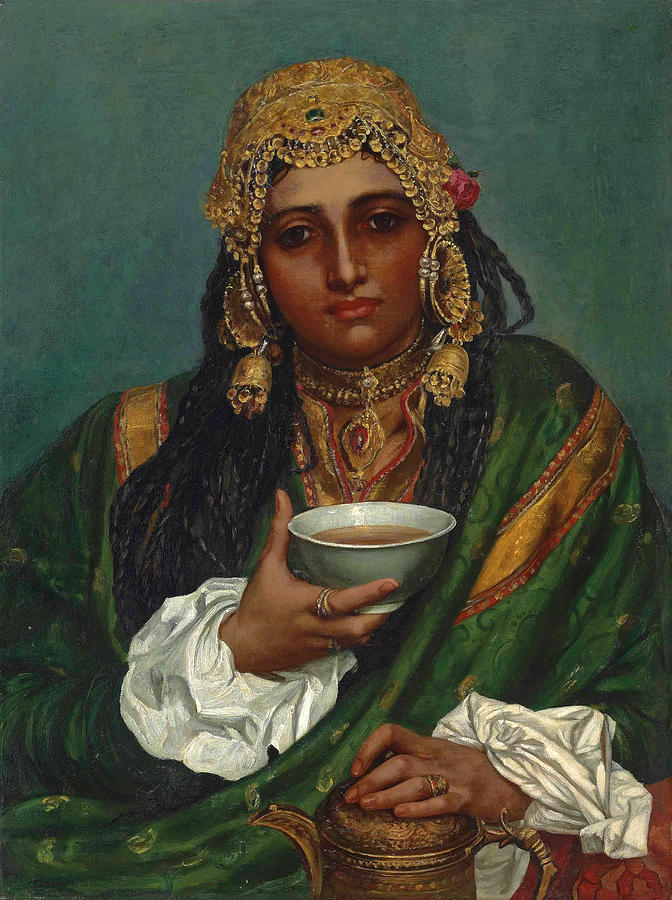
    Habba Khatoon stands as Kashmir’s Nightingale and Zoon: the Moon of Kashmir. Living in the 16th century, she transformed personal grief, marital heartbreak, and political exile into the foundational canon of Kashmiri romantic poetry. She was born to a peasant family in Chandhara village (Pampore), famous for its saffron fields. Unlike most rural girls of her era, her father sent her to a local maktab where she learned Persian and Arabic, nurturing her early literary talent. She got married to a peasant named Aziz Rathar. Unappreciative of her poetic disposition and intelligence, her husband and mother-in-law ill-treated her. She began singing her inner pain while working in the saffron fields and fetching water. Legend holds that while hunting near Pampore, Prince (later Sultan) Yousuf Shah Chak heard her singing under a plane tree. He arranged her divorce and married her as he was mesmerized by her voice and beauty. This marriage elevated her to Queen of Kashmir as Habba Khatoon. Emperor Akbar summoned Sultan Yousuf Shah to Delhi under the pretense of talks, arrested him, and exiled him to Bihar. Kashmir fell to Mughal rule, breaking Habba Khatoon’s world. She shed her courtly garments, donned the robes of an ascetic, and wandered the valley singing lamentations for her lost king. In short, she refused royal comfort. She spent her final years near Gurez and Athwajan, where her tomb rests today. Before Habba Khatoon, Kashmiri verse was dominated by devotional mysticism: Vaakhs and Shrukhs. She revolutionized Koshur literature by introducing the Lol. Lol is a short, melic lyric of intense personal feeling, love, longing, and domestic intimacy. It’s particularly designed to be sung rather than recited. One of her most iconic pieces, sung to this day across the valley: Mey haa karchey kitt kitaye, Mey kar tayiaar lole-vun… Chey kyaah gazi chaani roopeye, Volo haa maalyene dhoopeye! I have prepared myself in every way, I have composed my heart into a song of longing… What does it cost your beauty to look upon me? Come, my love, let us gather wild mountain herbs together! In the following verses, she uses Kashmir’s fleeting spring as an allegory for human beauty and time: Gulaan goy rang, pholan goy bahar, Mey valai poshan hyund hahaar… Yuthus chhumyene chaani dhaar, Volo maayi chaane pyarey! The flowers have faded, spring has taken its leave, My youth is wilting like a blossom in the heat… My eyes remain fixed on the path where you disappeared Come back, my beloved, for the sake of love!   After emperor Akbar exiled her husband to Bihar, she wrote this verse that captures geopolitical heartbreak reduced to raw human loss: Cchey saazey vaaye, bo saazey vaaye, Kati chhak chey, bo kati chhas… Diluk zaar vanay kith-kith bo, Jeel-e-Jhelum geyi aaba-haar! You play your tune far away, while I play mine in solitude, Where are you trapped, and where am I left to wander? How shall I tell you the agony of my heart? Even the waters of the Jhelum weep and overflow their banks for us. Her poetry is more than a story of personal transformation. It is the emotional arc of Kashmir itself. By introducing the Lol, she pulled Kashmiri verse down from abstract, detached mysticism into the intimate, beating heart of human experience. She gave language to the quiet endurance of ordinary women, the agony of sudden separation, and the unyielding beauty of a homeland caught in the tides of history.