aftermath free azad
|

The aftermath of Free (Azad) Kashmir

For centuries, poets have romanticized Kashmir. The famous Persian couplet claimed:

“Agar firdaus bar roo-e-zameen ast, hameen ast-o, hameen ast-o, hameen ast”

If there is a paradise on earth, it is this, it is this, it is this.

Our national rhetoric held this idea and declared Azad Jammu and Kashmir (AJK) as an Eden of resilient souls. We were taught to view the region through a single prism from our classrooms to our living rooms. Kashmir is a land of dignity waiting for liberation. We rightly raised our voices in moral outrage against Indian state violence.  We condemned the pellet guns in Srinagar. We  called out internet blackouts as crimes against basic humanity. Yet today, as the late Kashmiri poet Agha Shahid Ali lamented:

“Kashmiri people are being rowed through Paradise in a river of Hell.”

When the same heavy boots, digital blockades, and live gunfire echo through Rawalakot, Kotli, and Mirpur, our collective morality falls into a deafening silence.

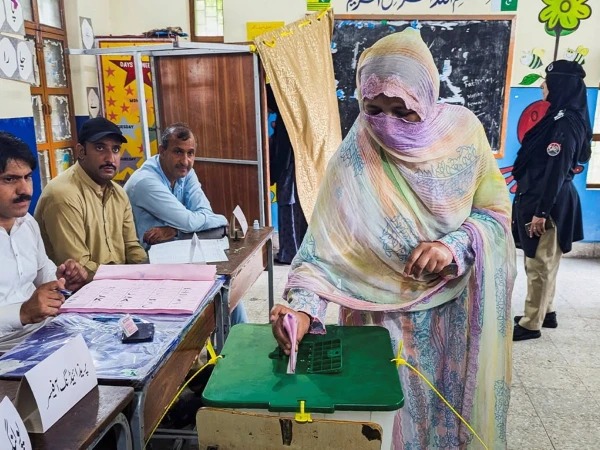
Finally, the elections have settled down with Pakistan Muslim League-Nawaz (PML-N) securing its lead amid heavy security deployments. Still, the official state narrative speaks of democratic continuity and institutional order.  Beyond the victory speeches lies a darker reality. Elections held under the shadow of civil crackdowns are not a triumph of democracy. In fact, they are an exercise in management.

The citizens of Azad Kashmir have not taken to the streets over abstract political games. Their demands were fundamental, human, and modest organized under grassroots movements like the Jammu Kashmir Joint Awami Action Committee (JAAC). They protested peacefully for affordable flour, fair electricity tariffs, local economic dignity, and genuine political representation. Instead of earnest dialogue, the state answered by banning civil rights, mobile internet access, and deploying paramilitary forces.

The cost of this refusal to listen is written in blood. Over months of recurring unrest, clashes between security forces and civilian demonstrators have left dozens dead. The deaths consumed local traders, young protesters, and security personnel alongside over 100 people wounded across the region. Reports of continuous firing near Rawalakot confirm a tragic pattern. Whenever citizens ask for basic constitutional rights, they are met with gunshots.  It is painful to admit this hypocrisy, but honesty demands it. As ordinary citizens living in Punjab, we cannot spend our lives idealizing human rights movements across the border while remaining selectively blind to Kashmir. When Delhi cut the internet in the Kashmir Valley, we rightfully called it authoritarian. What name do we give to the blackouts imposed on Muzaffarabad and Poonch? When Indian police opened fire on demonstrators, we called it state violence. How do we rationalize our forces opening fire on citizens asking for fair economic treatment?

We must acknowledge that living outside the valley does not grant us the privilege of silence. True solidarity cannot be a convenient geopolitical slogan. Azad (Free) Kashmir must’ve to be anything more than an empty prefix. Its people must possess the freedom to speak, to dissent, to connect, and to live without fear of a bullet. There mustn’t be such an electoral victory that carries legitimacy at the expense of Kashmiri lives. These political wins will remain hollow until the blockades are lifted and the state listens with humility rather than force.
 

Similar Posts

  • Frailty, thy name is woman

    Frailty, thy name is woman. When William Shakespeare wrote those famous words in Hamlet, he was reflecting a cultural dogma that would shackle women for centuries. For generations, society treated female vulnerability not as a situational condition, but as an inherent biological truth. Women were categorized as delicate creatures requiring protection, physically incapable of heavy labor, and psychologically unsuited for high-stakes conflict. That archaic myth has officially crumbled. Across military frontlines, deep-sea research facilities, high-altitude athletics, and outer space, women are consistently performing tasks once deemed physically and mentally impossible for them. The notion that physical and emotional fragility is uniquely female is just outdated. It is empirically false. To understand how rapidly this paradigm is shifting, one needs to look no further than recent milestones in defense and aerospace news. Over the past decade, armed forces around the globe including the United States, Britain, and Ukraine have systematically opened elite infantry, combat engineering, and special forces units to women. Reporting from military defense outlets highlights that female service members are completing rigorous combat fitness tests, enduring punishing load-bearing marches carrying 80-pound packs, and demonstrating tactical mastery under live fire. During recent global conflicts, female soldiers have served directly on combat lines, driving heavy tactical vehicles, executing artillery strikes, and providing direct tactical support under extreme duress. The old argument that women lack the physical stamina or aggressive grit for battlefield conditions has been disproven not by rhetoric, but by operational reality. Beyond Earth’s atmosphere, space exploration news provided another definitive refutation of female frailty when NASA astronauts Christina Koch and Jessica Meir conducted the world’s first all-female spacewalk. Working outside the International Space Station for more than seven continuous hours, the pair maneuvered massive hardware components while tethered over 200 miles above Earth. Operating in heavy, pressurized extravehicular suits requires immense upper-body endurance, spatial coordination, and psychological coolness under pressure. Their performance demonstrated that when training, gear, and opportunity align, gender is completely irrelevant to high-risk technical performance. For centuries, skeptics cited raw biological differences such as lower average muscle mass compared to men as definitive proof of female inadequacy for physically demanding tasks. However, modern exercise physiology and ergonomics present a far more nuanced picture. While average biological markers differ across populations, top-tier female athletic conditioning overlaps significantly with high-level male capabilities. A trained female soldier or weightlifter easily outperforms the vast majority of untrained men in functional strength, endurance, and power output. Studies in ultra-endurance athletics such as 200-mile marathons and open-water ocean swims show that women often narrow the performance gap as distance increases. Female physiology displays high metabolic efficiency in utilizing fat stores during prolonged exertion, alongside exceptional psychological resilience in managing physical discomfort. Modern warfare, heavy industry, and aviation rely less on brute force and more on endurance, technical precision, decision-making, and specialized gear. Advances in ergonomic equipment and load-distribution technology ensure that operational success hinges on skill and stamina rather than raw power alone. Physical capability is only half the equation. The traditional stereotype of frailty was always as much about mental weakness as physical limitation. Women were portrayed as overly emotional, prone to panic, and ill-equipped for decisive leadership during crises. Real-world experience repeatedly contradicts this bias. From emergency room physicians navigating mass-casualty events to political leaders steering nations through global pandemics and conflicts, women consistently exhibit calm, strategic resolve under fire. Calling frailty a woman’s trait was never a scientific fact. It was a social construct designed to limit access, independence, and authority of women. When women were barred from gymnasiums, sports, military academies, and executive boardrooms, society pointed to their absence as proof of their inability. Once those doors were forced open, the illusion dissolved. Acknowledging that frailty is not a female trait does not mean pretending that men and women are biologically identical. It means recognizing that human potential is defined by discipline not by gender.

  • |

    Dubai Airport introduces passport-free AI immigration system

    If you want to travel abroad, you usually need considerable time at the airport for passport checks, identity verification and other procedures. Imagine being able to board your flight without showing your passport, identity documents or ticket. It would save a lot of time. It may sound unbelievable but this has become possible at an airport in a Muslim country due to Artificial Intelligence (AI) technology. At Dubai Airport, AI technology helps passengers complete immigration procedures at high speed. The new system was first introduced in September 2025 for passengers boarding flights. However, now immigration procedures have also been made faster for passengers arriving from other countries at Dubai Airport. The new system uses AI, biometric cameras and flight data to complete the verification of passengers and their luggage within seconds. This technology allows up to 10 passengers to pass through border control simultaneously. Passengers walking through the red-carpeted Terminal 3 no longer need to show travel documents or stop for manual checks. They only need to complete registration before arriving at Dubai Airport so that their passport details and facial images can be identified. The system completes passenger clearance in just 3.4 seconds. According to Dubai Airports CEO Paul Griffiths, the airport has invested in camera technology allowing passengers to enter or leave the country without carrying a passport, passing through gate readers or facing difficulties during the process. He further stated that the new technology is currently being tested on first-class passengers and will gradually be made available to all passengers.

  • When dry skin may lead to infection

    Dry peeling skin around the nails is a common problem. It can be uncomfortable and may make simple daily tasks difficult.  This dryness can happen for several reasons including frequent hand washing harsh products and skin irritation. Why does skin  around the nails become dry? Frequent hand washing Washing your hands again and again can remove the skin’s natural oils.  If you do not use moisturizer afterward the skin around your nails may become dry and cracked. •Allergies and Irritation •Nail polish soaps detergents and other products may contain chemicals that irritate the skin.  This irritation can cause dryness peeling or redness. Nail Biting Biting your nails can damage the skin around them.  Small cuts may develop and increase the risk of irritation or infection. Lack of nutrients A poor diet may sometimes affect the health of your skin and nails.  A balanced diet with enough vitamins and minerals is important for healthy skin. Infection dry or damaged skin around the nails can sometimes become irritated or infected especially if it is picked or bitten. How can you  care for dry skin around the nails? •Use moisturizer Apply a good hand cream or moisturizer regularly especially after washing your hands.  This helps keep the skin soft and prevents cracking. •Aloe Vera Apply fresh aloe vera gel to the dry skin around your nails. It can help soothe and moisturize irritated skin. •Honey Apply a small amount of honey to your hands for 10–15 minutes then wash it off with lukewarm water. Honey can help keep the skin moisturized. •Cucumber Place fresh cucumber slices on your hands for about 15–20 minutes.  Then wash your hands with lukewarm water. •Olive oil Gently massage a little olive oil around your nails to help soften dry skin. After a few minutes wash your hands and apply moisturizer. Tip Avoid biting or pulling the peeling skin around your nails. If you notice severe pain  swelling pus or redness that does not improve  consult a doctor or dermatologist.

  • Bad breath causes and prevention

    Almost everyone experiences bad breath at some point in life. In medical terms this condition is called halitosis. While it is often temporary some people may have bad breath for a long time. In certain cases it can also be a sign of an underlying health problem. Experts estimate that about half of all adults experience bad breath at least once in their lifetime. •Common causes of bad breath •Poor oral hygiene One of the main causes of bad breath is not cleaning your teeth gums and tongue properly.  Tiny food particles can stay in the mouth and break down over time. This allows bacteria to grow and produce an unpleasant smell. •Not cleaning the tongue The tongue naturally collects bacteria. If it is not cleaned regularly these bacteria mix with leftover food and can cause bad breath. Cleaning your tongue every day is just as important as brushing your teeth. •Strong smelling foods Foods such as garlic onions and certain spices can make your breath smell bad. After digestion some of the natural oils from these foods enter the bloodstream and reach the lungs where they affect the smell of your breath. •Smoking Smoking is another common reason for bad breath. It leaves a strong smell in the mouth reduces saliva and increases the growth of harmful bacteria. •Dry mouth and not drinking enough water Saliva helps wash away food particles and bacteria. When your mouth is dry bacteria stay longer and produce bad odors. A dry mouth can happen if you sleep with your mouth open take certain medicines have problems with the salivary glands, or simply do not drink enough water. •Gum and tooth problems Plaque can build up around the teeth and gums if you do not brush and floss properly. Over time this can lead to gum disease infections, and bad breath. •Nose throat or sinus infections Bad breath may also be caused by sinus infections throat infections tonsil stones or other conditions affecting the nose and throat. •Certain medical conditions Sometimes bad breath is linked to health problems such as diabetes kidney disease liver disease or acid reflux. If bad breath continues even after improving oral hygiene it is a good idea to consult a doctor or dentist. •Simple tips to keep your breath fresh •Brush your teeth twice a day. •Clean your tongue every day. •Floss regularly to remove trapped food. •Drink plenty of water to keep your mouth moist. •Avoid smoking. •Limit foods with strong odors before social events. Visit your dentist regularly for check ups and cleanings. In many cases bad breath can be prevented with good oral hygiene and healthy daily habits. However if the problem does not go away it may be a sign of an underlying medical condition that should be checked by a healthcare professional.

  • World’s tallest bridge has a giant waterfall

    China has completed many incredible engineering projects in recent years but the Huajiang Grand Canyon Bridge stands out as one of its most amazing achievements. If you’re afraid of heights crossing this bridge might not be easy. It is built 625 meters (2,051 feet) above the ground making it the tallest bridge in the world. It opened to the public in September 2025. However its height is not the only reason it attracts attention. The bridge also features a 300 meter long artificial waterfall creating a spectacular view for visitors. At night a laser lighting system makes the waterfall even more impressive. Chinese officials designed the bridge as more than just a road. It is also a tourist attraction with glass walkways cafes inside the bridge towers and adventure activities such as bungee jumping. According to local authorities thousands of tourists visit the bridge every day. The bridge was also recognized by Time which ranked it as the No. 1 place to visit in 2026. Located in Guizhou the bridge was built to make travel faster in the province’s mountainous landscape. Trips that once took about two hours can now be completed in just one minute.  The steel bridge is 9,482 feet long. Construction began in January 2022 and it was completed and opened in September 2025. Around 20,000 tons of steel were used to build it roughly the same amount of steel found in three Eiffel Towers.

  • | |

    Greek epic poetry finds a home in Irish literature

    There is an intimacy in the way Irish writers engage with classical mythology including epic poetry. The Odyssey predates Ireland’s earliest written epic, Táin Bó Cúailnge (The Cattle Raid of Cooley), by nearly 1,400 years. The distance in time and geography vanishes the moment an Irish poet puts pen to paper. Universal Image of The Weary Traveler In her modern translation of The Odyssey, classicist Emily Wilson frames Homer’s epic through a deeply human lens. She writes of an exhausted wanderer standing outside a home. A figure who has been displaced and lost for decades. That universal image of the weary traveler searching for home is precisely why Homer’s writing has found such a permanent resonance in Ireland’s literary canon. Across generations, Ireland’s greatest literary minds have treated Homer as a living contemporary. William Butler Yeats, Patrick Kavanagh, and Nobel laureate Seamus Heaney all drew heavily on Homeric motifs to articulate the Irish experience. For these writers, the themes of exiled wanderers, domestic longing, political strife, and tragic return were not abstract concepts from a bygone Mediterranean era. They mirrored the realities of Irish history, rural life, and national identity. Seamus Heaney Seamus Heaney’s engagement with classical literature was particularly profound. Heaney frequently used ancient myths to process modern conflict, finding in Greek drama and epic poetry a framework to speak about political violence, loss, and reconciliation during the Troubles in Northern Ireland. By mapping Homeric echoes onto the Irish landscape, Heaney showed that the struggles of Ithaca were not so different from those of Derry or Ulster. To Heaney and his peers, classical antiquity offered a universal mirror through which local grief and local beauty could be understood. Patrick Kavanagh Similarly, Patrick Kavanagh famously elevated the quiet, local struggles of rural Monaghan by comparing them to the epic siege of Troy, insisting that the everyday life of ordinary people contains just as much drama and dignity as the ancient sagas. Meanwhile, W.B. Yeats wove Homeric imagery directly into the fabric of the Irish Literary Revival, bridging Ireland’s Gaelic heritage with classical antiquity to forge a distinct national identity. Ireland’s Relationship with The Odyssey What makes Ireland’s relationship with The Odyssey so enduring is this sense of shared cultural DNA. Both traditions belong to storytelling cultures rooted in oral performance, mythic memory, and a deep reverence for language. Homer’s tales of displaced heroes, lingering grief, and ultimate return resonate naturally within an island nation shaped by exile, migration, and the constant search for home. Ultimately, the literary bridge connecting Homer to Heaney proves that timeless stories do not belong to a single era or place. As long as readers recognize the tired wanderer standing at the door, The Odyssey will continue to find a home in Irish literature. The Literary Parallel Homer’s The Odyssey predates Ireland’s national epic, Táin Bó Cúailnge, by roughly 14 centuries, yet their thematic overlap remains seamless. Prominent Irish authors including Seamus Heaney, W.B. Yeats, and Patrick Kavanagh frequently adapted Homeric themes into their modern works. Emily Wilson’s modern translation highlights themes of exile and displacement, which reflect Ireland’s history of migration, political conflict, and domestic longing.

Leave a Reply

Your email address will not be published. Required fields are marked *