taylor swift songs
|

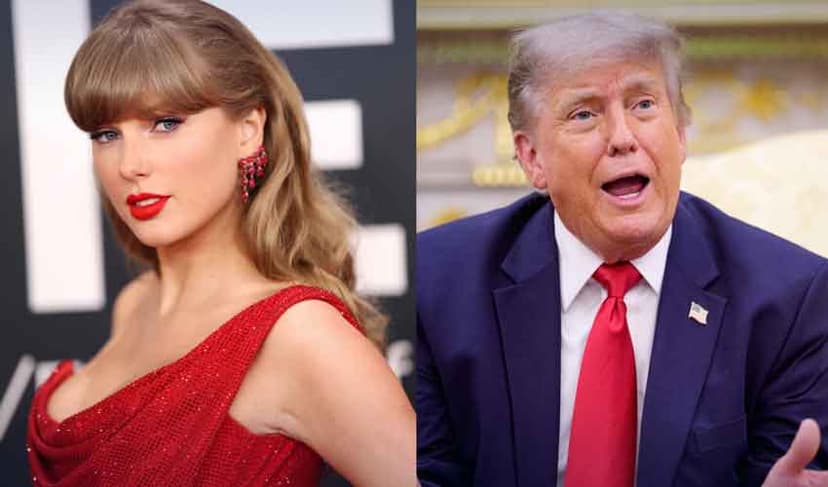
Taylor Swift songs removed from Trump campaign, White House social media posts

WASHINGTON: Several social media videos published by US President Donald Trump’s campaign and the White House that featured songs by pop superstar Taylor Swift have reportedly been removed, drawing renewed attention to the long-running tension between the singer and the Republican president.

The videos had used music associated with Swift during the past week, but the posts were subsequently taken down. Neither the White House nor a representative for Swift immediately issued a public explanation for the removals.

The development comes against the backdrop of Swift’s previous political opposition to Trump. Although the singer has not recently made public comments about the president, she endorsed then-Vice President Kamala Harris, Trump’s Democratic rival, during the 2024 presidential election.

Swift has also been openly critical of Trump in the past. During the 2020 election campaign, she criticized him on social media and indicated that she did not support his bid for another term in the White House.

Trump, for his part, has repeatedly attacked the singer publicly. Following Swift’s endorsement of Harris in 2024, Trump posted a message declaring that he hated the pop star. He also criticized her popularity in a separate social media post last year.

The latest controversy is part of a broader dispute over the use of commercially released music in political campaigns and government-produced social media content. A number of prominent musicians have previously objected to the Trump administration or its campaign using their music, while others have publicly called for restrictions on such use.

Among the artists who have raised concerns about the use of their work are Sabrina Carpenter and Ariana Grande.

Trump campaign uses Swift references in TikTok video

Over the past week, Trump’s campaign used two Swift songs or references to her music in content shared through its TikTok account.

One of the videos adopted the titles and themes of several well-known Swift songs and altered them to promote Trump’s political messaging. The captions referred to songs including Red, Everything Has Changed, We Are Never Ever Getting Back Together and The Last Time, while linking their themes to issues such as immigration, the US-Mexico border and criticism of the previous Biden-Harris administration.

The campaign’s use of Swift-related material was presented as political commentary rather than as an indication of support from the singer.

Another video posted in June used Swift’s song associated with the upcoming Toy Story 5 project. The campaign paired the music with footage showing Trump interacting with children at the White House, attending a UFC event and appearing at a political rally.

The accompanying message praised Trump’s support for the United States and American citizens.

The use of Swift’s music has attracted particular attention because of the singer’s well-documented political differences with Trump.

Previous White House use of Swift’s music

The latest removals are not the first occasion on which Trump-related social media accounts have featured Swift’s music.

In April, the White House published a video showing members of the Artemis II crew meeting Trump. The video incorporated Swift’s song High Infidelity, including a reference to one of its lyrics.

The White House also faced online reaction after publishing another TikTok video in November featuring The Fate of Ophelia, a song from Swift’s album The Life of a Showgirl, which had been released the previous month.

That video combined the song with images of the US flag, American landmarks and photographs of Trump, including his widely circulated 2023 booking photograph.

The post generated significant discussion on social media. A White House spokesperson subsequently told news organisations that the administration was aware the controversial content would attract substantial media attention and said news outlets would extensively amplify it.

Growing debate over music and political messaging

The use of popular music by political campaigns has become an increasingly sensitive issue, particularly when artists have publicly expressed opposition to a candidate or administration.

Trump’s communications operation has maintained a highly active presence across social media platforms and has frequently used popular songs and viral-style videos to promote the president’s political agenda.

Its posts have covered a wide range of issues, including immigration enforcement, US military actions against Iran and the arrest of former Venezuelan President Nicolás Maduro.

The repeated use of well-known songs has helped Trump’s social media operation generate attention beyond traditional political messaging. However, it has also raised questions about whether artists support the political messages attached to their music.

Swift has not publicly commented on the latest removal of the Trump-related videos. The White House and the singer’s representatives have likewise not provided an immediate explanation regarding the decision to remove the posts.

The episode nevertheless highlights the continuing clash between Trump’s aggressive social media strategy and Swift’s past political statements, ensuring that any future use of her music by Trump or his administration is likely to receive close public scrutiny.

Similar Posts

  • |

    Poland’s main opposition party splits following loyalty pledge ultimatum

    Poland’s main opposition Law and Justice (PiS) party has fractured following a severe internal dispute over its political strategy, with former Prime Minister Mateusz Morawiecki and dozens of his allies breaking ranks with longtime leader Jarosław Kaczyński. The split occurred after Kaczyński issued an ultimatum demanding all PiS lawmakers sign a strict loyalty oath committing them not to collaborate with outside political groups. Dozens of parliamentarians, led by Morawiecki, refused to sign the pledge before the deadline, leading Kaczyński to declare that those who abstained had effectively resigned from the party. The former prime minister confirmed that his faction includes 40 members of parliament, three members of the European Parliament, and one senator, though he maintained that his group sought to preserve unity while broadening the right-wing electoral base toward younger, centre-right voters. The division threatens PiS’s status as the largest party in the Polish parliament, a position it held despite losing power to Donald Tusk’s pro-European coalition in 2023. As the conservative vote increasingly fragments across competing factions ahead of the 2027 parliamentary elections, the formal expulsion of the dissident lawmakers is scheduled to be processed at a party leadership meeting.

  • | |

    Nadia Khan overwhelmed with pride over daughter’s graduation

    Veteran Pakistani television host and actress Nadia Khan expressed deep emotion and pride as she celebrated her eldest daughter, Alizeh Khan, graduating from university, marking a significant milestone in her family’s life. ​The celebrated morning show host took to her official social media platforms to share glimpses from the graduation ceremony, posting heartfelt photos and videos depicting the milestone moment. In her emotional tribute, Nadia reflected on her journey as a mother, recalling the personal sacrifices, challenges, and dedication required to raise her children while balancing a demanding career in the media industry. ​She commended Alizeh for her perseverance, academic focus, and independence while studying abroad, calling her daughter her biggest strength and motivation. Nadia noted that seeing her daughter cross the graduation stage in her academic gown was one of the most fulfilling experiences of her life, making every struggle worthwhile. ​The post drew widespread affection and warm congratulations from fans, well-wishers, and fellow showbiz colleagues. Prominent industry personalities joined in praising Nadia for her resilience as a single parent and celebrating Alizeh’s academic success, wishing her a bright and prosperous future ahead.

  • | |

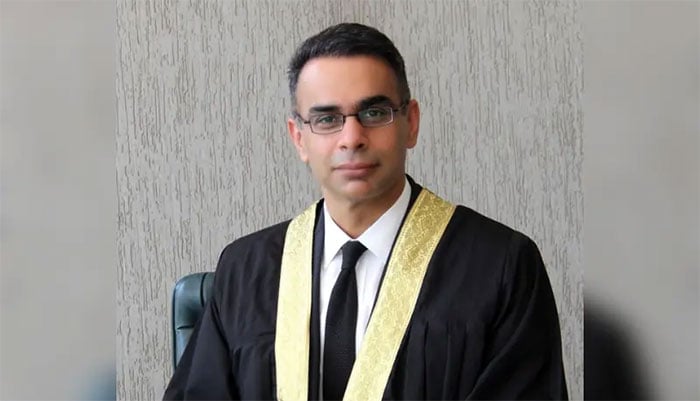
    Justice Babar Sattar told to vacate official house

    Justice Babar Sattar has been directed to vacate his official residence in Islamabad after the cancellation of its government allotment following his transfer to the Peshawar High Court. According to an official notice issued by the Registrar of the Islamabad High Court, Justice Sattar has been given 30 days to hand over the residence. The notice states that the Estate Office cancelled the allotment of the government house on July 3 after his transfer from the Islamabad High Court to the Peshawar High Court. The document explains that the one-month notice period began on July 3, the same day the official accommodation was withdrawn. Justice Sattar has been instructed to vacate the residence within that period in accordance with government rules governing official housing for judges transferred to another high court. The move follows Justice Sattar’s transfer to the Peshawar High Court, where he is expected to perform his judicial duties after leaving the Islamabad High Court. Sources familiar with the matter said that after the transfer, Justice Sattar did not apply for or obtain an official residence in Peshawar. Instead, he reportedly decided to continue staying in the government house allotted to him in Islamabad. The notice highlights that the cancellation of the residence allotment was carried out by the Estate Office, making the continued occupation of the house subject to the expiry of the notice period. The registrar’s office formally communicated the decision to ensure compliance with the applicable administrative procedures. The development comes as part of the routine administrative process that follows the transfer of judges between high courts. Under the existing rules, official accommodation is generally linked to the judge’s place of posting, and transferred judges are required to vacate residences allocated at their previous station once the prescribed notice period expires.

  • |

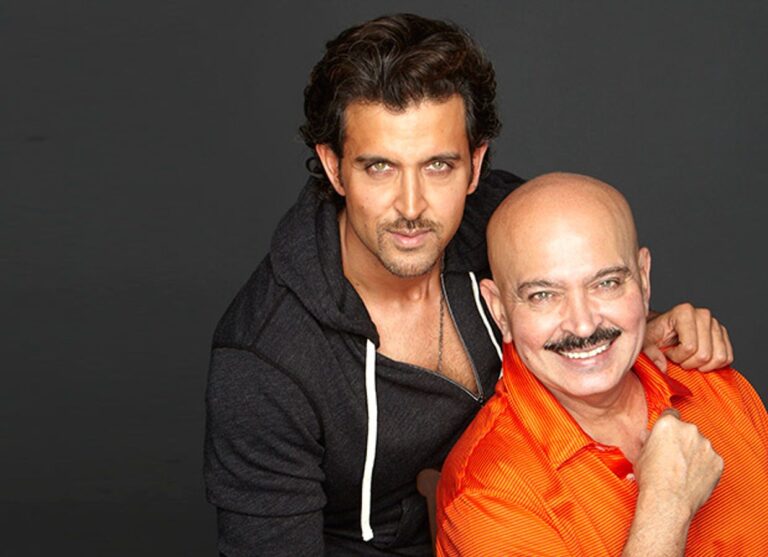
    Hrithik Roshan recalls father’s financial crisis after Koyla setback

    Bollywood actor Hrithik Roshan has opened up about one of the most emotional periods in his family’s life, recalling the financial difficulties his father, filmmaker Rakesh Roshan, faced following the commercial disappointment of Shah Rukh Khan’s 1997 film Koyla. The 52-year-old actor recently spoke about his father’s struggles and revealed that there was a time when Rakesh Roshan lost a significant portion of the money he had earned throughout his career. According to Hrithik, the setback was severe enough to create financial difficulties for the family and left a lasting impression on him. Recalling the difficult period, Hrithik said he still remembers a particular morning when he saw his father with tears in his eyes for the first time. The actor explained that Rakesh Roshan had told him that he had lost all the money he had earned. For Hrithik, witnessing his father in such a vulnerable state was an experience he could never forget. He described the moment as extremely emotional because he had never previously seen his father so broken and distressed. Rakesh Roshan had produced Koyla under his production banner Filmkraft Productions. The action thriller featured Shah Rukh Khan and Madhuri Dixit in the lead roles, alongside Amrish Puri, Deepa Sahi, Ashok Saraf, Johnny Lever and several other prominent actors. Released in 1997, Koyla revolved around Shankar, played by Shah Rukh Khan, a mute and loyal coal miner who works in a coal mine. The film combined action, romance and drama and was one of the major productions associated with Rakesh Roshan’s production house at the time. Despite its scale and star-studded cast, the film failed to achieve the level of commercial success that had been expected. It was reportedly made on a budget of around Rs 12 crore and earned approximately Rs 28 crore worldwide. Although the film recovered a significant amount at the box office, its overall commercial performance was considered disappointing in relation to its investment and expectations. The experience became an important chapter in Hrithik Roshan’s understanding of his father’s professional and personal journey. Years later, the actor has established himself as one of Bollywood’s leading stars, while Rakesh Roshan has continued to remain an influential filmmaker and producer. The father-son duo is now preparing to return to the superhero franchise that has been closely associated with their careers. Hrithik and Rakesh Roshan are currently involved in preparations for Krrish 4, the next installment in the popular superhero series. Hrithik’s recent recollection offers a rare glimpse into the challenges his family faced behind the glamour of Bollywood and highlights the personal impact that professional setbacks can have, even on established filmmakers.

  • | |

    12 Pakistani and foreign groups submit bids to acq…

    Twelve business groups, including eight prominent Pakistani conglomerates and four foreign firms, have formally expressed interest in acquiring majority stakes in the Faisalabad Electric Supply Company (Fesco), marking the government’s most serious attempt in a decade to privatise the profitable power distribution utility. The Privatisation Commission released the list of interested parties on Friday after the extended deadline for expressions of interest closed. The development represents a major milestone for Pakistan’s long delayed plan to sell off state owned power distribution companies, a process that stalled in 2016 when the previous government abandoned the sale just before bidding began. The federal cabinet has already authorised the sale of majority stakes in three of the country’s most profitable power distribution companies, positioning Fesco as the first test case in the broader privatisation drive. Local business families dominate interest Eight of the twelve groups that submitted expressions of interest are well established Pakistani business families with deep roots in energy, textiles, automobiles and cement manufacturing. A consortium formed by Nishat Mills, controlled by one of Pakistan’s wealthiest businessmen, Mian Mohammad Mansha, and Pak Elektron Limited, owned by the Saigal family, has entered the race. Mansha also participated in the failed 2015 to 2016 bidding round for the same company. The Saigal family additionally submitted separate bids through Maple Leaf Cement and Kohinoor Textile Mills, giving the family multiple entry points into the process. Other major local contenders include Engro Energy Limited, part of the Dawood family’s diversified business empire, and Sapphire Fibers Limited, owned by the Abdullah family. Hub Power Holdings, controlled by the Habibullah Khan family and already a significant player in Pakistan’s power sector, has also thrown its hat in the ring, alongside Lucky Cement, owned by the Mohammad Ali Tabba family. Lucky Cement previously finished as runner up in the privatisation of Pakistan International Airlines. Shirazi Investments, which also holds interests in the automobile sector, and Artistic Milliners, owned by the Yaqoob family, rounded out the list of local applicants. K-Electric, Pakistan’s largest integrated power generation and distribution company, submitted documents as well, even as its Saudi and Kuwaiti shareholders pursue international arbitration against the government over a blocked 1.7 billion dollar Chinese investment in the company. Foreign firms from Turkey and China join the race Four international firms rounded out the list of interested parties. Three Turkish companies, Aktor Elektrik Enerji Yatirimlari, Genvera Enerji (part of the Celik Group) and Cengiz Enerji Sanayii ve Ticaret, submitted bids alongside Chinese firm Jiang Xi Electric Power Construction. Officials noted that firms qualifying technically and financially for Fesco will also be eligible to bid for two additional distribution companies, Gujranwala Electric Power Company and Islamabad Electric Supply Company, if they fail to win Fesco. This flexibility likely contributed to the strong turnout, as qualified investors gain multiple chances to enter Pakistan’s power distribution market. Government hails strong investor response Muhammad Ali, Adviser to the Prime Minister on Privatisation and Chairman of the Privatisation Commission, called the response a significant milestone in the broader privatisation of state owned distribution companies. He said the strong interest in Fesco reflects investor confidence in the growth potential of Pakistan’s electricity distribution sector and in the government’s commitment to running a transparent and competitive process. Ali added that the commission will now engage with prequalified investors through detailed due diligence and begin discussing the structure of the post-privatisation regulatory regime. He said the sale aims to improve operational efficiency, modernise ageing distribution infrastructure, strengthen customer service and reduce financial losses across the sector, ultimately supporting more competitive electricity distribution and more affordable, reliable power for consumers. The expressions of interest and accompanying statements of qualification will undergo evaluation against the prequalification criteria set by the commission. Groups that meet the requirements will move to the next stage, gaining access to a virtual data room to conduct detailed buy side due diligence on Fesco’s operations and finances. Concerns remain over guaranteed returns and uniform pricing Despite the enthusiastic response, some analysts have raised concerns about the government’s proposal to guarantee investors a minimum return of 13 percent, warning that such guarantees could discourage efficiency gains and slow technological upgrades at the privatised utility. Questions also remain over whether the government will maintain uniform electricity pricing nationwide after privatisation, a policy that would keep subsidy costs on the federal budget rather than shifting the burden fully to market pricing. Fesco is one of three companies included in the first batch of distribution company privatisations, alongside Gepco and Iesco. The deadline for expressions of interest in Gepco is set for 21 August 2026, while Iesco’s deadline falls on 7 September 2026. Fesco’s financial position underscores its appeal Financial data from the finance ministry’s Central Monitoring Unit shows Fesco held total assets worth 410.3 billion rupees as of June last year, against liabilities of 347 billion rupees. The company posted net positive equity of 63 billion rupees, which climbed 28 percent due to share deposits and asset revaluation gains. Non-current liabilities stood at 217.6 billion rupees, with staff retirement benefits accounting for the largest share at 123 billion rupees. Current liabilities totalled roughly 130 billion rupees, including trade payables of 118 billion rupees. The company reported a profit after tax of 9.4 billion rupees for the period. With twelve qualified groups now in the running, the Fesco privatisation stands as a critical test of investor appetite for Pakistan’s power sector reforms and could shape the pace and structure of future electricity distribution company privatisation efforts.

  • | |

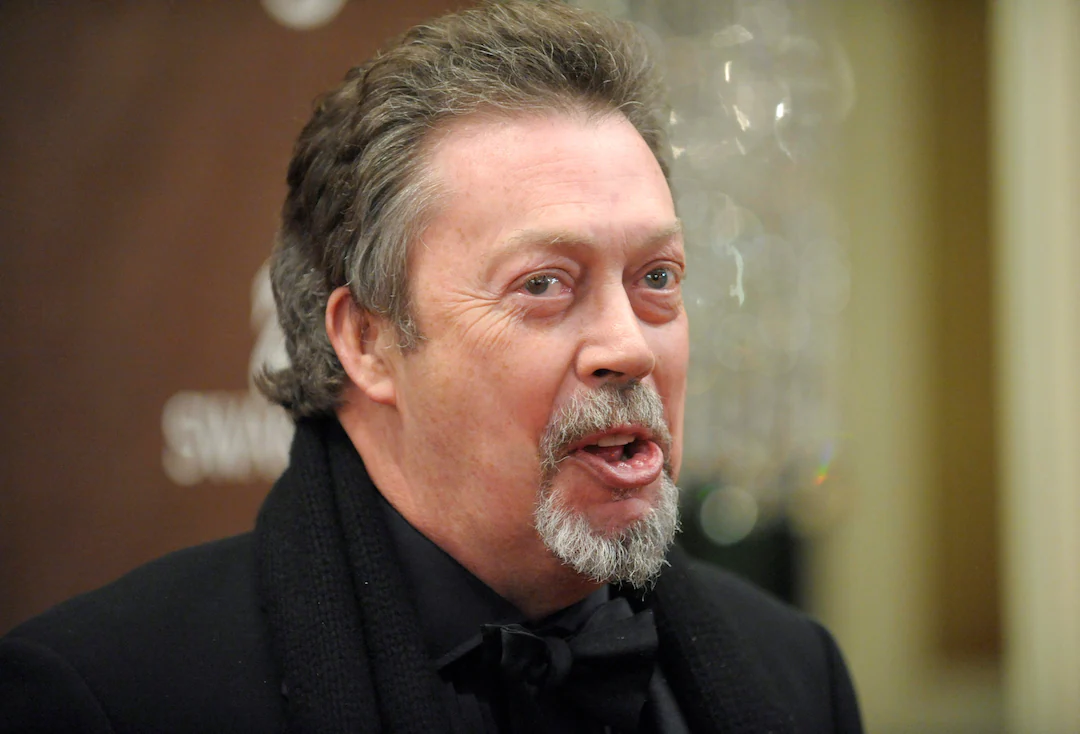
    Tim Curry, iconic ‘Rocky Horror’ star, dies at 80

    LOS ANGELES: British actor Tim Curry, best known for his unforgettable performance as Dr. Frank N. Furter in The Rocky Horror Picture Show, has died at the age of 80, according to Variety and other media reports. Curry, whose distinctive baritone voice and theatrical performances made him a celebrated figure in film, television and theatre, died on August 26. The cause of death was not immediately disclosed. His portrayal of Dr. Frank N. Furter in the 1975 cult musical horror-comedy The Rocky Horror Picture Show became the defining role of his career. The film initially struggled to find a mainstream audience but later developed a passionate international following through midnight screenings. Audiences often attended screenings dressed as characters from the movie, helping turn the production into one of cinema’s most enduring cult classics. Curry first played Dr. Frank N. Furter in the original London stage production of The Rocky Horror Show in 1973. He later reprised the role for the film adaptation, appearing alongside Susan Sarandon and Barry Bostwick. Although the character brought Curry worldwide recognition, he was concerned that such an unconventional role could overshadow the rest of his career. He nevertheless embraced the part and went on to build a diverse body of work across several entertainment genres. Curry appeared in numerous films, frequently playing villains or eccentric characters. His credits included Clue, Legend, Annie, Home Alone 2: Lost in New York, The Three Musketeers, The Shadow, Muppet Treasure Island and Charlie’s Angels. His career extended well beyond cinema. Curry was also a highly regarded stage performer and received three Tony Award nominations. He was nominated in 1981 for playing Mozart in Amadeus. His other Tony nominations came for My Favorite Year in 1993 and for his performance as King Arthur in Monty Python’s Spamalot in 2005. Curry’s deep, recognisable voice also made him a sought-after voice actor. He worked on numerous animated productions for film and television and won a Daytime Emmy Award in 1991 for his voice performance in Peter Pan & the Pirates. The actor became particularly associated with flamboyant and larger-than-life villains. His distinctive laugh, expressive face and commanding voice allowed him to bring a memorable theatrical quality to even supporting roles. Despite appearing in some critically unsuccessful productions, Curry remained candid about his career. He occasionally acknowledged his weaker performances with humour and continued to embrace challenging and unusual roles. Born on April 19, 1946, in Grappenhall, Cheshire, Curry studied drama at Birmingham University before pursuing a career in theatre. His career was affected by health problems later in life. He withdrew from a British stage production in 2011 because of ill health. His representatives later confirmed that he had suffered a stroke in 2012, after which he used a wheelchair and significantly reduced his professional workload. Despite these challenges, Curry continued working in entertainment. He returned to the big screen in 2024 with an appearance in the horror film Stream. Curry was also a singer and composer. He performed with his own rock band and released several albums during his career. He lived in Los Angeles and never married or had children.

Leave a Reply

Your email address will not be published. Required fields are marked *