Thailand’s Domestic Gas Production Remains Key to Long-Term Energy Security
BANGKOK – Thailand still depends on natural gas as a primary feedstock for electricity generation, industry, and transport, including compressed natural gas (CNG), while aging offshore fields no longer produce enough to meet national demand. Domestic output has fallen from its earlier peak, leaving the country more dependent on LNG and pipeline gas from abroad, with import costs filtering through to consumers’ energy bills as prices and supply conditions shift.
That makes domestic gas production a practical energy-security issue. Reliable supplies from the Gulf of Thailand can help limit price shocks, support steady power generation, and give Thailand more control during international disruptions. However, new production from fields such as Erawan, Bongkot, Arthit, and Pailin must be weighed against the need to build a cleaner energy system.
This article examines the Gulf’s declining output, Thailand’s rising imports, new production efforts, and the long-term balance between gas security and cleaner power. For broader context, see this overview of Thailand’s natural gas reliance.
Key Takeaways
- Thailand still relies on natural gas for roughly 56% of electricity generation, making a dependable domestic supply essential for grid stability and helping protect the average household’s monthly bill from global fuel price fluctuations.
- Gulf of Thailand fields remain the main source of domestic gas production, but aging reserves and risks to Myanmar pipeline supplies are increasing pressure on imports.
- PTTEP is raising output from Arthit, MTJDA B17-01, Erawan, Contract 4, and G2/61 to strengthen Thailand’s energy security.
- LNG, coal, hydropower, and electricity imports from Laos provide short-term backup, although imported fuel exposes Thailand to price and shipping risks. Domestic gas production can cushion sudden increases in the national energy bill and reduce exposure to global market volatility.
- Thailand must balance gas dependence in Thailand with its renewable-energy targets and cleaner power goals, as the IEA’s Thailand gas analysis explains.
Why Thailand’s Domestic Gas Production Matters for Energy Security
Thailand’s energy security depends on more than having enough fuel in storage. The country also needs natural gas that can reach power plants, factories, transport-related energy systems, and gas separation facilities when demand rises, or imports face delays. Domestic production does not supply every unit Thailand consumes, but it reduces exposure to global LNG prices, shipping disruptions, currency movements, and geopolitical tensions.
Recent reporting places domestic gas production at roughly half to 60% of Thailand’s total supply, depending on the year and calculation method. That share has declined from earlier levels, which makes the Gulf of Thailand an important part of the country’s energy planning. For wider context, Thailand’s energy security and imports show why supply disruptions can affect the economy well beyond the energy sector.
The Gulf of Thailand Built Thailand’s Modern Gas Economy
Thailand’s modern gas economy began with offshore production from the Erawan field in 1981. Its output helped expand electricity generation and supported the growth of factories, petrochemical facilities, and other industries that needed a steady fuel supply.
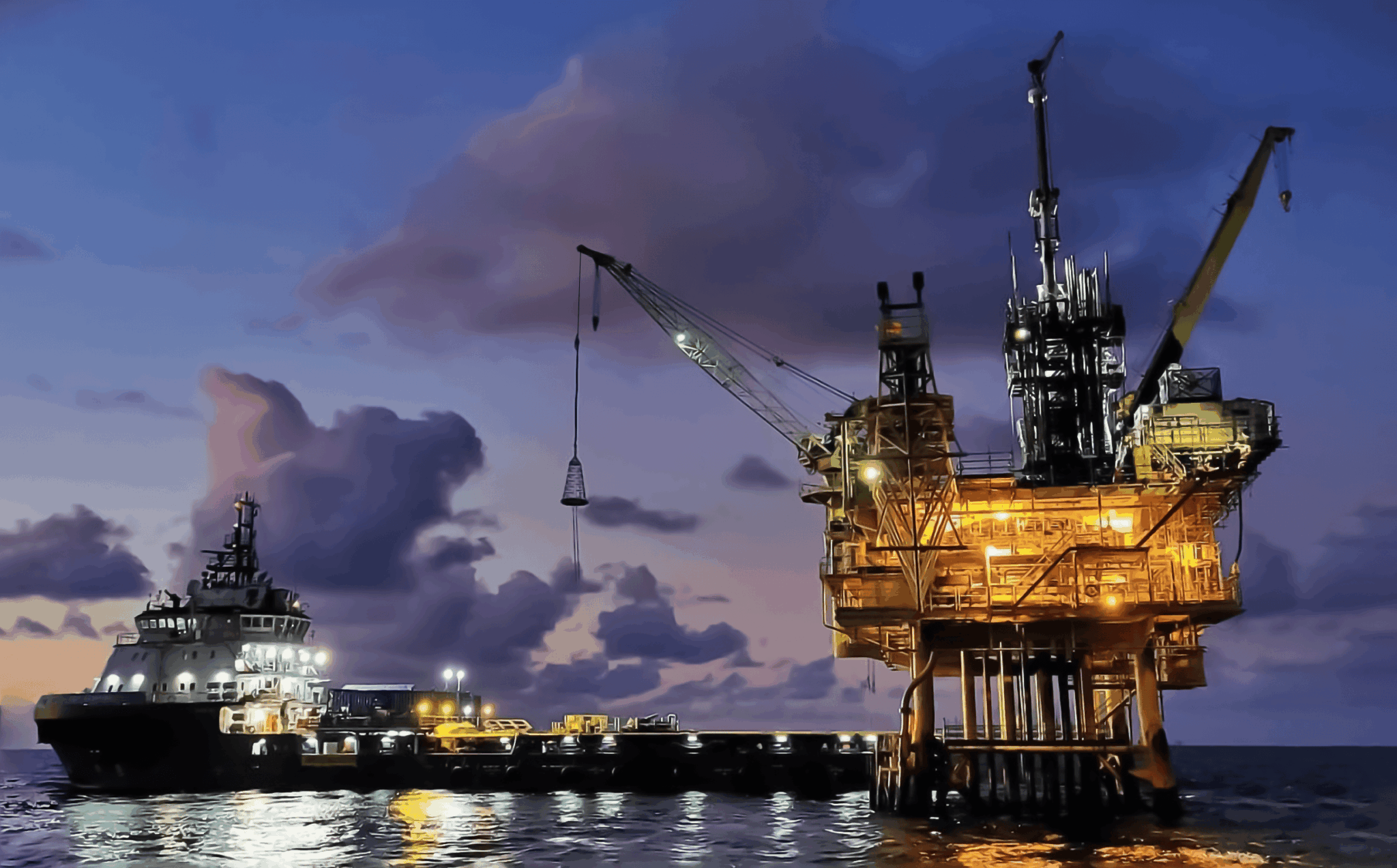
The process starts offshore, where platforms produce gas from fields beneath the Gulf of Thailand. Reservoir engineers use pressure data, production history, and an equation of state to model how gas particles behave as pressure and temperature change underground and during processing. Pipelines then carry the gas to Rayong for treatment, after which it moves into Thailand’s transmission network for delivery to power plants, industrial users, and gas separation plants. These facilities extract valuable products such as LPG and feedstocks used across the chemical sector.
Erawan and Bongkot established the foundation of this system. Arthit and Pailin added further production, while the Malaysia-Thailand Joint Development Area became another source connected to the national supply network. The U.S. Energy Information Administration’s Thailand analysis identifies Erawan and Bongkot as two of the country’s largest producing fields.
The Gulf’s importance also explains why mature-field decline creates pressure across the economy. When domestic output falls, Thailand must replace missing volumes with Myanmar pipeline gas or LNG. Estimates of Gulf of Thailand gas reserves can attract attention, but potential resources are not the same as proven reserves ready for production.
Local Gas Helps Keep Power and Industry More Predictable
A dependable domestic supply gives each power producer and utility company a steadier fuel source. That reliability matters when households need cooling, factories are running production lines, and transport-related energy systems depend on uninterrupted power and gas.
Local natural gas can also reduce Thailand’s reliance on spot LNG cargoes, whose prices may rise during cold weather, supply shortages, shipping disruptions, or regional conflict. When a utility company avoids some of those higher procurement costs, it may face less pressure to adjust its price plan or raise an end-user’s monthly bill. A fixed rate plan can offer additional short-term predictability, although its stability depends on the contract structure and how long the provider can absorb changes in fuel costs. Domestic gas is not automatically cheap, since exploration, offshore production, processing, maintenance, and pipeline transport all add costs.
The practical goal is risk reduction, not complete self-sufficiency. Maintaining enough local production gives Thailand more control over supply while imported LNG and pipeline gas fill the remaining gap. That mix can help protect household energy costs and factory competitiveness when international markets become unstable.
Declining Offshore Fields Are Creating a Wider Supply Gap
Thailand’s mature Gulf of Thailand fields have passed their production peak after years of relatively stable output. As local natural gas supplies decline, the country must rely more on Myanmar pipeline gas and LNG to keep power plants and industrial users supplied. Shrinking offshore volumes also put the reliability of Thailand’s overall gas service at greater risk, particularly when electricity demand or industrial consumption rises.
Reported reserve-to-production figures point to a limited production life at current rates, although estimates vary by field, reserve definition, and future investment. The central issue is clear: new wells can slow depletion, but they can’t remove it permanently.
Erawan and Bongkot Show Both the Risk and the Opportunity
Erawan and Bongkot are central to Thailand’s energy outlook because they’ve supplied a large share of the gas used by the country’s power sector and industries. Erawan was Thailand’s first commercial gas field, with production beginning in 1981. Bongkot later became another major source in the Gulf.
Chevron operated Erawan for many years before PTTEP Energy Development took over operatorship. The transition created a difficult production challenge because output had fallen sharply, while Thailand still needed steady fuel for electricity generation. PTTEP planned to raise Erawan production toward 800 million cubic feet per day. Reports later indicated that the field reached that target in 2024. The EIA’s Thailand country analysis provides wider background on the importance of Erawan and Bongkot to the national gas system.
PTTEP has also worked to sustain production at Bongkot, Arthit, the Malaysia-Thailand Joint Development Area, Contract 4, and G2/61. These projects can slow the decline, reduce LNG purchases, and give Thailand’s electricity grid a more dependable fuel base.
However, mature-field investment is similar to drawing more water from a well that’s already running low. Additional drilling may improve daily output, but the underlying reservoir still depletes. Thailand therefore gains time through new production, not permanent independence from imports. The role of domestic natural gas is also broader than electricity, since gas processing separates methane from heavier hydrocarbons and supplies LPG and other products used by households and industry. Under high pressure, real gas behavior differs from the simplified assumptions of an ideal gas because intermolecular forces affect how components expand, condense, and separate. That connection is covered in this overview of Thailand’s offshore gas production and LPG supply.
Imports Add Flexibility, but They Also Add Exposure
Thailand’s gas gap was visible in 2018, when the country produced about 37.7 billion cubic meters but consumed roughly 49.9 billion cubic meters. Pipeline gas from Myanmar and LNG imports filled the difference. Pipeline deliveries can provide a relatively steady regional supply, while LNG gives buyers more flexibility when domestic production falls short.
Each option carries risk. Pipeline volumes depend on contract limits, infrastructure, and political conditions in Myanmar. LNG offers access to international cargoes, but shipping costs, global price swings, and competition for cargoes can quickly raise the bill. Cold weather or a regional supply shock may draw cargoes toward other buyers.
Thailand therefore needs both import channels, alongside domestic production. Imports provide a useful safety valve, but declining local gas makes that valve more important and more expensive to operate.
How Thailand Is Trying to Raise Domestic Gas Production
Thailand is using several measures to protect gas supplies over the next several years. The plan includes better production planning, updated concession terms, investment in mature offshore fields, infill drilling, upgraded platforms, and faster development of approved projects. Together, these measures aim to maintain reliable natural gas supplies and protect gas service continuity for households, businesses, and the power sector.
These steps can raise output sooner than discovering and developing an entirely new field. However, short-term production gains and long-term reserves are different issues. Higher daily output can support the power grid today, while declining reservoirs still limit how long fields can produce at the same rate.
Government Policies Are Reshaping Upstream Investment
Thailand has updated its petroleum policy to make new offshore development and mature-field investment more attractive. Under the updated Petroleum Act, the country has moved beyond relying solely on classic concession agreements and can use Production Sharing Contracts (PSCs) for selected exploration and production blocks.
Under a PSC, the state retains ownership of the resource while contractors fund exploration and development, then recover eligible costs and share the remaining production with the government under agreed terms. This framework gives Thailand greater flexibility when offering new exploration blocks, while allowing contract conditions to reflect geological risk, expected investment, and national supply needs.
The policy framework can also support reinvestment in mature fields. More practical fiscal and contractual terms may encourage operators to drill infill wells, upgrade offshore facilities, and apply improved recovery techniques when older concessions still contain commercially recoverable reserves. By linking new block development with continued work on existing fields, regulators can support domestic gas production without treating exploration as the only path to higher output.
Clear rules remain important. Thailand needs predictable approval processes, transparent contract terms, environmental safeguards, and production obligations that support reliable gas service. These measures can reduce investment uncertainty while helping the government balance energy security, public revenue, and long-term resource management.
Better Field Management Can Extend Existing Reserves
Operators can recover more gas from aging fields by improving how they manage wells, platforms, and reservoirs. Offshore reservoir modeling combines pressure, temperature, flow, and geological data to estimate how gas will behave under extreme conditions. Concepts from statistical mechanics help explain the collective behavior of gas molecules, while kinetic energy and pressure relationships inform models of gas movement through reservoir rock and production equipment.
These models can guide well placement and extraction rates, but they must be supported by reliable field data. Upgraded offshore equipment can improve pressure control and processing capacity, while stronger maintenance reduces the risk of unplanned shutdowns. Regular inspections also help operators identify equipment problems before they interrupt deliveries.
Infill drilling is another practical measure. By drilling new wells between existing production wells, operators can reach sections of a reservoir that earlier development plans left untouched. Better reservoir data can guide those decisions. Updated seismic surveys, well testing, and production models help engineers locate remaining reserves and adjust extraction rates.
Production planning also matters. Operators can coordinate drilling, maintenance, platform capacity, and pipeline schedules so that one project supports the national supply system while another undergoes repairs. PTTEP reported domestic gas production of about 2,720 million standard cubic feet per day (MMSCFD) in the first quarter of 2026, above its daily contractual quantity of around 2,500 MMSCFD. The company linked the increase mainly to Arthit, MTJDA B17-01, Contract 4, and G2/61, as detailed in its first-quarter 2026 operating results.
Still, mature-field work needs sustained investment. Companies must fund new wells, platform upgrades, subsea equipment, skilled crews, environmental monitoring, and emergency response systems. Offshore safety procedures also limit how quickly work can proceed. Protecting workers and marine ecosystems cannot be treated as an afterthought when Thailand increases production from older fields.
The Malaysia-Thailand Joint Development Area Adds Regional Value
The Malaysia-Thailand Joint Development Area, or MTJDA, is a shared offshore resource in the Gulf of Thailand. Thailand and Malaysia cooperate in developing fields within the area, then send the produced gas into regional supply systems.
For readers unfamiliar with the term, a joint development area allows neighboring countries to manage an offshore zone when ownership or maritime boundaries require cooperation. Instead of waiting for a single country to control the entire resource, both sides agree on production, revenue, infrastructure, and operating rules.
The arrangement gives Thailand another source of supply beyond fields controlled solely through its domestic concessions. That improves supply diversity and supports closer energy ties with Malaysia. However, the benefits depend on careful coordination. Production targets, ownership shares, pipeline access, maintenance schedules, environmental standards, and cross-border regulations must all remain clear.
The MTJDA also requires long-term planning because offshore projects take years to develop and maintain. New wells may raise deliveries, but reservoir decline will eventually reduce output. Thailand therefore gains regional flexibility from the area, while still needing investment in local fields, LNG infrastructure, and cleaner power sources.
Domestic Gas Production Must Be Balanced With Cost and Climate Goals
Thailand needs reliable energy while it expands solar, wind, storage, and efficiency measures. Domestic natural gas can help manage that transition, but it should support a cleaner power system rather than become the main source of future growth. Gas production decisions should also remain aligned with Thailand’s climate targets and plans for greater renewable energy integration.
A Reliable Gas System Can Support the Clean Energy Transition
Solar and wind output changes with weather and time of day. Gas-fired power plants can respond when clouds reduce solar generation or wind speeds fall, helping the grid meet demand without relying only on coal or expensive emergency imports. This backup role may remain useful as Thailand works toward a higher share of clean electricity and its 2050 net-zero target, as outlined in the IEA’s Thailand gas analysis.
However, reliability does not justify unlimited gas expansion. New plants and pipelines can operate for decades, even if electricity demand grows more slowly than expected. If renewable power, batteries, demand management, and energy efficiency reduce gas use, expensive infrastructure could become underused while consumers continue paying for it.
Thailand should therefore set clear conditions for gas investment:
- Power plants should meet strict efficiency standards and operate mainly when cleaner sources cannot meet demand.
- Operators should measure methane leaks across offshore platforms, processing facilities, and pipelines.
- Regulators should require leak detection, equipment repairs, and routine emissions reporting.
- Energy planners should test each project against scenarios with faster renewable growth and lower gas demand.
- Government financial assistance and clean energy subsidies should prioritize grid upgrades, storage, and other measures that help solar and wind serve as an alternative fuel source, while a rebate program or bill credit can help households invest in efficiency and manage transition costs.
Offshore production also carries risks, including carbon emissions, methane releases, drilling impacts, and damage from spills or poorly managed waste. Public revenue from domestic gas should support monitoring, environmental safeguards, grid upgrades, and clean-energy investment. Consumer support, including targeted efficiency rebates and bill credits, should complement these broader investments. The central distinction is simple: gas can protect reliability, but renewables and efficiency should drive most new energy capacity.
Thailand Needs Clear Rules to Attract Long-Term Investment
Investors need confidence that Thailand will apply concession terms, licensing decisions, pipeline access, and pricing rules consistently. Stable rules can support exploration, mature-field recovery, platform maintenance, and new wells without exposing consumers to unnecessary costs.
Fair domestic gas pricing matters just as much. Prices should reflect production and transport costs while allowing regulators to protect households and industries from sudden increases. Transparent licensing can also reduce disputes and show the public how the government weighs energy security, public revenue, environmental damage, and climate commitments.
Thailand should compare every proposed gas project with the full system cost of LNG, pipeline imports, renewable power, battery storage, grid improvements, and efficiency programs. That calculation must include fuel-price risk, carbon costs, methane controls, decommissioning, and the possibility that demand falls sooner than expected. Public access to production data, reserve estimates, emissions records, and contract terms would make those decisions easier to assess.
A balanced policy can attract investment without locking Thailand into a larger gas system than it needs. It can also direct financial assistance toward renewable integration, energy efficiency, rebate programs, and bill credits that help consumers benefit from the transition. The Thailand natural gas crossroads analysis similarly connects security, affordability, and the clean-energy transition.
What a Strong Long-Term Energy Security Plan Should Include
Thailand’s energy security plan should treat domestic gas as one part of a wider system. The country needs reliable production, protected infrastructure, diversified imports, accurate demand forecasts, and faster investment in renewable power, storage, and electricity networks. It also needs stronger consumer safety and appliance management, since safe gas use depends on reliable equipment, informed customers, and clear communication. Dependence on one field, country, fuel, or technology leaves the economy exposed when conditions change.
Protect the Most Important Supply Infrastructure
Thailand must maintain every link between offshore wells and electricity users. That includes platforms in the Gulf of Thailand, gas-processing facilities, subsea and onshore pipelines, urban distribution networks, ports, LNG terminals, and gas-fired power plants. A failure at any point can reduce natural gas supply, even when enough fuel remains underground.
Planned maintenance should replace aging equipment before it causes an unplanned shutdown. Producers and government agencies also need shared emergency plans covering equipment failure, pipeline damage, cyberattacks, fires, spills, and extreme weather. Offshore operators, state agencies, utility companies, and local communities should apply clear safety awareness protocols, prepare for storms and flooding, and maintain backup systems, spare parts, and tested restart procedures at LNG terminals and power plants.
Downstream safety awareness is equally important. Gas distributors should provide customers with practical guidance on appliance installation, ventilation, leak detection, inspections, and safe shutdown procedures. People should use qualified technicians, avoid modifying gas appliances, and contact their local customer service team when they smell gas, notice damaged equipment, or need help managing service safely.
Urban pipeline work also requires careful coordination. Contractors, homeowners, and local authorities should follow call before you dig campaign protocols before excavation or construction begins. Confirming the location of underground distribution pipelines can prevent service interruptions, fires, explosions, and injuries. Gas providers should make safety information and emergency contacts easy to find for every service area, including through local customer service channels.
Cyber protection deserves the same attention as physical security. Gas control systems, pipeline networks, ports, and power plants all depend on connected technology. Regular testing, restricted access, system backups, and rapid reporting can limit the damage from an attack.
Coordination matters just as much. PTTEP, PTT, EGAT, LNG suppliers, regulators, local authorities, and distribution companies should share production forecasts, maintenance schedules, reserve data, customer safety information, and emergency updates. Better coordination can prevent several facilities from going offline at the same time and help customers receive accurate instructions during a disruption.
Thailand’s electricity demand will rise as factories expand, data centers open, cities grow, and transport becomes more electrified. Infrastructure planning must therefore match industrial development, not react after shortages appear. Import risks also show whyThailand’sd LNG supply vulnerabilities deserve regular stress tests.
Use Domestic Gas as a Bridge, Not a Permanent Substitute for Transition
Thailand should maximize safe and economic domestic gas production because it can reduce near-term import exposure and support stable power generation. However, each year of stronger offshore output should buy time for renewable power, energy efficiency, battery storage, and grid upgrades.
Demand forecasts need regular review, especially if industry changes or efficiency measures reduce gas use. The government should publish clear production, reserve, import, infrastructure, appliance safety, and service-area information so investors and consumers can judge supply risks and manage gas use responsibly.
Domestic fields will decline eventually. Delaying renewable projects and network investment would leave Thailand more exposed when that decline accelerates. A broader renewable transition roadmap for Thailand can help guide that shift.
A secure system keeps natural gas available when needed, protects consumers and infrastructure, and steadily reduces how much the country depends on it.
Frequently Asked Questions
Thailand’s gas outlook depends on more than the volume produced offshore. Field decline, imported fuel, electricity demand, prices, household safety, and climate policy all shape how secure the energy system remains.
Can Thailand Produce Enough Gas to Meet All of Its Demand?
No. Current domestic production doesn’t fully cover Thailand’s demand, so the country also relies on pipeline gas from Myanmar and LNG imports. Thailand received more than 11.7 million tonnes of LNG in 2024, according to the Thailand energy sources overview.
The balance changes over time. Offshore field output, hot weather, electricity demand, maintenance schedules, Myanmar’s pipeline deliveries, and global LNG prices can all change the amount of natural gas Thailand needs to import.
Which Offshore Fields Are Most Important to Thailand?
Erawan and Bongkot are the most important examples because they’ve supplied large volumes to Thailand’s power and industrial sectors for decades. Arthit and Pailin also contribute to the domestic gas network, while the Malaysia-Thailand Joint Development Area provides production through a shared arrangement with Malaysia.
These fields operate under different concession, operating, and partnership structures. Their production levels also vary because each reservoir has a different age, geology, investment plan, and development schedule.
Why Is Thailand’s Domestic Gas Production Falling?
Many Gulf of Thailand fields are mature, which means operators have already extracted much of the easiest-to-produce gas. As reservoir pressure and accessible reserves decline, maintaining earlier production rates becomes more difficult and expensive.
During processing, gas molecules with different properties can be separated into products for industrial feedstock and LPG for household gas appliances. The kinetic theory of gases helps explain why temperature, pressure, and molecular movement affect gas behavior during processing and storage. New drilling, improved reservoir management, and better recovery methods can slow the decline, but they can’t fully reverse the long-term depletion of finite reserves. The U.S. Energy Information Administration’s Thailand analysis provides additional background on the country’s declining production and growing import needs.
How Can Households Use Gas Appliances Safely?
Households should follow the manufacturer’s instructions, keep gas appliances in well-ventilated areas, and check hoses, regulators, valves, and connections regularly for damage or leaks. LPG cylinders should remain upright, away from heat sources and open flames, and never be stored in enclosed areas where leaking gas could accumulate.
If a household smells gas, everyone should leave the area, avoid switches, flames, and electrical equipment, and contact the relevant emergency or gas service from a safe location. Regular maintenance and prompt replacement of damaged parts help reduce the risk of fire, explosion, or carbon monoxide exposure.
Will More Domestic Gas Lower Electricity Prices?
More local natural gas may reduce Thailand’s exposure to high LNG prices, shipping costs, and sudden supply shocks. That benefit can improve cost stability, especially when international gas markets become tight.
Still, domestic gas alone won’t determine electricity prices. Fuel contracts, infrastructure costs, pricing rules, exchange rates, power demand, taxes, and investment in generation and transmission also affect household and business bills. Lower import dependence can reduce one source of risk without guaranteeing cheaper electricity every month.
Does Domestic Gas Conflict With Thailand’s Climate Goals?
Gas produces fewer carbon emissions than coal when burned, but it remains a fossil fuel. Methane leaks from wells, platforms, processing plants, and pipelines can also increase its total climate impact because methane is a potent greenhouse gas.
Thailand can use domestic gas to maintain grid reliability while setting firm limits on carbon and methane emissions. At the same time, the country needs steady progress on renewable power, energy efficiency, battery storage, and stronger transmission networks.
What Should Thailand Do When Gulf of Thailand Fields Decline Further?
Thailand should combine carefully managed gas imports with responsible domestic projects that meet strict safety and environmental standards. It should also expand renewable generation, battery and other storage, transmission capacity, energy efficiency, and programs that shift electricity use away from peak periods.
Households and businesses can support this transition by maintaining gas appliances, using energy-efficient equipment, and reducing unnecessary peak-period electricity use. That mix gives the country more options when one fuel becomes expensive or unavailable. Diversification, rather than one replacement fuel, is the strongest long-term energy-security strategy.
Conclusion
Thailand’s natural gas production in the Gulf of Thailand remains essential to the country’s energy security. It supports power generation, industrial activity, and gas processing while reducing exposure to volatile LNG prices, international supply disruptions, and pressure on the national energy bill. Recent increases in output from fields such as Arthit, Erawan, Bongkot, and the MTJDA provide useful breathing room, but mature reserves and rising demand mean domestic natural gas cannot cover Thailand’s future needs alone.
The strongest approach is a balanced one. Thailand should maximize safe and economic gas production from existing resources, maintain sensible LNG and pipeline import options, and use the time and savings to expand renewable power, energy efficiency, storage, and a stronger electricity grid. Gas can protect reliability during the transition, but it shouldn’t delay investment in alternatives or weaken overall gas service reliability.
As Gulf fields decline, long-term energy security will depend on supply diversity, sound planning, and realistic management of finite gas reserves.