thailand enforce overnight

Thailand to Enforce Overnight Gas Station Shutdown After Songkran

BANGKOK — In a sweeping bid to curb national energy consumption amid escalating geopolitical tensions in the Middle East, the Thai government will mandate the overnight closure of all petrol stations starting April 20, Prime Minister Anutin Charnvirakul announced today.

Missing 57 Million Litres of Fuel Off-Loaded at Sea, Justice Minister Says

The new operating hours, which will shut down petrol stations between 10 p.m. and 5 a.m., are designed to take effect immediately after the Songkran festival, which begins on April 13. The timing allows citizens to travel home for the traditional New Year celebrations before the restrictions kick in. The measure represents the government’s most visible effort yet to tighten energy use as the conflict in the Middle East shows little sign of abating, according to Anutin.

Speaking after a special Cabinet meeting, the prime minister acknowledged that the geopolitical situation is severely disrupting global supply chains. With Thailand importing approximately half of its energy from the Middle East, the government is bracing for a prolonged period of high costs not only for fuel and electricity but also for petrochemical products such as fertilisers and plastics. Anutin warned that even if the fighting were to stop tomorrow, the restoration of damaged production facilities and infrastructure would take considerable time, forcing Thailand to adjust its way of life to face this new reality. He emphasised that national unity is the country’s most important social capital during these trying times and pledged a comprehensive strategy to mitigate the impact of soaring global energy prices.

Beyond the overnight gas station shutdown, the government is exploring more aggressive ways to curb domestic fuel consumption while global energy prices remain volatile. Deputy Prime Minister Pakorn Nilprapunt revealed following the special Cabinet meeting that Anutin has authorised the use of certain provisions under the 1973 Emergency Decree on Fuel Shortage Prevention to manage the crisis. Pakorn also announced that a government work-from-anywhere initiative will be rolled out to reduce commuting, confirming that civil servants can begin remote operations across government agencies immediately.

At yesterday’s meeting, the Cabinet tasked the Committee for the Appropriateness of Fuel Cost Determination, chaired by Deputy Prime Minister and Finance Minister Ekniti Nitithanprapas, with conducting an urgent study on reducing refining margins and excise taxes. Pakorn explained that the committee must first approve the appropriateness of these cost adjustments before the government can move forward with any formal mandate. The finance and energy ministries are currently reviewing the wholesale oil price structure, specifically looking to remove any inflated insurance and transport costs from the refining fee formula. Energy Minister Akanat Promphan is expected to summon refinery representatives for talks today to negotiate a reduction in these margins to reflect actual costs.

As part of its broader response, the government plans to shield the public from external shocks through a three-pronged relief plan. This includes reallocating the public sector budget by cutting non-essential spending and diverting those funds into relief programmes for citizens. At the same time, authorities will prioritise energy price restructuring, focusing on revamping fuel and electricity pricing mechanisms to ease the financial burden on households and businesses as quickly as possible. The government will also roll out targeted economic stimulus measures, including the Khon La Khrueng Plus (Half-and-Half Plus) scheme, the Thai Help Thai programme, and low-interest loans to support farmers, industry, and small and medium-sized enterprises.

Inspections Conducted Nationwide Reveal Underfilled Gas Tanks

Anutin described the situation as a global crisis requiring collective sacrifice to maintain national economic stability and urged the public to cooperate with the energy-saving initiatives. He expressed confidence that public cooperation will be key to maintaining stability and overcoming the disruption, adding that the government has chosen to speak frankly about the severity of the crisis in the interest of transparency.

-Thailand News (TN)

Similar Posts

  • | |

    18 terrorists killed in Balochistan operation: ISP…

    Eighteen suspected terrorists were killed in Balochistan’s Surab district after an explosives-laden vehicle detonated prematurely, followed by a security operation against fleeing militants, the military’s media wing said on Wednesday. According to the Inter-Services Public Relations (ISPR), the incident occurred on the morning of August 12 while the militants were preparing a vehicle-borne improvised explosive device (VBIED). The premature explosion killed eight militants at the site, while several others were reportedly injured. ISPR said additional explosives stored by the militants also detonated. The blast reportedly caused the deaths of three civilians living or working near the area. Following the explosion, security forces and Balochistan Police launched a joint clearance operation. The objective was to identify those involved in the incident and locate other militants and their facilitators. During the operation, security personnel detected several militants attempting to flee the area. Ten more militants were subsequently killed in an exchange of fire, according to ISPR. The military said the combined death toll among the militants involved in the incident had reached 18. Two security personnel were also injured during the operation. Security forces have continued sanitisation activities in the area to search for any remaining militants and clear possible threats. The military said counter-terrorism operations would continue under the government’s broader Azm-e-Istehkam framework. It said security and law-enforcement agencies remained committed to preventing terrorist groups from establishing a foothold in the country. The latest operation comes a day after security forces reported killing five militants during an intelligence-based operation in Balochistan’s Panjgur district. Balochistan has remained one of Pakistan’s key security challenges, with militant groups repeatedly targeting security personnel, civilians and government installations. The province has witnessed several major attacks in recent months, prompting increased coordination between the Pakistan Army, Frontier Corps and Balochistan Police. Security officials say operations are being conducted to disrupt militant networks, identify facilitators and prevent further attacks. The authorities have also repeatedly warned that militant groups operating in Balochistan pose a threat to both civilian life and national security.

  • | |

    Dr Nigat Shah clarifies JPMC contract extension

    Professor Dr Nigat Shah, head of the Department of Obstetrics and Gynaecology at Jinnah Postgraduate Medical Centre (JPMC), has clarified that her contract-based employment extension will not affect the posting or promotion of any associate professor. Speaking to the media, Dr Shah said several gynaecology units at JPMC had remained closed since 2013. She said one of the closed units was revived in 2022 to expand medical services and provide treatment to patients. She added that the department is continuing patient care alongside postgraduate training and research. According to Dr Shah, the hospital needs more specialised doctors, and she has no objection to the appointment of any qualified medical professional. Dr Shah stressed that her objective was not to create obstacles for another doctor’s appointment or career progression. She said her contract extension should not be viewed as an attempt to block the posting or promotion of any associate professor. The clarification comes after senior associate professors at Jinnah Sindh Medical University (JSMU) reportedly raised concerns over Dr Shah’s reappointment. Several affected professors wrote to the Sindh chief minister, Sindh health minister and the federal ombudsman, expressing reservations about the decision. In their letter, the professors claimed that the second paragraph of a Pakistan Medical and Dental Council (PMDC) notification issued on May 19 had been overlooked. They further maintained that the reappointment could affect the promotions of six associate professors who are awaiting advancement to higher positions. The professors have sought the authorities’ attention to the matter and called for the relevant rules and regulations to be considered while deciding appointments and promotions.

  • | |

    Punjab schools to reopen on August 24 after summer…

    LAHORE: Schools across Punjab are set to reopen on August 24 following the summer vacation, with the provincial government directing education authorities to complete all necessary arrangements before students return to classrooms. Punjab Education Minister Rana Sikandar Hayat has instructed relevant departments and school administrations to ensure that educational institutions are clean, secure and fully prepared for the new academic session. The minister directed school administrations to pay particular attention to the cleanliness of classrooms, washrooms, playgrounds and other areas of school premises. He also stressed the need to ensure the availability of safe and clean drinking water for students and staff. In view of the ongoing monsoon season, authorities have been asked to inspect and clean water tanks and school rooftops and ensure proper disinfection. Drainage systems should also be checked to prevent the accumulation of stagnant water, which can increase the risk of mosquito breeding and dengue fever. The education minister ordered school administrations to strictly follow standard operating procedures (SOPs) aimed at preventing dengue outbreaks. Officials have been directed to identify and remove potential mosquito breeding sites from school premises and ensure that no stagnant water remains in or around the institutions. Security arrangements have also been made a priority ahead of the reopening. The minister directed both government and private schools to ensure full compliance with prescribed security SOPs and make certain that CCTV cameras and other security equipment are operational before students arrive. Schools where construction or repair work is underway have been instructed to install proper barriers and restrict students’ access to potentially hazardous areas. The authorities have also been directed to inspect electrical installations throughout school buildings. School heads must ensure that fans, lights, switches, electrical sockets and wiring are in safe working condition to prevent accidents. Rana Sikandar Hayat further instructed heads of educational institutions to conduct a final inspection of their respective schools before reopening. He warned that negligence, delays or failure to comply with the government’s instructions would not be tolerated and could result in action against those responsible. The minister emphasized that all arrangements must be completed before August 24 so that students can return to school in a clean, safe and healthy environment.

  • | |

    HSA controversy: representation before president a…

    Islamabad: A representation submitted before the President of Pakistan has requested an early decision in a workplace harassment case involving Dr. Shahzad Ali Khan and Dr. Ayesha Khan, after the applicant claimed the matter remained pending despite the completion of hearings. The application was addressed to the President of the Islamic Republic of Pakistan through the Secretary to the President, seeking directions for an early decision on Representation No. 18/WO/2026 pending before the Consultant to the President. According to the application, the Federal Ombudsperson for Protection Against Harassment of Women at Workplace (FOSPAH) issued an order on 13 February 2026, dismissing Dr. Shahzad Ali Khan’s complaint and ordering his removal from service. The applicant later filed a representation under Section 9 of the Protection Against Harassment of Women at Workplace Act, 2010. The representation states that both parties appeared before the Consultant to the President and presented their arguments. After hearing the matter, the Consultant reserved the decision on 12 May 2026, but according to the application, the final decision has not yet been announced. The applicant argued that unnecessary delay in deciding the representation is increasing difficulties and hardship, requesting that the matter be decided without further delay according to legal principles of timely justice. The case relates to proceedings under the workplace harassment law involving Dr. Shahzad Ali Khan and Dr. Ayesha Khan. The President Secretariat had earlier issued hearing notices regarding the representation against the FOSPAH order dated 13 February 2026 in Complaint No. FOH HQR H/0341/2025. The President Secretariat scheduled hearings before Mr. Justice (Retired) Irfan Qadir, Consultant Legal Affairs to the President, first on 2 April 2026 and later refixed the matter for 12 May 2026. The notices stated that the matter would be decided on the basis of available record. The dispute has attracted attention because the representation challenges a previous order passed by FOSPAH, while the final decision on the pending matter remains awaited. The available record shows that filing a representation does not itself establish innocence or final relief. The matter remains subject to examination under the applicable legal process, and the final outcome depends on the decision of the competent authority.

  • | |

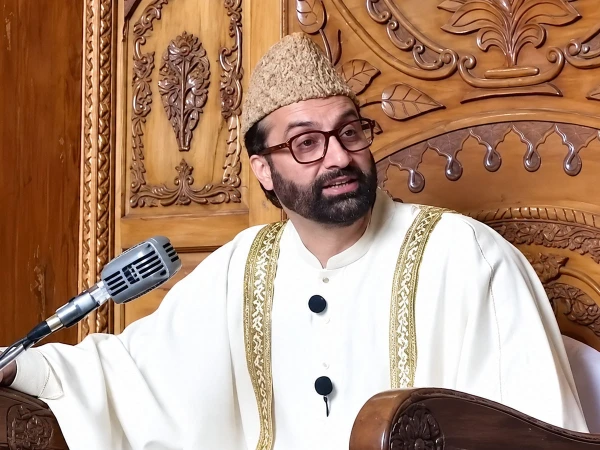
    Mirwaiz slams demand to end refugee seats in AJK

    Hurriyat leader Mirwaiz Umar Farooq has strongly opposed calls to abolish the reserved legislative seats for Kashmiri refugees living in Pakistan, saying the voting rights of displaced Kashmiris are protected by constitutional and democratic principles and must not be undermined. His remarks came after reports that a banned Action Committee had demanded the abolition of seats reserved for refugees from Indian-administered Kashmir in the Azad Jammu and Kashmir (AJK) legislative framework. The proposal has sparked debate and criticism from political and social circles on both sides of the Line of Control. In a statement, Mirwaiz said millions of Kashmiri refugees residing in Pakistan have a legitimate constitutional and democratic right to participate in the electoral process, adding that these rights cannot be ignored or sacrificed. “The voting rights of Kashmiri refugees are an integral part of their constitutional and democratic rights,” he said, stressing that displaced Kashmiris deserve equal respect, representation and protection. Mirwaiz argued that the rights of refugees are inseparable from the collective rights of the people of Jammu and Kashmir. He maintained that any political movement claiming to represent Kashmiris must ensure equal representation for residents of every region and community without discrimination. He warned that protecting the interests of one group should never come at the cost of another group’s constitutional rights. According to the Hurriyat leader, justice, equality and mutual respect must remain the guiding principles in resolving issues affecting the people of Jammu and Kashmir. Calling for dialogue, Mirwaiz urged all stakeholders to engage in consultations and meaningful discussions to find a balanced and widely acceptable solution. He said consensus-based decision-making was essential to preserving unity and protecting the democratic rights of all Kashmiris. The statement also criticized attempts to alter the existing representation of Kashmiri refugees, arguing that such moves risk deepening divisions rather than strengthening democratic participation. The controversy over refugee seats has emerged during a politically sensitive period in Azad Jammu and Kashmir, with electoral issues drawing increased public attention. While supporters of the proposal argue that reforms are needed, opponents insist that any changes affecting refugee representation must respect constitutional guarantees and the political rights of displaced Kashmiris. Mirwaiz’s intervention adds a prominent voice to the debate, highlighting the need for dialogue and consensus rather than unilateral decisions on issues involving the constitutional and democratic rights of Kashmiri refugees.

  • | | | |

    Petrol pump owners announce nationwide strike over…

    The All Pakistan Petrol Pumps Owners Association (APPPOA) has announced a nationwide strike beginning Wednesday night after negotiations with the government over the proposed daily petroleum pricing mechanism ended without an agreement. The decision was announced following talks between representatives of the association and a government delegation led by Petroleum Minister Ali Pervaiz Malik. The discussions focused on the government’s plan to introduce daily fuel price adjustments, but both sides failed to reach a consensus. Speaking after the meeting, APPPOA leaders said the proposed pricing system was unacceptable and would seriously affect the financial stability of petrol pump owners across the country. They argued that the new mechanism would create uncertainty for businesses already operating on narrow profit margins. Association officials said nearly 15,000 petrol pumps across Pakistan are expected to remain closed if the strike goes ahead, warning that the shutdown could disrupt fuel supplies nationwide. Vice Chairman Nauman Ali Butt said petrol dealers wanted petroleum prices to continue being revised on a monthly basis rather than daily. He also pointed out that dealers’ commissions had not been increased for the past three years despite rising operating costs. APPPOA Chairman Humayun Khan said petrol pump owners were already facing financial pressure due to regulatory requirements, policies of oil marketing companies and increasing business expenses. He argued that daily price revisions would benefit oil marketing companies while placing additional risks on retail dealers. According to the association, frequent price changes could create confusion in the market and make inventory management more difficult for petrol pump operators. The association also criticised the government for introducing the policy without consulting key stakeholders. It urged authorities to suspend the daily pricing mechanism, increase dealers’ commissions and involve petrol pump owners in future policy decisions. Meanwhile, the Pakistan Petroleum Dealers Association (PPDA) said it would hold a meeting of its executive committee on Wednesday to decide whether it would also join the nationwide strike. PPDA representatives acknowledged that discussions with government officials and the Oil and Gas Regulatory Authority (OGRA) had taken place. They said OGRA officials sought additional time to review the concerns raised by dealers before making further recommendations to the government. The government maintains that the new pricing mechanism is intended to improve transparency and ensure domestic fuel prices reflect changes in international oil markets more quickly. Under the proposed system, petroleum prices would be updated daily using a rolling average of global market prices.

Leave a Reply

Your email address will not be published. Required fields are marked *