flood defences shield
| |

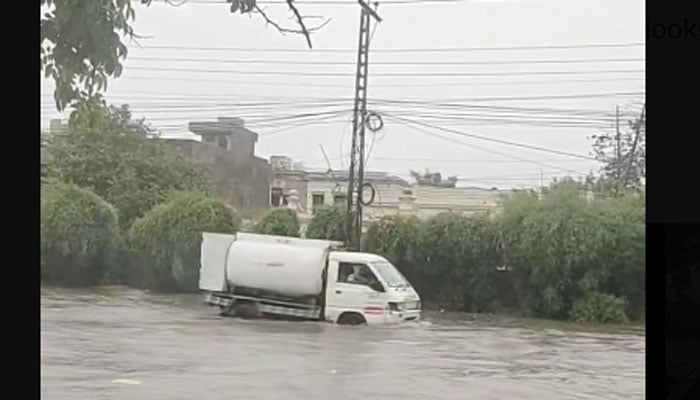
Flood defences shield Gujrat from monsoon

The Water and Sanitation Agency (WASA) has credited pre-monsoon flood protection measures with preventing urban flooding in Gujrat during the recent spell of heavy rains.

Managing Director WASA, Kashan Hafeez, said the city remained safe from potential flooding because of advance planning and the timely completion of key drainage projects before the arrival of the monsoon season.

He said a three-kilometre-long protective drain constructed along Mehsam Mor and Fatehpur Road proved highly effective in managing the flow of rainwater. According to him, the project successfully diverted excess water away from residential and commercial areas, significantly reducing the risk of flooding.

Kashan Hafeez said rainwater was redirected toward the Halsey Nullah through the newly developed drainage network. By channeling water into natural waterways, authorities were able to prevent water from accumulating in densely populated neighborhoods and major roads.

He added that the drainage system functioned as planned despite heavy rainfall, allowing rainwater to flow smoothly without causing widespread disruption to daily life or damage to infrastructure.

The WASA chief said the protective drainage network was developed under a Rs2 billion infrastructure project aimed at strengthening Gujrat’s flood management system. As part of the initiative, four major protective drains were constructed to improve stormwater disposal and enhance the city’s resilience against seasonal flooding.

He said the successful performance of the project demonstrates the importance of proactive planning and investment in urban infrastructure. According to WASA, the newly built drainage system will continue to play a vital role in protecting Gujrat from future monsoon-related flooding and ensuring the safety of residents during periods of heavy rainfall.

Similar Posts

  • | |

    Australia defends social media ban for under-16s

    The Australian government has defended its ban on social media use by children under the age of 16, despite new data showing that most teenagers continue to access restricted platforms months after the law came into effect. The legislation, introduced in December, was designed to protect children from the harmful effects of social media on their mental and physical health. The policy attracted international attention, with Australia becoming the first country to implement such a nationwide restriction on underage social media users. A recent report by Australia’s online safety regulator found that more than eight in ten teenagers under the age of 16 were still using social media platforms three months after the restrictions became operational. The findings have highlighted the challenges governments face in enforcing digital regulations. Despite the report, Australian authorities insisted that the policy remains an important step toward creating a safer online environment for children. Officials said the law has already influenced public discussion about online safety and encouraged greater awareness among parents, educators and technology companies. Assistant Minister for Productivity, Competition, Charities and Treasury Andrew Leigh said the government never expected complete compliance immediately after the law came into force. He explained that many public safety laws require time before they achieve widespread compliance. Leigh said the government considers the legislation successful because it has changed the national conversation about children’s use of social media and encouraged stronger action to protect young users from harmful online content. He noted that millions of social media accounts had already been closed or restricted since the implementation of the law. According to the minister, this demonstrates that the legislation is already having an impact, even if some teenagers continue to access online platforms. The government also stressed that technology companies have a major responsibility to ensure compliance with the new rules. Officials said digital platforms must strengthen age verification systems and take effective measures to prevent underage users from creating or maintaining accounts. Regulatory authorities are continuing to assess how well social media companies are implementing the restrictions. They are also examining additional measures that could improve enforcement and ensure technology firms meet their legal obligations. Experts say the latest findings illustrate the complexity of regulating online platforms, particularly as social media has become deeply integrated into the daily lives of young people. They note that effective enforcement will require cooperation between governments, parents, schools and technology companies.

  • |

    Shaheen, Naseem should play more domestic cricket, Usman Shinwari

    Former Pakistan fast bowler Usman Shinwari has urged Shaheen Shah Afridi and Naseem Shah to play more domestic and first-class cricket, arguing that regular competitive cricket can help the two premier pacers maintain their pace, fitness and longevity. Speaking to the media, Shinwari said Pakistan has traditionally placed too much emphasis on bowling speed, often overlooking the impact of workload and continuous cricket on a fast bowler’s body. “Even if your fitness is like Cristiano Ronaldo’s, bowling continuously can eventually affect your pace,” he said. Shinwari described Shaheen and Naseem as outstanding bowlers and said he was not in a position to offer them personal advice. However, he stressed that playing selected domestic cricket could help them retain their rhythm and speed while reducing the risk of injuries. The former pacer also discussed Pakistan’s upcoming challenges in England, saying tours of the country have historically been difficult for Pakistan. He believes the team can still produce a strong series if it carries its current momentum forward. Reflecting on Pakistan’s recent Test performances against the West Indies, Shinwari said the team’s first-match performance was disappointing but praised the side for making a strong comeback in the second Test. He emphasised the importance of consistency, saying better continuity within the team would ultimately produce better results. Shinwari also backed the decision to restore Babar Azam to the Test captaincy, describing it as a positive move and saying Babar has the ability to lead Pakistan in the longest format. Another major point raised by Shinwari was Pakistan’s approach to selecting players across different opponents. He argued that the same combination should not automatically be used against teams with vastly different playing conditions and strengths. Discussing Mohammad Abbas, Shinwari questioned the excessive focus on speed. He noted that Abbas had taken eight wickets at around 125kph in a recent match, arguing that the pacer’s best years were affected because too much importance had been attached to increasing his pace. “Speed is important, but it should not be given excessive importance,” he said. On Ihsanullah, Shinwari said the fast bowler had expressed grievances and suggested that his disciplinary issues should be addressed. Despite his experience, Shinwari made it clear that he has no plans to become Pakistan’s national team coach. He argued that coaches, like players, should progress through a structured system rather than being appointed directly to the national side. His comments have once again highlighted the debate over workload management, pace, domestic cricket and long-term planning in Pakistan’s fast-bowling system.

  • |

    Iran cautions US against military action during regional diplomatic calls

    Iran has warned that it will respond firmly to any future military action by the United States, with Foreign Minister Abbas Araghchi delivering the message during separate conversations with senior officials from Pakistan, Turkiye and Saudi Arabia. The diplomatic outreach comes as tensions in the region remain high amid growing speculation about possible American military action against Iran. According to statements released through Iran’s Foreign Ministry, Araghchi held separate telephone discussions with Turkish Foreign Minister Hakan Fidan, Saudi Foreign Minister Prince Faisal bin Farhan Al Saud and Pakistan’s Field Marshal Asim Munir. During the conversations, he stressed that Iran would react decisively to what he described as any new act of aggression by the United States or its allies. He said Tehran would respond proportionately to any attack targeting the country’s territory or critical infrastructure. In his discussion with Turkish Foreign Minister Hakan Fidan, both sides reviewed the latest developments in regional diplomacy and ongoing negotiations related to the current crisis. Fidan later confirmed the conversation on social media, saying the two officials exchanged views on recent diplomatic efforts and the evolving regional situation. Araghchi also used his conversation with Saudi Foreign Minister Prince Faisal bin Farhan to repeat Iran’s warning that any military action by the United States, Israel or other regional actors would receive a strong and direct response. Iranian officials have consistently maintained that the country’s defence policy is based on responding to attacks with equal force rather than initiating conflict. Last week, Araghchi reinforced this position through a social media post, describing Iran’s defence strategy as an “eye for an eye” approach. He said any strike against Iranian infrastructure would be met with a comparable response, signalling that Tehran remains prepared to retaliate if its security is threatened. The latest statements come as reports continue to circulate about possible military planning in Washington. Michael Doran, a former senior official on Middle East affairs at the US National Security Council, said President Donald Trump is reportedly close to deciding whether to authorise a large scale military operation against Iran. Citing an Israeli official quoted by Israel’s Kan 12 television channel, Doran said the US military has reached its highest state of readiness, although no final decision has been made. Neither the White House nor the Pentagon has publicly confirmed the reports. However, the speculation has added to concerns that the already fragile security situation in the Middle East could worsen if diplomatic efforts fail. Regional governments have been closely monitoring developments, with many countries urging restraint and encouraging dialogue to prevent a wider conflict. Analysts say continued communication between Iran and neighbouring states reflects growing efforts to avoid further escalation while preparing for the possibility of increased military tensions. Iran has repeatedly said it prefers diplomacy but insists it will defend its territory and national interests if attacked. As uncertainty continues over Washington’s next move, the exchange of warnings and diplomatic contacts highlights the delicate balance facing the region, where any military confrontation could have far reaching consequences beyond Iran and the United States. Focused keyword:

  • |

    Infantino’s future in doubt after FIFA rights controversy

    FIFA president Gianni Infantino is facing growing criticism after abandoning a controversial proposal to sell a stake in the commercial rights of the FIFA World Cup, a move that has raised questions about his leadership and decision-making within world football’s governing body. The proposal sparked strong opposition from several football organizations, particularly regional confederations and professional leagues, who argued that such a major commercial decision should not have been pursued without broader consultation. Critics believe the plan exposed concerns over transparency and governance at FIFA. Claudius Schaefer, the chairman of the organization representing 53 professional men’s and women’s football leagues across Europe and the chief executive of the Swiss Football League, said the handling of the proposal had seriously damaged confidence in FIFA’s leadership. According to Schaefer, the situation would have significant consequences in most organizations, especially when a senior executive advances a major business initiative without informing or involving key governing bodies. He suggested that the controversy has left Infantino’s position under increased scrutiny. The proposal was officially withdrawn after widespread resistance from football stakeholders. The decision came following criticism from various regional football confederations, with UEFA and CONCACAF publicly expressing that they had lost confidence in Infantino’s leadership after the episode. Schaefer argued that the failed proposal reflected a broader concern about FIFA’s priorities. He said the organization appeared increasingly focused on generating greater commercial revenue rather than protecting the long-term interests of football competitions, players, clubs, and domestic leagues. He also warned that expanding commercial opportunities could encourage FIFA to create even larger tournaments and increase the number of international matches. Such developments, he said, would place additional pressure on an already crowded football calendar. Professional leagues have repeatedly voiced concerns over fixture congestion, arguing that players are being asked to participate in too many matches throughout the season. Domestic competitions, they say, often bear the consequences when international tournaments continue to expand. Schaefer emphasized that national leagues remain the foundation of professional football and should not be weakened by decisions aimed primarily at increasing commercial returns. He argued that any future reforms to international competitions must balance financial objectives with the welfare of players and the health of domestic football. Another major point of criticism centered on FIFA’s decision-making process. Schaefer claimed that even members of the FIFA Council—the organization’s highest decision-making body—were reportedly unaware of the proposal before it became public. He described this lack of consultation as surprising and said it raised serious concerns about governance within FIFA. The controversy has intensified calls for greater transparency and accountability in football administration. Many stakeholders believe decisions involving the commercial future of the World Cup should involve extensive discussion with FIFA’s governing bodies, member associations, leagues, and other key partners before being considered. Although FIFA has now withdrawn the proposal, the fallout continues to fuel debate over leadership, governance, and the future direction of world football. With criticism coming from influential football organizations across different regions, pressure remains on Infantino to rebuild trust and demonstrate a more inclusive approach to decision-making on matters affecting the global game.

  • | |

    Petrol price cut by 94 paisa, diesel become more e…

      The government has reduced the price of petrol while increasing the price of high-speed diesel, according to a notification issued by the Petroleum Division. The Petroleum Division has formally announced changes in the prices of petroleum products, with the revised rates taking effect from midnight. Under the new pricing structure, the price of petrol has been reduced by 94 paisa per litre, while the price of diesel has increased by 54 paisa per litre. Following the revision, the new price of petrol has been fixed at Rs324.98 per litre, compared with the previous rate. Meanwhile, high-speed diesel will now be available at Rs382.79 per litre. According to the notification, the revised prices of petroleum products will be applicable for August 13 and will come into effect from 12am tonight. The latest adjustment comes just a day after the government made another revision to petroleum prices. On the previous day, petrol had been reduced by Rs1.70 per litre, while the price of diesel had been increased by Rs1.39 per litre. The repeated adjustments in petroleum prices come amid fluctuations in international oil prices and changes in domestic pricing factors. Petrol and diesel prices are closely watched in Pakistan because changes in fuel rates can directly affect transportation costs, electricity generation, industrial activity and the prices of everyday goods. The government has also reduced the price of kerosene oil. According to the notification issued by the Oil and Gas Regulatory Authority (OGRA), the price of kerosene oil has been cut by 41 paisa per litre. Following the reduction, the new price of kerosene oil has been set at Rs289.27 per litre. Kerosene oil is used by households and other consumers in areas where access to conventional gas or other energy sources can be limited. Any change in its price can therefore have an impact on household energy expenses.   Alongside the change in the retail price of diesel, the government has also increased the petroleum levy imposed on the fuel. According to OGRA, the petroleum levy on diesel has been increased by Rs1 per litre. Following the increase, the levy on diesel now stands at Rs77.28 per litre. The petroleum levy on petrol, however, has remained unchanged at Rs80 per litre. Similarly, the levy on kerosene oil has also been maintained at Rs20.36 per litre. The latest revision means consumers will see a marginal reduction in the price of petrol and kerosene oil, while diesel users will face a slight increase. Although the changes are relatively small on a per-litre basis, fuel price revisions can have a broader impact on the economy because diesel is widely used by public transport, commercial vehicles, agriculture and the industrial sector. The government is expected to continue reviewing petroleum prices in line with prevailing market conditions and other relevant pricing factors. For consumers, the latest notification provides a mixed outcome, with petrol and kerosene becoming slightly cheaper while diesel has become more expensive. The revised rates will remain applicable from August 13, with implementation beginning at midnight.

  • | |

    Fake arms licence racket busted in KP, two arreste…

    Police have uncovered a fake arms licence racket in Khyber Pakhtunkhwa, exposing an illegal network that allegedly produced forged weapon licences from a house. Authorities believe the operation had been running through a well-organised system and involved both private individuals and a government employee. According to police, the suspects were preparing counterfeit arms licences using computer equipment and printing materials inside a residential property. Investigators said each fake licence was sold for amounts ranging from Rs80,000 to Rs250,000, depending on the type of licence and the customer’s requirements. Police said an employee of the Home Department’s Licence Branch has also been found involved in the case. His alleged role is being investigated to determine how official records or procedures may have been misused. A case has been registered, and two suspects have been arrested during the operation. Police carried out a raid and seized a large quantity of equipment allegedly used to manufacture the fake licences. The recovered items include a laptop, a printer, ink bottles, around 700 licence cards, and other materials believed to have been used for printing forged documents. Investigators are examining the seized equipment to identify additional suspects and uncover the full scale of the operation. Police have also written to the Home Department, requesting assistance in the investigation. Officials are expected to examine departmental records to determine whether more employees were involved or if official data was misused. Sources in the Home Department said a committee will be formed to conduct a detailed inquiry into the incident. The committee will investigate the role of all individuals linked to the case and recommend legal and departmental action where necessary. CCPO Dr Mian Saeed said the investigation is progressing and that authorities are determined to bring everyone involved to justice. He said strict action will be taken against all suspects, including any government officials found responsible. He added that no official involved in the fake arms licence racket would be given any leniency, and the investigation would continue until the entire network is exposed.

Leave a Reply

Your email address will not be published. Required fields are marked *