maduro set new
| |

Maduro set for new US court hearing in trafficking…

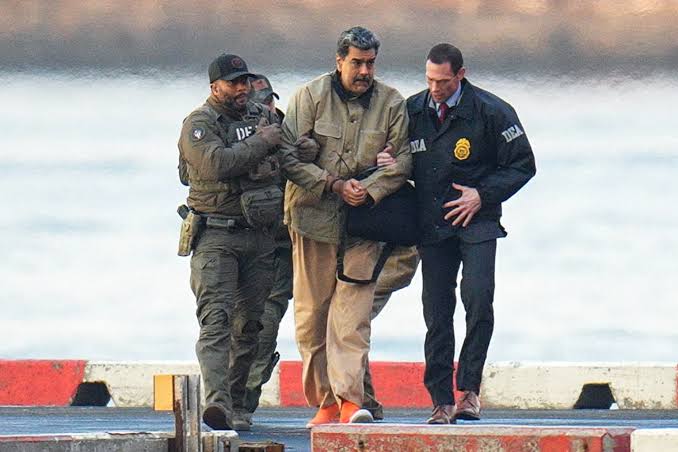
Venezuela’s ousted President Nicolas Maduro and his wife Cilia Flores are scheduled to appear back in a US courtroom Wednesday for a hearing focused on the upcoming schedule in their drug trafficking case, including discussion of a possible trial start date in June 2027.

The hearing before US District Judge Alvin Hellerstein is set to begin at noon Eastern time in Manhattan federal court and could offer insight into the next steps in what has become one of the most high profile and consequential criminal cases in recent US history.

Lawyers for both sides indicated in a filing that Maduro’s first round of legal motions seeking to have the case dismissed would come due on September 2. Those motions are expected to include an argument that Maduro should be immune from prosecution based on his position as head of a sovereign state. During Maduro’s first court appearance on January 5, his defense attorney Barry Pollack suggested the defense could also challenge the indictment by arguing that Maduro’s capture may not have been carried out legally.

Maduro, a socialist leader who maintained an antagonistic relationship with Washington throughout his time leading Venezuela from 2013 until his capture, referred to himself as a prisoner of war during that January appearance. He has long accused the United States of seeking to remove him from power in order to gain greater influence over Venezuela’s substantial oil reserves.

The United States describes Maduro as a corrupt dictator whose economic mismanagement led to Venezuela’s economic collapse, and accuses him of rigging reelection victories in 2018 and 2024. Washington stopped recognizing him as Venezuela’s legitimate president in 2019. Ahead of the January operation that led to his capture, the Justice Department’s Office of Legal Counsel issued an advisory opinion stating that it would be lawful for Trump to authorize the operation unilaterally, arguing it served an important national interest without rising to the level of a war requiring congressional approval.

According to Tuesday’s filing, lawyers for both sides said Maduro could submit a second round of legal motions by January 11, 2027, following the prosecution’s handover of any classified evidence for defense review.

Maduro last appeared in court on March 26 for a hearing concerning a US government restriction that barred Venezuela’s government from covering his legal fees. That dispute was resolved about a month later, when Washington agreed to adjust its financial sanctions on Venezuela to permit the government to pay those fees.

Venezuela has been governed since Maduro’s capture by his former vice president, Delcy Rodriguez, who has cultivated closer ties with the Trump administration. Washington has eased sanctions on Venezuela’s oil sector, and foreign companies have expanded oil and gas operations within the country. The US military has also provided relief assistance following two earthquakes that struck Venezuela’s coast last month, killing more than 5,000 people.

The case continues to unfold against the backdrop of a broader thaw in relations between Washington and Caracas under Rodriguez’s leadership, even as Maduro’s legal team prepares to mount a defense built partly around questions of sovereign immunity and the legality of the operation that led to his capture.

Similar Posts

  • | |

    Balochistan to bring 1.8 million out-of-school chi…

    The Balochistan government has approved the implementation of a large-scale non-formal education programme aimed at bringing 1.8 million out-of-school children back into the education system. The decision was made during a meeting chaired by the provincial chief secretary, where officials reviewed plans to expand access to education for children who have been unable to attend formal schools due to various social and economic challenges. Under the initiative, children who have missed out on formal education will be provided with alternative learning opportunities through a structured non-formal education system. The programme is designed to help them continue their studies and improve literacy across the province. Officials said the project will be implemented over the next five years. For the current fiscal year, the provincial government has allocated Rs8 billion to launch and support the initiative. The chief secretary said the programme will operate under the supervision of the Social Welfare Department, which will oversee its implementation and ensure educational services reach children in underserved communities. Special priority will be given to children between the ages of 9 and 16, a group considered most vulnerable to dropping out of school or never enrolling in formal education. The initiative is expected to expand educational access, reduce the number of out-of-school children, and improve learning opportunities for thousands of young people across Balochistan.

  • |

    Delhi pushes electric vehicle drive to tackle worsening air pollution

    Delhi has launched one of India’s boldest electric vehicle plans as authorities step up efforts to reduce dangerous air pollution in the capital. The new policy, introduced on July 1, aims to ensure that most newly registered vehicles in the city are electric by 2027. Officials believe the move will improve air quality and reduce harmful emissions, although experts say its success will depend on expanding charging facilities and strengthening the electricity network. Across several parts of Delhi, electric vehicle charging stations are becoming increasingly busy as more residents switch to battery powered scooters, cars and commercial vehicles. Even so, many drivers say the city still lacks enough charging points to support widespread use. Shyam Singh, who uses an electric scooter for work, said the existing infrastructure is not sufficient, especially for people who travel long distances. He explained that limited battery range and the shortage of charging stations remain major concerns for potential buyers. Under the new policy, existing petrol and diesel vehicles will not be banned, but the government expects their numbers to decline over time as electric vehicles become more common. Buyers will receive financial incentives including subsidies, exemptions from registration fees and some road taxes. People who scrap older fuel powered vehicles will also qualify for additional cash rewards. Authorities estimate the policy will cost around 150 billion rupees and is designed to encourage faster adoption of cleaner transport across the city. The plan focuses heavily on two and three wheelers, which make up nearly 70 percent of vehicles on Delhi’s roads. From 2027, all newly registered three wheelers and small commercial trucks must be electric. The same requirement will apply to newly registered two wheelers from the following year. Larger passenger cars and heavy vehicles running on conventional fuels will still be allowed for now. Electric vehicles currently account for only about five percent of the nearly 8.7 million vehicles registered in Delhi. However, registrations have grown steadily over the past year, with more than 100,000 new electric vehicles added, most of them scooters and auto rickshaws. Experts say the latest policy sends a clear signal that the city is committed to reducing dependence on fossil fuel powered transport. Energy specialists have described Delhi’s strategy as one of the most ambitious electric vehicle policies introduced by any Indian state. Jaideep Saraswat of the Vasudha Foundation said the firm deadlines make it clear that the transition to electric transport is unavoidable. He believes the policy will encourage both manufacturers and consumers to prepare for a future where electric vehicles dominate the market. Delhi has struggled with severe air pollution for years, particularly during winter when smog often reaches hazardous levels. The city regularly experiences school closures, restrictions on construction and emergency health measures because of poor air quality. Vehicles contribute around one quarter of pollution across the National Capital Region, while two and three wheelers alone account for almost half of transport related emissions within the city. Analysts say Delhi has already taken important steps toward cleaner transport in the past, including shifting many public vehicles to compressed natural gas. According to energy experts, electric vehicles represented around 12.7 percent of new vehicle sales in Delhi during the 2026 financial year, compared with the national average of 8.3 percent. They believe the latest policy builds on that progress by linking financial incentives with strict registration deadlines for conventional vehicles. Despite the optimism, several challenges remain. Some residents are still hesitant to switch because they worry about battery life, charging convenience and the effect of seasonal flooding on electric vehicles. Others believe more advanced and affordable models will become available in the coming years, making it worthwhile to delay their purchase. Experts also stress that expanding charging infrastructure is only part of the solution. Delhi must increase the use of renewable energy to power electric vehicles and modernize its electricity grid to handle rising demand. Fast charging stations, battery storage systems and better electricity management will all be necessary to support large scale adoption. Specialists also believe cooperation with neighboring states will be essential to reduce emissions from the wider power network and create a cleaner transport system for the entire region.

  • |

    Kanikka Kapur’s ‘Batwara 1947’ look has fans convinced it is Kiara Advani

    A fresh poster from Batwara 1947 is making waves online for a rather unexpected reason. Fans have started comparing debutant actress Kanikka Kapur’s appearance in the poster to Bollywood actress Kiara Advani. The buzz began after the poster dropped on July 30. It featured Kanikka alongside co-star Karan Deol. The partition-era drama boasts a solid ensemble cast. This includes Sunny Deol, Preity Zinta, Shabana Azmi, Ali Fazal, Karan Deol, and Kanikka Kapur in key roles. Almost immediately after the poster surfaced, comment sections lit up. Viewers pointed out a striking resemblance between the two actresses. In the poster, Kanikka wears a floral outfit paired with a light brown dupatta. Her makeup was kept simple and understated. That styling choice seemed to be what triggered the comparisons in the first place. Kanikka shared the same poster on her personal Instagram account. Alongside it, she wrote a simple caption. “Watch #Batwara1947 in cinemas this Partition Day, 14th August,” she posted. The comments under her post soon filled up with reactions from fans. One user wrote, “Congratulations @kanikkakapur I really thought it was Kiara Advani on the poster!” Another commented, “I thought it is Kiara Advani…but happy for you Kanika ji…God bless you with huge success.” Many other users chimed in with similar observations. Kiara Advani’s name kept coming up repeatedly across the replies. For Kanikka Kapur, Batwara 1947 marks her big Bollywood debut. Before stepping into films, she built a name for herself on television. She played the role of Suman Tiwari in Ek Duje Ke Vaaste 2. She has also worked on digital projects, including Dono, Modern Parivar, and Murderbad. Separately, director Rajkumar Santoshi recently shared an emotional detail about the film. He revealed that Batwara 1947 was the very last film veteran actor Dharmendra watched before his death. According to Santoshi, Dharmendra grew emotional while listening to the film’s narration. Tears welled up in his eyes as he offered his blessings for the project. Santoshi also mentioned that after watching the film, Dharmendra praised it warmly. He reportedly told the director that the film would go on to do exceptionally well. Batwara 1947 is all set to hit cinemas on August 14, 2026, coinciding with Partition Day.

  • |

    President Zelenskiy reassigns Rustem Umerov to head foreign intelligence in ongoing administration reshuffle

    Ukrainian President Volodymyr Zelenskiy has appointed Rustem Umerov, former Defence Minister and head of the National Security and Defence Council, as the country’s new chief of foreign intelligence. Despite taking on the intelligence portfolio, Umerov will retain his role leading Ukraine’s peace delegation in negotiations aimed at ending the conflict with Russia. The personnel shift is part of a broader cabinet restructuring initiated in July that saw former Interior Minister Ihor Klymenko named to head the Security Council, while former Defence Minister Mykhailo Fedorov and top military commander Oleksandr Syrskiy were relieved of their positions. The decision to remove Fedorov, an advocate for digital and drone warfare, sparked public criticism and street demonstrations calling for his reinstatement. While critics argue the reshuffle repeatedly shifts a small circle of close political allies between senior posts, government officials maintain the structural changes are designed to optimize national defense preparations ahead of anticipated winter strikes on energy infrastructure.

  • | |

    AJK police accuse banned JAAC of armed violence, b…

    MUZAFFARABAD: Azad Jammu and Kashmir (AJK) Police have alleged that the banned Joint Awami Action Committee (JAAC) is pursuing a coordinated agenda to disrupt peace and destabilise the region, claiming recent clashes with security forces demonstrate that the group has transformed into an armed organisation. Addressing a press conference in Rawalakot, AJK Police spokesperson Senior Superintendent of Police (SSP) Khawar Ali Shaukat said the violence of the past two days contradicted claims circulating on social media that the movement was peaceful. He alleged that armed individuals occupied buildings, established fortified positions and opened fire on police and security personnel using automatic and sophisticated weapons. According to the police, law enforcement personnel had been deployed across various parts of Rawalakot to maintain public order when they came under attack. Shaukat said authorities had exercised restraint throughout the situation but were compelled to respond in accordance with the law after security forces were targeted. The police spokesperson maintained that the nature of the weapons used and the organised tactics adopted during the clashes suggested the involvement of more than an ordinary protest movement. He further claimed that the group’s activities were intended to damage social harmony, weaken the atmosphere of brotherhood in AJK and create instability in the region. Officials said the confrontation claimed the life of a Rangers official, while around 15 police officers and other law enforcement personnel were injured during the exchanges. Police have reiterated that operations are being carried out under the law to restore order, while investigations into the incidents and the alleged network behind the violence remain ongoing.

  • |

    Govt increases petrol by Rs1.09, HSD by Rs2.42

    The government on Thursday increased the prices of petrol and high-speed diesel (HSD) by Rs1.09 and Rs2.42 per litre, respectively, passing on the impact of fluctuating global oil prices amid ongoing Middle East tensions. Following the revision, petrol will retail at Rs336.15 per litre, while HSD will cost Rs393.04 per litre. The government continues to levy Rs110 per litre in taxes and duties on petrol and Rs96 per litre on diesel. The Petroleum Division’s notification said the new prices would be applicable for July 31 (Friday). The diesel price has come down from a peak of Rs520.35 recorded on April 3, after beginning its upward trajectory from Rs281 per litre when the US-Iran war broke out on February 28. Similarly, petrol had peaked at Rs458.41 on April 3 after rising from Rs266 in the first week of March. Earlier, Petroleum Minister Ali Pervaiz Malik announced that fuel prices would now be fixed on a daily basis due to fluctuations in international market prices following renewed hostilities between Iran and the US. The government had been announcing weekly revisions since early March, alongside conservation measures amid possible oil supply disruptions due to the ongoing conflict in the Middle East. In April, the federal government also announced targeted relief measures to provide subsidised fuel. The petroleum minister stated that the cabinet and the prime minister had decided to give the Oil and Gas Regulatory Authority (OGRA) the responsibility of deciding fuel prices on a daily basis based on international market trends. The daily pricing decision was rejected by the All Pakistan Dealers Association, which said it would consider a protest plan this week. Petrol is mainly used in private transport, small vehicles, rickshaws and two-wheelers, and changes in its price affect the middle and lower-middle classes. Similarly, diesel price changes impact the public at large, as it is primarily used in the heavy transport sector, power plants and large generators. Petrol and HSD are the major revenue earners, with monthly sales of about 700,000 to 800,000 tonnes, compared to just 10,000 tonnes of monthly demand for kerosene.

Leave a Reply

Your email address will not be published. Required fields are marked *