thailand revoke visas

Thailand to revoke visas of troublemaking tourists amid growing concerns

BANGKOK, Thailand – Tourism authorities have announced that the government will revoke the visas of foreign tourists who cause trouble and disrupt public order, following reports of inappropriate behaviour by some visitor groups, particularly Israeli tourists, in key tourism areas including Phuket and Koh Samui, the Bangkok Post reported.

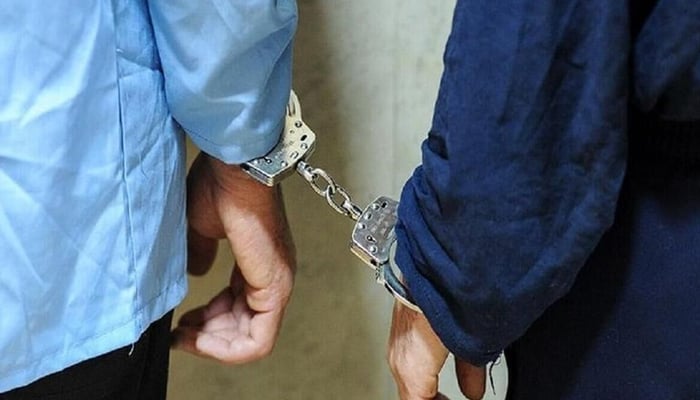
Two Swedish Men Arrested In Bangkok Over Alleged Crimes And Overstays

The reported behaviour has directly affected the tourism atmosphere, safety, and the image of the local service sector as efforts continue to elevate these areas into global destinations, prompting Tourism and Sports Minister Surasak Phancharoenworakul to address the issue decisively.

In an interview, Surasak stated that the behaviour was a matter of individual conduct and that the ministry would neither ignore the issue nor allow it to spread or escalate, with the government ready to coordinate with relevant agencies for immediate action to revoke the visas of tourists who cause trouble.

He emphasised that Thailand welcomes tourists from around the world, but those entering the country must respect Thai law and culture, and the government would not allow tourists of any nationality to use Thailand as a playground or use any area for symbolic expressions connected with any conflict.

Revoking the visas of individuals who cause problems before matters escalate is regarded as an important measure to preserve a positive atmosphere for Thailand’s tourism industry and reassure both business operators and tourists of other nationalities who travel to Thailand for holidays in the proper manner.

Israeli Man Fined Over Threats to Koh Samui Zoo

The announcement comes amid growing concerns over the impact of disruptive behaviour on Thailand’s reputation as a premier tourist destination, with authorities vowing to take firm action to ensure that all visitors adhere to local laws and cultural norms. The government has also signalled that it will not hesitate to take similar action against any foreign nationals whose conduct threatens public order or undermines the country’s tourism sector.

-Thailand News (TN)
Similar Posts

  • Thailand Summons Iranian Envoy Over Attack on Thai Cargo Ship

    BANGKOK — Thailand has sought an explanation and an apology from Iran over its attack on a Thai-flagged cargo vessel near the Strait of Hormuz on Wednesday, which damaged the ship and left three crew members still missing, the Foreign Ministry announced. Thai Cargo Ship Attacked Near Strait of Hormuz, Three Crew Missing Iranian Ambassador […]

  • | | |

    ‘Imran could face Morsi’s fate,’ sister warn…

    Pakistan Tehreek-e-Insaf (PTI) founder Imran Khan has expressed fears about his safety and allegedly told his sister that he could face a fate similar to that of former Egyptian president Mohamed Morsi, according to Dr Uzma Khan. Speaking at a press conference in Islamabad, Uzma said she was deeply concerned about her brother’s physical and mental condition following his prolonged confinement in Adiala Jail. She claimed Imran had repeatedly complained about being kept in solitary confinement and said he believed he was being treated inhumanely. According to Uzma, Imran told her that his concerns were not being properly heard by jail authorities. She said he had complained about the lack of human contact and believed that the isolation was affecting his health. Uzma further claimed that a doctor who examined Imran on August 10 attributed his anxiety and high blood pressure to his prolonged solitary confinement. She also said newspapers and television access had only been provided to him for a limited period. The PTI founder’s sister said she attempted to reassure him during their meeting, telling him that people across the country stood with him and that he should remain hopeful. Dispute over hospital transfer Uzma also provided details of the events surrounding Imran’s proposed transfer to Shifa International Hospital. She said she reached Adiala Jail between 8pm and 8:30pm after being contacted by authorities. She waited there with Imran’s physician, Dr Faisal Sultan. According to Uzma, they were later informed that Imran had been taken away, but she was not initially told where he had been taken. She said she was subsequently taken in a vehicle accompanied by a security convoy. After travelling for some time, she was informed that they had reached the Pakistan Institute of Medical Sciences (PIMS). Uzma said she reminded officials that the Supreme Court had ordered Imran’s transfer to Shifa International Hospital. She was reportedly told that he had instead been taken to PIMS for an eye examination. When she eventually met her brother, Uzma said Imran appeared surprised to see her. She told him that he was expected to undergo a comprehensive medical examination at Shifa. She said doctors at PIMS checked his blood pressure and examined his eyes. Dr Faisal Sultan separately said he had been summoned and taken to Shifa International Hospital but was repeatedly given unclear responses when he asked when Imran would arrive. He said he eventually concluded that the PTI founder would not be brought to the hospital. Government seeks review of Supreme Court order The dispute intensified after the federal government approached the Supreme Court seeking a review of its August 18 order concerning Imran’s medical examination and proposed transfer to Shifa International Hospital. The government had earlier filed a review petition, but it was returned after objections were raised by the Supreme Court registrar’s office. The government subsequently refiled the petition after addressing those objections. In its revised plea, the government argued that the August 18 order had been issued beyond the court’s jurisdiction and contained errors of law that warranted reconsideration. The government also relied on the Pakistan Prison Rules, 1978, arguing that the transfer of a convicted prisoner to a hospital is governed by a prescribed legal procedure. It referred specifically to Rule 197, which deals with the mechanism for transferring prisoners for medical treatment. The government further invoked Article 10-A of the Constitution, which guarantees the right to a fair trial and due process. It argued that adequate notice and an opportunity of hearing should be provided to both sides. The government therefore asked the apex court to review and recall its earlier order. Government rejects allegations of non-compliance Information Minister Attaullah Tarar defended the government’s position and rejected claims that the Supreme Court’s directive had been ignored. In a statement posted on X, Tarar said Imran had been taken for a medical examination during the early hours of August 21 under appropriate security arrangements. He said a team of doctors, including specialists in ophthalmology, cardiology and general medicine, examined Imran and declared him medically fit. Tarar said Uzma remained present during the medical examination and treatment process. According to the minister, Imran was subsequently returned to Adiala Jail at around 5am. In another statement, Tarar clarified that the examination was conducted at PIMS and that doctors from Shifa International Hospital were also present. He attributed the decision to use PIMS to security concerns surrounding the route to and area around Shifa International Hospital, which he said had been created by PTI workers. The minister maintained that the government had provided medical facilities to Imran in the past and would continue to do so whenever required. Opposition accuses government of contempt Opposition parties, however, strongly criticised the government’s handling of the matter. Opposition leaders alleged that the Supreme Court’s order had not been implemented in the manner directed and questioned the circumstances under which Imran was separated from his sister and physician. National Assembly Opposition Leader Mehmood Khan Achakzai and Senate Opposition Leader Allama Raja Nasir Abbas criticised the government’s decision and said those responsible should be held accountable. Achakzai questioned the circumstances surrounding the events during the night and described the episode as evidence of wider political problems in the country. Raja Nasir Abbas alleged that the government had effectively disregarded the Supreme Court’s decision by not transferring Imran to Shifa International Hospital as expected. He said the opposition would continue its legal and political struggle over the matter. The opposition leaders also expressed concern about Imran’s health and called for his medical treatment to be conducted transparently. Opposition alliance plans Supreme Court action The opposition’s joint parliamentary party, operating under the Tehreek Tahaffuz Aiyeen-e-Pakistan (TTAP) platform, also held a meeting at Parliament House. The meeting was chaired by Achakzai and attended by Raja Nasir Abbas, PTI Chairman Barrister Gohar Ali Khan, PTI Secretary General Salman Akram Raja, Khyber Pakhtunkhwa Chief Minister Sohail Afridi and other opposition lawmakers. The participants discussed Imran’s health, the Supreme Court order, the country’s political

  • | | |

    Iran says every threat will strengthen its militar…

    TEHRAN: Iran’s acting Defence Minister, Seyed Majid Ibn al-Reza, has declared that Tehran will continue strengthening its military capabilities by treating every threat from its adversaries as genuine, even as the United States signals a renewed diplomatic effort. His remarks came after US President Donald Trump announced that Washington had postponed a planned military strike against Iran in favour of restarting negotiations aimed at reducing tensions in the Middle East. In a statement posted on social media platform X on Monday, Ibn al-Reza said Iran viewed recent statements from its enemies as part of a broader campaign of psychological and cognitive warfare. However, he stressed that Tehran would not dismiss any warning, regardless of its nature. “We consider every threat to be real and deserving of a serious response,” the acting defence minister said, adding that Iran’s strategy was to transform every external challenge into an opportunity to reinforce its military preparedness and national defence. He said the Iranian armed forces would neither be caught off guard nor remain passive in the face of rising regional tensions. Instead, every warning or hostile statement would serve as a catalyst for expanding the country’s defensive capabilities and maintaining operational readiness. The comments underscore Iran’s continued emphasis on deterrence at a time when uncertainty surrounds the future of US-Iran relations and broader security dynamics across the Gulf. Earlier, President Trump announced that the United States had suspended plans for military action against Iran after requests from Tehran and several Middle Eastern countries to give diplomacy another chance. Writing on his social media platform, Truth Social, Trump claimed the US military had been fully prepared for an operation of unprecedented scale, describing it as one of the largest potential military actions since the Second World War. According to Trump, the proposed negotiations focus on two key objectives: ensuring the immediate and uninterrupted reopening of the Strait of Hormuz for global shipping and addressing concerns over Iran’s nuclear programme. The Strait of Hormuz remains one of the world’s most strategically important maritime routes, carrying a significant share of global oil exports. Any disruption in the waterway has the potential to affect international energy markets and regional stability. While Washington has presented the renewed talks as an opportunity to prevent further escalation, Iranian officials continue to insist that the country will not relax its military vigilance during the diplomatic process. The latest exchange of statements reflects the delicate balance between diplomacy and deterrence, with both sides signalling a willingness to negotiate while simultaneously emphasizing military preparedness amid persistent regional tensions.

  • |

    Two arrested in Rs220m Karachi heist

    Police have arrested two suspects in connection with a Rs220 million theft in Karachi, apprehending them from Jhang after tracing their alleged involvement in a series of criminal activities across Punjab and Sindh. According to the spokesperson for the DIG Operations, police arrested suspect Mehtab along with his relative, Abdul Rehman, during an operation in Jhang. The spokesperson said Mehtab has 18 previous cases of theft and burglary registered against him. Investigators have also linked him to a major robbery in Karachi’s Saddar area in April, in which valuables worth around Rs220 million were reportedly stolen. Police said the two suspects had allegedly carried out thefts in several other cities, including Jhang, Faisalabad and Rahim Yar Khan. During the arrest operation, officers recovered a 9mm pistol and ammunition from Abdul Rehman, according to police. Authorities also recovered stolen property from the suspects that allegedly belonged to a theft case registered at Islamabad’s Ramna Police Station. Police are continuing their investigation to determine the suspects’ involvement in other criminal cases and to trace any additional stolen property.

  • Songkran Safe: Cambodia’s UNESCO Bid for Maha Songkran Poses No Threat to Thailand’s Listing

    BANGKOK – Thailand’s traditional Songkran festival remains secure in its UNESCO recognition despite Cambodia’s recent application to list its own Khmer New Year, “Moha Sangkranta Chnam Thmey,” as an intangible cultural heritage, officials confirmed. Yuthika Isarangkura na Ayutthaya, Director-General of the Cultural Promotion Department, addressed concerns following Cambodia’s submission, explaining that UNESCO listings do not […]

  • | |

    UEFA welcomes FIFA investment plan withdrawal

    UEFA has welcomed FIFA’s decision to abandon its controversial private investment proposal, calling the move “a victory for the whole game” while declaring that it has lost confidence in FIFA president Gianni Infantino’s leadership. The governing body for European football made the remarks after FIFA officially scrapped plans to sell stakes in its competitions following widespread opposition from football associations around the world. On August 1, FIFA president Gianni Infantino confirmed that the proposal to bring private investors into FIFA tournaments had been withdrawn after facing intense backlash and threats of a boycott. The plan had sparked strong criticism from UEFA, which argued that football’s global competitions should not be treated as commercial assets. Before the proposal was abandoned, UEFA had firmly opposed the idea, stating: “Football is not FIFA’s to sell.” Following FIFA’s decision to withdraw the proposal, UEFA issued another strongly worded statement welcoming the outcome while criticising Infantino’s leadership. The statement read: “The current FIFA leadership has not only lost UEFA’s confidence but also that of many other members of the football family.” UEFA also reminded members of the promises Infantino made when he first sought election as FIFA president in 2016. Quoting his campaign pledge, the organisation said: “When Gianni Infantino asked for the trust and the votes of FIFA’s member associations to elect him as their president in 2016, he said: ‘Of course we have to be transparent.’” The European governing body accused Infantino of failing to live up to that commitment, claiming he had handled FIFA’s finances without sufficient transparency and had treated the organisation’s money as though it belonged to him personally. The controversy began on July 29, when Infantino reportedly offered each of FIFA’s 211 member associations$40 million in exchange for supporting a proposal that would allow private investment in FIFA competitions, including the men’s and women’s World Cups. UEFA responded swiftly by announcing it would boycott future World Cups if the proposal moved forward. The Asian Football Confederation (AFC) also declared that it “stands in solidarity” with UEFA and Concacaf, adding further pressure on FIFA to reconsider the plan. The criticism did not stop there. FIFA chief operating officer Kevin Lamour reportedly admitted that the organisation’s own administration had been “deceived” about the investment project. Meanwhile, FIFA senior adviser on global strategy and governance Carlos Cordeiro resigned over the proposal, describing it as: “A bad deal for football” He also warned that it would: “Mortgage football’s future.” The episode has created fresh uncertainty around Infantino’s leadership ahead of FIFA’s next presidential election. Infantino, who was first elected FIFA president in 2016 after defeating AFC president Sheikh Salman al-Khalifa by 115 votes to 88, is expected to seek another term. FIFA’s next president will be confirmed at the organisation’s 77th Congress in Morocco next March, with candidates required to submit their nominations by November 18. 

Leave a Reply

Your email address will not be published. Required fields are marked *