unfinished fiscal map

The Unfinished Fiscal Map: Who Gets to Tax the Dig…

When France first levied a 3% tax on the domestic revenues of large technology companies in 2019, the move was presented as a modest, temporary fix. Five years later, the temporary fix has become a global patchwork. More than 20 countries now operate some form of digital services tax, the United States has threatened retaliatory tariffs, and the multilateral replacement intended to tidy it all up remains unsigned.


The question at the heart of the scramble is disarmingly simple and technically complex: where should a company that sells everywhere but is physically located almost nowhere pay its taxes?


For most of the last century, international tax rules rested on physical presence. A company was taxed where it had offices, factories, or personnel. That principle struggled as companies like Google, Amazon, and Meta built business models in which value is derived from users, data, and online advertising in one country, while profits are booked in another, often lower-tax, jurisdiction.


The scale of the mismatch sharpened after the 2008 financial crisis. The Organisation for Economic Co-operation and Development (OECD) launched its Base Erosion and Profit Shifting (BEPS) project in 2013, estimating that profit-shifting cost governments $100 billion to $240 billion annually in lost revenue. By 2018, public pressure to act on highly visible technology firms accelerated political timelines faster than the OECD process could move.


The result was the rise of the unilateral digital services tax, or DST.


Unlike corporate income taxes, DSTs are typically levied on gross revenues, not profits, generated from specific digital activities online marketplaces, search engines, social media platforms, and targeted advertising within a country’s borders. Rates are low, generally 2% to 5%, but they apply broadly. The United Kingdom’s 2% DST raised over £800 million in 2024-25. France, Italy, Spain, Austria, India, Turkey and others adopted similar measures, each with slightly different thresholds, definitions, and scopes.


Proponents argue DSTs restore a basic link between economic activity and taxation. “If a platform earns substantial revenue from French users watching French ads, the French tax base should reflect that,” a senior official at the French Ministry of Finance said in 2023. For many developing economies, where consumption of digital services is large but physical presence of providers is minimal, DSTs are also a matter of fiscal sovereignty.


Critics, including the technology companies themselves and the U.S. government, point to three problems. First, taxing revenue rather than profit can penalize low-margin businesses and be passed on to small businesses and consumers who use the platforms. Second, the proliferation of different rules creates compliance complexity and the risk of double taxation, where the same income is taxed in multiple jurisdictions. Third, Washington has long argued DSTs are discriminatory by design, targeting predominantly American firms.


That third argument carried trade consequences. Under Section 301 of the U.S. Trade Act, the Office of the U.S. Trade Representative (USTR) investigated DSTs adopted by France, India, Italy, and others, concluding that several did discriminate against U.S. companies. Tariffs of up to 25% on selected imports were prepared, then suspended pending a global deal.


That deal was meant to be Pillar One.


In October 2021, 136 countries and jurisdictions representing more than 90% of global GDP agreed to a two-pillar framework brokered by the OECD/G20 Inclusive Framework. Pillar Two, a 15% global minimum corporate tax, has largely moved forward and is now in force in dozens of countries. Pillar One is the more ambitious and more fragile.


Under Pillar One’s Amount A, a portion of the residual profits of the world’s largest and most profitable multinationals  those with global turnover above €20 billion and profitability above 10% would be reallocated to market jurisdictions where their customers and users are located, regardless of physical presence. The scope was deliberately expanded beyond tech; excluding extractive industries and regulated financial services, it would cover roughly 100 multinationals across sectors.


In exchange, countries would be required to withdraw DSTs and similar measures and commit not to introduce new ones. A Multilateral Convention (MLC) would implement the rules, replacing a web of unilateral taxes with a single, coordinated mechanism. The OECD estimated in 2023 that Pillar One would reallocate $200 billion in profits and generate $13 billion to $36 billion in additional global tax revenue annually, a figure comparable in aggregate to existing DST receipts, though distribution would differ markedly by country.


Negotiations have since slowed. The original goal of signing the MLC in 2023 was missed. A target for 2024 was also missed. In 2025 and early 2026, several governments, including the UK, revised their internal planning assumptions to 2027, while confirming that their DSTs “remain in operation” until a convention enters into force.


Several factors explain the delay. The convention requires ratification, including in the United States, where any tax treaty must secure a two-thirds majority in the Senate. Bipartisan skepticism about ceding taxing rights and concerns about revenue impacts have made ratification uncertain. Some emerging economies have argued that the thresholds for Pillar One are too high and the reallocation too small to benefit them meaningfully, preferring instead to retain DSTs or pursue a parallel negotiation at the United Nations on international tax cooperation that could run until 2027. In Washington, meanwhile, successive administrations have maintained that any acceptable deal must include robust DST withdrawal provisions.


The result is a holding pattern with real costs. In October 2021, Austria, France, Italy, Spain, the UK and the United States announced a transitional agreement: as long as Pillar One progressed, the U.S. would not impose retaliatory tariffs, and European DST liabilities would be creditable against future Pillar One obligations. That truce has largely held, but it depends on continued progress.


For businesses, the uncertainty complicates planning. A multinational may face a DST in India, a diverted profits tax in the UK, a Pillar Two top-up in the EU, and the prospect of Pillar One reallocation all with different calculation bases and documentation requirements. Tax directors at several large firms interviewed for this article described building parallel compliance systems for scenarios in which Pillar One enters into force, fails, or enters into force partially.


For governments, the trade-off is fiscal and diplomatic. DSTs offer immediate, predictable revenue and domestic political appeal. Pillar One offers stability, prevention of double taxation, and a brake on trade disputes, but its benefits are diffuse and longer-term.


No outcome is likely to satisfy all parties. A full implementation of Pillar One would mean the end of headline-grabbing taxes on tech giants, but would institutionalize a new principle that market countries deserve a share of residual profits even without physical presence a precedent that extends well beyond Silicon Valley. A collapse of Pillar One would likely entrench and expand DSTs, increasing the risk of fragmented digital taxation and tit-for-tat trade measures.


What began as an argument over how to tax search ads and online marketplaces has become a test of whether 140-plus jurisdictions can rewrite tax rules built for factories for an economy built on intangible assets. Until that map is redrawn, the titans will continue to be taxed just not under a single system.

*An accomplished jurist with profound acumen in constitutional and corporate jurisprudence, advising both public institutions and private enterprises, and shaping contemporary legal and policy thought.

Similar Posts

  • Debtocracy & bankruptcy of ideas   

    Pakistan’s debt problem has entered a new phase. The headline figure is alarming: total debt and liabilities reached Rs. 99.59 trillion by the end of fiscal year (FY) 2025-26. The deeper concern, however, lies in the composition of this debt, the burden of servicing it and the channels through which public borrowing now affects every productive sector of the economy. According to the latest State Bank of Pakistan data, total debt stood at Rs. 97.88 trillion. Gross government domestic debt reached Rs. 59.44 trillion, while external debt amounted to Rs. 36.20 trillion. Central government debt increased by 7.39% over the preceding year to Rs. 83.64 trillion. External debt and liabilities stood at US$138.85 billion. These numbers confirm the central argument developed in the a ten-part series published in these columns [‘Bankruptcy of ideas—X: Debt, Taxes & Democracy’, Minute Mirror, June 21, 2026]. Pakistan has not merely borrowed against its future. It has increasingly borrowed to service earlier borrowing, while failing to create sufficient productive capacity from the accumulated debt.   ‏The external debt-servicing profile for FY2026 makes this particularly clear. Pakistan serviced US$21.59 billion of external debt during the year. An extraordinary US$10.14 billion—nearly half of the annual amount—fell in the final quarter alone. Quarterly servicing was 2.63 times the amount paid in the preceding quarter, mainly because principal repayments jumped from US$2.70 billion in the third quarter to US$8.81 billion in the fourth. This concentration of repayments is as important as the overall debt stock. A country may carry a large debt if its economy generates sufficient revenue, exports and foreign exchange to service it. Pakistan’s difficulty is that debt obligations have expanded much faster than the productive and export capacities needed to meet them. The debt accumulated over decades cannot be attributed to one government or one fiscal year. Persistent fiscal deficits, a narrow and inequitable tax base, losses of state-owned enterprises, the energy-sector circular debt, excessive recurrent expenditure, exchange-rate depreciation and repeated balance-of-payments crises have all contributed to it. Borrowing became the preferred substitute for reform.  Governments borrowed because they could not tax influential sectors, restructure loss-making enterprises, reduce wasteful expenditure or build a competitive export economy. External lenders financed temporary stability, while domestic banks financed the fiscal deficit. Each arrangement postponed difficult decisions without removing the causes of the crisis. The Ministry of Finance reported public debt at 70.7% of GDP by June 2025. The ratio may improve when nominal GDP grows faster than debt, especially during periods of inflation, fiscal consolidation and lower interest rates. A declining debt-to-GDP ratio, however, does not necessarily mean that the debt burden has become harmless. Pakistan’s debt stock is still increasing. What has improved is the immediate cost of servicing parts of it. Total debt and liabilities servicing declined from Rs. 13.16 trillion in FY2025 to Rs. 11.97 trillion in FY2026. Interest payments on debt fell by more than 23%, from Rs. 9.47 trillion to Rs. 7.27 trillion, largely because lower policy rates reduced the cost of servicing domestic government debt. Interest payments on gross government domestic debt consequently fell from Rs. 8.08 trillion to Rs5.99 trillion. This is welcome relief. It should not be presented as the end of the debt crisis. Lower interest rates reduce the flow cost of debt; they do not extinguish the stock. Principal repayments on external debt and liabilities increased from Rs. 3.47 trillion to Rs. 4.47 trillion during FY2026. Pakistan therefore obtained relief on domestic interest payments while facing a substantially heavier external repayment burden. The distinction is between debt management and economic transformation. Pakistan may be moving from an acute debt-accumulation crisis towards a more manageable financing position. It has not escaped debtocracy—the system in which fiscal policy, taxation, banking, foreign relations and development priorities become subordinate to the requirements of borrowing and repayment. Debtocracy does not remain confined to the accounts of the Ministry of Finance. It is transmitted throughout the economy. The first channel is the banking system. Government securities offer banks sovereign backing, liquidity and attractive risk-adjusted returns. Lending to the government is easier than evaluating businesses, financing innovation or supporting small and medium enterprises. A large domestic borrowing requirement therefore creates continuous competition for available liquidity. The result is crowding out. The State obtains the funds it requires, banks earn relatively secure returns and the private sector bears the adjustment. Productive businesses face limited access to credit, higher risk premiums and shorter financing horizons. Smaller enterprises suffer the most because they cannot compete with the sovereign for bank liquidity. This creates a financial system that can remain profitable while the productive economy remains weak. Deposits are mobilised from citizens and businesses, channelled into government securities, and then used substantially to meet recurrent expenditure and service earlier debt. Banking expands without an equivalent expansion in productive capacity. The second channel operates through foreign exchange. External debt repayment creates demand for dollars. That demand places pressure on reserves and the current account. Any resulting exchange-rate depreciation increases the rupee value of external liabilities and raises the domestic price of imported fuel, machinery, raw materials and intermediate goods.  The chain is direct: External repayment creates foreign-exchange demand; reserve pressure increases exchange-rate sensitivity; depreciation generates imported inflation; and inflation raises working-capital requirements and production costs. Debt consequently becomes a corporate balance-sheet issue. An industrial enterprise may have no external loan, yet still bear the effects of sovereign external debt through a weaker rupee, costlier imports, higher energy prices and restricted access to domestic credit. Consumers ultimately pay through inflation, reduced employment and lower real incomes. The third channel is fiscal. Every rupee allocated to debt servicing is a rupee unavailable for education, health, water, climate resilience and productive infrastructure—unless the State raises additional revenue or borrows again. Pakistan then enters a circular arrangement: borrowing creates servicing obligations, servicing compresses development expenditure, weak development limits growth and revenue, and insufficient revenue necessitates further borrowing. This is why a primary surplus, though necessary, is not sufficient. It can stabilise debt dynamics, but

  • Poetry, Power & Humanity—IV Bulleh Shah: Be…

    “The ‘I’ of Bulleh Shah represents man in his very essential capacity as a unit of creation”. —Najm Hosain Syed, Recurrent Patterns in Punjabi Poetry  Najm Hosain Syed’s reading of Bulleh Shah rescues one of Punjab’s most familiar poems from the ease of popular applause. Bullah ki jaana main kaun is commonly heard as a graceful confession that ultimate truth cannot be known. Najm sees something more demanding. Bulleh’s “I” is the elemental human being confronting the question “who?” Every answer offered by history—religion, institution, inherited status, nationality, relationship or dogma—tempts the seeker with a final identity. The poet accepts none as sufficient. His negatives are not an escape from commitment; they refuse to let any socially manufactured label exhaust the meaning of being human. This makes Bulleh Shah indispensable to our inquiry into poetry, power and humanity. Shah Hussain crossed the narrow passage between possession and freedom [Poetry, Power & Humanity—III:  Shah Hussain: Crossing the Narrow Passage of Love & Rebellion, Minute Mirror, July 21, 2026]. Bulleh Shah interrogated the walls on either side. Who constructed them? Who benefits when human beings are separated into pure and impure, believer and unbeliever, ruler and subject, high-born and low-born? His poetry exposes how identity, initially a source of belonging, can be converted into an instrument of hierarchy. اُٹھ گئے گوانڈھوں یار رَبّا ہُن کیہ کریے Uth gaye gawandhon yaar Rabba hun ki kariye The Beloved has left the neighbourhood; Lord, what am I to do now? اُٹھ چلّے ہُن رہندے ناہیں ہویا ساتھ تیار رَبّا ہُن کیہ کریے Uth chale hun rehnde nahin Hoya saath tayyar Rabba hun ki kariye He has risen and departed; the caravan stands ready, and he will remain no more. Lord, what am I to do now? ڈاڈھ کلیجے بل بل اُٹھے بھڑکے بِرہوں نار رَبّا ہُن کیہ کریے Daadh kaleje bal bal uthe Bharke birhon naar Rabba hun ki kariye The depths of my heart are aflame, kindled by the fire of separation. Lord, what am I to do now? بُلھا شاہ پیارے باجھوں رہے اُرار نہ پار رَبّا ہُن کیہ کریے Bulla Shah piyare bajhon Rahe uraar na paar Rabba hun ki kariye Without the Beloved, says Bulleh Shah, I remain stranded midstream, reaching neither shore. Lord, what am I to do now? The kafi begins with departure, though it does not end in private sorrow. The familiar neighbourhood has lost its centre; the traveller is left between shores. This is the existential moment preceding Bulleh’s interrogation of identity. Once the familiar world departs, inherited answers can no longer shelter us. “What am I to do now?” becomes the cry of every human being whose social certainties have collapsed. Bulleh Shah lived in a Punjab experiencing political dislocation, declining Mughal authority and sharpening religious and social conflict. His spiritual choice itself challenged inherited hierarchy. Born into a Syed family, he accepted Shah Inayat, traditionally identified with the Arain community, as his murshid. Knowledge and spiritual worth were thus placed above genealogy. Their relationship was not merely devotional; it denied the proposition that dignity could be inherited by one group and withheld from another. His choice of Punjabi carried similar democratic force. Persian was associated with administration and cultivated elites; Arabic commanded religious authority. Punjabi was the living speech of cultivators, artisans, women, faqirs and labouring communities. Through the kafi, philosophy ceased to be the exclusive property of courts and seminaries. It could be remembered, sung and transmitted without permission from those controlling formal knowledge. The kafi was central to Bulleh Shah’s poetic expression and to the wider Sufi traditions of Punjab and Sindh. Bulleh’s resistance becomes sharper in the following kafi, where he compares the ostentatiously pious with dogs. راتیں جاگیں کریں عبادت راتیں جاگن کُتے تیتھوں اُتے Raatin jaagein karein ibaadat Raatin jaagan kutte Taithon utte You remain awake at night in worship; dogs keep vigil too— and surpass you. بھونکنوں بند مول نہ ہندے جا روڑیں تے سُتے تیتھوں اُتے Bhonkanon band mool na honde Ja roorin te sutte Taithon utte They never cease their watchful barking, then sleep upon a refuse heap— and surpass you. خَسم اپنے دا در نہ چھڈدے بھاویں وجن جُتے تیتھوں اُتے Khasam apne da dar na chhadde Bhaven vajjan jutte Taithon utte They never abandon their Master’s door, though struck repeatedly— and surpass you. بلھے شاہ کوئی رَخت وِہاج لے نہیں تے بازی لے گئے کُتے تیتھوں اُتے Bulleh Shah koi rakht vihaaj lai Nahin te baazi lai gaye kutte Taithon utte Bulleh Shah, acquire provisions for the journey, or the dogs will carry away the prize— and surpass you. The poem reverses an established hierarchy with deliberate audacity. The dog, conventionally treated as impure, becomes the moral teacher; the visibly devout human being becomes the object of satire. Bulleh does not ridicule worship. He asks what worship is worth when it produces neither loyalty nor humility. The dog remains at its master’s threshold despite hunger, rejection and blows. The worshipper may remain awake, although ritual performed for reputation can coexist with pride, cruelty and the pursuit of power. This distinction is critical. Bulleh Shah’s target is not religion but its conversion into social capital. Piety becomes another possession—something to display, trade and employ against others. In Erich Fromm’s terms, the mode of “having” invades faith: one “has” learning, sanctity, lineage and followers. Bulleh insists upon the mode of “being”, where truth appears through conduct rather than claim. The dog’s fidelity defeats the worshipper’s performance. The same assault on borrowed identity culminates in three immortal lines: بلھیا! کی جاناں میں کون Bulleya, ki jaana main kaun? Bulleh, how can I know who I am? نہ میں مومن وچ مسیتاں نہ میں وچ کفر دیاں ریتاں Na main momin vich maseetan Na main vich kufar diyan reetan I am not confined to the believer in the mosque, nor to the rituals called unbelief. نہ میں موسیٰ، نہ فرعون Na main Moosa, na Firaun I am neither Moses nor Pharaoh. Bulleh removes the available answers one after

  • The Door That Once Slammed in Europe is Now Echoin…

    When Henrik Ibsen wrote A Doll’s House in 1879, Europe was not prepared for Nora Helmer’s final act, where she left her husband. The sound of a woman shutting the door on her husband and children became one of the most controversial moments in literary history. To nineteenth-century society, the idea that a wife could leave an unhappy marriage was not merely immoral; it was considered an attack on the very foundation of civilization itself: the marriage. The reaction was so intense that German theatre managers forced Ibsen to change the ending. In the revised version, Nora looks at her sleeping children, collapses emotionally, and stays in the marriage. Society wanted the family preserved at all costs. Marriage was sacred. Separation was shameful. A woman’s identity was expected to remain tied to sacrifice, endurance, and silence. More than a century later, something similar is unfolding in Pakistan, particularly in Islamabad. According to recent reports, family courts in Islamabad are facing an unprecedented rise in khula and maintenance cases. More than 45,000 khula-related cases have reportedly already been filed this year, with over 300 new cases emerging daily. The number of family disputes continues to rise, reaching 100,000 cases in 2025. Alongside this trend, court marriages have also increased significantly, many ending in disputes soon after marriage. This phenomenon is often discussed only through statistics or social criticism. Yet beneath these numbers lies a deeper sociological transformation, one that history has witnessed before: a doll’s house. The most striking aspect is not the increase in divorce. It is the change in social attitudes toward marriage itself. Pakistan today appears to be experiencing debates that Europe confronted more than one hundred years ago. In traditional Pakistani society, much like Victorian Europe, marriage has long been treated as sacred, permanent, and socially untouchable. Previous generations often viewed separation as failure, dishonour, or rebellion against family values. Women were expected to tolerate emotional hardship, neglect, incompatibility, and sometimes even abuse for the sake of preserving the household structure. This is precisely the social environment that Nora challenged in A Doll’s House. At the time, audiences were horrified not because Nora committed a crime, but because she chose herself over an unhappy domestic life. Society could forgive a flawed husband more easily than it could accept a woman leaving the marriage altogether. Her departure symbolized individual dignity over social expectation. Today, in Islamabad’s family courts, one can observe echoes of the same historical transformation. Increasingly, people, particularly women, are refusing to remain in marriages they perceive as emotionally unbearable, unequal, or destructive. Whether one agrees with this shift or not, it represents a visible social reality. This does not necessarily mean that society has abandoned the institution of marriage. Rather, it may indicate that expectations from marriage are changing. Earlier generations often prioritized endurance and collective family reputation. Modern generations increasingly prioritize emotional compatibility, respect, mental peace, and personal autonomy. The pace of this transition, however, varies across societies. Europe underwent these debates gradually through industrialization, feminism, legal reform, and changing gender roles over decades. Pakistan, by contrast, is witnessing social change at a much faster pace due to urbanization, education, digital connectivity, economic pressures, and shifting cultural narratives. Ideas that once took generations to spread now travel instantly through social media, television, and global interaction. This is why the comparison with Ibsen’s drama becomes deeply relevant. History does not repeat itself in identical forms, but human societies often move through similar psychological and cultural stages. The same fears once expressed in nineteenth-century Europe, that family systems would collapse, morality would disappear, and social order would weaken, are now frequently heard in discussions within Pakistan. Yet it is important to approach this issue carefully and honestly. Recognizing this social transformation does not automatically mean celebrating divorce, nor does it mean condemning marriage. It simply means acknowledging that societies evolve, and that concepts once considered absolute eventually become contested. The sanctity of marriage remains deeply important for millions of families in Pakistan. At the same time, increasing numbers of individuals no longer believe that preserving a marriage at any cost is always the highest social virtue. Perhaps the real lesson from A Doll’s House is not about encouraging separation, but about understanding how societies react when individuals begin demanding dignity, identity and personal autonomy within family life. More than a century ago, Europe feared Nora’s door slam. Today, Pakistan is hearing similar sounds, not from theatre stages, but from courtrooms and homes. Whether this transformation strengthens or weakens society remains a question for future generations. But one thing is undeniable: social change, once it begins, rarely moves backward.

  • India’s nuclear security dilemma: Kudankulam…

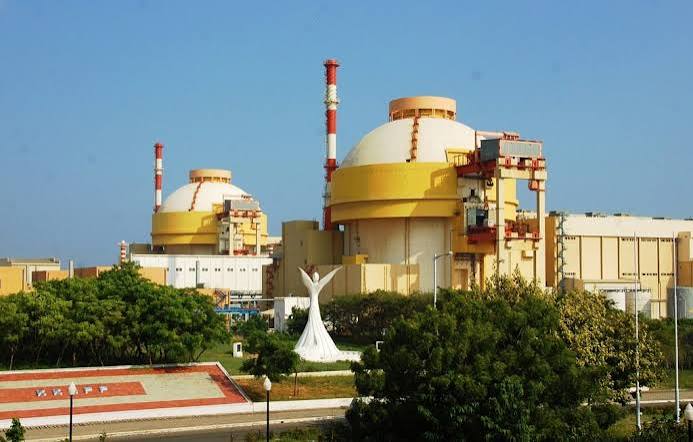
    By Sharjeel Zafar “Nuclear security is first and foremost a national responsibility.” This principle is not merely a diplomatic commitment – it is the minimum requirement for any state operating nuclear facilities. Against this fundamental principle, the reported data breach involving India’s largest nuclear power station, the Kudankulam Nuclear Power Project (KKNPP), which came to public attention on 15 July 2026, represents a serious setback to confidence in India’s nuclear security architecture and highlights vulnerabilities within one of its most critical strategic facilities. The exposure of sensitive engineering documents from one of India’s flagship nuclear facilities is not just a cybersecurity failure; it is a warning sign of deeper vulnerabilities within a nuclear establishment that seeks to expand rapidly while struggling to secure the infrastructure it already operates. According to cybersecurity researchers, thousands of engineering files related to Kudankulam Units 3 and 4 were reportedly exposed following a ransomware attack on Reliance Infrastructure, a contractor associated with the project. The leaked material allegedly included drawings of ventilation and cooling systems, layouts of auxiliary control rooms, inspection records with site photographs, supplier information, and insurance documentation. Indian authorities have maintained that no reactor-core designs or operational control systems were compromised. Yet modern cyber operations seldom begin by targeting the most protected assets. Instead, adversaries assemble seemingly routine engineering documents, contractor records, and infrastructure layouts to build an intelligence picture that can support future cyber intrusions, supply-chain compromises, or physical sabotage. In this context, the significance of the breach lies not merely in what was leaked, but in what such information can enable. The incident is particularly concerning because it follows an earlier cybersecurity breach at the same facility. In 2019, malware attributed by cybersecurity researchers to the Lazarus Group infiltrated an administrative network associated with Kudankulam. Although the Nuclear Power Corporation of India Limited (NPCIL) maintained that operational systems remained isolated, the episode demonstrated that India’s nuclear infrastructure had already become a target for sophisticated cyber actors. The recurrence of security incidents involving the same strategic installation suggests that vulnerabilities within India’s broader nuclear ecosystem, including contractors, suppliers, and administrative networks, remain insufficiently addressed. Such repeated breaches raise questions about the effectiveness of existing cybersecurity protocols and the resilience of critical nuclear infrastructure against evolving cyber threats. More troubling, however, is that Kudankulam represents only one aspect of a much larger problem. Over the past four decades, India has witnessed repeated incidents involving the theft, illegal possession, and trafficking of radioactive materials. Police have intercepted attempts to sell uranium and other radioactive substances in Maharashtra, West Bengal, Bihar, Jharkhand, Uttarakhand, and Dehradun involving stolen radioactive material. These repeated incidents raise serious questions about the effectiveness of India’s nuclear security mechanisms and its ability to maintain strict control over hazardous materials. These incidents expose a dangerous gap between India’s claims of maintaining a robust nuclear security architecture and the reality demonstrated by repeated security breaches. The timing of these concerns is particularly alarming. India is simultaneously seeking to dramatically expand its nuclear energy sector and introduce greater private-sector participation. Expansion without institutional strengthening creates a dangerous contradiction: the country is increasing the size and complexity of its nuclear ecosystem before fully resolving vulnerabilities already visible within the existing system. Private participation may bring investment, technological expertise, and efficiency, but it also introduces additional layers of complexity into nuclear security governance. Unlike a purely state-controlled system, a larger private-sector ecosystem involves multiple contractors, subcontractors, software providers, equipment suppliers, and service companies that may require access to sensitive information, digital networks, or operational support functions. Each additional entity connected to nuclear infrastructure expands the potential attack surface and creates new points at which cybersecurity failures, insider threats, inadequate security practices, or supply-chain compromises can occur. Differences in security standards, compliance capabilities, and oversight mechanisms among private entities may further complicate efforts to maintain uniform protection across the nuclear sector. Without strict regulatory control, mandatory cybersecurity standards, and continuous monitoring of third-party participants, privatization could unintentionally widen the pathways through which hostile actors attempt to access sensitive nuclear information or critical infrastructure. The implications extend far beyond India’s domestic energy programme. India’s expanding nuclear industry increasingly relies on international technology, foreign vendors, global supply chains, and cross-border investment. Consequently, vulnerabilities within one national nuclear programme can have wider strategic repercussions. A successful cyber operation or compromise of sensitive engineering information could undermine confidence in India’s nuclear security practices, raise concerns among international partners, and expose weaknesses in critical infrastructure protection within an increasingly interconnected nuclear industry. As civilian nuclear programmes worldwide become more digital and commercially integrated, cybersecurity failures in one country inevitably become matters of broader international concern. The Kudankulam breach should therefore serve as a strategic wake-up call, not another incident to be contained through official statements. A nuclear power’s credibility is not determined by the number of reactors it operates or the ambitions it announces, it is determined by its ability to prevent unauthorized access, protect sensitive information, secure radioactive materials, and maintain public confidence in its institutions. The question is whether the international community would still stay silent over a State’s perpetual weak demonstrated performance in nuclear security and remain vulnerable to risk of nuclear terrorism, cyber terrorism, illicit proliferation, and black market or transnational ecological disorder? India’s nuclear programme stands at a critical crossroads. Rapid expansion combined with unresolved security weaknesses creates a dangerous environment where a single successful cyber operation, insider compromise, or supply-chain failure could produce consequences far beyond financial losses or reputational damage. In the nuclear domain, prevention is not optional, and security lapses cannot be treated as routine administrative failures. The most serious threat facing India’s nuclear ambitions may not come from external adversaries seeking to undermine its programme, it may come from vulnerabilities that remain unaddressed within the programme itself. A nation aspiring to become a major nuclear power cannot afford a security culture built around reassurance after failure. It must build one based on prevention before disaster. The Kudankulam leak is not merely

  • Gujrat: The Height of the Akbari Fort and the Trag…

    When rain descends from the folds of clouds, it assumes the form of divine mercy for the earth—reviving parched soil and spreading smiles across the weary faces of farmers. Yet, when this very rain turns unbridled and the administrative apparatus built to welcome it pulls a heavy shroud of negligence over its eyes, this descent of mercy transforms into a harrowing shape of torment and sudden calamity. Gujrat, a historic and industrial city of Punjab that holds a unique global identity through its civilizational expanse, skilled artisans, and proximity to the Chenab River, presents the terrifying spectacle of a pond and a swamp every monsoon season. Here, urban flooding is no longer merely a climatic accident; rather, it has become a chilling confession of administrative apathy, unscientific planning, and a criminal denial of historical geographical realities. When the hydrological management of cities is evaluated on a global scale, the concepts of “Sponge Cities” are put into practice, but our reality stands in stark opposition. When the state of urban drainage in Gujrat is objectively reviewed through the corridors of history, one’s eyes are opened to the bitter truth that the rulers and elements who dominated this city consciously hollowed out its roots at every level for the gratification of greed. The city’s drainage and sewerage system, in particular, fell prey to the plunder of commission agents belonging to the corruption mafia. It is an immensely agonizing chapter of history that two decades ago, when a renowned international Japanese company completed a detailed survey of Gujrat, officially announced its complete reconstruction on modern lines, and promised a world-class drainage system, the hungry brokers sitting in the echelons of power burnt this magnificent project in the fire of personal lust. The people of Gujrat can never forget the actors who sacrificed the Japanese company’s dream at the altar of kickbacks. Later, when times changed and Chaudhry Pervaiz Elahi assumed the helm of this region as Chief Minister, he released heavy, voluminous funds amounting to billions of rupees to radically improve and modernize Gujrat’s decrepit and worn-out drainage system. Yet the tragedy was that these billions of rupees in Gujrat’s history remained restricted to a few specific and powerful pockets, and to openly divide these funds, the entire system was mortgaged to a fostered contractor mafia. With an exceptionally substandard, superficial, and unprofessional approach, this mafia played a game of window-dressing that instead of fixing Gujrat’s sewerage system, ruined it permanently and turned the entire city into an artificial swamp. Today, the agony of drainage dancing through the city’s streets and roads offers no hope of deliverance from this terrifying urban flood unless a severe accountability of these true, deceitful culprits is carried out. The political leadership that followed also made efforts suited to their respective statures for the betterment of the city; and although their own technical errors consistently hampered this improvement, every resident of Gujrat continues to carry the heavy burden of those primary sinners who devastated Gujrat’s history, civilization, and urbanity. Last year, when urban flooding once again descended upon the city as a mortal torment, uproar echoed everywhere, the wheel of life halted, and the situation reached a point where the Chief Minister of Punjab had to personally make an emergency visit to Gujrat to rescue the district administration from this storm of incompetence. During this visit, a heavy downpour of announcements and promises took place, accompanied by the release of special funds worth billions for complete and sustainable improvement next year. Despite the sincere efforts and financial provisions of Honorable Maryam Nawaz Sharif, the district administration—entrenched in a colonial mindset—spent all its energies throughout the year on personal image-building and photo sessions rather than the timely completion of this vital sewerage project. As ill luck would have it, as soon as the monsoon season arrived once again this year, the colorful balloon of good governance and claims deflated entirely, exposing the bitter reality that this malaise of flawed planning persists and rainwater continues to rain down as a torment upon citizens’ lives. And when this rainwater has already devastated citizens’ lives, wounding their homes and businesses, only then do the traditional efforts of WASA and district institutions begin to bear fruit, with water finally receding from the streets after prolonged suffering. Success drums are then beaten over this very temporary performance, adding salt to the injuries of the citizens. A profound study of Gujrat’s urban geography reveals that its foundations and topography are deeply embedded in its centuries-old historical backdrop. Built during the Mughal era, the Akbari Fort serves as the greatest metaphor for the region’s military, political, and administrative history. Viewed from a geographical and topographical standpoint, the Akbari Fort is situated on a relatively high mound or plateau, and the city’s older structural layout spreads outward from this height in gradual slopes in all directions. Principally and naturally, this elevation of the fort and the surrounding natural slopes should have stood as an exceptional geographical blessing for a drainage system—provided the natural pathways of water flow had been preserved and left unmolested by grotesque tampering. The tragedy, however, is that over time, unbridled urban expansion and a flood of encroachments mutilated this natural sloping system so ruthlessly that today, that very height and slope have turned into a bane for the city. Unchecked commercialization and illegal constructions in and around the Akbari Fort and its adjoining low-lying areas have blocked all traditional water routes in such a manner that water finds no outlet. The consequence is that when rainwater flows down from the elevated parts of the fort, instead of finding an open path or paved drain ahead, it encounters dead alleys, narrow sewage pipelines, and an endless siege of encroachments. Consequently, this water accumulates in lower regions to form a permanent lake, leaving city residents weeping over their helplessness. Gujrat’s tragedy is not merely the accumulation of rainwater; it is a reflection of that collective apathy and corruption which wakes up with the arrival

  • Every Year, Same Old Fight

    Every August, right on schedule, my phone starts buzzing. Friends send me lists. WhatsApp group start heated debates. Neighbours stop me at the corner shop. Someone always has an opinion about who made it onto Pakistan’s civil awards list this year, and someone always has an even louder opinion about who got left off. I have seen this happen so many times now that I could almost set my watch by it. The list comes out, the arguments start, and by the time the dust settles, nobody remembers what the fuss was even about. The award list carries the names which we like the most, and unfortunately, it carries those names, which do not like. I want to tell you something I have come to believe after watching this cycle play out year after year. This debate we keep having, about who deserved a medal and who did not, is about as useful as arguing over which cloud looks more like a rabbit. It never ends, and it never really goes anywhere either. People pick their favourites, defend them like family, and forget the whole point of what an award is supposed to mean in the first place. Here is the real point, plain and simple. An award is not a popularity contest. It is not a reward for showing up. It is meant for something extraordinary. Something exceptional. A person who did work so far above the ordinary that the state felt it had to stand up and say thank you in front of everybody. Now here is where the story gets interesting, and honestly, a little strange. An economist named Zehra Farooq sat down and did something most of us never bother to do. She pulled together every single civil award given out over nine years, all 2,209 of them, and looked at the pattern. What she found should stop us all in our tracks. Back in 2018, only 73 people received awards. By 2026, that number had climbed to 372. That is five times as many people being called extraordinary in less than a decade. Think about what that actually means. If we are handing out that many more awards for exceptional service, it should follow that we have more and more exceptional people walking among us. Teachers going beyond the call. Officers solving problems nobody else could touch. Scientists, engineers, public servants, all rising to meet the moment. That is what a growing list of honourees is supposed to tell us. But here is the part that keeps me up at night. If we truly have this many extraordinary minds working for the good of the country, why does the country not feel more extraordinary? Why do our institutions still creak and groan the way they always have? Why does public service still feel, for so many ordinary citizens, like an uphill climb rather than a smooth road paved by all this supposed excellence? Something does not add up. Either the definition of extraordinary has quietly loosened over the years, or the excellence being honoured is not translating into the everyday experience of the people it is meant to serve. Farooq’s numbers also show something else worth sitting with. Women still make up only around ten to sixteen percent of recipients, a share that has barely moved in nine years, and their share shrinks even further at the highest levels of honour. So the next time the list comes out and the arguments start flying, I hope we can steer the conversation somewhere more useful. Instead of fighting over names, let us ask why the growth in awards has not translated into a more exemplary, more ideal society. That is the debate worth having. That is the one that might actually change something.

Leave a Reply

Your email address will not be published. Required fields are marked *