three injured rival
| |

Three injured as rival MQM-P groups clash at party…

KARACHI: Internal differences within Muttahida Qaumi Movement-Pakistan (MQM-P) intensified on Sunday after supporters of two rival factions allegedly clashed outside the party’s Bahadurabad headquarters in Karachi, leaving at least three people injured.

According to reports, tensions between supporters of the groups associated with MQM-P Chairman Khalid Maqbool Siddiqui and senior leader Mustafa Kamal escalated following a party meeting. The confrontation turned violent as workers allegedly exchanged slogans, engaged in physical fighting, and pelted stones at each other.

Witnesses also reported aerial firing near the Bahadurabad headquarters during the unrest, creating panic in the area. Three people sustained injuries during the clashes.

Senior MQM-P leader Dr Farooq Sattar said the dispute erupted after a meeting of party leaders at the Bahadurabad office. Speaking to the media, he alleged that supporters of one faction assaulted MPA Ejaz-ul-Haq and party leader Zakir. He further claimed that party leaders Mangla Sharma and Sabeen Ghori were also mistreated during the incident.

MQM-P leader Amin Ul Haque alleged that one party worker was injured in the firing, while several others suffered injuries due to stone-pelting. He also claimed that extensive vandalism took place inside the party office and that the office’s DVR recording system was taken away.

Amin Ul Haque said the matter had reached a point where it could no longer be ignored and called the incident deeply concerning for the party.

Meanwhile, Dr Farooq Sattar later arrived at the Bahadurabad headquarters following the clashes as senior party leaders attempted to assess the situation and address the growing internal crisis.
Similar Posts

  • | | | |

    Israeli settlers torch two mosques in West Bank as…

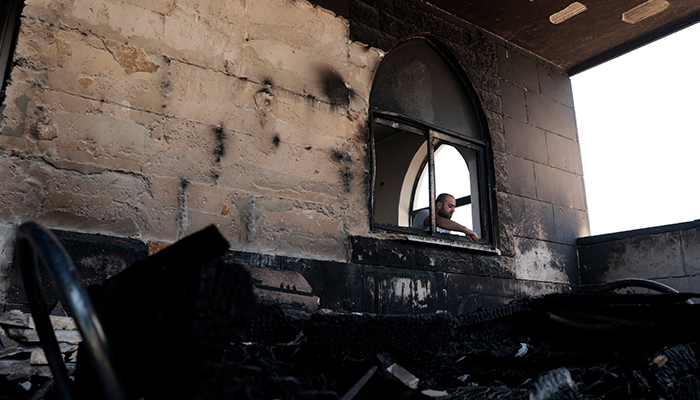
    WEST BANK: Two mosques were set ablaze in the occupied West Bank overnight, Palestinian officials said on Sunday, in the latest escalation of violence that has sharply raised tensions across the territory. The attacks targeted a mosque under construction in Qusra, south of Nablus, and another mosque in the village of Kour, near Tulkarm. The incidents came only days after a deadly confrontation in the nearby village of Tal that left four Palestinians and two Israelis dead. In Qusra, Mayor Abdel Azim Wadi said settlers set fire to the mosque’s entrance and damaged parts of its stonework. Hebrew graffiti, including the word “revenge,” was reportedly sprayed across the walls. The Israeli military said troops were sent to the area after receiving reports of the fire. According to the army, the suspected attackers had already fled when soldiers arrived. Israeli police were expected to collect evidence and investigate the incident. The second attack took place in Kour, where Palestinian officials said a mosque was set alight and racist slogans were written on its walls. Worshippers and local residents managed to prevent the fire from causing further destruction, according to reports. The mosque attacks have added another disturbing chapter to a widening cycle of violence in the West Bank, where clashes, arson attacks and raids have intensified since the Gaza war began in October 2023. The latest incidents also follow a deadly confrontation in Tal on Friday, where four Palestinians and two Israelis were killed. The aftermath has triggered further arrests, raids and attacks in surrounding Palestinian communities. With tensions already running high, the torching of places of worship has raised fresh fears that the latest violence could fuel further retaliation and deepen an already volatile situation across the occupied territory.

  • | |

    President Zardari approves civil awards for 355 pe…

    ISLAMABAD: President Asif Ali Zardari has approved civil awards for 355 Pakistani and foreign personalities in recognition of their outstanding services and achievements in various fields. The awards will be presented at a special ceremony on Pakistan Day, March 23, next year. The recipients include prominent figures from politics, public service, entertainment, sports, journalism, law enforcement, medicine and other sectors. Among the personalities from the entertainment industry, singers Tarannum Naz and Nisho Begum will receive the Sitara-i-Imtiaz. Actors Ghazala Kaifi, Sania Saeed and Maria Wasti, along with singer Zohaib Hassan, will be honoured with the Tamgha-i-Husn-i-Karkardagi. Singer Shiraz Uppal will receive the Tamgha-i-Imtiaz. In sports, shooter Kishmala Talat and former Test cricketer Sadiq Mohammad will be awarded the Tamgha-i-Husn-i-Karkardagi for their contributions and achievements. Several senior government officials and political figures have also been included in the awards list. Deputy Prime Minister and Foreign Minister Ishaq Dar, Interior Minister Mohsin Naqvi, Federal Ministers Ahsan Iqbal and Muhammad Aurangzeb, and Minister of State Bilal Azhar Kayani will receive the Nishan-i-Imtiaz. Director General Intelligence Bureau Fawad Asadullah, Attorney General Mansoor Usman Awan, Federal Board of Revenue Chairman Rashid Mahmood Langrial, Finance Secretary Imdadullah Bosal and Commerce Secretary Jawad Paul will receive the Sitara-i-Imtiaz. Chairman Pakistan Ulema Council Allama Hafiz Tahir Mahmood Ashrafi will be awarded the Tamgha-i-Imtiaz, while Federal Minister Engineer Amir Muqam will receive the Hilal-i-Imtiaz for public service. Zobia Khursheed Raja of Azad Kashmir will receive the Tamgha-i-Shujaat for her bravery in confronting rioters. She reportedly risked her life to rescue an injured police officer who was surrounded by rioters. A total of 46 martyrs of law enforcement agencies will be awarded the Sitara-i-Shujaat. Group Captain Asim Tariq Shaheed will also receive the same honour. Drug Regulatory Authority of Pakistan CEO Dr Ubaidullah will receive the Sitara-i-Imtiaz, while Punjab Saaf and Suthra Authority Director General Babar Sahib Din will be awarded the Tamgha-i-Imtiaz. Senior journalists Saleh Zafar and Haji Nawaz Raza will receive the Sitara-i-Imtiaz. Journalists Ammar Masood, Maria Zulfiqar, Adil Shahzeb and Hamad Hassan will be honoured with the Tamgha-i-Imtiaz. Two physicians associated with Quaid-e-Azam Muhammad Ali Jinnah, Dr Jal Ratanji Patel and Dr Jal Dabu, will be conferred the Nishan-i-Quaid-i-Azam posthumously. The list also includes prominent foreign figures. Saudi Prince Saud bin Naif will receive the Hilal-i-Pakistan, while Turkish Foreign Minister Hakan Fidan, Defence Minister Yasar Guler and Trade Minister Omer Bolat will each be awarded the Sitara-i-Pakistan. Dr Khalid Abbas Al-Asadi and Dr Paul Jacob Bhatti will receive the Tamgha-i-Imtiaz in recognition of their services.

  • | | |

    Kuwait welcomes Pakistan-Saudi-Türkiye Makkah def…

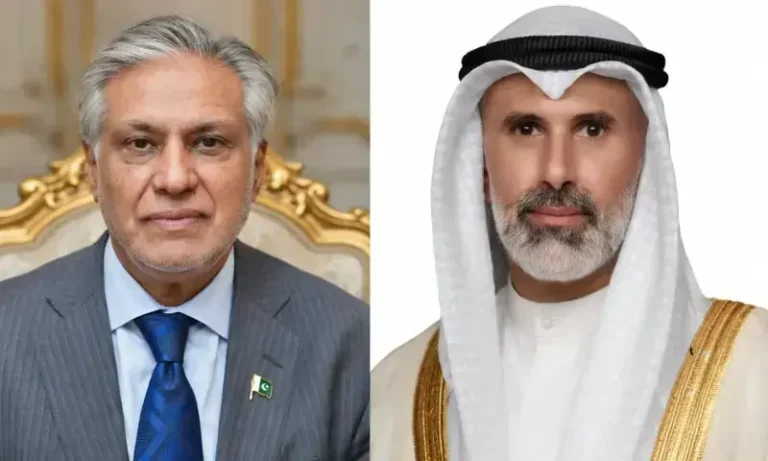
    ISLAMABAD: Kuwait has congratulated Pakistan on the signing of the Makkah Joint Defence Agreement with Saudi Arabia and Türkiye, signalling growing regional interest in the new security arrangement. Pakistan’s Deputy Prime Minister and Foreign Minister Ishaq Dar received a telephone call from Kuwaiti Foreign Minister Sheikh Jarrah Jaber Al-Ahmad Al-Sabah late on Sunday, during which the two officials discussed the agreement as well as the wider regional situation. According to Pakistan’s Foreign Office, the Kuwaiti foreign minister felicitated Dar on the agreement signed in Makkah on Friday. The two ministers also exchanged views on developments in the region, including the situation in occupied East Jerusalem. Their conversation also covered bilateral relations and ways to expand cooperation between Pakistan and Kuwait, particularly in investment and other key sectors. The officials also discussed follow-up to Sheikh Jarrah’s recent visit to Pakistan. “The two sides agreed to remain closely engaged,” the Foreign Office said. The development comes as Pakistan continues to explain the objectives and scope of the landmark defence pact, which brings Pakistan, Saudi Arabia and Türkiye closer together on security matters. Dar has stressed that the agreement is defensive in nature and is not directed against any particular country. Under the pact, an armed attack against any one of the three signatories would be treated as an attack against all three. The foreign minister said the arrangement was designed to strengthen collective deterrence while supporting regional peace, stability and security. He also maintained that the agreement was consistent with the right of individual and collective self-defence recognised under Article 51 of the United Nations Charter. Importantly, Dar clarified that the Makkah agreement does not replace or cancel existing bilateral or multilateral defence arrangements involving the three countries. The pact could also have a broader regional dimension. Dar said the agreement remains open to other countries in the region that are willing to respect its principles and resolve differences through dialogue, cooperation and peaceful means. His comments came amid reports that Egypt could potentially join the arrangement. Earlier, Dar also spoke with Canadian Foreign Minister Anita Anand, with the two officials discussing regional developments and the newly signed agreement. Pakistan has presented the Makkah accord as part of its broader foreign-policy objective of promoting regional stability and peaceful conflict resolution. With Kuwait now extending its congratulations, attention is increasingly turning to how the new defence framework could influence cooperation and security across the wider region.

  • | | |

    Iran sets tough conditions for Strait of Hormuz re…

    Iran has warned that the strategically vital Strait of Hormuz will remain closed until the United States meets a series of conditions under a June memorandum of understanding, raising fresh concerns about the future of a conflict that has already disrupted global energy markets. Iranian Parliament Speaker Mohammad Bagher Ghalibaf said on Tuesday that Tehran would not reopen the waterway until what he described as the full terms of the agreement had been implemented. According to Iranian state media, Ghalibaf said the blockade must first be lifted, Iran’s frozen assets released, oil sanctions removed and military threats and operations on all fronts brought to an end. He also insisted that other provisions of the memorandum must be fully implemented. “Iran is prepared to impose a heavier defeat on the enemy than before,” Ghalibaf said, warning that Tehran’s response would depend on the actions and aggression of its opponents. The statement came as diplomatic efforts to secure a permanent end to the Iran-US conflict appeared increasingly fragile. Iran Claims Victory in War and Diplomacy Iranian Foreign Minister Abbas Araghchi separately declared that Tehran had won both the military confrontation and the diplomatic battle. Speaking at an event, Araghchi said Iran had resisted sustained military pressure before entering negotiations. He claimed that those who initially demanded Iran’s unconditional surrender later sought talks with Tehran. “We fought with strength, and we negotiated with strength,” Araghchi said, according to Iranian media. Araghchi also accused Israel of undermining efforts to implement the June memorandum, saying it had worked to prevent the agreement from being reached and subsequently obstructed its implementation. His comments followed US President Donald Trump’s call for Iran to surrender and “raise the white flag”, further highlighting the sharp divide between Washington and Tehran. Hormuz Becomes Central Dispute The Strait of Hormuz has emerged as one of the most important points of disagreement between the two sides. The narrow waterway links the Persian Gulf with the Gulf of Oman and is a crucial route for global oil and liquefied natural gas shipments. Shipping activity has already fallen dramatically during the conflict. Reuters reported that only a handful of commodity vessels crossed the strait over the weekend, compared with more than 130 daily ship transits before the war began. Iran says provisions of the June memorandum give it authority to manage parts of the waterway, while Washington rejects that interpretation. The disagreement has contributed to renewed tensions after an earlier ceasefire failed to produce a lasting settlement. Vessel Hit by Unknown Projectile The latest tensions were accompanied by another maritime incident. The UK Maritime Trade Operations centre said a vessel travelling outbound through the Strait of Hormuz was struck by an unknown projectile. The impact damaged the ship’s engine room and caused a crew casualty. The remaining crew members were assisted by the Omani Coast Guard, while authorities began investigating the incident. No environmental impact was reported. UKMTO urged vessels operating in the area to exercise caution and report suspicious activity. Back-Channel Diplomacy Continues Despite the increasingly hostile rhetoric, reports indicate that Washington and Tehran have continued exploring indirect channels. Media reports said the Trump administration had established a back channel involving figures connected to Iran’s Islamic Revolutionary Guard Corps. The reported effort reflected US concerns over whether Iranian negotiators had sufficient authority to deliver an agreement acceptable to the country’s powerful security establishment. US special envoy Jared Kushner also indicated that discussions between Washington and different parts of the Iranian government were more extensive than publicly acknowledged. The developments suggest that diplomacy has not completely collapsed, even as official statements from both sides remain confrontational. Iran Faces Economic Pressure Iran’s leaders also face significant economic challenges. The conflict has added pressure to an economy already struggling with inflation, sanctions, currency weakness, energy shortages and structural problems. Disrupted trade, damaged infrastructure and lost production have increased the financial burden of the war, while prolonged restrictions on shipping through Hormuz threaten Iran’s ability to generate export revenue. Global markets have also felt the impact. Brent crude rose sharply during the conflict, reaching a peak of $126 a barrel before later easing. The prolonged disruption has raised concerns over fuel prices and inflation in countries dependent on Gulf energy supplies. Ghalibaf Heads to Iraq Against this backdrop, Ghalibaf is expected to travel to Iraq for talks on regional developments and bilateral cooperation. His discussions are expected to cover security, border management, counterterrorism, economic cooperation and implementation of existing agreements between Tehran and Baghdad. The visit comes after a drone attack targeted the residence and private office of Iraqi Kurdish Regional Government Prime Minister Masrour Barzani. Iran denied involvement and condemned the incident. Araghchi said nothing justified the attack and warned against attempts to create divisions between Iran, Iraq and the Kurdish region. With the Strait of Hormuz still at the centre of the dispute, the coming days could prove crucial. Tehran’s insistence on sanctions relief, the release of frozen assets and an end to military threats leaves little room for compromise unless Washington and its allies are prepared to make substantial concessions. For now, the strategic waterway remains a powerful bargaining tool for Iran — and a major source of uncertainty for the global economy.

  • |

    Pakistan, Belarus agree to expand agricultural trade through online B2B platforms

    ISLAMABAD: Pakistan and Belarus have agreed to strengthen agricultural and food-sector cooperation by facilitating online business-to-business (B2B) engagements between companies from the two countries. The understanding was reached during a meeting between Federal Minister for National Food Security and Research Rana Tanveer Hussain and Belarusian Deputy Minister of Agriculture and Food Yakovchits Aleksander. The discussions focused on expanding bilateral trade, improving business-to-business connectivity and creating new opportunities for cooperation in agriculture and food-related sectors. Under the proposed initiative, businesses and relevant organisations from Pakistan and Belarus will be encouraged to participate in online B2B meetings. The sessions are expected to connect exporters, importers and other industry stakeholders and help them explore potential commercial partnerships. The two countries identified a number of products with potential for increased bilateral trade, including seafood, citrus fruits, mangoes, fruit puree, potatoes, seeds and dairy products. Greater business connectivity in these areas could help companies explore new markets and diversify trade opportunities. Focus on Agricultural Exhibitions Pakistan and Belarus also agreed to encourage greater participation by businesses and agricultural stakeholders in food exhibitions, trade fairs and other industry events held in both countries. Such events will provide companies with opportunities to showcase their products, establish business contacts, develop partnerships and explore investment opportunities. The initiative is also expected to help strengthen direct commercial links between businesses operating in the agricultural and food sectors. The two sides further agreed to facilitate reciprocal visits by agricultural trade and business delegations. These exchanges are aimed at encouraging investment, sharing technical expertise and identifying areas where companies and institutions from both countries can work together. Cooperation in Fish Farming The meeting also discussed prospects for cooperation in fisheries, particularly fish farming and aquaculture. Both sides agreed to promote the exchange of knowledge, technology and best practices in the sector. Cooperation in this area could support the adoption of modern aquaculture techniques while providing opportunities for technical collaboration and investment. The initiative is expected to contribute to the development of more efficient fish-farming practices and strengthen cooperation between relevant institutions and businesses in Pakistan and Belarus. Proposal for Agricultural Machinery Testing Centre During the meeting, Rana Tanveer Hussain proposed the establishment of a universal agricultural machinery testing facility or centre at the Pakistan Agricultural Research Council (PARC), with financial and technical assistance from Belarus. The proposed centre would provide a platform for testing agricultural machinery and assessing its suitability for use in Pakistan’s farming sector. The Belarusian side took note of the proposal and agreed to examine the initiative further. As part of the process, the two sides agreed to conduct a detailed assessment of the proposed facility. This will include identifying the machinery and equipment required for the centre and evaluating locations suggested by Pakistan for establishing machinery testing stations. Pakistan and Belarus also agreed to facilitate exchange visits by highly qualified technical experts by the end of 2026. The visits are expected to help specialists assess technical requirements, exchange expertise and explore practical mechanisms for implementing the proposed cooperation. Pakistan Seeks Practical Outcomes Rana Tanveer Hussain emphasised the need to transform bilateral cooperation into practical commercial, technological and institutional results. He said Pakistan was interested in expanding its engagement with Belarus in emerging areas of agriculture and food security, while creating greater opportunities for farmers, businesses, investors and technical experts. The minister highlighted the importance of stronger institutional and private-sector linkages to ensure that agreements between the two countries translate into tangible economic benefits. Both sides expressed satisfaction with the growing cooperation between Pakistan and Belarus and reaffirmed their commitment to expanding collaboration in agriculture, food trade, fisheries, technology and agricultural machinery.

  • | |

    Sindh restores Saturday holiday for schools

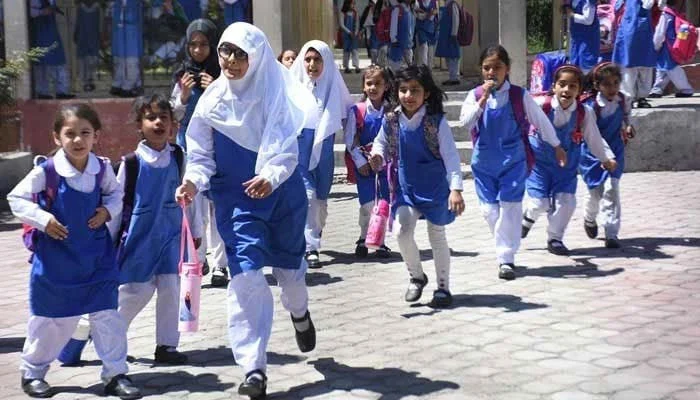
    The Sindh government has revised the weekly schedule for schools, restoring Saturday and Sunday as official weekly holidays for all public and private educational institutions across the province. According to the School Education and Literacy Department, the updated schedule has been approved by the chief secretary and will be implemented in all government and privately managed schools. Under the new arrangement, schools will operate five days a week, from Monday to Friday. To compensate for the reduced number of working days and ensure timely completion of the academic syllabus, daily teaching hours will be extended by one additional hour. Officials said the revised timetable aims to maintain the pace of academic activities while providing students and teachers with a two-day weekend. The latest decision replaces an earlier directive issued last month, under which all public and private schools in Sindh had been instructed to observe a six-day working week from August 1, with classes scheduled from Monday to Saturday. The change comes shortly after educational institutions resumed classes following the two-month summer vacation, which lasted from June 1 to July 31. Education authorities said the revised schedule will apply uniformly across the province and schools have been directed to implement the updated working days and teaching hours accordingly.

Leave a Reply

Your email address will not be published. Required fields are marked *