three prisoners seek
| |

Three prisoners seek private hospital treatment in…


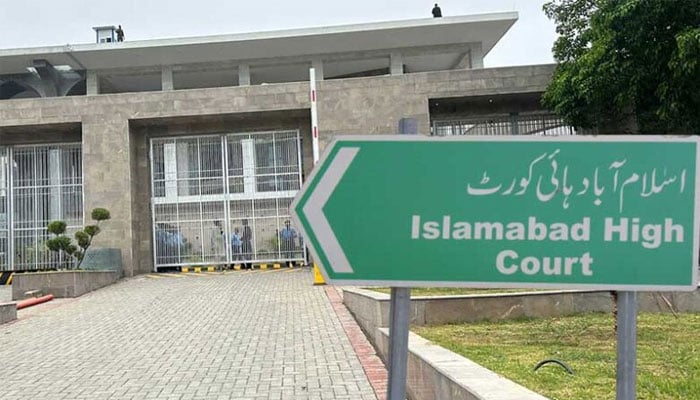
Three prisoners have approached the Islamabad High Court seeking relief similar to that granted to the founder of Pakistan Tehreek-e-Insaf (PTI), Imran Khan, regarding treatment at a private hospital.

The petitions were filed before the Islamabad High Court, with the applicants requesting permission to be transferred from prison to a private medical facility for treatment. The prisoners have specifically asked the court to allow them to receive medical care at either Shifa International Hospital or Quaid-e-Azam International Hospital.

The development comes amid continued legal discussions over the medical treatment of prisoners and the circumstances under which an inmate may be allowed to receive treatment outside a prison hospital or government medical facility.

During the proceedings, the Islamabad High Court sought a response from the relevant prison authorities by August 27. The court has directed the jail administration to explain its position regarding the requests made by the three prisoners.

The court also ordered the superintendent of Adiala Jail to submit the medical reports of the petitioners. These reports are expected to help the court assess the prisoners’ medical conditions and determine whether their requests for treatment at private hospitals have sufficient grounds.

Justice Muhammad Asif issued a two-page written order in connection with the petitions. In the order, the court directed the relevant parties to submit para-wise comments before the next hearing.

The applicants have argued that they require medical treatment that may not be adequately available within the prison system. Their petitions seek permission to be transferred to either Shifa International Hospital or Quaid-e-Azam Hospital so that they can receive treatment from specialists and access facilities available at private medical institutions.

The court has not yet issued a final decision on whether the prisoners will be allowed to move to a private hospital. Instead, it has sought medical documentation and responses from the prison authorities before considering the matter further.

The medical reports from Adiala Jail will be particularly important in determining the nature and seriousness of the applicants’ health conditions. The court is expected to examine whether their medical needs justify treatment at a private hospital and whether such a transfer is appropriate under the applicable legal and prison regulations.

The petitions also highlight broader questions concerning prisoners’ access to healthcare and the circumstances in which courts can intervene to ensure that inmates receive appropriate medical attention.

The applicants’ request for relief similar to that provided to Imran Khan has placed the issue before the Islamabad High Court for judicial consideration. Their lawyers are seeking comparable treatment arrangements based on the medical needs of the petitioners.

Under the court’s latest directions, the prison authorities are required to respond by August 27. The superintendent of Adiala Jail must also provide the petitioners’ medical reports, while all concerned parties have been asked to submit their detailed para-wise comments before the next hearing.

Following the submission of these documents, the court will have an opportunity to review the medical evidence and the authorities’ position before deciding the applications.

For now, the three prisoners remain in custody, and no final order allowing their transfer to a private hospital has been issued. The next hearing is expected to provide greater clarity on whether the applicants will be permitted to receive treatment at Shifa International Hospital or Quaid-e-Azam Hospital.

The case could also become significant for future requests by prisoners seeking specialised medical treatment outside jail facilities, particularly where serious health concerns are raised and comparable relief has previously been granted in individual cases.

Similar Posts

  • | |

    US appeals Court again blocks Trump’s $100,0…

    The Trump administration has suffered another legal setback after a US federal appeals court refused to reinstate a controversial $100,000 fee for H-1B visas, dealing a fresh blow to the administration’s immigration policy. A three-judge panel of the First US Circuit Court of Appeals in Boston ruled that the administration had failed to demonstrate a strong likelihood of success in its appeal or prove that it had acted within its legal authority when imposing the massive fee increase. The decision comes in a lawsuit filed by attorneys general from 20 Democratic-led states, who challenged the legality of the policy soon after it was introduced. The appeals court’s ruling leaves in place an earlier decision issued on June 8, when a lower court declared the $100,000 H-1B visa fee unlawful. That court concluded that Congress had never granted the executive branch the authority to impose a charge of that magnitude, describing it as a tax that exceeded the administration’s legal powers. President Donald Trump introduced the fee increase through an executive order issued last year, arguing that the H-1B visa program had been widely used by companies to replace American workers with lower-paid foreign professionals. The administration maintained that the significantly higher fee would discourage misuse of the program and encourage employers to prioritize hiring US workers. Critics, however, argued that the measure would severely disrupt industries that rely on highly skilled international talent, particularly the technology, healthcare and engineering sectors. Under current immigration rules, the United States issues 65,000 H-1B visas annually, along with an additional 20,000 visas for applicants holding advanced academic degrees from US institutions. The visas are generally granted for periods ranging from three to six years. Before Trump’s proposed increase, employers typically paid between $2,000 and $5,000 in government filing fees for an H-1B visa, depending on the size of the company and other applicable charges. The proposed $100,000 fee would not have applied to foreign nationals already in the United States on student visas who later transitioned to H-1B status. The latest court ruling represents another significant legal obstacle for the Trump administration’s immigration agenda and ensures that the dramatic fee increase will remain suspended while the broader legal battle continues.

  • | |

    Israel revokes entry permits of US Jewish activist…

    JERUSALEM: Israel has withdrawn the entry permits of several American Jewish activists who took part in protests in the occupied West Bank against attacks on Palestinians and damage to their property, according to a report by US Jewish publication The Forward. Among those affected was activist Sam Sherman, who said his travel permit was canceled while he was participating in a seven-week volunteer programme in Masafer Yatta, where he had been working alongside Palestinian residents. Sherman told the publication that several members of his group received cancellation notices within minutes of one another. He said Israeli soldiers, police and armed settlers had photographed his passport during confrontations that he described as being initiated by settlers. According to Sherman, the activists had been peacefully spending time with local Palestinians but were treated by Israeli authorities as though their presence itself constituted a serious offence. The reported permit cancellations come amid continued tensions in the occupied West Bank, where confrontations involving Palestinians, Israeli settlers and security forces remain a major source of concern.

  • |

    Apple forecasts slower sales growth as supply chain problems continue

    Apple has projected slower sales growth for the current quarter, disappointing investors as ongoing supply chain problems continue to limit the company’s ability to meet strong customer demand. The weaker outlook sent Apple shares down by more than five percent in after hours trading despite the company reporting better than expected financial results for the previous quarter. The technology giant said revenue for the quarter ending in September is expected to grow between 9 and 11 percent compared with the same period last year. That forecast fell short of market expectations, which had predicted growth of around 12 percent. Apple also expects iPhone sales to increase at a mid teens rate, slightly below analysts’ forecasts. Chief Executive Tim Cook said the company’s biggest challenge is not weak demand but limited supplies of critical components. He explained that shortages of advanced chip manufacturing technology have reduced Apple’s ability to produce enough of its custom designed processors, especially for its Mac computers. Cook said the company is reviewing all possible options to secure additional supplies, including working with alternative memory chip suppliers. Apple’s Chief Financial Officer Kevan Parekh told investors that the company expects gross profit margins to remain between 47 and 48 percent during the current quarter. Although supply problems remain a concern, executives said demand for Apple products continues to be stronger than expected across several product categories. According to Cook, the company experienced particularly high demand for its Mac lineup during the recently completed fiscal third quarter. Sales of Mac computers rose by nearly 29 percent, driven by strong demand for the entry level MacBook Neo and the premium MacBook Pro models. Cook said the advanced chip manufacturing industry currently lacks the flexibility to respond quickly to unexpectedly high demand, making it difficult for Apple to increase production. Despite concerns about future growth, Apple reported financial results that exceeded most market expectations. Revenue for the fiscal third quarter, which ended on June 27, increased by 16.4 percent to 109.42 billion dollars. Net profit reached 2.02 dollars per share, including benefits from tariff refunds provided by the United States government. Even without those refunds, earnings remained above analysts’ expectations. The company’s strongest performance came from iPhone sales, which climbed 21.7 percent to 54.25 billion dollars. These were Apple’s highest ever third quarter iPhone sales, a period that usually experiences slower demand as customers wait for new models to be released later in the year. Analysts believe some consumers accelerated purchases because of concerns that future price increases could result from the global shortage of memory chips. Mac sales also exceeded expectations, reaching 10.35 billion dollars during the quarter. However, iPad sales declined by 5.9 percent to 6.19 billion dollars. Cook said the decline reflected difficult comparisons with the previous year, when Apple launched a lower priced iPad model that generated unusually strong demand. Revenue from Greater China increased by 22.4 percent to 18.82 billion dollars, although that figure still fell below market forecasts. Analysts said investors remain uncertain about whether demand will remain strong if Apple decides to raise iPhone prices during its expected product launch in September. Although Apple continues to benefit from strong consumer interest and solid financial performance, the company acknowledged that supply chain disruptions remain a major obstacle. Executives said resolving shortages of advanced chips and memory components will be critical to maintaining growth as demand for premium technology products continues to rise.

  • | | |

    Imran hospital move: security tightened at Shifa

    Security has been intensified around Shifa International Hospital in Islamabad as the deadline approaches for the government to comply with a Supreme Court directive regarding the transfer of PTI founder Imran Khan for medical treatment. A significant number of police personnel and senior officers were deployed outside the hospital on Thursday. Officials inspected security arrangements and cleared roads around the facility of parked vehicles. The heightened security comes ahead of the midnight deadline set under the Supreme Court’s order issued on Tuesday. The court directed authorities to shift Imran Khan to Shifa International Hospital for medical treatment and also ordered arrangements for weekly meetings between him and his family. The federal government has challenged aspects of the order through a review petition, describing the decision as discriminatory and raising legal concerns over its wider implications. Law Minister Azam Nazeer Tarar said the government still had time until midnight to implement the order. He said the responsibility for making arrangements rested with the Islamabad administration and that officials were working on the matter. Speaking in the Senate, Parliamentary Affairs Minister Tariq Fazal Chaudhry said the government would follow the Supreme Court’s decision. He said the government had no intention of preventing Imran Khan from receiving necessary medical treatment. According to the minister, existing rules generally provide for convicted prisoners to receive medical care through government hospitals. However, he said a legal question concerning the scope of such arrangements was currently before the Supreme Court. Fazal said that if the required treatment was not available at a government hospital, the authorities would have to arrange treatment at Shifa International Hospital or another facility with better medical capabilities. He stressed that the government would comply with the court’s final determination regarding the matter. The minister also addressed concerns about the health of PTI leader Dr Yasmin Rashid. He said the government was concerned about her condition and would again contact the Punjab government and prison authorities to obtain an updated assessment. Meanwhile, Prime Minister’s Adviser on Political Affairs Rana Sanaullah said the government’s review petition was expected to be dealt with by the Supreme Court. Sanaullah said the government had raised technical and legal objections to parts of the court’s order. He argued that the decision could create difficulties for the broader judicial system if similar applications were filed by other prisoners seeking treatment at private hospitals. He maintained that the government would respect whatever decision the Supreme Court reached on its review petition. According to sources, the Supreme Court’s registrar’s office had returned the review petition after raising an objection concerning the completion of required paper books. The government was expected to address the objections and resubmit the petition, with possible amendments to its contents. The development has triggered a fresh dispute between the government and PTI over implementation of the court order. Imran Khan’s lawyer, Khalid Yousaf Chaudhry, announced that he would approach the Supreme Court with a contempt petition if the government failed to transfer his client to the hospital. The lawyer accused the government of delaying implementation of the court’s directive and said the legal team was preparing the contempt proceedings. He also visited Adiala Jail to obtain Imran Khan’s signatures on the required documents, including the contempt petition and power of attorney. Earlier, PTI Secretary General Salman Akram Raja claimed that the government had withdrawn its review petition after objections were raised by the Supreme Court’s filing branch. Raja demanded immediate implementation of the August 18 order and argued that there was no legal justification for further delaying Imran Khan’s transfer. The government, however, maintained that the legal process concerning the review petition was still underway and that it would act according to the law and the final position of the Supreme Court. Imran Khan’s sister Aleema Khanum also reached Adiala Jail amid the ongoing developments.

  • | | |

    Pakistan’s water is red line, PM Shehbaz warns I…

    ISLAMABAD: Prime Minister Shehbaz Sharif has warned that Pakistan will respond directly if India fails to change course, declaring that every drop of the country’s water is a “red line.” Addressing the inauguration ceremony of the Victory Monument in Islamabad, the prime minister said Pakistan wanted peace rather than war, but its desire for peace should never be mistaken for weakness. He said the country was committed to pursuing peace with dignity while remaining prepared to protect its sovereignty and national interests. Shehbaz Sharif described the Victory Monument as a symbol of the courage, determination and professional capabilities of Pakistan’s armed forces. He said the monument also paid tribute to the martyrs who sacrificed their lives defending the country and honoured the armed forces personnel who demonstrated exceptional bravery. The prime minister congratulated the nation on what he described as a historic victory in the May 2025 conflict and praised Field Marshal Syed Asim Munir for his leadership. He said Pakistan’s response had strengthened the country’s standing and sent a clear message that any future challenge to its sovereignty or security would be met with a stronger response. Referring to India’s decision to suspend the Indus Waters Treaty, Shehbaz Sharif accused New Delhi of undermining regional peace. He warned that Pakistan’s water resources were a matter of national security and reiterated that the country would take direct action if India continued on its current course. The prime minister said the monument represented a milestone in Pakistan’s broader journey towards becoming a prosperous, stable and welfare-oriented state. He stressed the need to combine national defence with economic development, technological advancement and investment in human resources. Highlighting the growing importance of information technology and artificial intelligence, Shehbaz said Pakistan must prepare its younger generation for a rapidly changing global environment. He pledged that the government would provide maximum possible support for innovation, technology and skills development. On foreign policy, the prime minister said Pakistan wanted a region free from conflicts and supported resolving disputes through justice and the principles of the United Nations. He highlighted Pakistan’s role in facilitating dialogue between the United States and Iran and praised Field Marshal Asim Munir’s efforts towards promoting peace in the Middle East. Shehbaz also referred to the emerging trilateral defence cooperation involving Pakistan, Saudi Arabia and Türkiye, describing it as a positive development for regional stability and a message of peace for the wider Muslim world. Earlier, Prime Minister Shehbaz Sharif and President Asif Ali Zardari jointly inaugurated the Victory Monument in Islamabad, attended by senior civil and military officials.

  • | |

    Sarwat Gilani celebrates Special Olympics athletes

    Renowned Pakistani actor and Special Olympics Pakistan (SOP) Ambassador Sarwat Gilani shared heartwarming moments from the organization’s three-day national sports competition, which concluded following a vibrant celebration of inclusion, sportsmanship, and determination. The three-day event, held from July 21 to July 23, brought together athletes with intellectual disabilities from across the country to showcase their athletic talents and foster a spirit of unity through sports. Taking to social media, Gilani shared a recap featuring photos and video clips highlighting her interactions with competitors, volunteering alongside organizers, and presenting awards to winners during the closing ceremony. The national competition featured a total of 82 athletes representing diverse regions, including Sindh, Punjab, Balochistan, Khyber Pakhtunkhwa, Gilgit-Baltistan, and the Federal territory. Highlighting the success of the games, Special Olympics Pakistan praised the participating athletes on its official social media channels, noting that every moment of the tournament reflected the intense passion and dedication of the individuals involved. Reflecting on her long-standing commitment as brand ambassador and advocate for the organization’s mission, Gilani emphasized the broader societal importance of empowering individuals with special needs: “At Special Olympics Pakistan, we celebrate athletes who redefine courage, resilience, and possibility every single day. They don’t just compete — they inspire a nation. They remind us that inclusion is not charity; it is justice. It is love in action.” In addition to celebrating the sports gathering, Gilani used the platform to promote Inclusion Rocks, an upcoming concert series aiming to raise awareness and support for the cause. Featuring musicians Faisal Kapadia and Murtaza Qizilbash, the musical initiative is scheduled to take place across Karachi, Islamabad, and Lahore. Special Olympics Pakistan continues to work towards transforming the lives of people with intellectual disabilities through sports, creating opportunities for nationwide participation and building a more inclusive society. Gilani’s active participation and advocacy during the national event served to further spotlight the remarkable resilience and achievements of the nation’s special athletes.

Leave a Reply

Your email address will not be published. Required fields are marked *