Deal or no deal for PH? Trump’s offer on US energy, agri products
Following the Republicans’ historic defeat in the US midterms, US President Donald Trump is now trying to cut his losses, and he’s using his engagements during the ASEAN Summit in Manila and the APEC Summit in China for this goal. (READ: [Edgewise] US midterms: After the blue tsunami, what is to be done?)
Take, for instance, his unbelievable statement on Sunday, November 22 that the Philippines will soon be buying 100% of its energy and all of its agriculture requirements from America, supposedly by January 1, 2027.

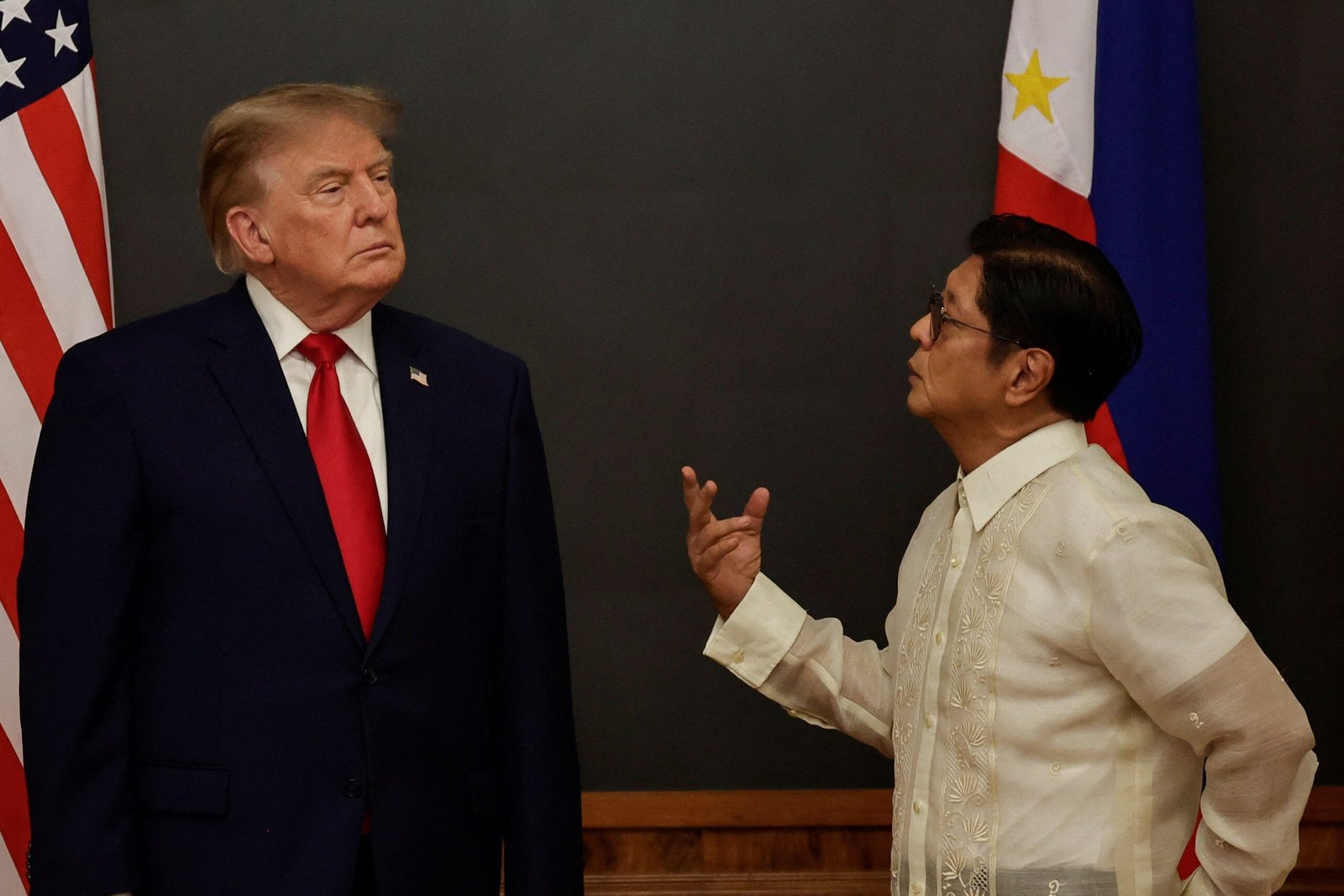
“Energy, they buy 20% from us but they buy… ‘Where do you get your energy?’ Prime Minister (sic) [Ferdinand] Marcos who’s a very good man, by the way. Great family, but I said, ‘Where do you buy your energy?’ Trump said in a press conference with the US media after the APEC Summit in Shenzhen, China. “‘Sir, we buy it from the Middle East.’ I said ‘not anymore, you don’t. You’re gonna buy 100% of your energy from us.’”
Trump probably thinks the Philippines is still an American colony, and to pressure the Marcos administration into accepting this unfair deal, he uses the Philippines’ conflict with China in the West Philippine Sea as a bargaining chip.
“We support these countries [like the Philippines], but they don’t buy from us. So I said, ‘You’re going to buy 100% from — not 90, not 95…’ Is Brazil gonna help them in case they get into a little skirmish with China? I don’t think so,” Trump said.
On Tuesday, November 24, Philippine Trade and Industry Secretary Cris Roque said no such deals with the US have been finalized.
“We are still in the negotiating table so we cannot divulge the details,” she told Radio DzBB, citing a non-disclosure agreement that trade negotiators signed.
What she could say, however, was that such a trade deal would be unrealistic since most international trade is done by private companies, not by the government.
“What’s important for us is the world is our market and we have the option to buy from all different countries, especially [it’s the] private sector ang bumibili (who’s buying),” Roque said.
Energy Secretary Sharon Garin gave a similar assurance.
“We can’t force the [fuel] companies [in the Philippines] to buy from a specific country, baka ang gobyerno pwedeng bumili ng diretso pero for stockpiling, pero it’s under negotiations e… so far, wala pa naman written na document,” Garin told Radio DzMM on Monday, November 23.
(We can’t force the companies to buy from a specific country, perhaps government can buy directly but for stockpiling, but it’s still under negotiations… so far, there’s no written document.)
Agriculture Secretary Francisco Tiu-Laurel was quoted on the sidelines of the Asia-Pacific Conference on Sustainable Agricultural Mechanization on Monday that such an offer would be good for the Philippines as long as the prices of US farm produce are good, but it would not be wise in terms of food security.
“We have to have multiple sources to be food secure. Mas magandang mas marami tayong iba ibang sources, but of course kung mura naman ibebenta siguro sa atin ang agri products like soya, wheat na hindi naman finafarm, why not?” Tiu-Laurel said.
(We have to have multiple sources to be food secure. It would be better if we have various sources, but of course, if they will sell us cheaper agri products like soya, wheat which we don’t produce, why not?)
Philippine Ambassador to the US Jose Romualdez clarified that while Trump was, as usual, “straight to the point,” President Marcos was just being his “polite” self when he said he was open to the idea of complete sourcing of energy and farm products from the US.
“But the commitments will have to come when we have a complete discussion on how we will be able to achieve the proposal of President Trump. At the end of the day, the trade team, which means to say both parties have to look at the cost and how we’ll be able to get to that point,” Romualdez told One News on Monday.
“It’s a quid pro quo essentially, that’s the reality to that,” he added.
Senator Bam Aquino, in response to Senator Imee Marcos’ critical remark on the supposed deal during the Department of Trade and Industry budget hearing on Wednesday, November 25, said, “I don’t even think that’s feasible.”
Trump’s statement is also inconsistent with what the White House disclosed about the US president’s engagements with ASEAN leaders.
In the White House’s November 18 fact sheet on Trump’s “historic economic deals” from his ASEAN Summit engagements, it states: “The leaders also committed to eliminate the US trade deficit with the Philippines through increased Philippine imports of American energy and agriculture products, which will support the jobs of tens of thousands of American engineers, technicians, and farmers.”
Take note that it talks about the Philippines buying more US energy and farm products, not buying solely from America.
So, it’s really best to take Trump’s statements with a grain of salt. As the popular adage goes, “All politics is local.” – Rappler.com