umera ahmed urges
| |

Umera Ahmed urges fans to avoid AI-generated content

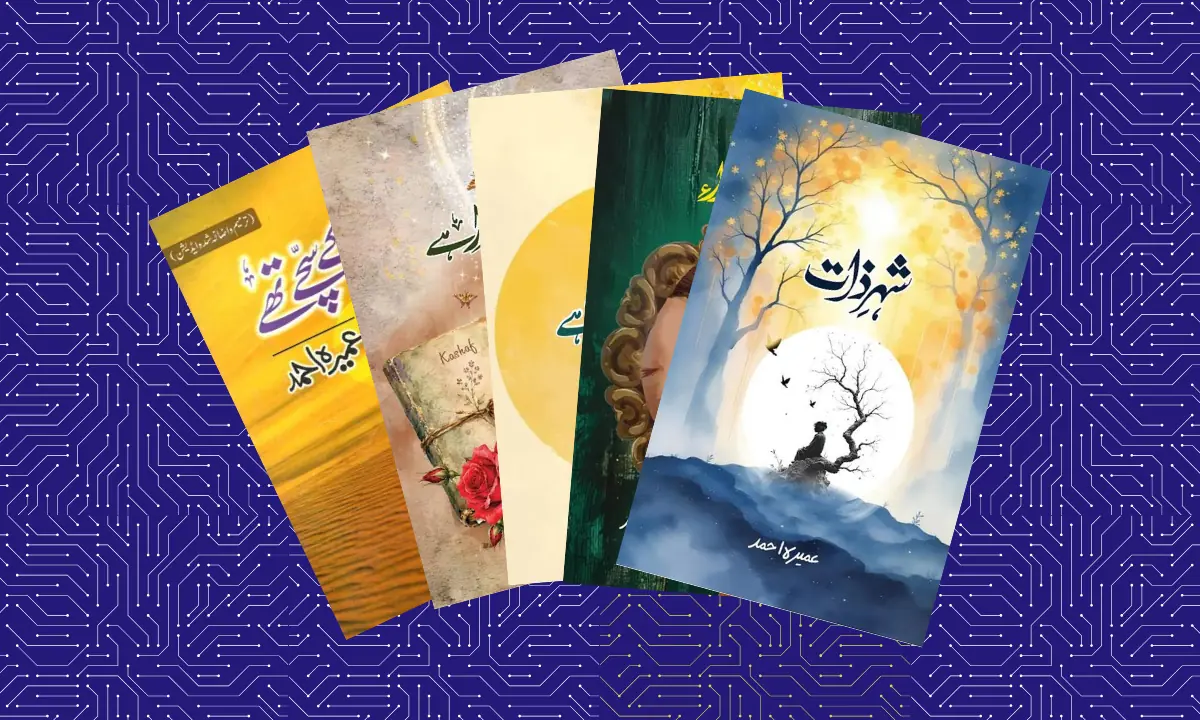
Renowned Urdu novelist Umera Ahmed has appealed to readers and content creators to stop producing and sharing AI-generated visuals based on her literary works, saying such content diminishes the emotional and spiritual depth of her stories.

In a statement shared through her official Instagram page, Ahmed’s team thanked readers for their continued love and support but expressed concern over the growing number of AI-generated images, videos and reels portraying scenes, characters and dialogues from her novels.

The statement urged fan pages and digital creators to refrain from using artificial intelligence to recreate her books. According to the team, literature offers every reader a unique and personal experience, while AI-generated visuals limit that imagination by presenting a fixed interpretation of characters and events.

Special concern was raised over Ahmed’s acclaimed novel Peer-e-Kamil, which the team described as a deeply spiritual and emotionally sensitive work. They said its message, beauty and sanctity should not be diluted through artificial intelligence-generated content.

While appreciating the passion and dedication of fan communities, the statement encouraged readers to experience and share the author’s work in its original form, allowing the stories to leave their intended emotional impact without technological alteration.

The appeal comes as artificial intelligence continues to spark debate within Pakistan’s creative and entertainment industries. Concerns over the misuse of AI have grown in recent months, with artists and public figures warning about its impact on originality, artistic integrity and personal image rights.

The discussion intensified after an AI-generated promotional music video released by the Ministry of Planning and Development drew widespread criticism. Separately, television personalities Tauseeq Haider and Farah Saadia were forced to deny false rumours after AI-created images depicting their alleged wedding circulated online.

Actor Hira Tareen has also urged fellow performers to carefully review contract terms, warning that some agreements may allow studios to use an actor’s likeness for AI-generated productions without adequate safeguards.

Similar Posts

  • | |

    Magnitude 4.0 earthquake jolts Rakhni and surround…

    A 4.0-magnitude earthquake struck Rakhni and nearby areas in Pakistan’s southwestern province of Balochistan on Wednesday, causing tremors that were felt across the region. According to seismic monitoring authorities, the earthquake originated at a depth of 37 kilometres below the surface. The moderate tremor was felt in Rakhni and surrounding localities, prompting residents to leave their homes and workplaces as a precaution. There were no immediate reports of casualties, injuries, or significant property damage following the earthquake. Local authorities are monitoring the situation and assessing whether the tremor caused any structural damage in affected areas. Earthquakes of moderate intensity are relatively common in Balochistan due to the province’s location along active tectonic fault lines. The region lies near the boundary where the Indian Plate and the Eurasian Plate interact, making it one of Pakistan’s most seismically active areas. Although a magnitude 4.0 earthquake is generally considered moderate, its impact can vary depending on factors such as the depth of the quake, the distance from the epicentre, and local geological conditions. Shallow earthquakes are often felt more strongly than deeper ones, even if their magnitude is relatively low. Emergency management officials have advised residents to remain alert for any possible aftershocks, although no additional seismic activity had been reported immediately after the initial tremor. Citizens are also encouraged to follow official safety guidelines and avoid spreading unverified information on social media. Pakistan frequently experiences seismic activity because of its geographical location on the collision zone of major tectonic plates. While many earthquakes are minor and cause little or no damage, stronger tremors have historically resulted in significant destruction, particularly in mountainous regions. Disaster management authorities continue to monitor seismic developments and will provide updates if further activity is recorded or if any damage assessments reveal new information. Residents in the affected areas have been urged to report any structural damage to local authorities and to remain cautious until the situation is fully assessed. The latest earthquake serves as a reminder of the importance of earthquake preparedness in vulnerable regions, including adherence to building safety standards and public awareness of emergency response procedures.

  • |

    60,000 migrants flood Spain’s Ceuta border

    Spain has deployed additional security forces to its North African territory of Ceuta after a massive wave of migrants crossed from Morocco, creating one of the largest border crises in the region’s recent history. Ceuta’s President Juan Jesús Vivas said around 60,000 migrants entered the Spanish enclave within 24 hours, while at least 43 people died during the crossing attempts. The sudden influx overwhelmed local authorities and triggered an emergency response from Madrid. Spain’s Interior Ministry gave a lower estimate, saying around 50,000 people had reached Ceuta since early Thursday. Officials said more than 25,000 migrants had already returned voluntarily to Morocco. The crisis intensified after Spain’s Supreme Court ruled that migrants intercepted at sea while attempting to reach Ceuta or Melilla could not be immediately returned to Morocco. Spanish Prime Minister Pedro Sánchez described the situation as an “attack” and promised that those who entered illegally would be sent back as quickly as possible. During a visit to Ceuta, Sánchez said Spain would strengthen border security and accused criminal networks of spreading misleading information about the court ruling to encourage migration attempts. He added that Moroccan authorities were cooperating with plans to return migrants. Spanish authorities have now increased military deployment in Ceuta and Melilla, another Spanish territory in North Africa, after several hundred additional crossings were reported there. Many of those arriving were young men, but women, children and infants were also among the migrants. Officials estimated that around 7,000 minors were part of the latest arrivals. Ceuta, located on Morocco’s northern coast, is one of the European Union’s only land borders with Africa. The territory has long been a major route for migrants seeking entry into Europe and remains a sensitive issue in Spain-Morocco relations. The latest arrivals have caused concern among European leaders. Several governments called for stronger border controls, while EU officials described the scenes in Ceuta as unacceptable and urged an immediate halt to irregular crossings. The last major migration surge in Ceuta occurred in 2021, when thousands crossed the border amid a diplomatic dispute between Spain and Morocco. However, officials said the current movement is far larger and has created an unprecedented challenge for local authorities.

  • |

    Toxic gas leak kills eight at Bangladesh shipyard

    At least eight workers were killed and five others were reported missing after toxic gas leaked from a vessel at a shipbreaking yard in Bangladesh on Friday. The incident occurred at the Ferdous Steel Shipbreaking Yard and Recycling Factory in Chittagong, a major hub for ship dismantling on the country’s southeastern coast. Witnesses said they heard cries from inside the facility before fellow workers rushed several affected employees to nearby hospitals. Police said eight people had died while a search operation was underway for those still unaccounted for. Authorities have formed an investigation committee to determine the cause of the accident and ordered a safety audit of the shipbreaking facility. Officials said the vessel involved had previously been used to transport liquefied natural gas. Although the yard was reportedly classified as a compliant facility, fire service officials raised concerns about whether proper safety procedures had been followed before dismantling work began. According to fire service officials, vessels must be completely cleared of hazardous gases before workers begin cutting them apart. They said workers who were closest to the gas leak died, while others farther from the affected area survived. Firefighters recovered three bodies from the site and rescued several workers who were found unconscious. The injured were transported to hospitals for treatment. The shipbreaking industry along Chittagong’s coast stretches for around 25 kilometres and provides employment to tens of thousands of people. Bangladesh is one of the world’s major shipbreaking centres, but the industry has repeatedly faced criticism over workplace safety, labour conditions and environmental risks. One of the workers killed in the accident was identified as Palash Jaladas. His family was left devastated by the tragedy, with relatives saying his wife, Bhoumika Jaladas, is eight months pregnant.

  • | |

    Judge walks out after uproar in Aleema case

    RAWALPINDI: An anti-terrorism court judge in Rawalpindi left the courtroom after expressing anger over repeated disruptions during the hearing of a case against PTI founder Imran Khan’s sister, Aleema Khan. The case relates to a case registered over the November 26 protest. The hearing turned tense when the prosecution began questioning Aleema Khan and her witness about property-related matters. During the proceedings, prosecutor Zaheer Shah questioned Aleema Khan’s witness, Fatahullah Barky, about whether he was aware of alleged properties owned by Aleema Khan abroad. Defence lawyer Faisal Malik immediately objected. He argued that the question was not relevant to the case being heard by the court.The prosecutor then questioned Aleema Khan directly about alleged properties in Dubai and New Jersey. Aleema Khan rejected the allegations. She said she did not own any illegal property.She maintained that the properties had been described as benami assets in an earlier legal dispute. The prosecutor then asked whether the Supreme Court had imposed a fine on her in connection with the alleged benami properties. Aleema Khan replied that former chief justice Saqib Nisar had issued a decision that, according to her, was contrary to the law. She further claimed that a tribunal later cleared her in the matter. The prosecutor also asked whether she had paid a Rs30 million fine following the Supreme Court’s orders.Aleema Khan said that Rs29.4 million had been deposited. She added that the tribunal subsequently cleared her. During the hearing, Aleema Khan asked the court to record her statement. The court began recording her statement. However, the defence counsel raised another objection.The repeated objections and arguments created a noisy situation inside the courtroom. Judge Amjad Ali Shah expressed strong displeasure over the disruption. He questioned the defence counsel over the objection and said that if the accused wanted her statement recorded, there was no reason for the court not to record it.The judge’s remarks came as arguments continued between the prosecution and defence. The situation eventually became so tense that Judge Amjad Ali Shah left his seat and walked out of the courtroom. The proceedings were subsequently disrupted and the hearing was adjourned.Further proceedings in the case will take place on a later date. The hearing highlighted tensions between the prosecution and defence over the relevance of questions being asked during the proceedings

  • |

    US and Asian chip stocks fall after report of Chinese semiconductor breakthrough

    Shares of major semiconductor companies dropped sharply on Monday after a report suggested that a Chinese firm has made significant progress in developing advanced chipmaking equipment. The news raised concerns among investors that China could reduce its reliance on foreign technology and strengthen its position in the global semiconductor industry. The market reaction followed a report by The Information, which said Shanghai Yuliangsheng is producing immersion deep ultraviolet lithography machines. These machines use ultraviolet light to carve extremely small circuits onto silicon wafers, a key step in manufacturing modern computer chips. Neither Shanghai Yuliangsheng nor related companies SiCarrier and Huawei responded immediately to requests for comment. However, the report was enough to unsettle investors, who fear that China’s progress in chip manufacturing could reshape competition in the technology sector. If the reported breakthrough proves successful, China could reduce its dependence on Dutch company ASML, the world’s leading supplier of advanced lithography equipment. ASML’s exports are subject to strict restrictions, limiting China’s access to some of the most advanced chipmaking technology. Developing its own DUV lithography machines would allow China to expand domestic chip production and accelerate the development of more powerful processors. Industry analysts believe this could help Chinese technology companies narrow the gap with leading American semiconductor manufacturers. The development is also seen as important for China’s artificial intelligence industry. Improved access to advanced chips would strengthen the country’s AI capabilities and help Chinese companies compete more closely with leading US firms developing cutting edge AI models. The report triggered heavy selling across the US technology sector. Shares of AMD fell by as much as eight percent during trading, while Nvidia dropped nearly five percent. Micron Technology also lost around five percent, and Intel declined about 3.7 percent as investors reassessed the competitive outlook for the semiconductor industry. The decline spread quickly to Asian markets on Tuesday. South Korea’s stock market suffered steep losses as concerns over the future of the AI industry combined with the reported Chinese breakthrough. The Kospi index plunged more than 10 percent to its lowest level since April. Major South Korean chipmakers were among the hardest hit. Shares of SK hynix and Samsung Electronics each fell by around 12 percent as investors worried that stronger competition from China could affect future earnings and market share. Japan’s technology sector also came under pressure. The Nikkei 225 index dropped more than four percent, while leading technology companies including Advantest, Kioxia and Tokyo Electron each lost more than 10 percent during trading. The sharp decline across global markets highlights how closely investors are watching developments in the semiconductor industry. As countries compete to secure leadership in chip production and artificial intelligence, even reports of technological advances can have an immediate impact on stock markets and reshape expectations for the future of the global technology sector.

  • | | |

    South Korean energy firm seeks PM Shehbaz’s …

    A South Korean state-owned energy company has appealed directly to Prime Minister Shehbaz Sharif, claiming that prolonged regulatory delays have placed its planned $1 billion investment in Pakistan’s hydropower sector at serious risk. In a letter addressed to the prime minister, Korea South-East Power Co. Ltd. (KOEN) said it had spent nearly a decade developing two run-of-the-river hydropower projects on the Swat River in Khyber Pakhtunkhwa but remains unable to move forward because of unresolved regulatory approvals. The company, a subsidiary of Korea Electric Power Corporation (KEPCO), is developing the 229-megawatt Asrit Kedam and 238-megawatt Kalam Asrit hydropower projects. Together, the projects represent an investment of approximately $1 billion, with the company already investing around $25 million in feasibility studies, surveys, and other preparatory work. According to KOEN, the projects have met all major government requirements since development began in 2016. The company signed a memorandum of understanding with the Khyber Pakhtunkhwa government, obtained letters of intent from the Pakhtunkhwa Energy Development Organization (PEDO), completed feasibility studies, secured a power generation licence from the National Electric Power Regulatory Authority (Nepra), and maintained all required financial guarantees. Despite fulfilling these requirements, KOEN said the tariff determination for the projects has remained pending for nearly three years. The company noted that Nepra conducted a public hearing on its tariff petition in July 2023, but a final decision has yet to be issued. The company said it repeatedly approached Nepra and later appealed to the Nepra Appellate Tribunal, which directed the regulator to decide the tariff matter. However, KOEN claims that the tribunal’s order has still not been implemented. Adding to its concerns, the company said both hydropower projects have been excluded from the draft Indicative Generation Capacity Expansion Plan (IGCEP) 2025–35. KOEN warned that if the revised plan is approved without the projects, its proposed investment could remain stalled indefinitely. In its appeal, the company urged the prime minister to intervene and ensure a timely tariff determination while allowing the projects to continue under Pakistan’s Power Generation Policy 2015, the framework under which the investment was originally made. KOEN also stated that it understands Pakistan’s current surplus electricity generation and is willing to align the commercial operation of the projects with the country’s future energy requirements rather than adding unnecessary capacity. The issue comes as Pakistan and South Korea continue discussions aimed at strengthening bilateral trade and investment ties through a proposed Comprehensive Economic Partnership Agreement (CEPA). Analysts say resolving regulatory bottlenecks will be crucial for maintaining investor confidence and attracting future foreign direct investment into Pakistan’s energy sector.

Leave a Reply

Your email address will not be published. Required fields are marked *