imposes per cent
| |

US imposes 10 per cent tariff on Pakistan over forced-labour enforcement

The United States has levied a 10 per cent tariff on Pakistani goods under a broader Section 301 trade action targeting 60 economies for their failure to adequately prohibit and enforce bans on imports produced with forced labour.

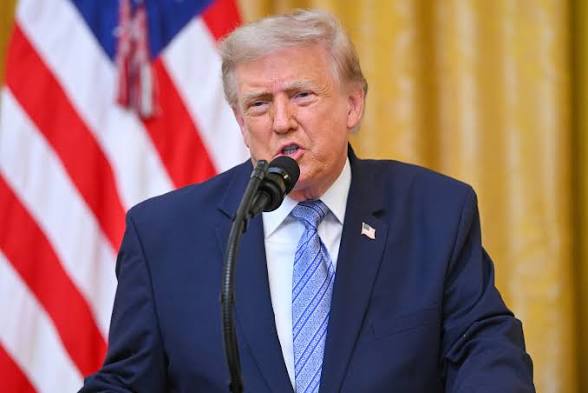
According to the Office of the U.S. Trade Representative (USTR), the final action followed investigations directed by President Donald Trump in March, encompassing public hearings and consultations with numerous governments. Ambassador Jamieson Greer stated that trading partners must match the enforcement standards the United States has upheld, noting that decades of moral persuasion have failed to eradicate forced labour from global supply chains.

Pakistan is grouped in the 10 per cent tariff bracket alongside nations such as India, Bangladesh, Mexico, and the United Kingdom. These countries either imposed a prohibition on forced-labour imports, committed to one through a trade agreement, or introduced a partial restriction regime, while other investigated economies face tariffs of up to 12.5 per cent.

The new duties arrive at a critical juncture for Islamabad. Pakistan has recently positioned itself as a key mediator in the US-Iran conflict and deepened its security partnership with Saudi Arabia, including the deployment of air-defence assets. However, the conflict has already strained Pakistan’s economy, with shipping disruptions in the Strait of Hormuz driving up domestic petroleum prices amid high inflation.

Textiles and apparel, a primary focus of the USTR’s forced-labour investigation, represent a significant portion of Pakistan’s exports to the US. Industry groups are expected to evaluate the impact of these tariffs on market competitiveness in the coming days.

The USTR noted that product exemptions will apply in limited cases, including critical raw materials and goods that cannot be sourced reasonably from elsewhere. Islamabad has yet to issue a formal response to the tariff imposition.

Similar Posts

  • | |

    Senate panel seeks Bullah suspension until title, dialogue changes

    The release of Bullah, a Pakistani film written by veteran screenwriter Nasir Adeeb and starring Shaan Shahid and Saleem Shah, has been placed in uncertainty after a Senate standing committee recommended that its screening be halted until its title is changed and certain dialogues are revised. The recommendation emerged from a meeting of the Senate Standing Committee on Information and Broadcasting held on Thursday, July 24, chaired by Senator Sarmad Ali. The session was convened to review concerns that had been raised about the film’s certification process by the Central Board of Film Censors. Officials from the CBFC appeared before the committee to defend the approval process, telling members that Bullah had already been cleared without any cuts by both the Punjab and Sindh censor boards under the same title. They explained that the federal board’s jurisdiction was limited to Islamabad Capital Territory and cantonment areas, and maintained that the CBFC chairman could not unilaterally reject a film. Certification decisions, they clarified, were taken collectively by the board, with the chairman holding only a casting vote in the event of a tie. The officials further noted that if the committee believed the film should be banned or its title changed, the matter could be referred to the federal government, which serves as the next appellate authority under the applicable legal framework. Senator Pervaiz Rashid pushed back on the board’s defence, questioning whether Nasir Adeeb’s reputation as a screenwriter was a sufficient basis for approving the film’s content. He pointed out that Adeeb was primarily known for writing violence-based films, particularly Maula Jatt, and argued that this background did not establish the screenwriter’s credentials as an authority on history, national personalities or Pakistan’s cultural traditions. Senator Rashid also remarked that Maula Jatt had introduced the “gandasa” as a cultural symbol to mainstream audiences, saying he had not been aware of the weapon before the film popularised it. Following the discussion, committee chairman Senator Sarmad Ali concluded the session by proposing that the film’s title be changed and that certain dialogues be revised before it is permitted to screen. He further suggested that Bullah remain suspended until these recommended changes have been implemented. The meeting was attended by Senators Abdul Shakoor Khan, Syed Waqar Mehdi, Pervaiz Rashid and Jan Mohammad, along with Secretary Information Ashfaq Ahmed Khalil and officials from the Ministry of Information and Broadcasting and the Central Board of Film Censors. The film’s makers have not publicly responded to the committee’s recommendations. With both provincial censor boards having already cleared the film without cuts, the situation now rests on what the federal government decides to do with the parliamentary committee’s proposal.

  • |

    Gulf families seek fairer inheritance through UK law

    Wealthy families in the Gulf are increasingly preparing wills under British law to reduce the difference between the inheritance shares traditionally allocated to sons and daughters under Islamic law. According to a report in a Western publication, some experts have described the emerging trend as “Shariah Lite”, referring to families using the flexibility offered by English succession law to distribute their wealth among their children on relatively equal terms. British lawyers say families are increasingly exploring these legal arrangements to protect the financial future of their children, particularly in cases where they have only daughters or where daughters outnumber sons. Under traditional Islamic inheritance rules, the shares received by male and female heirs can differ depending on the family structure and circumstances. The growing use of foreign legal frameworks allows wealthy families with international assets to consider alternative succession arrangements within the limits of applicable laws. Experts say several factors are contributing to the trend, including changing attitudes among younger generations, increasingly complex marital arrangements and political uncertainty across parts of the Gulf region. These developments have encouraged affluent families to pay greater attention to estate planning, asset protection and succession arrangements to ensure that their wealth remains within the family and is transferred according to their wishes. Gulf states are also introducing legal systems that offer foreign residents and some families alternatives to traditional Sharia-based procedures. Abu Dhabi, for example, has established a separate civil legal framework for matters including divorce, providing an alternative route outside the traditional Sharia system. The growing interest in British wills highlights the changing approach of some wealthy Gulf families toward inheritance and succession planning, as they seek greater control over how their assets are distributed among future generations.

  • | |

    Lahore police launch major crackdown on loan shark…

    Lahore Police have launched a large-scale operation against illegal moneylenders and their facilitators as part of an intensified effort to protect citizens from financial exploitation, harassment, and intimidation. Authorities have directed police across the city to register cases without discrimination against individuals involved in illegal lending practices, particularly those accused of threatening, blackmailing, or harassing borrowers. The campaign aims to curb predatory lending and ensure strict legal action against offenders. DIG Operations Faisal Kamran said there would be zero tolerance for moneylenders who recover amounts far exceeding the original loans through coercive and unlawful means. He emphasized that no concessions would be granted to those exploiting financially vulnerable people. To strengthen access to justice, Lahore Police have also partnered with the Lahore Bar through a newly signed memorandum of understanding. Under the agreement, deserving and financially disadvantaged citizens will be referred, with their consent, to a panel of lawyers who will provide free legal representation in civil cases. Faisal Kamran added that legal experts have also been engaged to assist in disputes involving inheritance, the return of dowry items, and financial transactions. He assured that police would continue to monitor such cases closely to ensure that victims receive timely justice and legal protection. The initiative reflects Lahore Police’s broader commitment to tackling financial crimes while expanding legal support for vulnerable members of society.

  • | |

    Gunmen target PPP MNA Qadir Patel’s office in Ka…

    KARACHI: Unidentified gunmen opened fire at the office of Pakistan Peoples Party (PPP) MNA and former federal minister Qadir Patel in Karachi’s Boat Basin area, prompting a police investigation and tighter security around the premises. According to police, the attackers fired several shots at the office entrance late at night before fleeing the scene. No one was injured in the incident, while the main gate sustained bullet marks. Investigators recovered five spent 9mm pistol casings from the site and secured them as evidence. Police teams also began examining CCTV recordings from the surrounding area to trace the attackers and determine the vehicle used in the shooting. Following the incident, security was increased around Patel’s office and nearby areas of Clifton. Police said efforts were underway to identify the suspects and establish the motive behind the attack.

  • |

    Japan launches cooling shirt with built-in fans

    Tokyo – Due to Japan’s intense summer heat, office wear is now being equipped with modern cooling technology. Japanese people have started wearing clothes with built-in air-conditioning systems. Japanese clothing manufacturer Yofuku no Aoyama has introduced a short-sleeved shirt fitted with two small fans that provide cool air to the wearer while they are on the move. According to media reports, the shirt looks like a simple and elegant office shirt but it actually contains an advanced cooling system. A fan is installed at the back of the shirt near the waist. When switched on, it circulates air inside the shirt and helps keep the body cool. Air-cooled clothing has become increasingly popular in Japan over the past few years. However, it has mainly been used by people working in construction, waste collection and event security. Such clothing is generally designed as jackets or vests and has traditionally been considered protective or workwear rather than office clothing. However, as summer temperatures continue to rise in Japan, demand for cooling clothing is increasing among ordinary citizens and office workers as well. Keeping this growing demand in mind, Yofuku no Aoyama developed the shirt in collaboration with FZN, a company specializing in fan-equipped clothing. The shirt comes with two fans and a rechargeable battery. According to the company, efforts have been made to keep the cooling system as lightweight as possible. According to the report, each of the two fans weighs 95 grams, while the rechargeable battery pack weighs 165 grams. Although the fans are visible when the shirt is viewed from the back, designers have tried to make them less noticeable from other angles so that the shirt remains suitable for an office environment. The company has not provided specific information about the noise level of the fans suggesting that they may not be completely silent. When is cooling shirt most useful? The shirt is considered more useful while travelling rather than during meetings. The company says its main purpose is not necessarily to operate the fans inside an office or during client meetings as such meetings are generally held in air-conditioned rooms. The real benefit of the shirt is for people who travel around the city from one meeting to another. While walking outside in extreme heat or using public transport, the fans can help keep the body cool. It may also reduce the need for employees to change sweat-soaked clothes and put on formal attire again after reaching their destination. What is price? The complete initial package of the Kuchou Wear Short-Sleeve Shirt is being sold for 17,490 Japanese yen. The package includes the shirt, two fans, a rechargeable battery pack and a charging cable. The shirt is available in blue and grey with medium, large and extra-large sizes offered. The product has already gone on sale at the company’s stores and online shop.

  • |

    Yemeni forces launch 133 operations against Houthis

    Yemeni government forces carried out 133 operations against Houthi militia positions over the past 24 hours, according to a military spokesperson. The spokesperson said the operations targeted key Houthi military infrastructure, including weapons storage facilities and a modern command-and-control centre. Government forces also struck several military vehicles used by the militia. The attacks involved a combination of rocket launchers, artillery fire and drones, with the military saying the strikes focused on disrupting the Houthis’ weapons capabilities and command structure. The Yemeni government forces have also released video footage showing several of the attacks on Houthi positions. The footage reportedly captures military operations targeting weapons facilities, vehicles and other sites linked to the militia. The latest operations come amid continued fighting between Yemen’s internationally recognised government forces and the Iran-aligned Houthi movement, with both sides continuing to target military positions in areas affected by the conflict. The Yemeni military spokesperson said the operations formed part of ongoing efforts to weaken the Houthis’ military capabilities and prevent the group from reinforcing its positions. The strikes focused on facilities and equipment that the militia allegedly uses to support its operations on the ground. According to the military, the use of drones, artillery and rocket systems allowed government forces to target several locations simultaneously. The strikes also aimed to disrupt the movement of Houthi fighters and limit their ability to transport weapons and military equipment. The Yemeni government forces said they would continue operations against Houthi positions as part of their efforts to regain control of areas held by the militia. The latest footage was released as the conflict continues to pose a major security challenge in Yemen.

Leave a Reply

Your email address will not be published. Required fields are marked *