[Vantage Point] GCash at P6.60: Did investors finally get their price?
Ambition met market arithmetic when GCash’s final offer price settled at P6.60 instead of P10, stripping hundreds of billions of pesos off its implied valuation. Global funds backed the digital leader only after demanding a substantial discount. For everyday investors stepping into the country’s biggest tech debut, that markdown offers a crucial cushion as underlying profit growth begins to enter a more mature gear.
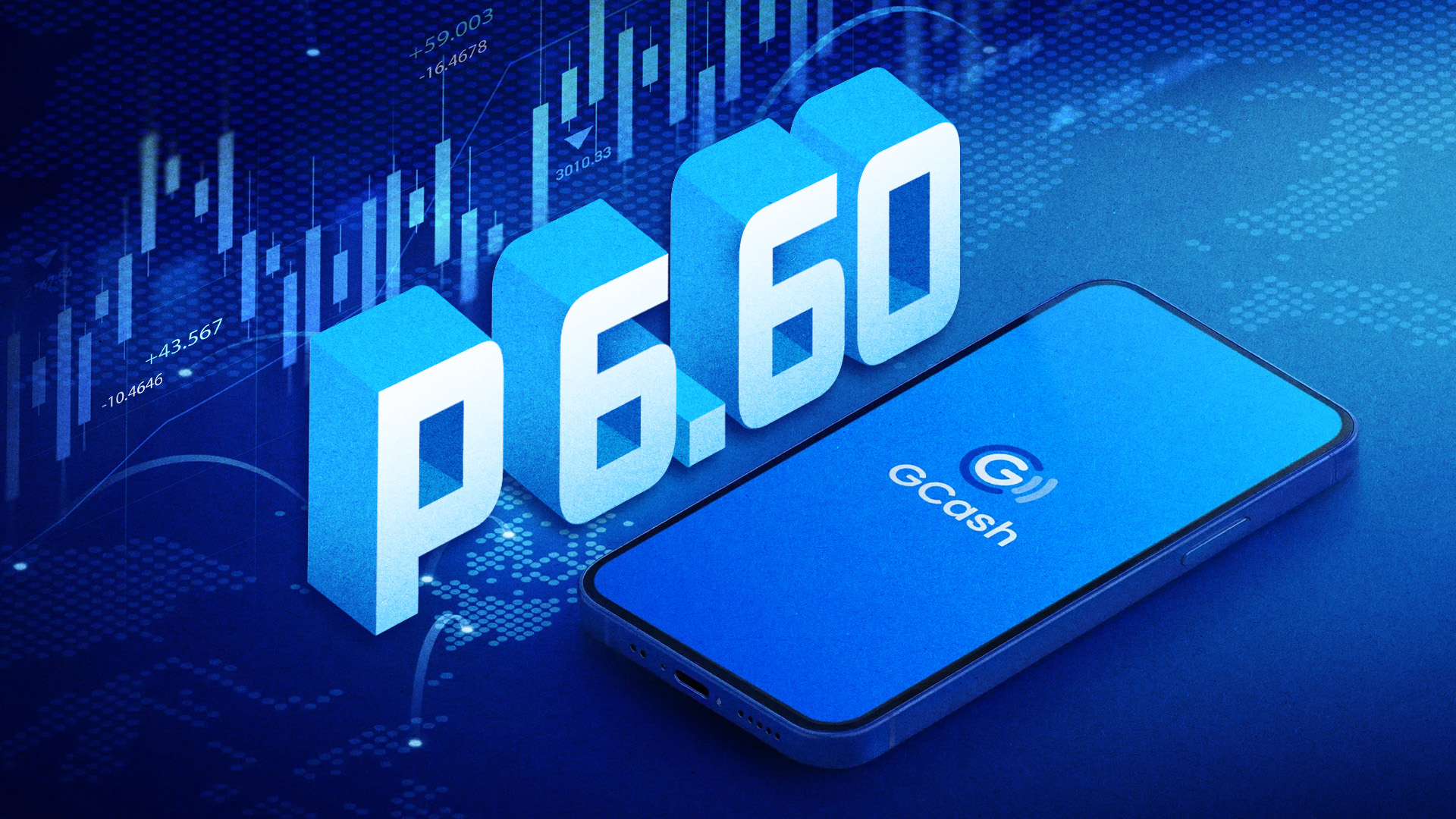
In the high-stakes bazaar of Philippine finance, even the grandest vendors rarely get their asking price. GCash parent Mynt walked to the counter seeking as much as P10 a share for its long-heralded public debut, only to find the room offering P6.60.
That 34% haircut is easily the defining plot twist in the country’s biggest technology offering. At P10, Mynt would have commanded an eye-watering market valuation of P669 billion, asking the public to pay nearly 39 times its 2025 earnings. At P6.60, that price tag shrinks to roughly P442 billion, bringing its valuation down to a more grounded 25.6 times.
The business itself did not change overnight. What shifted dramatically is the price of admission—and how much unproven future success ordinary investors are being asked to underwrite upfront.
Nobody disputes that GCash has built a formidable commercial franchise. It commands 41.5 million monthly active users, processed P9.84 trillion in transactions during the first half of 2026 alone, and has successfully expanded from basic digital payments into lending, savings, investments, and insurance.
It has become an essential utility in everyday Filipino commerce. Yet retail investors must remember one of the oldest truths in finance: a great company and a great stock are not always the same thing. Price is what bridges the two.
This is important because recent financial statements suggest GCash is shifting into a more mature, slower gear. In the first six months of 2026, Mynt earned P10.82 billion in net income, up just 7% from a year earlier.
More tellingly, core operating cash earnings (EBITDA) dipped 4% to P11.76 billion, while its operating margin tightened from 31.3% to 27.3%. Transaction volume across the network continues to expand, but underlying profit margins are no longer accelerating at the breakneck pace early backers enjoyed.
There is another rumple beneath the surface. Mynt closed June holding P68.6 billion in cash and cash equivalents, which generated P2.56 billion in deposit interest income during the first half—a 45% increase.
That passive interest helped lift net income even as core operating earnings softened. Earning yield on idle bank balances is prudent corporate treasury management, but investors paying a growth premium for a fintech champion should separate core app earnings from passive interest earned by parking billions in commercial banks.
This is why P6.60 fundamentally alters the investment arithmetic. Based on the expected post-offer share count of roughly 66.9 billion, Mynt’s equity value comes to around P441.5 billion. Morgan Stanley estimates that Mynt could earn P21.2 billion for the full year 2026, which would place the IPO price at roughly 20.8 times projected earnings.
That estimate warrants careful scrutiny rather than automatic acceptance. Because Mynt already booked P10.82 billion during the first six months, reaching P21.2 billion requires only about P10.4 billion in the second half—slightly below its first-half run rate. Numerically, the target does not look out of reach. The real issue is earnings quality: can core app operations regain momentum as passive interest income levels off?
Consider a basic stress test. If net profit reaches P39 billion by 2030 and a more mature GCash trades at 18 times earnings, its equity value would approach P700 billion, equivalent to roughly P10.40 per share.
But if growth slows and earnings reach only P30 billion while the market assigns a more cautious 14-times multiple, the valuation would drop to about P420 billion, or roughly P6.30 per share. These are illustrative scenarios rather than firm predictions, but they make the practical benefit of P6.60 obvious: it buys ordinary investors room for imperfect execution.
Global institutional investors clearly understood that balance. More than 20 cornerstone investors—including international heavyweights like Capital Research, Fidelity International, HSBC Asset Management, Lazard, Schroders, and T. Rowe Price, alongside major domestic funds—committed about P36.5 billion to the deal. Notably, institutional demand coalesced right at P6.60. Sophisticated fund managers wanted a piece of GCash, but they refused to chase it at any price.

Prospective buyers should also examine the transaction’s plumbing. Of the roughly 8.03 billion shares in the base offer, only about 1.61 billion are newly issued primary shares raising fresh capital for Mynt. Roughly 6.42 billion shares—about 80% of the base offering—are secondary shares sold by existing shareholders taking money off the table. (READ: For GCash’s early private equity backers, record IPO will be ultimate payday)
Another 1.20 billion secondary shares may be sold through the overallotment option. There is nothing improper about venture capital and private equity funds monetizing earlier risks. However, everyday investors should understand what they are funding: an already dominant business whose early backers are cashing out a substantial portion of their holdings.
The P6.60 offer price makes that structure far easier to swallow. At P10, most of the company’s future potential would have been captured upfront by early shareholders selling into the market. Trimming the price by 34% leaves a healthier cushion for incoming public investors who must shoulder the next leg of operational risk.
Those operational risks have not disappeared simply because big funds showed up. GCash must prove that its digital lending book can grow without sparking an unmanageable spike in bad loans. Higher-margin financial services like investments and insurance must become more meaningful contributors to the bottom line. At the same time, GCash must defend its dominant market share against aggressive rivals like Maya and fee-free traditional banks, all while navigating tightening regulations that could constrain fees and revenue streams. (LIST: Banks, e-wallets that made transfers free or cheaper)
The debate, however, has changed. At P10, investors were asked to pay heavily today for profits that still had to arrive tomorrow. At P6.60, a substantial amount of execution risk has been stripped from the entry valuation.
Millions of Filipinos already trust GCash to move their money. The IPO asks whether they should trust it with their investment capital. Institutional investors have given their verdict, but only after demanding a steep discount.
When trading begins on the Philippine Stock Exchange on October 20, the real test is no longer whether GCash was worth P10, but whether P6.60 gives everyday investors enough room to be wrong. – Rappler.com

Below are some Vantage Point pieces you might have missed:
Click here for other Vantage Point articles.