[Vantage Point] The road to plenty: Four titans and the battle for the Santa Rosa peso
Thirty years ago, moving to Santa Rosa meant navigating cratered roads and driving 14 kilometers just to buy groceries. Today, the quiet frontier is ground zero for a heavyweight retail clash among the nation’s wealthiest dynasties.
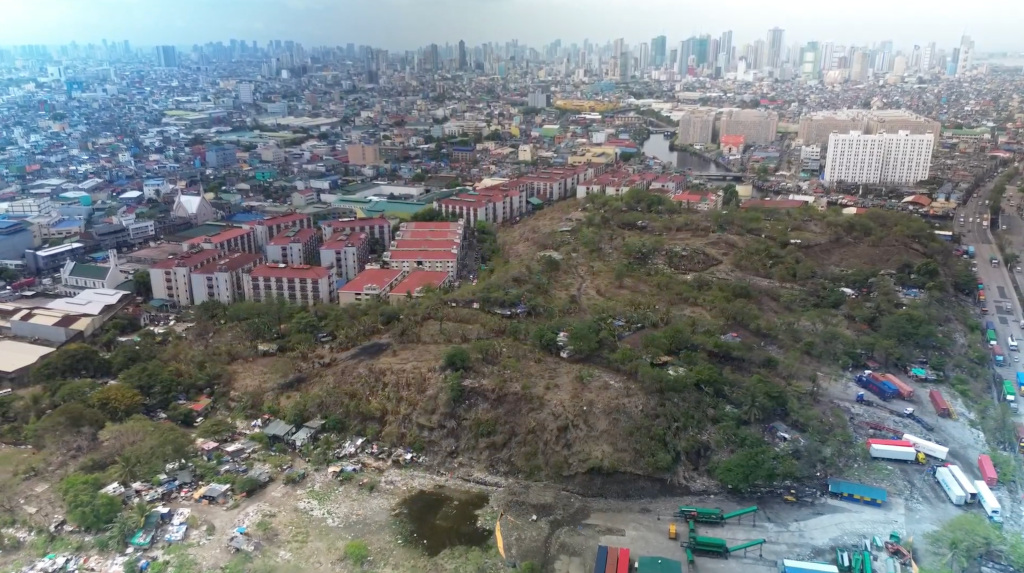
In 1996, when our family packed up our life in Makati and headed south to Santa Rosa, Laguna, our friends assumed we had either discovered inner peace or lost our minds. Back then, the Sta. Rosa–Tagaytay corridor was neither the bustling suburban haven nor the commercial goldmine it is today.
The lone imposing landmark was Laguna Technopark—then spanning 224 hectares, though it has since more than doubled to 471. Otherwise, the road was an unsparing ribbon of dirt and asphalt, pockmarked with axle-busting potholes that punished car suspensions and tested our family’s faith in country living.
Our nearest proper pantry was South Supermarket in Balibago, a 14-kilometer expedition that took over 45 minutes one-way because of cratered roads. With the first Skyway under construction, having our driver shuttle my wife and me to our Makati offices—and our toddler daughter to Kumon—routinely consumed close to six punishing hours.
We paid for green horizons in the quiet currency of endless patience, with daily life easing only slightly when the Campos Group opened Paseo de Santa Rosa in 1998.
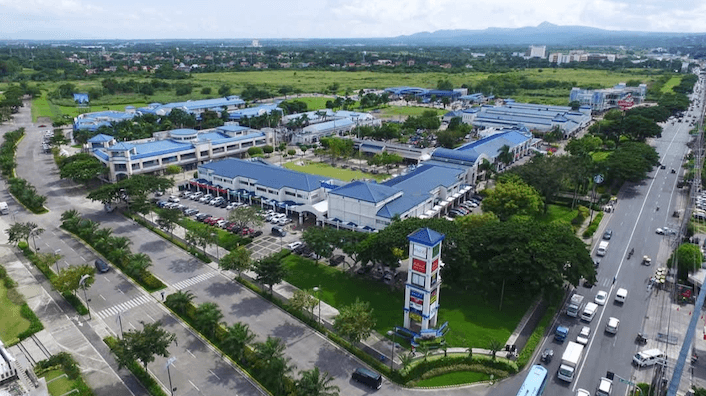
Three decades later, that quiet frontier has transformed into the most fiercely contested retail prize in Southern Luzon.
Battle of malls giants
On November 27, SM Prime Holdings will open SM Nuvali. Boasting over 82,000 square meters of gross leasable area, a one-hectare indoor garden, and a tenant mix heavily weighted toward dining, it will debut as Laguna’s largest SM mall.

Yet the true significance is not merely its footprint, but its audacious geography. SM is planting its flag squarely inside Nuvali—the 2,290-hectare estate Ayala Land spent nearly two decades transforming into the province’s commercial epicenter.
To casual observers, SM is invading Ayala turf. But in property development, this looks more like an Ayala masterstroke: Ayala monetized prime estate land at peak commercial valuations—where lots along this corridor command upwards of P100,000 per square meter—turning its biggest rival into both a paying buyer and a massive foot-traffic generator for Nuvali itself.
Nor is Ayala retreating to the sidelines. In response, Ayala Malls Nuvali (formerly Solenad) has put its own expansion into full throttle, evolving into a Super Regional Mall. By adding over 50,000 square meters of retail space, Ayala will push its footprint past 100,000 square meters to accommodate 550 stores. With Phase 1 opening in late 2026 and Phase 2 adding a two-story food hall, wellness destinations, and a chapel, Ayala is meeting SM’s arrival with overwhelming scale of its own. For those of us who once spent half a day hunting down butter and eggs, watching these two titans collide in our backyard feels surreal.
Just down the road, another subtle yet pivotal drama is unfolding. Inside Vista Mall Santa Rosa, Manny Villar’s AllDay Supermarket has bowed out after nearly a decade, replaced by the Gokongwei group’s Shopwise. At first glance, it looks like routine tenant rotation. In reality, it marks the first visible breach in the Villar group’s signature closed-loop strategy. (READ: Some suppliers get short end of stick as Villars keep winning)
Vista Mall was hardly dropped into unfamiliar territory. The Villars had planted deep residential roots nearby through Brittany’s Georgia Club and Augusta, alongside Crown Asia’s Valenza. The formula was classic vertical integration: buy a Villar home, furnish it at AllHome, and fill the grocery cart at AllDay so household spending never left the ecosystem.
That fortress is now showing undeniable, ugly cracks. AllDay’s revenue slipped from P10.19 billion to P9.25 billion in 2024, with net income retreating to P268 million, amid selective store closures and delayed financial reporting among Villar-linked listed entities. Surrendering a flagship anchor occupied since 2016 looks less like routine rotation and more like a pragmatic corporate retreat.
Shopwise’s arrival is a retail salvage mission for floor space and foot traffic that AllDay could no longer afford to tie down. By installing an established grocer, Vista Mall sacrifices family insularity to become a more durable, traffic-friendly landlord. The irony is inescapable: a Villar mall may now become stronger precisely by depending less on Villar retail.
The Gokongweis, meanwhile, are hardly strangers here. Robinsons Supermarket anchors Solenad 2, while another Shopwise already draws shoppers at Greenfield City’s Laguna Central.
For Robinsons Retail, moving into Vista Mall secures immediate, low-friction access to the affluent Santa Rosa–Nuvali belt without developing an estate from scratch or carrying Villar corporate risk.
Yet if Shopwise succeeds where AllDay faltered, the contrast will be telling: two supermarket operators tested under identical conditions, on the very same tile floors.
With that move, four of the country’s most powerful corporate dynasties—Ayala, SM, Villar, and Gokongwei—are converging on a single corridor to fight over our household wallets.
To equity analysts, this is a clash of corporate models: Ayala’s integrated ecosystem versus SM’s retail gravity, alongside a repositioned Villar mall leaning on Gokongwei merchandising. But for those of us watching from our front gates, this is the tangible story of suburban decentralization in motion. Backed by the Cavite Laguna Expressway(CALAX) and rapid sprawl, Santa Rosa alone has expanded past 430,000 residents, pulling in disposable income from Biñan, Cabuyao, Calamba, Silang, and Tagaytay.
The tycoons can landscape their atriums, refine their tenant mixes, and deploy their billions. But out here, where axle-snapping ruts have given way to an embarrassment of retail riches, real power no longer resides in Makati boardrooms.
It rests with the long-suffering suburbanites who paved the way. The empires will build, but ordinary families like ours will pick the ultimate victors—one grocery cart, one restaurant bill, and one weekend errand at a time. – Rappler.com
Below are some Vantage Point pieces you might have missed:
Click here for other Vantage Point articles.