anyare villars allhome
| | |

Anyare? Villars’ AllHome, AllDay confirm store closures 

MANILA, Philippines – From fast-growing just a few years ago to fast-declining. 

Villar-owned retail companies AllHome and AllDay confirmed on Wednesday, October 7, the decline in their number of outlets in light of recent financial troubles and stiff competition, in separate disclosures to the Philippine Stock Exchange (PSE).

The Villars’ home improvement brand AllHome said its total store count stood at 34 as of September 29, 2026, down 28% (not 26% as earlier reported) from 47 as of December 31, 2025. 

Based on AllHome’s annual reports, it had 15 stores in 2016, 18 in 2017, 23 in 2018, 45 in 2019, 50 in 2020, 57 in 2021, 60 in 2022, 72 in 2023, and still 72 in 2024. 

From its peak in 2023 and 2024, the number of AllHome stores has dropped by 53% (not 81% as earlier reported).  

(Editor’s note: An earlier version of this article miscalculated the declines in percentage of AllHome stores. These have been corrected.)

AllHome store count as of September 2026
Rappler graphic based on AllHome annual reports and Philippine Stock Exchange disclosures

“The company confirms that it has closed certain stores as part of its store network optimization program. These measures are intended to improve operating efficiency and support long-term profitability within its existing retail business,” AllHome said. 

The company, which started in 2013 with four stores and debuted in the PSE in 2019, said it “remains engaged in its core retail business.” 

AllHome has three categories for AllHome stores: large mall-based, large free-standing, and small specialty. 

“The company continues to operate its remaining store network. The company’s store closures and resizing of underperforming locations are intended to optimize productivity and maintain a more efficient cost structure,” it added.

“Store operations have been realigned based on sales throughput, customer traffic, and operational requirements, allowing the company to right-size manpower and reduce excess costs while maintaining service quality and operational effectiveness.” 

AllHome had a net loss of P36.4 million from January to September 2025, and a net profit of P384 million in the same period in 2024, based on unaudited annual reports. 

The PSE had asked AllHome and AllDay to respond to news reports that the Gokongwei Group’s Shopwise would soon take over the space of AllHome at Vista Mall in Santa Rosa City, Laguna. 
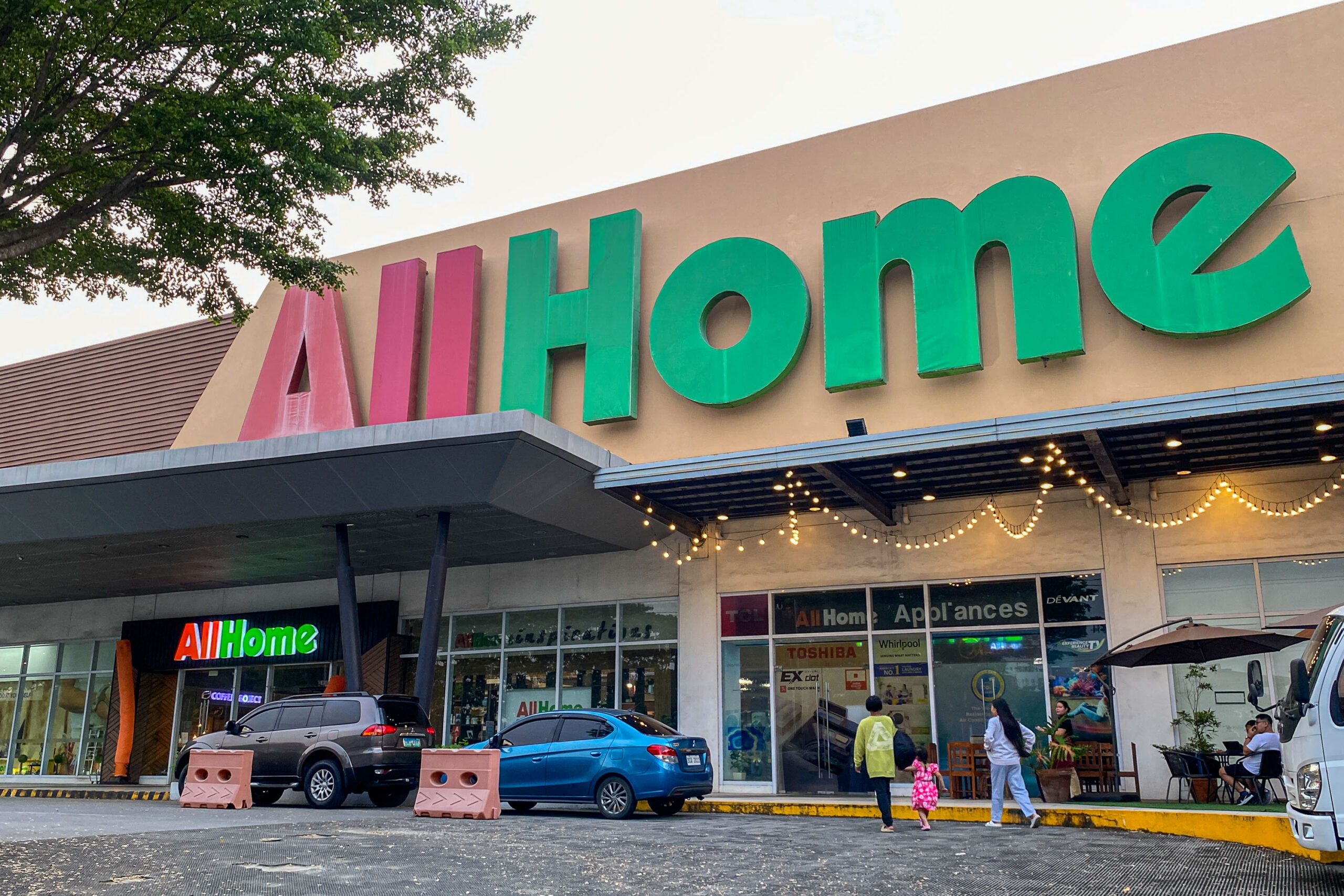
AllHome store in Vista Mall Santa Rosa
STILL OPEN. The AllHome store at the Villar family’s Vista Mall, Santa Rosa City, Laguna, on October 4, 2026. Photo by Leanne Jazul/Rappler
AllHome store in Vista Mall Santa Rosa
PRICE DROP. Shoppers visit the AllHome store offering a ‘Price Drop’ at Vista Mall in Santa Rosa City, Laguna, on October 4, 2026. Photo by Leanne Jazul/Rappler

Rappler’s photo editor Leanne Jazul was in the area on Sunday, October 4, and was able to take photos of the retail outlet. One of his photos shows AllHome having a “Price Drop” sale. 

Must Read

[Vantage Point] The road to plenty: Four titans and the battle for the Santa Rosa peso


[Vantage Point] The road to plenty: Four titans and the battle for the Santa Rosa peso

Supermarket business

With respect to its grocery brand AllDay Marts, the separate Villar company said its total store count was 13 as of September 29, 2026, down 50% from 26 as of December 31, 2025.  
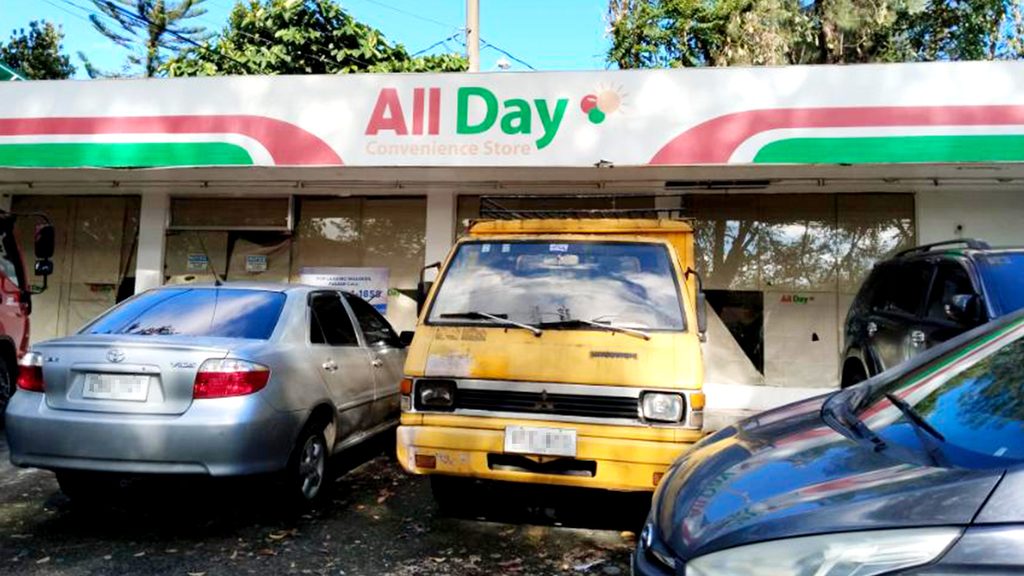
AllDay Convenience store closed in Antipolo City, Rizal
CLOSED. A shuttered AllDay Convenience Store in Antipolo City, Rizal, in November 2025. Photo by Isagani de Castro Jr./Rappler

AllDay, which was incorporated in December 2016, said the company “remains engaged in its core grocery retail business,” and that it would “continue to operate its remaining store network.”

“The closure of certain stores…is aimed at improving the company’s long-term profitability, overall operational efficiency, and aligning store network with market conditions,” it added. 

Based on AllDay annual reports, it had a peak of 40 stores in 2023 and 2024. Thus, its number of stores has fallen by 67%. 

AllDay store count
Rappler graphic based on AllDay Marts annual reports, corporate disclosures, and press release

AllDay disclosed a net profit of P369 million as of December 2023, which fell 27% to P268 million as of December 2024. Sales also fell 9.2% from P10.1 billion in December 2023 to P9.25 billion in December 2024. It said this was “brought about by low-performing stores where there is intense market competition.” 

On Wednesday, AllDay said that in order “improve profitability,” it would “optimize its supermarket operations by selectively adopting smaller mini-mart formats to enhance operational efficiency and better serve its target market.”

“The company will also focus on cost discipline, and active liquidity management, including working capital optimization and prudent cash prioritization — while maximizing the value of its existing footprint to restore sustainable profitability,” it said.
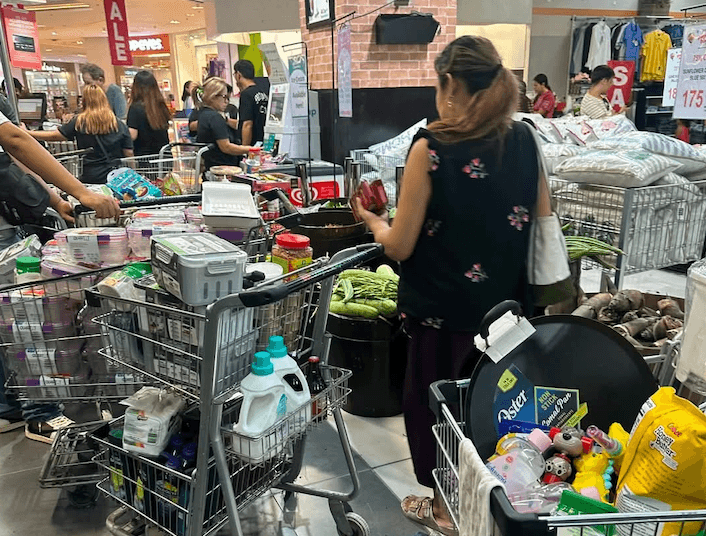
AllDay Supermarket hakot sale
HAKOT. Shoppers take advantage of AllDay Supermarket’s ‘Hakot Sale’ in select stores in Metro Manila, Calabarzon, and Pampanga, based on photos posted online by the retail chain. Photo from AllDay Supermarket’s Facebook page

Last July 2, AllDay Supermarket’s official Facebook account posted an “AllDay Payday Hakot Sale” with steep discounts ranging from 50% to 75% on selected items at its stores in Mandaluyong City; Taguig City; Santa Rosa City, Laguna; General Trias City, Cavite; and in Pampanga. The posts also showed consumers taking advantage of the sale, filling up grocery carts with various discounted items.

The president and chief operating officer of AllHome and also of all AllDay resigned last year amid a drop in corporate earnings, as disclosed in September 2025.

AllHome and AllDay chairman Manny Villar had reported record sales for AllDay in 2021 or five years ago, describing it as “stellar” and “consistent performance.” (READ: Tracking the fallout of Manny Villar’s spot in Forbes’ list of richest individuals)

In the same release five years ago, then-AllValue president and now-senator Camille Villar said AllDay’s growth since it started operations was “a product of our propensity to innovate and remain on the cutting edge of retail consumer trends.”

She added, “AllDay has and will always continue to innovate to stay a step ahead of the local supermarket landscape.”

Retail was seen as complementary to the Villars’ housing projects, having built over 500,000 homes that made it the “largest homebuilder” in the country. This “synergy,” AllHome said in its 2022 annual report, gave “AllHome easy access to a captive market and ideal locations in growing residential communities nationwide, enabling its rapid store network growth.”

In 2025, Rappler published this exclusive report on some suppliers of the Villars’ coffee retail brand Coffee Project not getting paid on time. – Rappler.com

Similar Posts

  • | | |

    Rising fuel taxes add to motorists’ burden

    Consumers are facing a growing burden of taxes and other charges on petrol and high-speed diesel. Official documents show that the difference between the basic cost and retail price of petrol is Rs139.93 per litre. For high-speed diesel, the difference stands at Rs116.10 per litre. The documents show that the basic cost of one litre of petrol is Rs197.69. However, consumers are currently paying Rs327.62 per litre. Several taxes, levies and margins are included in the retail price. These charges significantly increase the amount paid by consumers at fuel stations. Petrol carries a petroleum levy of Rs80 per litre. A climate support levy of Rs5 is also imposed. The price also includes Rs21.24 in customs duty. An Inland Freight Equalisation Margin of Rs7.48 is charged per litre. Oil marketing companies receive a margin of Rs7.87 per litre. Dealers are paid a margin of Rs8.64 per litre. As a result, consumers pay Rs130.23 per litre in combined levies, taxes and margins on petrol. The situation is similar for high-speed diesel. Its basic cost is Rs264.76 per litre. However, its retail price has been fixed at Rs380.86 per litre. According to the documents, consumers pay around Rs116 per litre in levies, taxes and different margins on high-speed diesel. The petroleum levy on high-speed diesel is Rs74.28 per litre. The fuel also carries a climate support levy of Rs5 per litre. Customs duty accounts for another Rs15.68 per litre. The Inland Freight Equalisation Margin stands at Rs4.63. Oil marketing companies receive a margin of Rs7.87 per litre. Dealers receive Rs8.64 per litre as their margin. The figures show that taxes, levies and various margins form a significant portion of the final prices of both fuels. The additional charges directly affect motorists and consumers. They also increase transportation and operating costs for businesses that depend heavily on fuel. The rising cost of petrol and diesel can also put pressure on the prices of goods and services. Transport operators, traders and other businesses often pass higher fuel costs on to consumers.

  • |

    Pakistan inflation falls to 9.2% in July 2026: PBS

    Pakistan’s annual inflation eased to single digits in July 2026, with the latest official figures showing a noticeable decline in price growth compared to the previous month. However, economists cautioned that inflationary pressures have not disappeared, as higher fuel costs and other economic challenges continue to weigh on the outlook. According to data released by the Pakistan Bureau of Statistics (PBS) on Monday, the Consumer Price Index (CPI) recorded an annual inflation rate of 9.2% in July 2026. The reading marked a significant decline from 11.1% in June, although it remained considerably higher than the 4.1% recorded in July 2025. On a monthly basis, consumer prices increased by 1.2% during July, reversing the 0.3% decline witnessed in June. In comparison, monthly inflation had risen by 2.9% in July last year. Urban and rural inflation The PBS data showed that inflation in urban areas slowed to 8.7% year-on-year in July, down from 11.2% in June. During the same month last year, urban inflation had stood at 4.4%. Month-on-month, urban prices climbed 1.2%, compared to a 0.5% decline in June and a 3.4% increase recorded in July 2025. Meanwhile, rural inflation also moderated, with the annual rate easing to 9.9% in July from 10.9% a month earlier. Rural inflation had been 3.5% in the corresponding month of last year. On a monthly basis, rural prices increased by 1.2%, compared with no change in June, while July 2025 had witnessed a 2.2% monthly increase. Government projects inflation to remain elevated The Finance Division had earlier projected inflation to remain between 9% and 10% in July, warning that rising international oil prices could continue to exert pressure on domestic prices. The ministry’s latest economic outlook also highlighted concerns over external investment, noting that Pakistan’s foreign direct investment (FDI) fell by 33.9% during the last fiscal year, declining from $2.48 billion in FY2024-25 to $1.64 billion in FY2025-26. SBP keeps policy rate unchanged Last week, the State Bank of Pakistan’s Monetary Policy Committee maintained the benchmark policy rate at 11.5% during its first monetary policy meeting of the new fiscal year. Speaking after the decision, SBP Governor Jameel Ahmad said inflation was expected to decline in July and expressed optimism that it would gradually move towards the central bank’s target. He said the State Bank expects inflation to settle within the upper end of its 5-7% target range by the close of the current fiscal year. Analysts see base effect behind slowdown Market analysts had largely anticipated inflation returning to single digits in July, though many argued that the improvement was mainly due to favourable statistical base effects rather than a broad-based easing in price pressures. Analysts at Ismail Iqbal Securities estimated July inflation at 9.3%, saying the decline reflected comparison with a higher base from the previous year rather than a sustained reduction in inflationary momentum. Similarly, JS Global projected headline inflation at 9.1% for July, indicating that while inflation has eased, underlying economic pressures continue to pose risks for the months ahead. The latest inflation reading provides some relief for consumers and policymakers, but economists believe the path ahead will depend on global commodity prices, exchange rate stability, energy costs and the government’s fiscal management during the current financial year.

  • | | |

    Gold Prices surge by Rs10,000 per tola in Pakistan

      Gold prices in Pakistan witnessed a dramatic increase on Wednesday, with the price of 24-karat gold rising by Rs10,000 per tola, marking one of the biggest single-day jumps in recent months. The sharp increase has pushed the domestic gold market to a new record level, adding to concerns among consumers, investors, and jewellery traders about the continued rise in precious metal prices. According to the All Pakistan Gems and Jewellers Association (APGJA) the price of one tola of gold has climbed to Rs437,936 following the latest increase. The association also reported that the price of 10 grams of 24-karat gold rose by Rs8,573 reaching Rs375,459 The latest surge reflects the ongoing volatility in both domestic and international bullion markets. Gold prices have remained under the spotlight in recent weeks due to global economic uncertainty, fluctuations in currency exchange rates, and increased investor demand for safe-haven assets. Although the association did not specify the exact reason behind the latest increase, analysts believe that a combination of rising international gold prices and the depreciation of the Pakistani rupee has contributed significantly to the record-high rates. The steep rise in gold prices is expected to have a major impact on Pakistan’s jewellery market. Many consumers traditionally purchase gold for weddings, gifts, and investment purposes. However, with prices reaching unprecedented levels, experts believe that demand for gold jewellery may decline as buyers postpone purchases or opt for lighter and more affordable designs. Jewellers have also expressed concerns that the continued rise in prices could slow business activity, particularly during the ongoing wedding season. Higher costs may discourage customers from making large purchases, affecting retailers and manufacturers across the country. At the same time, investors who view gold as a secure store of value may continue to buy the precious metal despite the rising prices. Financial experts note that gold often performs well during periods of economic uncertainty, inflation, and geopolitical tensions. As investors seek safer assets, demand for gold increases, driving prices higher in international markets. Since Pakistan imports gold and its domestic prices are closely linked to global trends and exchange rate movements, local prices often rise in response to international developments. The record increase also highlights the broader economic challenges facing Pakistan, where inflation and currency fluctuations continue to influence the prices of imported goods and commodities. Consumers are already coping with higher living costs, and the latest jump in gold prices adds another burden for those planning to invest in or purchase the precious metal. Market observers will closely monitor future movements in international bullion prices and the value of the Pakistani rupee to assess whether gold prices continue their upward trend or stabilize in the coming days. Until then, buyers and traders are expected to remain cautious as the market adjusts to the latest record-breaking increase.

Leave a Reply

Your email address will not be published. Required fields are marked *