yda sindh pushes
| |

YDA Sindh pushes healthcare reform agenda

KARACHI: The Young Doctors Association, YDA, is often seen by the public as violent, irresponsible doctors who take to the streets. But rarely does anyone see the other side of the coin. Behind the protests is a group of young doctors — the young blood of our healthcare system — fighting for their basic rights and for better patient care. Like whistleblowers in every society, they are rarely welcomed when they speak the truth. The Young Doctors Association is no exception.

To the common man, YDA means protests, strikes, and chaos in hospitals. What often goes unnoticed is the reason behind it. These are young doctors, the backbone of emergency wards in Sindh, who are demanding dignity, security, and resources.

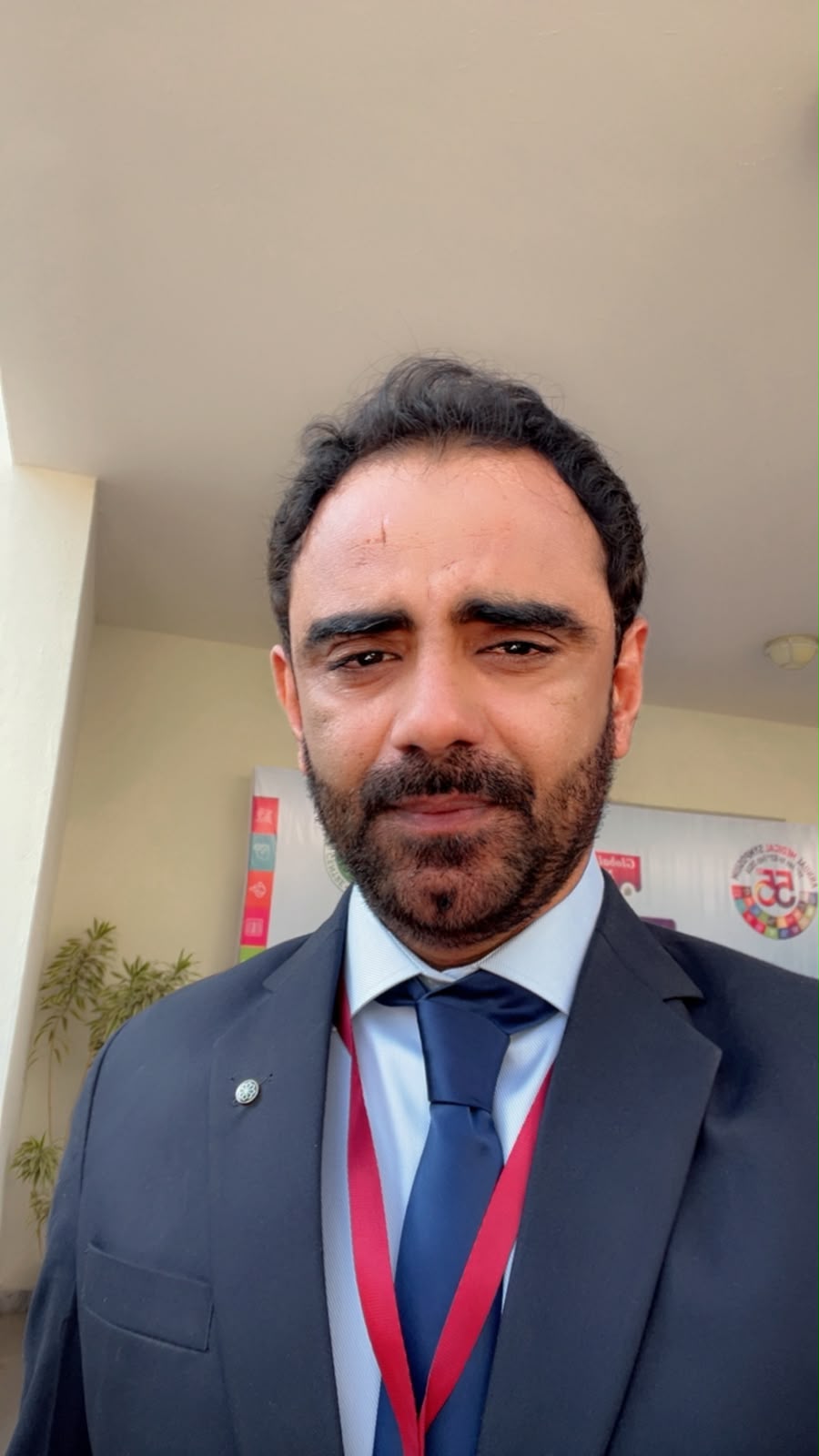
In this context, Chairman of the Young Doctors Association Sindh Chapter, Dr. Farrukh Rauf paints a realistic picture of a system buckling under patient load, with too few specialists and even fewer resources to go around.

From JPMC Member To Sindh Chairman

YDA was formed in 2013 following an incident in which a female doctor was injured by relatives of a patient who had died. Since then, Dr. Farrukh Rauf has been associated with Young Doctors Association. He started as a member, was later elected General Secretary and then President of the JPMC unit, served as Senior Vice President of YDA Sindh, and is now serving as Chairman of the Sindh chapter.

Dr. Farrukh Rauf, Chairman YDA Sindh, is a consultant orthopedic surgeon at Jinnah Postgraduate Medical Centre. He is currently the only surgeon at JPMC who performs orthopedic tumor and cancer surgeries — a super-specialty that only 4 to 5 surgeons practice across Karachi. Surgeons with his expertise in the private sector often draw salaries of over Rs. 20 lakh, but he continues to serve at a public institution out of commitment to suffering humanity. Dr. Rauf has been associated with JPMC for the last 17 years, where he also completed his post-graduation. He serves as General Secretary of the Pakistan Orthopedic Association and is an internationally certified trainer/instructor for HOPE – Hospital Preparedness for Emergencies — a certification he received from Nepal. There are only 4 to 5 such certified trainers in all of Sindh.

Condition Is Still Very Critical”

Dr. Farrukh Rauf said that despite the Sindh government’s interest in the healthcare sector, the condition is still very critical, which is truly reflected in the overcrowded corridors of JPMC, Lyari and Civil Hospitals, where patients lie on floors and doctors work 36-hour shifts.

On the issue of shortages at Civil, JPMC, and NICVD, Dr. Farrukh offers a mixed assessment.

“There is no shortage of life-saving drugs,” he said. “Yes, ICU facility is very limited owing to patient burden. Seeing the overflow of patients, more equipment is needed.” He acknowledged the Sindh government’s efforts but stressed the scale of the problem.

“Though the Minister of Health, Dr. Azra Pechuho, is addressing the concerns, however, there is a huge gap and lack of equipment for patients.” At tertiary hospitals like JPMC and Civil, where critical cases from across Sindh land every day, the mismatch between patient inflow and available ICU beds and machines remains a key pressure point for young doctors on duty.

He traced the problem back to medical education itself. “The number of medical colleges has increased manifold in the last 10 years, but the standard of education has deteriorated. There is a dearth of quality doctors.”

YDA’s Key Milestones

According to Dr. Farrukh Rauf, Chairman YDA Sindh, the situation in government hospitals across Sindh, especially in Karachi, has improved only because of constant struggle. “Owing to YDA’s struggle and efforts, salaries of young and mid-career doctors were revised. Previously, they were lower than in all other provinces,” he said.

He added that security was one of the biggest issues YDA flagged early on. “Doctors were facing serious security issues. There was no health risk allowance, which is being introduced now owing to the YDA movement.”

The gains, he notes, came after years of protests at JPMC, Civil Hospital Karachi, and other tertiary centers where patient load far exceeds available staff and basic facilities.

YDA Beyond Protests And Karachi

The Young Doctors Association, once seen as a Karachi-centric pressure group, now claims a presence across the province. “I had established YDA units in all districts of Sindh including Umerkot, Thar, Ghotki. Now almost in twenty districts YDA is active for the rights of doctors and patients,” Dr. Farrukh said.

In Karachi, the association is active in Civil, Lyari, JPMC and NICH. “We seek and welcome active participation from other government hospitals,” he added.

The work has expanded beyond protests. YDA runs a welfare committee that coordinated flood relief last year, and an academic committee that offers career counseling, FCPS guidance, and surgical workshops. “We have constituted a welfare committee which offers coordinated help on disasters like floods last year. There is an academic committee which offers career counseling, how to give high-level exams, and workshops on surgical procedures,” he said.

On training, Dr. Farrukh said YDA is pushing for reforms in the PGT system. “We are trying to get PGT seats equal in number to the number of graduates.”

Violence And Security Gaps

For Dr. Farrukh Rauf, the frustration in wards often boils over into violence against doctors. But he says the anger has a root cause. “Most of the people get provocative owing to the absence of ICU or urgent facility for their patient,” he said. “It is necessary to expand ICUs and facilities to handle the high influx of patients which overburdens doctors.”

He was blunt about administrative failures too. “There are security lapses also on the part of the administration.”

The Way Forward

Dr. Farrukh argues the solution is not in Karachi’s tertiary hospitals alone, but in strengthening the entire pyramid.

“We need a proper primary healthcare network across the province, like in developed countries,” he said. “Patients who can be treated at the UC or Tehsil level should not be coming to Karachi. This will reduce the burden on tertiary care hospitals.” In Karachi alone, we need 4 to 5 more hospitals to cater to the patients’ influx, he added. He also reiterated that more post-graduate medical professionals should be inducted into the system.

He said YDA is trying to push change through regular dialogue. “YDA’s General Council is held every three months to resolve the issues and to see what can be done in the next session,” he said.

On the government side, he credited Health Minister Dr. Azra Fazal Pechuho for being accessible. “Dr. Azra is very receptive to our proposals. She makes herself available whenever and wherever required to resolve the issues of YDA.”

From flood relief in interior Sindh to FCPS prep sessions, YDA’s role has expanded into welfare, academics, and grassroots advocacy — especially in districts where doctors previously had no collective platform.

“Stay And Fight”

He ended with a direct message to young doctors considering leaving Pakistan. “Running away is not the solution. Our young doctors need to stop, think, and stay,” he said. “If specialists like me — few as we are in this system — can give our time and talent to this country, why can’t they?”

His voice softened as he recalled his father.

“My late father, Rauf sb, told me, ‘Seeing you become a doctor is my biggest achievement.’ That one sentence keeps me here. It keeps me fighting for this system.”

For Young Doctors Association, Sindh, the fight is no longer just about salaries. It is about refusing to abandon the patients in Thar, Umerkot, and Karachi who have nowhere else to go.

In his view, YDA’s real fight is to make sure the next generation chooses service over escape.

The writer is a senior journalist and columnist covering crime, law, social issues, governance, energy, health, literature, women and children’s rights across Pakistan’s leading English media houses.

Feedback: mediawomen2014@gmail.com

Similar Posts

  • | |

    Maryam approves 30,000-acre shrimp farming plan

    Punjab Chief Minister Maryam Nawaz has given in-principle approval for a major shrimp farming project covering 30,000 acres across the province. The plan includes areas such as Bahawalpur and aims to turn unused and barren land into productive aquaculture zones. The decision was taken during a meeting on shrimp farming and fisheries development in Punjab. Officials briefed the chief minister about progress on the project and the potential for expanding shrimp production in different parts of the province. Maryam Nawaz directed authorities to speed up work on introducing modern, technology-based shrimp farming in Sargodha. The decision follows successful experimental farming activities in Muzaffargarh. The chief minister said Punjab had significant potential to develop a large shrimp farming industry. She said barren land could be transformed into productive farms and eventually become a major centre for shrimp exports. She said the development of a complete local value chain would help Punjab emerge as a leading shrimp-exporting region. The value chain would cover farming, processing, packaging, transportation and marketing. According to the chief minister, the project could also help save valuable foreign exchange. Local food businesses currently rely on imported shrimp to meet part of their demand. Increasing domestic production could reduce the need for imports and keep more foreign exchange within the country. Maryam Nawaz directed officials to gradually involve the private sector in the shrimp farming programme. She said private investment and modern technology could help expand production and improve the efficiency of the sector. The project is also expected to create new employment opportunities in farming, processing, transportation and related businesses. Officials will work on developing the necessary infrastructure and facilities as the programme expands. The chief minister stressed the need for a modern and commercially viable fisheries sector in Punjab. She directed the relevant departments to ensure that the project moves forward according to a clear and practical plan. During the meeting, Maryam Nawaz was also given a detailed briefing on the Kahna Fish Market. Officials discussed the market’s development and related fisheries activities.

  • | | |

    Top National Thailand Stories From the Past Week: Death Toll in School Mass Shooting Reaches 9, Chinese Man Gets 46 Years for Military Weapons, and More

    Here is a look at the top NATIONAL Thailand stories, chosen by our Pattaya News/TPN National team, from last week, Monday, August 3rd to Sunday, August 9th. They are not in any particular level of importance but are listed in the order of date of publication. Nonthaburi’s Disaster Prevention and Mitigation Department has confirmed a […]

  • | |

    AB de Villiers says Pakistan bowling attack has lo…

    Former South African batter AB de Villiers believes Pakistan’s bowling attack has lost the fear factor that once made the country’s fast bowlers among the most intimidating forces in international cricket. Speaking on his YouTube channel, de Villiers reflected on Pakistan’s rich history of producing world-class fast bowlers and said the current attack has yet to consistently demonstrate the same level of dominance. The former South African star recalled watching legendary Pakistani pacers including Wasim Akram, Shoaib Akhtar, Waqar Younis and Mohammad Asif, describing them as exceptional bowlers who could create fear and uncertainty among opposing batters. According to de Villiers, Pakistan’s current pace attack has not consistently produced the same impact. He specifically mentioned Shaheen Shah Afridi and Naseem Shah, saying they still have the reputation and potential associated with great Pakistani bowlers but need to show greater consistency to match those expectations. He suggested that this issue has contributed to questions surrounding the effectiveness of the current bowling unit. The former batter further described the last three years as a difficult period for Pakistan cricket. He pointed to disappointing results, including a defeat against the West Indies, as evidence of the challenges facing the national side. However, de Villiers acknowledged that Pakistan is currently going through a rebuilding phase. He believes the upcoming performances of the country’s fast bowlers will be important in determining whether the team can restore its traditional reputation. The former South African international will be particularly interested in Pakistan’s fast-bowling performance against England. According to him, the series could provide an opportunity for Pakistan’s pacers to demonstrate whether they can bring back the aggression, pace and intimidation that once defined the country’s bowling attack. Pakistan has historically been synonymous with quality fast bowling, producing several generations of elite pacers. The challenge for the current generation is not simply to produce individual moments of brilliance but to deliver consistently across formats. De Villiers’ comments have therefore sparked a wider discussion about the state of Pakistan’s bowling attack and whether its current stars can revive the fear factor that once made Pakistan one of the most respected fast-bowling nations in world cricket.

  • |

    AI builds 16 brand-new viruses in world-first genome experiment

    Artificial intelligence has designed 16 entirely new viruses that have never existed in nature before. Researchers in the US are calling it a genuine scientific breakthrough. According to the team behind the project, these newly designed viruses are fully functional and can replicate successfully in lab conditions. Scientists are describing the achievement as a major turning point for the field. This marks the first time AI has managed to design a complete viral genome from scratch. The viruses were specifically built to target bacteria, particularly drug-resistant strains of E. coli, and pose no risk to humans. The work was led by Dr Brian Hie and his team at Stanford University. They relied on genome language models, including systems called Evo1 and Evo2, trained using data from roughly two million bacteriophages. To keep the research safe, the team deliberately excluded any genetic data linked to viruses capable of infecting humans, animals or plants. That precaution was built into the training process from the very start. Hie explained that this represents a new level of complexity for what generative AI can design. He noted that building a complete, functional genome capable of replicating inside cells was completely uncharted territory for his team. Out of thousands of AI-generated designs, researchers narrowed the list down to around 300 for lab synthesis. After testing, only 16 of those proved effective at killing antibiotic-resistant E. coli. Scientists have framed the achievement as a potential breakthrough with real medical applications ahead. Tom Ellis, a synthetic genome expert at Imperial College London, called the work impressive but pointed out its current limitations. He noted that this particular genome remains one of the simplest and smallest to design successfully. Ellis added that concerns around AI-designed pathogens are often overstated compared to more realistic risks. He explained that modifying existing pathogens through gain-of-function techniques remains a far easier and more likely biosecurity threat. Still, some researchers in the wider scientific community remain cautious about where this technology could eventually lead. Experts at the Johns Hopkins Center for Health Security warned that proper oversight for this kind of AI-driven genome design doesn’t fully exist yet. Dr Filippa Lentzos from King’s College London argued that regulation needs to focus on multiple layers, including lab safety and DNA synthesis screening, rather than restricting AI models alone.

  • | | |

    Shaheen Shah Afridi leaves Lanka Premier League du…

    Pakistan’s star fast bowler Shaheen Shah Afridi has returned home after leaving the Lanka Premier League (LPL) due to personal reasons. The left-arm pacer, who was representing the Kandy Royals in the tournament, departed from the event before its conclusion, ending his participation in the ongoing competition. During his time in the Lanka Premier League, Shaheen Afridi was also involved in a disagreement with his team management over his exclusion from the playing squad for a match on July 19. The incident reportedly created tension between the player and the franchise during the tournament. In the match against the Colombo Capitals, Shaheen Afridi was informed that he would be used as an impact player. However, his name was not included in the official team sheet submitted for the match. The omission reportedly upset the Pakistani fast bowler, who expressed his disappointment over the situation. The issue was later addressed after the Kandy Royals management apologized to Shaheen Afridi. Following the apology and discussions with the team officials, the fast bowler returned to action and participated in subsequent matches for the franchise. Despite the disagreement, Shaheen Afridi continued to contribute to his team’s campaign in the tournament. He played six matches in the Lanka Premier League and took seven wickets, demonstrating his effectiveness as one of the leading fast bowlers in the competition. Shaheen Afridi is regarded as one of Pakistan’s most important international cricketers and has established himself as a key figure in the national team’s bowling attack. Known for his pace, swing, and ability to take early wickets, he has represented Pakistan across all formats of international cricket and has earned recognition as one of the world’s top fast bowlers. His participation in overseas T20 leagues has provided him with valuable experience and exposure against international players. The Lanka Premier League was another opportunity for him to showcase his skills and maintain competitive form ahead of future international assignments. The Kandy Royals management’s decision to apologize after the team sheet controversy helped resolve the matter, allowing Shaheen Afridi to continue his involvement in the tournament. However, his early departure due to personal reasons means that he will no longer be available for the remaining matches of the league. The exact nature of the personal reasons behind Shaheen Afridi’s return to Pakistan has not been disclosed. His decision comes as part of his personal commitments, and there has been no official indication that his departure is related to any injury or cricketing issue. Fans and cricket analysts have closely followed Shaheen Afridi’s performances in the tournament, particularly because of his reputation as a match-winning bowler. His seven wickets in six matches highlighted his continued ability to perform at the highest level in franchise cricket. The Pakistan Cricket Board and supporters will now be hoping that Shaheen Afridi returns refreshed and prepared for upcoming international challenges. His fitness, form, and availability remain important factors for Pakistan’s future cricketing plans.

  • |

    UFC flyweight Allan Nascimento passes away at 34

    Brazilian UFC fighter Allan Nascimento has died at the age of 34 after suffering a heart attack. The UFC confirmed that Nascimento was discovered unconscious at his home on the morning of August 3. Medical personnel responded and attempted to save him, but their efforts were unsuccessful. According to reports from US media outlets, the heart attack occurred while he was asleep. Nascimento was an active member of the UFC’s flyweight division. His most recent fight took place in June, where he faced off against Mach Raposo and came up short. That bout ended up being his final appearance in the octagon. His journey in mixed martial arts began gaining wider attention back in 2018. That year, he stood out on Dana White’s Contender Series, a platform known for spotlighting rising talent and helping fighters earn a spot on the UFC roster. From there, Nascimento went on to build a respected career inside the promotion. Over the years, he became known for delivering exciting performances inside the cage. That reputation earned him the Fight of the Night bonus on two separate occasions, a recognition given to the most thrilling matchups on a fight card. Flyweight competition is known for its speed and technical precision, and Nascimento carved out his place among a talented group of fighters in that division. His ability to consistently put on entertaining fights made him a familiar name among fans who followed the weight class closely. News of his passing has understandably affected the wider MMA community. Fighters, fans, and analysts alike have taken time to reflect on his career and the impact he had inside the octagon. At just 34 years old, his death serves as a stark reminder of how sudden and unpredictable health emergencies can be, even among athletes known for their physical conditioning and discipline. For now, tributes continue to come in from within the sport, with many remembering Nascimento not just for his fighting style, but for the dedication he brought to his craft throughout his career.

Leave a Reply

Your email address will not be published. Required fields are marked *