Celebrating 4/06 With Ford’s One-Year Hi-Po FE Big Block You Should Know
Henry Ford II declared war on everybody in 1962. His “Total Performance” mandate brought Ford factory racing support to drag strips, ovals, and road circuits around the world; in nearly every arena, Ford’s weapon of choice was the V8. The 406 was the latest evolution of their thin-wall FE big block, arriving mid-year for regular customers and racing teams alike. This transitional performance motor was in production for just one year, until it was superseded by the mighty 427 in mid-1963.
Click above to open the article in a full-window viewer, or hit the “share” arrow to download the PDF.
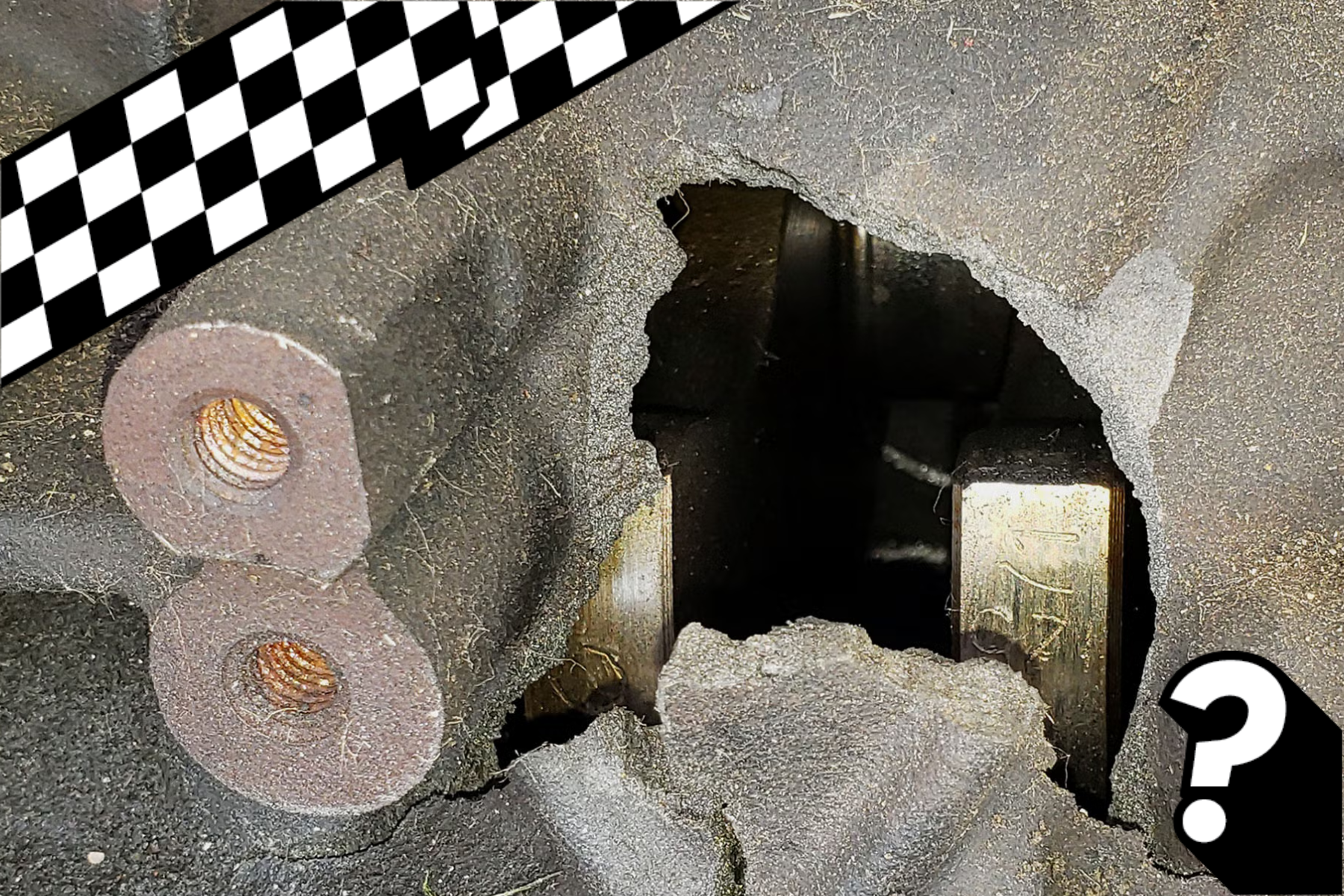
This 1962 feature from Hot Rod by Ray Brock spells out the differences in great detail. What made the 406 more than just a punched-out 390 was its strength. The cylinder wall castings were thicker, and the bottom end was similarly beefed up. Cross-bolted main-bearing caps were added later in the production cycle—a first for Ford V8s. New heads had larger exhaust valves and tighter combustion chambers, giving the motor an 11.5:1 compression ratio out of the box. Factory ratings were 385 horsepower with a single four-barrel carburetor and 405 with three two-barrels.

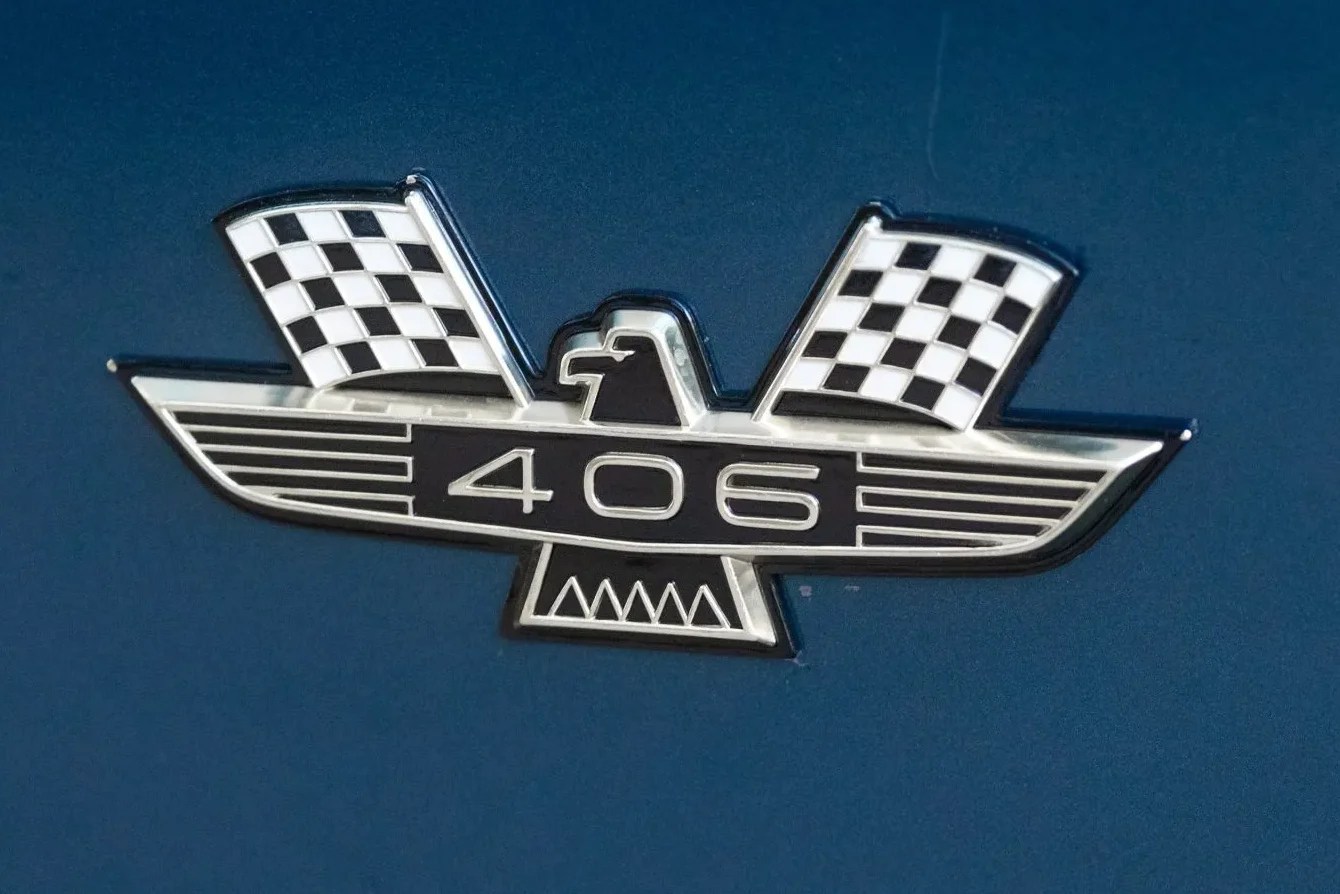
This was only marginally higher than the power figures for the 390 with the same induction setups (375 and 401 horsepower, respectively). Ford didn’t even attempt to distinguish the new mill, giving it the same “Super Thunderbird” branding as the 390. It got gold valve covers. That was it. But Ford wasn’t trying too hard to entice casual buyers with their top engine option, because the 406 was not meant for general consumption—it was made to race. Outside of one brief reference calling it “lusty,” the 1963 brochure mentioned the 406 only to describe what equipment its presence excluded: no A/C, no assisted steering or brakes, no automatic transmissions, and not available with the Country Sedan wagon. Furthermore, it was a major exception to the reliability claims made for other Ford V8s, as it needed frequent valve adjustments and required high-test fuel.
Many 406-equipped cars were snapped up by well-funded teams for Super Stock competition. And for the brand-new A/FX class, eleven lightweight cars with chassis built by Dearborn Steel Tubing were equipped with lightweight panels and distributed to drag racing teams like Tasca and Alderman Ford—the precursors to the more famous, 427-powered 1963.5 Galaxie lightweights. In the video above, we ride along in a Tasca Ford competing in the Super Stock class, which had become a hothouse for factory racing development, officially sanctioned and otherwise.

At the ’62 NHRA Nationals in Indianapolis, Dick Brannan made it all the way to the quarter-finals before losing to a 413ci Wedge-powered Chrysler driven by the Ramchargers team.
Fords struggled on the ovals, not because of the 406 but due to the Galaxie’s new Thunderbird-derived “boxtop” silhouette, aerodynamically a step backward from the sleek Starliner coupes of 1961. This they attempted to remedy with the “Starlift” removable fastback hardtop, but they were quickly shut down by NASCAR. They may have given up top end to the Impalas and Catalinas, but could still make trouble on shorter courses. In the video above, South Carolina native Larry Frank takes the win at Darlington in 1962, beating out Richard Petty and Junior Johnson in a controversial finish that saw Petty driving the last laps on a bare steel rim, and NASCAR scorekeepers eating crow after erroneously placing Frank one lap down. Fellow Ford driver Frank Lorenzen also led for many laps, though his car was equipped with air conditioning to combat the 96-degree heat in South Carolina that day.


These days, 406-equipped cars can still go under the radar despite their performance bonafides and limited production. Around here, we tend to call out the tri-power G-code cars in listing titles. For any 406, just look for the “B” (four-barrel) or “G” (triple two-barrel) in the fifth position of the serial number on a 1962 or 1963 Galaxie, and remember that the 406 was never officially offered with the station wagon body style (though we can hold out hope that some Ford exec managed to procure an exception).