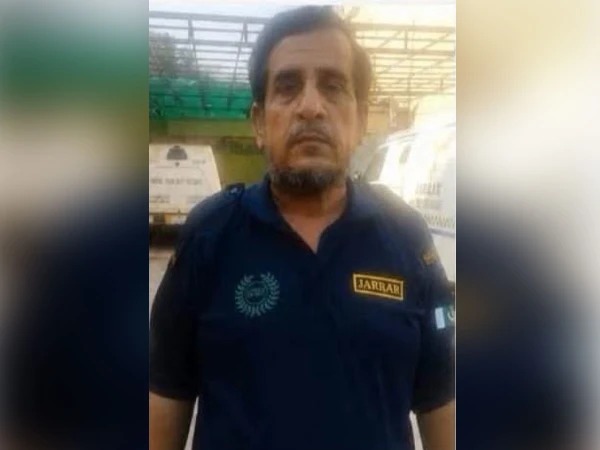
55yearold security guard
| |

55-year-old security guard missing in Lahore, Kidn…

A private company security guard has reportedly gone missing from Lahore’s Nasirabad area, after which police registered a case of alleged abduction. Authorities have started an investigation to trace the missing man and determine the circumstances surrounding his disappearance.

According to police officials, the case was registered on the complaint of the missing security guard’s daughter. The missing person has been identified as 55-year-old Ijaz Hussain, who was working as a security guard at a private company.

In her statement to police, the guard’s daughter said that her father was unwell and had gone to Gulab Devi Hospital to get medicine and have tea. However, despite efforts to locate him, the family was unable to find any information about his whereabouts.

Following the complaint, police registered a case and began collecting details as part of the investigation. Officials said that efforts are underway to trace the missing security guard and identify any possible suspects involved in the incident.

Police teams are reportedly reviewing available information and taking necessary steps to find clues regarding the disappearance. Authorities have assured the family that the matter is being investigated and all possible measures are being taken to locate the missing man.

Cases involving missing persons require immediate action, as early investigation and evidence collection can play an important role in determining the facts. Police officials have encouraged anyone with relevant information about the incident to cooperate with investigators.

The investigation into the alleged abduction remains ongoing, and further developments are expected as police continue their efforts to recover the missing security guard and establish what happened.

Similar Posts

  • | | |

    Relatives of Murdered Thai Family Demand Death Penalty for Killers as Chonburi Family of Three Cremated

    CHONBURI, Thailand The bodies of a father, mother and teenage daughter murdered and buried by a gang of criminals reportedly led by a suspect known as “Pong” were cremated on Saturday in a solemn ceremony at a temple in Banglamung district, as grieving relatives called for the death penalty and reported strange incidents they believe […]

  • | |

    Sindh schools adopt facial recognition attendance

    The Sindh government has approved the introduction of a Facial Recognition Attendance Monitoring and Evaluation System (FRAMES) in public schools as part of a broader effort to improve governance, transparency and accountability in the education sector. The decision was taken during a meeting of the School Education Department chaired by Chief Minister Murad Ali Shah. The meeting was attended by Education Minister Sardar Ali Shah, the chief secretary and other senior government officials. During the meeting, the education minister gave a detailed briefing on the proposed system and informed participants that all technical preparations for its implementation have been completed. He said the project is designed to introduce data-driven governance and improve monitoring of teachers and non-teaching staff across government schools. According to the briefing, the first phase of the project will begin in six districts, with one district selected from each division of Sindh. Registration of teachers and non-teaching employees in these districts has already been completed, paving the way for the system’s launch. Chief Minister Murad Ali Shah announced that the new attendance system will become operational in the selected districts from August 17. If the pilot phase is successful, it will be expanded gradually to all districts across the province. Under the FRAMES system, attendance of teachers and school staff will be recorded through facial recognition technology. Officials said the system will automatically record employees’ arrival and departure times, creating a secure, accurate and tamper-proof attendance record. The education department also informed the meeting that geo-tagging of government schools has been completed. Officials said the system has been designed to function effectively even in remote areas with weak internet connectivity, ensuring uninterrupted monitoring throughout the province. Murad Ali Shah said improving teachers’ attendance is essential for raising educational standards and ensuring quality education for students. He said every child has the right to receive quality education, and achieving that goal requires teachers and school staff to perform their duties regularly and responsibly. The chief minister emphasized that the use of modern technology would strengthen accountability and improve discipline within the education system. He said digital monitoring would help eliminate irregularities, increase transparency and provide education authorities with reliable data for decision-making. He directed officials to establish an effective support and monitoring mechanism during the initial implementation phase. He also instructed the education department to provide schools with all necessary technical assistance and training to ensure the smooth operation of the new system. Officials said information collected through the facial recognition platform will help education authorities evaluate attendance patterns, improve administrative oversight and identify areas requiring further reforms. They added that the initiative is expected to enhance institutional discipline, strengthen governance and improve the overall performance of public schools.

  • | |

    PPL strikes 1st-ever Chiltan formation gas find in…

    KARACHI: Pakistan Petroleum Limited (PPL) has announced a significant hydrocarbon discovery at its operated Sarani Block in Sindh’s Sujawal district, opening fresh prospects for exploration in the country’s shallow offshore and swampy onshore regions. The discovery was made at the Dolphin X-1 exploratory well, where PPL identified hydrocarbons in the Chiltan Formation of the Lower Indus Basin. The company described it as the first reported hydrocarbon discovery from the Jurassic-age Chiltan Formation in the basin. PPL said the find could expand exploration opportunities in adjoining shallow offshore areas and strengthen the hydrocarbon potential of Pakistan’s low-depth marine zones. The region had remained largely unexplored for years because of its challenging geological and geographical conditions. Drilling of Dolphin X-1 began on April 17, 2026, with the well reaching a measured depth of 3,850 metres to evaluate the hydrocarbon potential of the Chiltan Formation. Analysis of drilling results and wireline logs subsequently identified a hydrocarbon-bearing zone. During testing, the well produced gas from the Chiltan Formation at a rate of 0.942 million standard cubic feet per day. The gas recorded a heating value of 1,000 British thermal units per standard cubic foot, with a wellhead flowing pressure of 211 pounds per square inch gauge through a 64/32-inch choke. PPL holds a 75 per cent working interest in the Sarani Block and serves as its operator, while Government Holdings (Private) Limited owns the remaining 25 per cent stake. The company said the well was drilled and tested using the expertise of its technical teams. The results have led to the identification of a new hydrocarbon play within the Chiltan Limestone, potentially providing a foundation for further exploration in the surrounding onshore and shallow offshore areas.

  • | |

    Pakistan turns 79, leaders call for unity, reform …

    ISLAMABAD: As Pakistan marked its 79th Independence Day on Friday, the country’s civilian and military leadership delivered a common message: the sacrifices that created Pakistan must now be matched by unity, institutional reform, economic progress and opportunities for its people. Independence Day celebrations began across the country with traditional ceremonies. A 31-gun salute was held in Islamabad, while 21-gun salutes were fired at provincial headquarters. At the mausoleum of Quaid-i-Azam Muhammad Ali Jinnah in Karachi, a change-of-guards ceremony was also held to honour the founder of Pakistan. The messages issued by President Asif Ali Zardari, Prime Minister Shehbaz Sharif and the armed forces focused not only on Pakistan’s past but also on the challenges shaping its future. Zardari urges reforms and investment in youth In his Independence Day message, President Zardari paid tribute to the leaders of the Pakistan Movement and millions who made sacrifices for an independent homeland. He described independence as more than a historic achievement, saying each generation had a responsibility to strengthen the country and build on the work of those who came before. Reflecting on the country’s security challenges, the president said the events surrounding last year’s Marka-i-Haq had demonstrated Pakistan’s desire for peace as well as its determination to defend its sovereignty and national interests. He also paid tribute to members of the armed forces, police and law enforcement agencies who had lost their lives while protecting the country. The president stressed that Pakistan’s security was closely connected with peace in the region. He said the country would continue using diplomatic channels to encourage dialogue, reduce tensions and support regional stability. But the strongest part of his message centred on domestic development. Zardari called for economic, social and governance reforms, better education, stronger skills development and greater opportunities for young people. He said Pakistan’s youth represented the country’s greatest strength and that investment in their education and abilities would ultimately determine the nation’s future. For ordinary citizens, he noted, national progress should be visible in everyday life — through better education and healthcare, employment opportunities and greater economic security for families, farmers, workers and businesses. PM Shehbaz highlights economic progress Prime Minister Shehbaz Sharif also called for national unity while highlighting what he described as economic achievements made during the past two-and-a-half years. He said Pakistan had navigated difficult circumstances and moved towards economic stability, while remittances from overseas Pakistanis had risen by $11.3 billion over two years. The prime minister identified information technology, innovation, industrial and agricultural development, employment creation, education and skills training as key priorities for the government. He also praised the armed forces for their role during Marka-i-Haq and reaffirmed Pakistan’s commitment to defending its national interests, including its water resources. Shehbaz pointed to the Makkah Joint Defence Agreement involving Pakistan, Saudi Arabia and Turkiye as evidence of Pakistan’s growing strategic importance. He also reiterated Islamabad’s support for the people of occupied Kashmir and Palestine, while calling for diplomatic solutions to regional disputes. Military leadership calls for unity Chief of Defence Forces and Chief of Army Staff Field Marshal Syed Asim Munir, Chief of Naval Staff Admiral Naveed Ashraf and Chief of Air Staff Air Chief Marshal Zaheer Ahmed Baber Sidhu also issued Independence Day messages. According to ISPR, the armed forces paid tribute to Jinnah, the country’s martyrs, veterans, law enforcement personnel and citizens who had served Pakistan. The military leadership reaffirmed its commitment to defending Pakistan’s sovereignty and territorial integrity, upholding the Constitution and protecting national interests. The message also stressed that Pakistan’s real strength lay in the unity and collective determination of its people. As the green and white flags filled streets, buildings and homes across the country, the leadership’s messages offered a reminder that Independence Day is not only about remembering 1947. It is also about asking what Pakistan can become in the years ahead — a country where security is matched by stability, economic growth by opportunity, and national strength by better lives for its people. The shared call from the leadership was clear: unity, discipline and meaningful reform must turn the promise of independence into progress for every Pakistani.

  • |

    Mayor shot dead inside town hall in Central Mexico

    Valentín Lavín Romero, the mayor of Temoac in the central Mexican state of Morelos, was shot dead on Wednesday inside the municipal government headquarters. The politician, affiliated with the Green Party, an ally of the ruling Morena party, was targeted in broad daylight when armed hitmen entered the town hall before escaping on a motorcycle. The fatal attack came six months after Lavín Romero survived a previous attempt on his life in late January, when gunmen opened fire on his vehicle at a highway petrol station. His assassination marks the 14th murder of a mayor in Mexico since President Claudia Sheinbaum took office in October 2024, highlighting the persistent vulnerability of municipal officials in regions contested by organised crime networks. Prior to his death, Lavín Romero faced intense local scrutiny and threats. In May, a criminal group left a warning banner in the town center accusing him of protecting rival syndicates. He was also under pressure from community activists who demanded investigations into his alleged links to the homicides of two local campaigners. The state prosecutor’s office confirmed that initial forensic investigations are underway at the crime scene, though no suspects or official motives have yet been formally identified. The killing coincides with broader federal anti-corruption drives under Operation Swarm, which targets collusion between municipal administration members and regional cartels across multiple states.

  • |

    Pakistan’s Foreign office launches evening s…

    The Ministry of Foreign Affairs (MOFA) has introduced an evening shift for consular services, extending working hours from 8am to 8pm on weekdays to enhance accessibility and convenience for citizens, Foreign Minister and Deputy Prime Minister Ishaq Dar announced on Monday . According to an official announcement shared by Dar on X, the expanded hours represent a significant increase in service availability, allowing citizens to access consular facilities over a 12-hour window, Monday through Friday . The initiative is part of the ministry’s broader efforts to enhance efficiency and ensure citizen-centric service delivery . Previously, consular services at MOFA were limited to regular government working hours, requiring citizens to visit offices within a designated daytime schedule . The restricted timings often posed challenges for individuals, particularly overseas Pakistanis and working professionals who faced difficulties accessing services during conventional office hours . The introduction of the evening shift aims to address these concerns by providing greater flexibility to applicants, officials said . Details of the revised timings have been confirmed, and the ministry expects the move to significantly reduce bottlenecks and improve the overall citizen experience . The announcement comes amid ongoing efforts by the government to digitize and streamline public services, with the Foreign Office now joining other federal departments in extending service hours to better accommodate the public .

Leave a Reply

Your email address will not be published. Required fields are marked *