
ppp leader nadeem
| |

PPP leader Nadeem Afzal Chan criticizes Punjab gov…

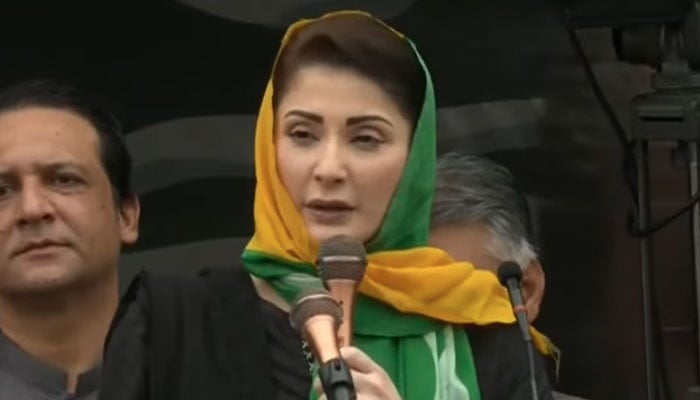
Pakistan Peoples Party (PPP) Central Secretary for Information Nadeem Afzal Chan has strongly responded to a speech delivered by Punjab Chief Minister Maryam Nawaz during a public gathering in Muzaffarabad. In his statement, Chan accused the Punjab chief minister of making false allegations against the Pakistan Peoples Party and rejected the claims made during her address.

Responding to Maryam Nawaz’s remarks, Nadeem Afzal Chan said that the Pakistan Muslim League-Nawaz (PML-N) should focus on addressing its own governance challenges instead of criticizing political opponents. He alleged that the party’s poor governance and corruption had negatively affected Punjab and claimed that the current condition of the province reflected years of administrative failure.

Chan argued that the slogan of “Clean Punjab” had remained only a political promise and had not translated into meaningful improvements on the ground. According to him, the situation across the province demonstrates that many of the commitments made by the Punjab government have not been fulfilled.


Referring to the recent heavy rainfall in different parts of Punjab, the PPP leader claimed that a single spell of rain exposed weaknesses in the province’s infrastructure and urban management. He said that roads in several cities were submerged under water, creating serious difficulties for residents and disrupting normal daily life. Many people, he alleged, were forced to remain inside their homes because flooded streets made travel difficult and unsafe.


Nadeem Afzal Chan specifically mentioned the cities of Gujranwala and Layyah, describing their condition after the rainfall as particularly concerning. According to him, streets, markets, and residential areas in these cities resembled rivers and streams due to inadequate drainage systems. He argued that the flooding highlighted shortcomings in planning and municipal services despite repeated claims of development by the provincial government.


The PPP leader further criticized what he described as excessive government spending on publicity campaigns. He said billions of rupees had allegedly been spent on advertisements promoting the Punjab government’s performance, but the actual situation experienced by citizens painted a very different picture. In his view, the condition of roads and public infrastructure after the rainfall contradicted the government’s claims of effective governance and development.


Chan also accused the Punjab government of setting new records for corruption, alleging that financial irregularities had become a growing concern under the current administration. He claimed that additional controversies could emerge in the near future, including what he described as a potential wheat-related scandal. According to him, the details of the matter would soon become public, though he did not provide specific evidence to support the allegation.

The remarks by Nadeem Afzal Chan reflect the continuing political rivalry between the Pakistan Peoples Party and the Pakistan Muslim League-Nawaz, with both parties frequently criticizing each other’s governance and policy decisions. Political exchanges between government and opposition leaders have intensified in recent months, particularly over issues related to public services, infrastructure, and economic management.

The Punjab government has not immediately responded to Chan’s latest allegations. As political debate continues, issues such as urban infrastructure, flood management, public spending, and governance remain central topics in Pakistan’s political discourse, with both government and opposition parties presenting differing views on the province’s performance and future priorities.


Similar Posts

  • |

    Real Madrid hails FIFA U-turn on World Cup investor plan

    Spanish giants Real Madrid have welcomed FIFA’s decision to abandon a controversial plan that would have opened the door to private investment in the World Cup. FIFA president Gianni Infantino was forced into an embarrassing reversal on Friday. The climbdown came after strong pushback from European football’s governing body UEFA, along with several other confederations who had raised objections to the proposal. In an official statement, Real Madrid called the decision good news for football, its institutions, and the millions of fans who follow the sport worldwide. The club specifically thanked UEFA, along with various confederations and federations, for standing firm and responsibly opposing the project. According to the statement, this collective show of unity and sense of duty helped protect the game at a crucial moment. Notably, Real Madrid was once a founding member of the failed European Super League breakaway project, a venture that had strained its relationship with UEFA for years. However, the two parties reached an agreement back in February 2026, aimed at benefiting European club football and putting past tensions to rest. The controversy at the centre of this latest episode began on Tuesday. FIFA had revealed plans to set up a commercial subsidiary responsible for running its biggest events, including the World Cup and Club World Cup. This subsidiary was designed to be open to private investment, something Infantino claimed could generate as much as $4.2 billion for the organisation. UEFA led the charge against the proposal from the very beginning. The organisation made clear it would boycott all FIFA competitions if the plan went ahead. It also stated openly that it had lost confidence in Infantino’s leadership, adding to the mounting pressure the FIFA chief has faced in recent days. Given Real Madrid’s past history with breakaway football projects, their public support for UEFA in this instance carries added weight. It signals a continued effort by the club to align itself with the sport’s traditional governing structures, rather than commercial ventures that risk disrupting football’s existing institutions. For now, the scrapped plan appears to have averted a serious rift within global football’s governing bodies. Still, with UEFA having openly questioned Infantino’s leadership, uncertainty may continue to surround his position at FIFA in the coming months, even as this particular controversy comes to a close.

  • |

    Goods transporters’ strike enters sixth day as talks With government fail

    The nationwide strike by goods transporters has entered its sixth consecutive day after negotiations with the federal and provincial governments failed to produce a breakthrough. President of the Goods Transporters Association Nabil Mahmood Tariq said the talks had reached a deadlock, with no agreement reached on the key demands of the transport sector. He warned that the strike would continue indefinitely unless the government addressed the concerns raised by transporters. Speaking to Geo News by telephone, Nabil Mahmood Tariq said the negotiations failed because of what he described as the government’s rigid stance. According to him, transporters are particularly concerned about frequent changes in diesel prices, which they say make it difficult to manage transportation costs and business operations. He said the government had also refused to reduce toll taxes or guarantee that existing toll rates would remain unchanged for at least one year. Transporters have maintained that rising operating expenses, including fuel and toll charges, are putting increasing pressure on the sector. The association president said the government had offered limited concessions on customs-related matters and axle-load restrictions, but the proposals were not sufficient to end the strike. He further alleged that authorities had not yet fully assessed the economic consequences of the ongoing shutdown. According to him, the impact would become more visible in the coming days if the dispute remained unresolved. The strike has already begun affecting the movement and supply of essential commodities in several parts of the country. Disruptions in the transportation of fruits and vegetables have raised concerns about shortages and further increases in prices. In Balochistan, the strike has reportedly contributed to higher prices of several food items. In Quetta, for instance, the price of chicken meat has increased from around Rs500 to Rs550 per kilogram amid supply disruptions. Meanwhile, efforts are continuing in Karachi to maintain the supply of vegetables through smaller vehicles. However, transport-sector representatives warn that such arrangements may not be sufficient to meet normal market demand if the strike continues for an extended period. The prolonged protest has raised concerns among traders, consumers and businesses that rely heavily on road transportation. Any further delay in resolving the dispute could increase pressure on supply chains and potentially push up the prices of essential goods.

  • |

    Haroon Akhtar appointed PM’s adviser on industri…

      The federal government has formally appointed Haroon Akhtar Khan as the Prime Minister’s Adviser on Industries and Production, granting him the status of a federal minister. President Asif Ali Zardari approved the appointment, while the Cabinet Division issued the official notification confirming Haroon Akhtar’s new role. He will take charge of his responsibilities immediately and oversee the Industries and Production portfolio as part of his advisory duties. Haroon Akhtar brings extensive political, business and economic experience to the position. He has served as a senator twice and has also been elected as a member of the Punjab Assembly on two occasions. His long association with the business community and industrial sector has given him substantial experience in economic policy, investment, taxation, industry and public-sector affairs. From 2015 to 2018, Haroon Akhtar served as Special Assistant to the Prime Minister on Revenue with the status of a federal minister. During his tenure, he remained involved in matters relating to taxation, revenue collection and economic policy. Earlier, he served as a senator from 2006 to 2012 and played an active role in several parliamentary standing committees. His committee work covered key sectors, including finance, economic affairs, revenue, statistics, planning and development, commerce, industries and production, petroleum, natural resources and minerals, as well as sports, culture and tourism. Haroon Akhtar also has a strong professional background in actuarial science and business administration. He earned Master of Science degrees in Actuarial Science and Business Administration from the University of Manitoba in Canada. He is a fellow of the Society of Actuaries in the United States and the Canadian Institute of Actuaries. He also achieved recognition in the actuarial profession at a young age, becoming one of the youngest qualified actuaries at the time. His professional career has remained closely connected with Pakistan’s business and industrial community for more than three decades. Over the years, he has developed strong links with investors, industrialists, business leaders and government institutions, giving him a broad understanding of the challenges facing the private sector and the regulatory environment. Haroon Akhtar has also worked to strengthen coordination between businesses and government institutions. His experience includes bringing investors, industrialists and regulators together to improve communication, facilitate investment and address issues affecting businesses and industry. His appointment comes at a time when Pakistan continues to focus on strengthening industrial growth, attracting investment, improving the business environment and expanding economic activity. With his background in business, taxation, economic affairs and parliamentary work, Haroon Akhtar is expected to play a key role in shaping policies related to the country’s industrial and production sectors.

  • |

    More than 20,000 evacuated as wildfires sweep south-west France

    More than 20,000 people have been forced to leave their homes and holiday campsites as fast moving wildfires continue to spread across south western France. Emergency officials said the fires have already destroyed thousands of hectares of land in the Gironde region near the Bay of Arcachon, while firefighters are battling difficult weather conditions that are expected to worsen the situation. Gironde Prefect Sophie Brocas said around 12,000 people were evacuated overnight, with another 8,800 residents and visitors later ordered to leave as a precaution. Many of those affected were tourists staying at campsites on the Lège Cap Ferret peninsula, a popular summer destination along France’s Atlantic coast. Authorities said the evacuations were carried out in an orderly manner and no injuries had been reported. Roads and forest areas considered at high risk have been closed to protect the public while emergency crews continue to fight the flames. According to local officials, the fire has already burned around 2,400 hectares of land. Firefighters worked throughout the night to stop the blaze from spreading, but rising temperatures and stronger winds are making the operation increasingly difficult. Gironde fire service chief Marc Vermeulen warned that changing wind conditions could make the fire unpredictable during the evening, requiring crews to remain on constant alert. Hundreds of firefighters, supported by emergency vehicles and aircraft, are continuing efforts to contain the flames before they threaten more communities. The latest wildfire comes only days after two firefighters lost their lives while battling another blaze near Bordeaux Airport. French Interior Minister Laurent Nuñez paid tribute to the victims, thanking them for their service and expressing support for their families during a difficult time. Residents described scenes of thick smoke, falling ash, and darkened skies as the fire approached their communities. Yassmina de Freitas, who lives in the coastal town of Le Porge, said smoke began filling the air during the afternoon before ash and pieces of burned tree bark started falling around her neighbourhood. By evening, police ordered her family to evacuate to a temporary shelter in a nearby town. She said the family had to leave behind two cats and four chickens because they could not find them before leaving. Throughout the night she followed updates on the fire, watching the number of burned hectares continue to increase. Tourists staying in the area have also been affected. Some visitors chose to leave campsites before official evacuation orders were issued, while others waited for instructions from emergency services. Holidaymakers reported unusually quiet roads and businesses as thousands of people left the peninsula. The wildfire in Gironde is part of a wider wave of fires affecting southern Europe. In southeastern France, residents who had earlier been evacuated from parts of the Var region were allowed to return home to assess damage, although officials warned that strong winds could cause fires to restart. Italy and Spain are also struggling with severe wildfires. In Sicily, a firefighter died while responding to a blaze and another was injured. Authorities reported more than 350 fires across the island, including several major incidents that forced precautionary evacuations. Officials believe many of the fires were caused by human activity. In Spain, residents have started returning to their homes after a large wildfire near Toledo burned nearly 900 hectares of land. Emergency crews are still working to fully contain the blaze. Earlier this week, Spain also experienced its largest wildfire of the year in the Guadalajara region, where more than 35,000 hectares were destroyed before firefighters gained control. Scientists have linked the growing number of extreme wildfires across Europe to increasingly frequent heatwaves and prolonged periods of dry weather. Climate experts say Europe is warming faster than any other continent, creating conditions that allow fires to spread more rapidly and become more destructive. Emergency authorities across southern Europe remain on high alert as high temperatures continue and weather conditions increase the risk of new wildfires.

  • | | |

    Constitutional provisions fuel referendum debate

    Debate over the possibility of holding a national referendum has resurfaced in Pakistan, prompting discussions among political observers and constitutional experts about the legal framework governing such a move. Although the government has made no official announcement regarding a referendum, speculation in political circles has raised questions about when and how a nationwide vote can be conducted under the Constitution. Constitutional experts say Articles 48(6) and 48(7) of the Constitution empower the prime minister to propose a referendum on a matter of national importance. Under Article 48(6), the prime minister may refer such a proposal to a joint sitting of Parliament. If approved by the joint session, the matter can be presented to the public through a referendum in the form of a “Yes” or “No” question. Article 48(7) further provides that Parliament may legislate the procedure for conducting a referendum and determining its results. Legal experts note that, unlike a constitutional amendment, such legislation does not require a two-thirds majority and can be passed through a simple majority of members present, provided the quorum is complete. The renewed debate has also revived interest in the history of referendums in Pakistan. The concept first gained prominence during the political crisis that followed the March 7, 1977 general elections. Opposition parties, united under the Pakistan National Alliance (PNA), rejected the election results, alleging widespread rigging. They later boycotted provincial assembly elections and launched a nationwide protest movement demanding fresh elections, dissolution of assemblies and the resignation of then-prime minister Zulfikar Ali Bhutto. Despite mediation efforts by Saudi Arabia, negotiations between the government and the opposition failed, and the political deadlock culminated in the imposition of martial law by General Muhammad Zia-ul-Haq on July 5, 1977. Following these developments, constitutional provisions allowing referendums were introduced through the Seventh Constitutional Amendment. Pakistan’s first referendum was held on December 19, 1984, during General Zia-ul-Haq’s rule. While the public was asked to vote on the continuation of the Islamization process, a “Yes” vote effectively extended Zia’s presidency for another five years. Official results declared overwhelming support for the proposal, though opposition parties questioned both the process and the outcome. A second nationwide referendum was held in April 2002 under General Pervez Musharraf. The exercise enabled him to secure another five-year presidential term before the general elections later that year. After the 2002 elections, Musharraf was formally elected president by an electoral college comprising Parliament and the four provincial assemblies under the framework established through the Seventeenth Constitutional Amendment. Political analysts say recent discussions intensified after comments made during a media briefing by the Director General of Inter-Services Public Relations (ISPR), whose carefully worded responses to questions on constitutional matters drew public attention.

  • | |

    Deadly Fire at Popular Bangkok Pub Kills at Least 27 People, Prime Minister Visits Scene

    Bangkok, Thailand — A massive fire ripped through a well-known beer pub and restaurant in Bangkok’s Chatuchak district late on Sunday night, killing at least 27 people and injuring many others, according to initial reports from Thai emergency services and local media. The blaze broke out at Rong Beer Na Lad Prao (โรงเบียร์ ณ ลาดพร้าว), […]

Leave a Reply

Your email address will not be published. Required fields are marked *