royal thai police
| | |

Royal Thai Police Launch Nationwide Illegal Firearms Crackdown

Thailand –

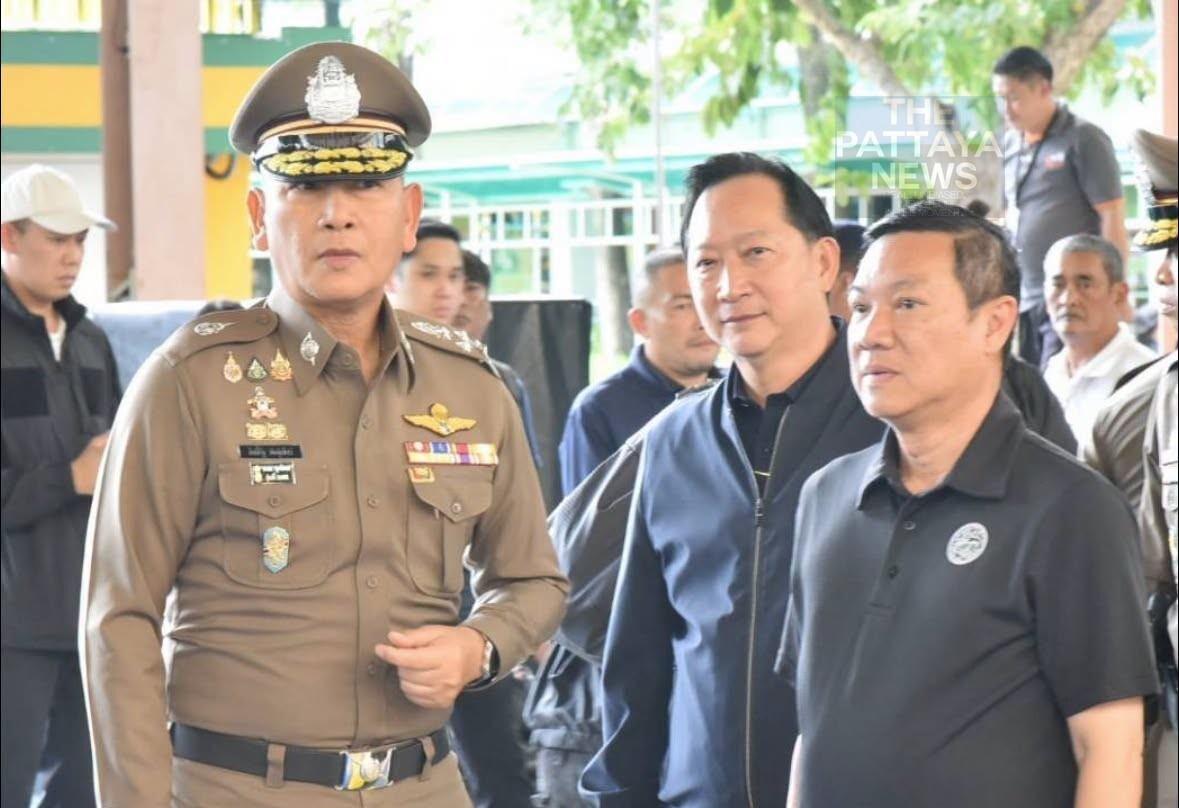
Royal Thai Police Commissioner-General Pol. Gen. Kitrat Phanphet has ordered police nationwide to step up enforcement against illegal firearms, ammunition, and explosives while increasing security at public places following recent violent incidents involving deadly weapons.

Pol. Gen. Thana Chuwong, deputy commissioner-general responsible for investigation and inquiry affairs, will oversee operations targeting illegal weapons possession and trafficking. Police have been instructed to gather intelligence, identify suspects, and conduct searches involving firearms, military-grade weapons, ammunition, explosives, and imitation firearms, while also pursuing illegal weapons sales through social media and other online platforms.

Pol. Gen. Thatchai Pitaneelaboot, deputy commissioner-general responsible for crime prevention and suppression, will oversee security at public places and crowded locations. Police units have been directed to increase patrols, inspect suspicious people and vehicles, maintain rapid-response capabilities, and deploy specialized tactical teams when necessary.

Pol. Gen. Kitrat has also ordered tighter oversight of government-issued police firearms, including their possession, storage, and issuance. Commanders nationwide have been directed to coordinate investigative and crime-prevention personnel, and all enforcement activities must comply with the law and established police procedures.

The preceding is a press release from the Thai Government PR Department.

Similar Posts

  • | | |

    Pakistan celebrates Eid Milad-un-Nabi with religio…

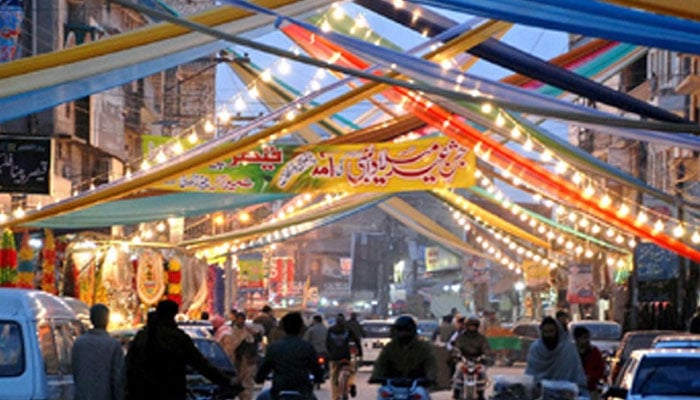
    ISLAMABAD: Eid Milad-un-Nabi (PBUH), marking the birth anniversary of the Holy Prophet Muhammad (PBUH), is being observed across Pakistan with deep religious devotion, respect and enthusiasm. The day began with a gun salute, while mosques, streets, public buildings and residential areas have been illuminated and decorated to mark the occasion. Special Milad gatherings, Naat recitations and religious programmes are being held in cities and towns across the country. In Karachi, streets and neighbourhoods have been adorned with colourful lights, while models of the Holy Kaaba and Masjid al-Nabawi (PBUH) have been displayed at several locations. Religious gatherings and processions are also being organised in different parts of the city. Lahore has also been decorated for the occasion, with mosques, homes, roads and government buildings illuminated. Special prayers are being offered for Pakistan’s peace, progress and prosperity. The city’s main procession is scheduled to begin from Railway Station Chowk. In Peshawar, devotees are arranging Naat Khawani and Milad gatherings to pay tribute to the Holy Prophet (PBUH), while Quetta has also been illuminated for the celebrations. The main gathering in Quetta is scheduled to take place at Bacha Khan Chowk. Islamabad is witnessing similar celebrations, with the capital decorated with lights and religious gatherings being organised at mosques. Devotees are expressing their love and reverence for the Holy Prophet (PBUH) through prayers, Naat recitations and processions. The main Eid Milad-un-Nabi procession in Karachi is scheduled to leave Shaheed Masjid in Kharadar at 2:30pm. It will pass through New Memon Mosque before concluding at Gulzar-e-Habib Mosque around Asr prayer time. Processions and religious programmes are also being held in other cities. To facilitate the celebrations, K-Electric has announced that no load-shedding will be carried out across Karachi on the occasion of Eid Milad-un-Nabi.

  • | |

    Pakistan paid Rs6,405 billion to IPPs in capacity …

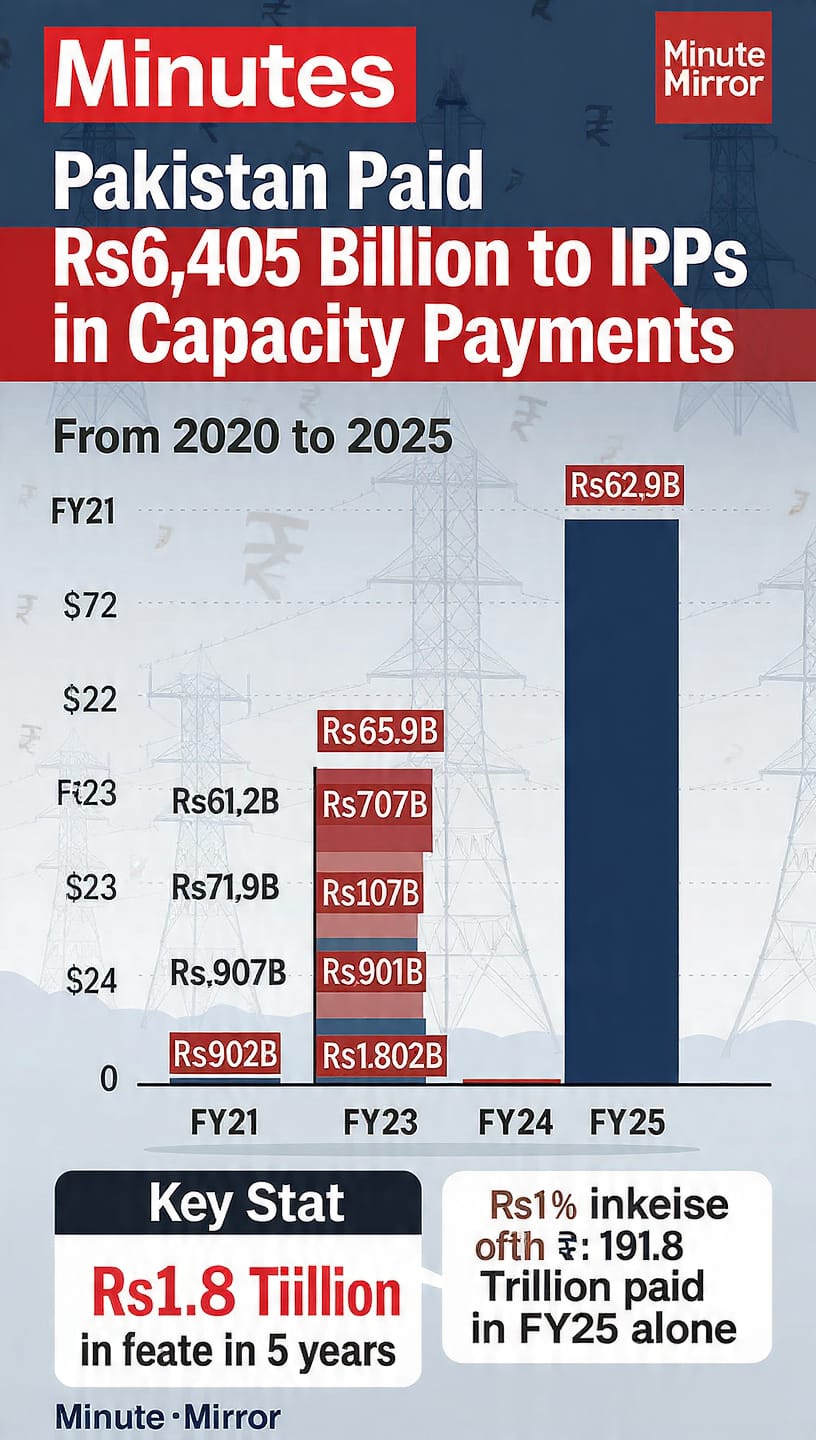
      ISLAMABAD: Pakistan’s federal government paid a total of Rs6,405 billion to Independent Power Producers (IPPs) in capacity payments between 2020 and 2025, the National Assembly has been informed, highlighting the growing financial burden associated with the country’s power sector. According to a written response submitted by Federal Minister for Energy Awais Ahmad Leghari, capacity payments increased significantly during the five-year period despite government efforts to renegotiate power purchase agreements and reduce electricity costs. The figures presented to the National Assembly show that capacity payments rose from Rs613.9 billion in FY2020-21 to Rs1,807 billion in FY2024-25. This represents an increase of approximately 194% over the period. The government paid Rs613.9 billion in capacity charges during FY2020-21. The amount increased to Rs775.9 billion in FY2021-22 before rising sharply to Rs1,307 billion in FY2022-23. Capacity payments reached their highest level during FY2023-24, when the government paid around Rs1.902 trillion to IPPs. Although the amount declined slightly in FY2024-25 to Rs1.807 trillion it remained almost three times higher than the amount paid in FY2020-21. Capacity payments are charges made to power producers for keeping their generating plants available to supply electricity, regardless of whether the full generation capacity is actually utilised. These payments are part of the contractual arrangements between the government and IPPs and have frequently been identified as one of the factors contributing to Pakistan’s expensive electricity system and growing circular debt. Responding to questions in the National Assembly, Energy Minister Awais Ahmad Leghari said the government has taken several measures to reduce the financial pressure created by existing power agreements. According to the minister, a government task force has terminated power purchase agreements with six IPPs, while agreements with several other producers have also been revised. The objective of these measures is to reduce electricity costs and limit the financial burden on the national power sector. The Ministry of Energy estimates that the changes made to the agreements could result in savings of approximately Rs4.3 trillion over the remaining life of the contracts. Leghari also clarified that payments made to power producers are based on tariffs determined by the National Electric Power Regulatory Authority (Nepra) and the terms agreed under the relevant power purchase agreements. He rejected the impression that generators were receiving payments outside the approved contractual and regulatory framework, stating that there were no additional payments beyond the applicable arrangements. Despite the government’s renegotiation efforts, the figures show that capacity payments continue to represent a major financial obligation for Pakistan. The Rs1.807 trillion paid in FY2024-25 alone demonstrates the scale of the challenge facing the country’s power sector. The government’s efforts to terminate and revise agreements are expected to provide substantial savings in the coming years. However, reducing capacity payments and addressing the broader issues of electricity pricing, power utilisation and circular debt remain critical challenges for Pakistan’s energy sector.

  • | |

    JI launches countrywide protests against inflation

    Jamaat-e-Islami (JI) is holding nationwide demonstrations on Friday against the petroleum levy, rising fuel prices and inflation. The party has announced protests and sit-ins in major cities and districts across the country. Demonstrations are scheduled to begin at 4pm. According to the party, protests will be held along hundreds of major roads and highways in around 170 districts. Karachi, Lahore, Islamabad, Quetta, Peshawar, Faisalabad and Rawalpindi are among the cities where demonstrations have been planned. Several major locations have also been selected for sit-ins. These include Qurtaba Chowk in Lahore, Stop No. 26 in Islamabad, Mian Ghundi Chowk in Quetta and the Toll Plaza in Peshawar. Other protest points include Bosan Road in Multan, the Indus Highway in Karak, CPEC Chowk in Bannu and the Chakdara interchange. JI leaders have warned that the protest campaign could be expanded if authorities attempt to prevent the demonstrations. The party said the number of roads and highways involved could increase significantly. In Karachi, JI leaders said protest caravans would begin moving from several locations at 4pm. These include Shahrah-e-Pakistan, Hub Road, National Highway, Super Highway, Orangi, Korangi, Pakistan Chowk and Sher Shah. The caravans are expected to gather at Mazar-e-Quaid before moving towards Shahrah-e-Faisal. Karachi JI chief Monem Zafar Khan said the demonstrations would continue until the petroleum levy was withdrawn. He said roads along some protest routes could remain closed during the demonstrations. He added that emergency vehicles, including ambulances, would be allowed to pass. JI Emir Hafiz Naeemur Rehman had called for the nationwide action a day earlier. In a video message, he urged citizens to join the peaceful demonstrations and asked motorists to park their cars and motorcycles on roads at 4pm. The JI leadership has criticised the government over fuel-related taxes and the rising cost of essential goods. The party says ordinary citizens are facing increasing financial pressure because of higher fuel prices and indirect taxation. Hafiz Naeem also claimed that prices of several food items had increased over the past month. He said motorcycle users and other low-income citizens were particularly affected by higher fuel costs. The JI chief argued that people who do not fall within the formal income-tax system are also paying taxes through fuel levies and other indirect charges. He claimed the government collected around Rs1.9 trillion through the petroleum levy during the past year. The party has warned that further taxation could increase the burden on households if the government does not reconsider its policies. JI leaders are calling on citizens to participate in the protests and press the government to withdraw the petroleum levy

  • | | |

    CM Punjab Rahmat Card enters digital disbursement …

    LAHORE: Following the successful computerized ballot held on June 23, 2026, the CM Punjab Rahmat Card initiative has entered its next major milestone with JazzCash commencing digital disbursements to selected widows and orphans across Punjab. The launch of digital payments marks the successful transition from beneficiary selection to financial assistance delivery, completing another key phase of one of Punjab’s most technologically advanced social welfare initiatives. The CM Punjab Rahmat Card is a collaborative initiative of the Government of Punjab, Zakat & Ushr Department, Punjab Information Technology Board (PITB), NADRA, Punjab Social Protection Authority (PSPA), Urban Unit, JazzCash, and other stakeholders to digitize the complete lifecycle of welfare assistance from citizen application and eligibility verification to transparent beneficiary selection and digital financial disbursement. During the computerized ballot ceremony, officials acknowledged the successful completion of the project’s technology implementation. Special Assistant to the Chief Minister (SACM) Rashid Iqbal Nasrullah appreciated the PITB team for its continuous technical support throughout the implementation of the initiative within stringent timelines. He also specially acknowledged the prompt guidance and support extended by PITB Chairman Faisal Yousaf at various stages of the project whenever required. Secretary, Zakat & Ushr Department, Irfan Ahmad Sandhu also commended the dedicated efforts of PITB in designing, developing, and operationalizing the comprehensive digital ecosystem supporting the Programme. He appreciated PITB’s commitment to ensuring the timely completion of all assigned deliverables despite challenging timelines. Participants observed that the CM Punjab Rahmat Card is the first initiative of its kind undertaken by the Zakat & Ushr Department in terms of both scale and technological sophistication. By replacing conventional manual processes with integrated digital workflows, the Programme has introduced unprecedented levels of transparency, efficiency, accountability, and speed in the delivery of welfare assistance. As the technology implementation partner, PITB designed, developed, and operationalized the complete digital platform supporting the initiative. The digital ecosystem includes an online citizen application portal, an Android mobile application, a dedicated helpline for application support, inquiries, and complaints, a Beneficiary Management System, a multi-agency digital verification engine integrated with NADRA and Punjab Socio-Economic Registry (PSER) databases, automated scrutiny and eligibility determination workflows, a computerized district-wise balloting mechanism, and real-time monitoring and decision-support administrative dashboards. The end-to-end digital workflow enabled citizens to submit applications online, which were then verified through multiple government databases, assessed against approved eligibility criteria, allocated according to district quotas, and finally selected through a transparent computerized ballot before being transferred for digital disbursement through JazzCash. The CM Punjab Rahmat Card initiative stands as a successful example of how digital public infrastructure can enable multiple government institutions to operate through a unified technology platform, facilitating data-driven decision-making, automated eligibility verification, transparent Programme execution, and secure digital payments. The project reinforces the Government of Punjab’s commitment to delivering technology-enabled, scalable, and accountable citizen services that improve the lives of vulnerable segments of society.

  • | | |

    Russia, Pakistan advance Moscow-Karachi rail link

    Russia and Pakistan are working to launch a new freight railway service connecting Moscow with Pakistan, Russian Ambassador to Islamabad Albert P. Khorev has said. The proposed rail link is aimed at improving trade connectivity between the two countries and creating a more direct overland route for the movement of goods. In comments published by the Russian newspaper Izvestia on August 8, Khorev said Moscow and Islamabad were jointly working on launching freight railway services along the Moscow-Faisalabad and Moscow-Karachi corridors. The proposed routes would operate in both directions, allowing goods to be transported between Russia and Pakistan through a dedicated rail-based trade network. Khorev said the possibility of including Belarus in the project was also being examined. If the Belarusian side joins the initiative, the route could provide a wider connection across parts of Eastern Europe and South Asia. The project has faced delays because of changing geopolitical conditions in the region. According to the Russian ambassador, heightened geopolitical tensions during 2025 and early 2026 resulted in several postponements to the planned launch. Despite the delays, work on the project is continuing. Khorev said the countries involved are currently finalising a contract covering the required freight railway services. At the same time, officials are identifying companies in the countries along the proposed route that could use the railway network to transport commercial cargo. The identification of potential cargo owners is considered an important step before the service can begin. A stable volume of goods would be needed to make the railway corridor commercially viable. The Moscow-Karachi route could provide Pakistani and Russian businesses with another option for moving goods between the two markets. It could also reduce reliance on traditional maritime routes for certain types of cargo. The Moscow-Faisalabad corridor would provide a direct connection to one of Pakistan’s major industrial and commercial centres. Faisalabad is an important manufacturing hub, particularly for textiles and other export-oriented industries. For Russia, improved rail connectivity with Pakistan could open additional opportunities for trade with South Asia. Pakistani businesses could also gain access to wider markets through connections with Russia and potentially Belarus. The possible involvement of Belarus could further expand the corridor’s geographical reach. It may also strengthen transport cooperation among the countries involved. However, the project still requires the completion of commercial and logistical arrangements before the first freight service can be launched. The parties are therefore focusing on finalising the service contract and securing interest from companies that can provide regular cargo for the route. The proposed railway initiative is part of broader efforts by Russia and Pakistan to strengthen economic and transport cooperation.

  • | |

    AJK poll body issues strict election warning

    The Azad Jammu and Kashmir (AJK) Election Commission has warned political parties and election candidates against violating the electoral code of conduct ahead of the upcoming general elections. The commission said strict action would be taken against anyone found using government resources or machinery for election campaigning. An AJK Election Commission spokesperson said federal and provincial ministers could participate in election campaigns but would not be allowed to use official protocol, vehicles or government resources for political purposes. The commission also prohibited the announcement of new development schemes, financial packages and public welfare projects during the election campaign. Any such announcement would be treated as a violation of the electoral code. The spokesperson warned that vehicles, equipment and relief supplies provided by the federal or provincial governments could be confiscated if they were used for electoral purposes. Legal action would also be taken against those responsible for violations. The warning came during a meeting in Mirpur chaired by AJK Chief Election Commissioner Ghulam Mustafa Mughal to review preparations for the upcoming polls. Senior officials from the Election Commission, district administrations and police departments attended the meeting. Officials briefed the chief election commissioner on security and administrative arrangements in Mirpur, Kotli and Bhimber. Mughal expressed satisfaction with the preparations and stressed that the elections must be conducted in a peaceful, free, fair and impartial manner. He said all relevant institutions would have to work together to ensure the smooth completion of the polling process and counter rumours surrounding the elections. The chief election commissioner said security agencies were responsible for protecting polling stations, voters and election staff. He added that security forces had begun arriving at polling stations ahead of the phased voting process. Mughal also rejected concerns that holding elections in phases could allow results from one division to influence voting in another. He said AJK had its own political and local dynamics and that the phased polling arrangement would not affect the integrity of the election process. The AJK Election Commission had earlier announced that polling would begin on July 27 and take place in three phases. Voting in Mirpur Division is scheduled for July 27. Muzaffarabad Division and 12 refugee constituencies will vote on August 2, while polling in Poonch Division will be held on August 10.

Leave a Reply

Your email address will not be published. Required fields are marked *