pmln rejects rigging
| |

PML-N rejects rigging claims as AJK polls head tow…

ISLAMABAD: Pakistan’s ruling Pakistan Muslim League-Nawaz (PML-N) has strongly rejected allegations of election rigging in the ongoing Azad Jammu and Kashmir (AJK) legislative assembly elections, maintaining that the electoral process has remained transparent and democratic despite criticism from opposition parties.

The three-phase election, being held under heightened security arrangements, has become one of the most closely watched political contests in recent years. The process has been marked by the boycott of the polls by Pakistan Tehreek-e-Insaf (PTI), accusations of irregularities by the Pakistan Peoples Party (PPP), and weeks of unrest linked to the Joint Awami Action Committee (JAAC), which has challenged the existing electoral structure, particularly the controversial refugee constituencies.

Addressing a press conference after the completion of the second phase of polling, Prime Minister’s Adviser on Political Affairs Rana Sanaullah expressed confidence that the PML-N had already secured enough seats to form the next AJK government. He predicted the party would strengthen its position further after the remaining constituencies complete voting in the final phase.

Sanaullah described the elections as free, fair and credible, crediting election officials, law enforcement agencies and the AJK administration for ensuring a peaceful voting process under difficult circumstances. He dismissed the PPP’s allegations of rigging, arguing that any complaints should be formally presented before the Election Commission, which has the constitutional authority to investigate and order re-polling wherever necessary.

The senior PML-N leader also alleged that elements associated with the PPP and JAAC attempted to create unrest in Muzaffarabad before polling day to discourage voter turnout in areas considered favorable to his party. He said the PML-N would seek an official investigation into those incidents.

The PPP, however, continues to challenge the credibility of the elections. Party Chairman Bilawal Bhutto Zardari has alleged widespread irregularities and insisted that several constituencies require independent investigations, claiming that the electoral process has not provided a level playing field for all contestants.

One of the central issues surrounding the election remains the 12 refugee constituencies, which represent refugees from Indian-administered Kashmir residing in different parts of Pakistan. Critics argue that these seats allow Islamabad greater influence over government formation in AJK, while the government maintains they are constitutionally protected. Earlier this year, the AJK Supreme Court ruled that the constituencies cannot be abolished without a constitutional amendment.

The political atmosphere has also been shaped by protests led by the Joint Awami Action Committee, which initially mobilized against rising electricity prices, taxation and the increasing cost of living before expanding its campaign to demand electoral reforms. Following weeks of demonstrations and clashes with security forces, the AJK government declared JAAC a banned organization under anti-terrorism laws.

With unofficial results from the first two phases placing the PML-N in a leading position, attention has now shifted to the third and final phase of polling in Poonch Division, scheduled for August 10. The outcome will determine the composition of the next AJK government and conclude an election that has generated intense political debate across Pakistan.
Similar Posts

  • |

    US Senate unanimously approves resolution opposing executive clemency for Ghislaine Maxwell

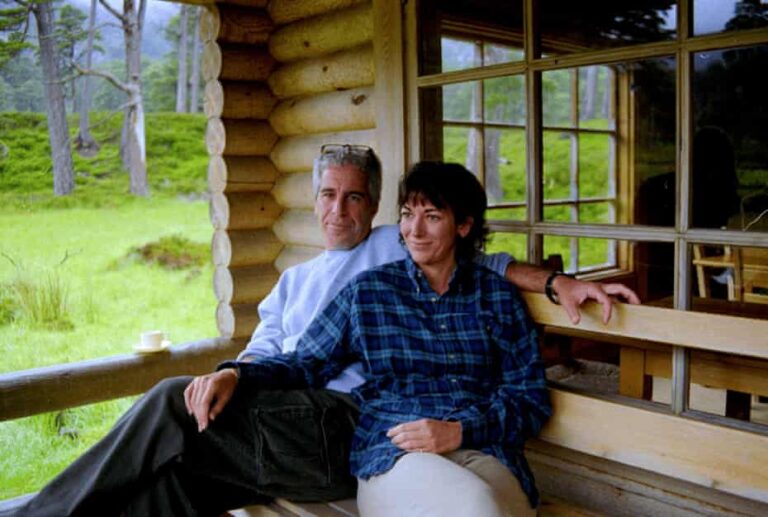
    The United States Senate has unanimously passed a non-binding resolution expressing formal opposition to any potential presidential pardon or clemency for Ghislaine Maxwell, who is currently serving a twenty-year prison sentence for her role in Jeffrey Epstein’s sex-trafficking operation. Introduced by Democratic Senator Jacky Rosen of Nevada, the measure asserts that granting executive clemency to Maxwell would run contrary to the interests of justice and accountability regarding crimes involving the sexual exploitation and abuse of minors. The vote occurred alongside congressional deliberation over the permanent nomination of Acting Attorney General Todd Blanche, who previously conducted an interview with Maxwell and stated to lawmakers that he would not recommend her for a pardon. The bipartisan action follows Maxwell exhausting her judicial appeals after the US Supreme Court declined to hear her petition last October, and her subsequent refusal to testify before a House oversight committee without a guarantee of immunity or clemency. Survivors and legal advocates have strongly condemned any prospect of executive intervention, maintaining that offering leniency to an individual convicted of facilitating child exploitation undermines the fundamental integrity of the justice system.

  • | | | |

    Iran ready to resist pressure as Hormuz talks near…

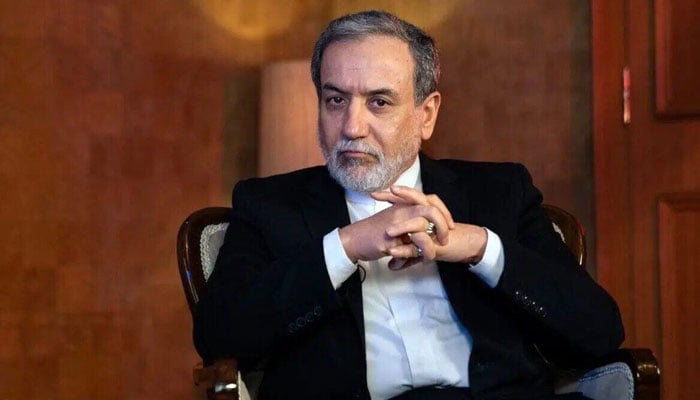
    TEHRAN: Iran is prepared to continue resisting mounting pressure, Foreign Minister Abbas Araghchi said, as Tehran and Oman move closer to an agreement on managing navigation through the strategically vital Strait of Hormuz. Araghchi said Iran would not forget what it described as the unjust bloodshed of its martyrs and would not forgive those responsible. His remarks come amid continuing tensions between Tehran and Washington and uncertainty over the future of negotiations. The Iranian foreign minister also warned that talks with the United States would not resume if Washington continued to violate the memorandum of understanding between the two countries. According to Araghchi, Iran and the United States are currently not engaged in direct negotiations. However, messages are being exchanged through intermediaries, keeping a narrow diplomatic channel open despite the broader standoff. The most immediate development concerns the Strait of Hormuz, a critical waterway for international energy shipments. Araghchi said negotiations between Iran and Oman over a new arrangement for maritime traffic were in their final stages. He stressed, however, that reaching an agreement with Oman would not automatically mean the strait would be fully reopened. Instead, the proposed arrangement would establish new maritime routes between Iran and Oman. The two countries have previously agreed to work together on future navigation management, shipping services and related arrangements while emphasizing safe passage and their sovereign rights over their territorial waters. The issue has become a major point of contention in wider diplomatic efforts, with Tehran insisting that US actions under the memorandum must be addressed before normal negotiations can resume. For now, the emerging Iran-Oman arrangement could offer a potential pathway for maritime traffic, but significant political hurdles remain. With Tehran maintaining its tough stance toward Washington, the next stage of diplomacy could determine whether the strategic waterway moves toward greater stability or remains at the center of regional tensions.

  • |

    South Korea to enshrine nuclear pledge in law

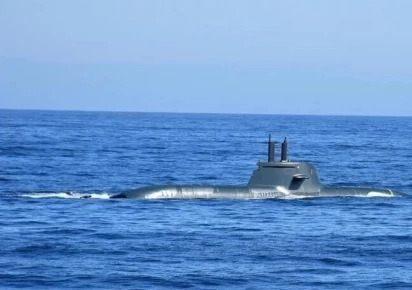
    SEOUL: South Korea is preparing legislation that would legally reaffirm its commitment to nuclear non-proliferation while it moves ahead with plans to develop nuclear-powered submarines. The proposed bill is expected to be released for public consultation by the Defence Ministry. It will set out five key principles governing the country’s nuclear-powered submarine programme. If approved, the legislation would formally establish in domestic law Seoul’s pledge not to develop, produce, possess or use nuclear weapons. The proposed law would also prevent the government from using nuclear materials specifically for weapons-related purposes. It would prohibit activities that could weaken the international nuclear non-proliferation system. The move is aimed at addressing concerns that South Korea’s submarine programme could eventually lead to a domestic nuclear weapons capability. The legislation would reaffirm Seoul’s commitments under the Nuclear Non-Proliferation Treaty. It would also require cooperation with international organisations during the development of the submarines. The proposed framework would include safeguards for public safety and environmental protection against radioactive materials. The government also wants to speed up the submarine programme. The proposed law would reportedly allow the project to bypass a preliminary feasibility study. South Korea’s nuclear-powered submarine project, known as Jang Bogo N, involves plans for attack submarines powered by low-enriched uranium. The programme is being developed with US approval. The two countries reached an agreement on the project during a leaders’ summit last October. Seoul plans to launch its first nuclear-powered submarine in the mid-2030s. The vessel is expected to enter operational service later in the decade. Defence authorities are reportedly considering three submarines weighing about 8,000 tonnes each. However, official technical details have not yet been released. South Korean Defence Minister Ahn Gyu-back has previously stressed that the country will continue to follow its international non-proliferation commitments. Seoul also plans to work closely with the International Atomic Energy Agency throughout the programme.

  • |

    Indian student protest to continue after clashes in Delhi leave nearly 180 injured

    A youth led protest movement in India has vowed to continue demonstrations demanding the resignation of Education Minister Dharmendra Pradhan after violent clashes with police in New Delhi left nearly 180 people injured. The movement, known as the Cockroach Janta Party, cancelled plans for another march to parliament but said protests would continue at the Jantar Mantar demonstration site. Organisers said they wanted to avoid further injuries after Monday’s confrontation with security forces. The campaign began as an online satirical movement but has rapidly grown into one of the biggest public challenges facing Prime Minister Narendra Modi during his third term in office. It has attracted widespread support from young people angered by repeated examination paper leaks and allegations of corruption in India’s education system. Thousands of protesters from Delhi and nearby regions gathered outside parliament on Monday to demand accountability over a national medical entrance examination leak that affected more than two million students earlier this year. The exam had to be conducted again after question papers were leaked, while reports of several student suicides linked to the controversy intensified public outrage. Police used batons and tear gas to disperse demonstrators after violence broke out during the march. According to Delhi Police, more than 118 police and security personnel, along with around 60 protesters, were injured during the clashes. Most of those hurt received medical treatment and were later discharged from hospital. Authorities also detained around 70 protesters and said legal action would be taken against them. Police accused demonstrators of ignoring restrictions on public gatherings and behaving aggressively despite repeated warnings. On Tuesday, around 500 protesters gathered peacefully at Jantar Mantar despite light rain and heavy security across central Delhi. Paramilitary forces remained deployed while barricades were placed on several roads to prevent further unrest. CJP founder Abhijeet Dipke apologised to supporters for the violence they faced during Monday’s protest. He expressed particular concern over female demonstrators who he claimed were assaulted by male police officers during the clashes. Dipke announced that while the movement would continue its campaign, organisers would not attempt another march towards parliament because they feared more young people could be injured. The protest movement gained significant momentum after social activist Sonam Wangchuk joined the campaign with a hunger strike in late June. Wangchuk was later moved to hospital by authorities, a move that further fuelled criticism of the government among supporters. The group’s demands include the resignation of the education minister, the release of Wangchuk and financial compensation for the families of students who reportedly died by suicide following the examination leak. Government officials have indicated they are open to discussions. Health Minister JP Nadda recently met representatives of the movement and requested time to consider their demands. Parliamentary Affairs Minister Kiren Rijiju also called for calm and said ongoing talks should not be disrupted. Opposition parties criticised the government’s handling of the protests and accused authorities of using excessive force against peaceful demonstrators. Leaders of the ruling Bharatiya Janata Party rejected those claims and argued that the violence appeared to have been deliberately provoked. Political analysts believe that even if negotiations reduce immediate tensions, the wider frustration among India’s younger generation is unlikely to disappear. Concerns over unemployment, repeated examination scandals and growing distrust in public institutions continue to drive dissatisfaction, making youth unrest an increasingly important political issue for the government.

  • | |

    Pakistan’s major dams reach 72% storage capa…

    Pakistan’s water reserves have improved significantly, with the country’s major reservoirs now filled to 72% of their total storage capacity, according to official data released on Sunday. The latest figures show that the combined water storage in the country’s key reservoirs has reached 9.466 million acre-feet (MAF), compared with a total storage capacity of 13.149 million acre-feet. Officials said the improvement follows a substantial increase in water inflows across the Indus River system, with inflows significantly exceeding outflows. The higher inflow has helped replenish major dams and strengthen the country’s water reserves. The increase in reservoir levels is expected to support irrigation needs, improve water availability for agriculture and enhance overall water management during the current season. Authorities continue to monitor inflows and reservoir levels as the monsoon season contributes to rising water storage across the country’s major dams.

  • | |

    Pakistan completes 3-0 clean sweep against South K…

    Pakistan’s national hockey team secured an impressive 4-3 victory over South Korea in the third Test match to complete a dominant 3-0 clean sweep in the Pakistan-South Korea Hockey Test Series. The thrilling encounter was played at the Naseer Bunda Hockey Stadium in Islamabad under the supervision of the Pakistan Hockey Federation (PHF). The final match of the series showcased Pakistan’s determination and fighting spirit. South Korea started the game aggressively and took an early lead through Kim Hyung Jin in the 10th minute. The visitors maintained their advantage throughout the first half, going into the break with a 1-0 lead. Pakistan responded brilliantly in the second half with an outstanding comeback. Hayat Zakaria leveled the score in the 32nd minute, giving the home side much-needed momentum. However, South Korea quickly regained the lead when Yang Ji Hoon scored in the 33rd minute. The contest remained highly competitive as Pakistan continued to attack. Rana Waheed Ashraf equalized in the 45th minute before Kim Yong Bok restored South Korea’s advantage in the 50th minute. Refusing to give up, Pakistan displayed remarkable resilience as Abdul Rehman scored in the 55th minute to make it 3-3. Just two minutes later, Shahid Hanan netted the winning field goal in the 57th minute, completing an unforgettable comeback and sealing a 4-3 victory. The win marked Pakistan’s third consecutive success against South Korea in the Test series, highlighting the team’s growing confidence and improved performances. The clean sweep is expected to boost the morale of the national squad as it prepares for upcoming international competitions. Federal Ombudsman Naveed Kamran Baloch attended the match as the chief guest and appreciated the exciting contest as well as the commitment shown by both teams. At the closing ceremony, Pakistan Hockey Federation President Mohiuddin Ahmad Wani presented a commemorative shield to the chief guest. Several prominent hockey personalities, including PHF Development Committee Chairman Olympian Hassan Sardar, Selection Committee Chairman Olympian Samiullah Khan, and Pakistan Sports Board Director General Yawar Hussain, were also present at the event. Pakistan’s impressive performance throughout the series reflects the team’s positive progress and offers renewed hope for the revival of the country’s rich hockey tradition. The comprehensive 3-0 series victory serves as an encouraging sign for Pakistan hockey and demonstrates the squad’s ability to compete at a high international level.

Leave a Reply

Your email address will not be published. Required fields are marked *