deputy interior minister
| | | | |

Deputy Interior Minister Leads Illegal Hotel Inspections in Krabi

Krabi –

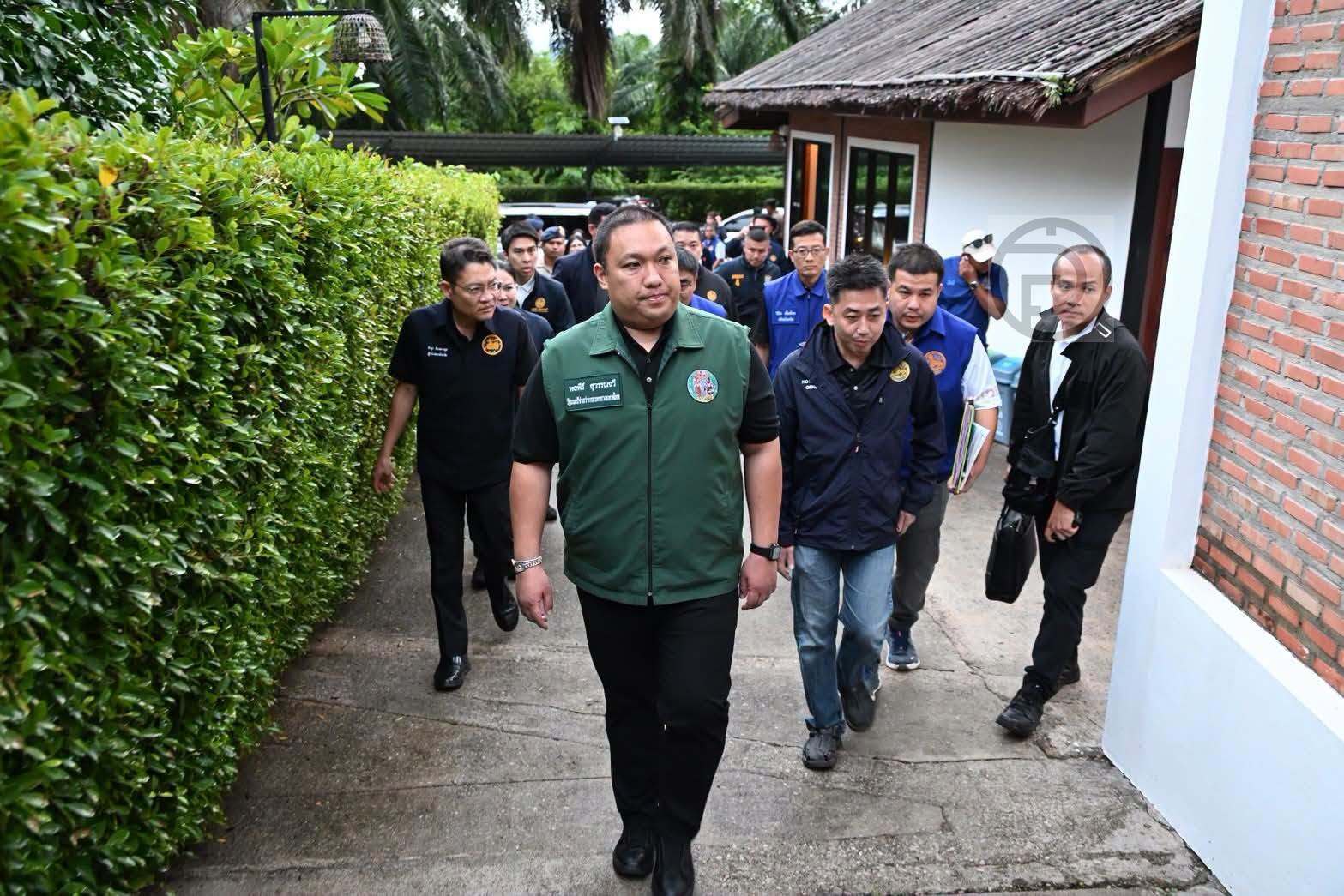
Deputy Interior Minister Polapee Suwunchwee led a surprise inspection of two suspected unlicensed hotels in Ao Nang, Krabi, on July 24, expanding a nationwide crackdown on illegal hotel operations and suspected nominee businesses.

The inspections followed complaints that some properties were operating without required licenses. One property, a luxury pool villa advertised on online booking platforms, allegedly lacked a hotel license. The other had been approved as a residential building before being converted into a hotel. Authorities are now examining ownership and registration records to determine whether the businesses are linked to nominee operations.

Polapee said unlicensed hotels may fail to comply with construction, fire safety, and other public safety requirements, putting guests at risk while creating unfair competition for licensed operators.

He added that similar inspections will continue nationwide wherever evidence of violations is found, and authorities will investigate all suspected offenders, including foreign or Thai nationals using illegal business arrangements. He also urged hotel operators to comply with licensing, safety, and other legal requirements.

The original version of this article appeared on our sister website, The Phuket Express, owned by our parent company TPN media.

Similar Posts

  • | | | |

    Petrol pump owners announce nationwide strike over…

    The All Pakistan Petrol Pumps Owners Association (APPPOA) has announced a nationwide strike beginning Wednesday night after negotiations with the government over the proposed daily petroleum pricing mechanism ended without an agreement. The decision was announced following talks between representatives of the association and a government delegation led by Petroleum Minister Ali Pervaiz Malik. The discussions focused on the government’s plan to introduce daily fuel price adjustments, but both sides failed to reach a consensus. Speaking after the meeting, APPPOA leaders said the proposed pricing system was unacceptable and would seriously affect the financial stability of petrol pump owners across the country. They argued that the new mechanism would create uncertainty for businesses already operating on narrow profit margins. Association officials said nearly 15,000 petrol pumps across Pakistan are expected to remain closed if the strike goes ahead, warning that the shutdown could disrupt fuel supplies nationwide. Vice Chairman Nauman Ali Butt said petrol dealers wanted petroleum prices to continue being revised on a monthly basis rather than daily. He also pointed out that dealers’ commissions had not been increased for the past three years despite rising operating costs. APPPOA Chairman Humayun Khan said petrol pump owners were already facing financial pressure due to regulatory requirements, policies of oil marketing companies and increasing business expenses. He argued that daily price revisions would benefit oil marketing companies while placing additional risks on retail dealers. According to the association, frequent price changes could create confusion in the market and make inventory management more difficult for petrol pump operators. The association also criticised the government for introducing the policy without consulting key stakeholders. It urged authorities to suspend the daily pricing mechanism, increase dealers’ commissions and involve petrol pump owners in future policy decisions. Meanwhile, the Pakistan Petroleum Dealers Association (PPDA) said it would hold a meeting of its executive committee on Wednesday to decide whether it would also join the nationwide strike. PPDA representatives acknowledged that discussions with government officials and the Oil and Gas Regulatory Authority (OGRA) had taken place. They said OGRA officials sought additional time to review the concerns raised by dealers before making further recommendations to the government. The government maintains that the new pricing mechanism is intended to improve transparency and ensure domestic fuel prices reflect changes in international oil markets more quickly. Under the proposed system, petroleum prices would be updated daily using a rolling average of global market prices.

  • 5,000 Foreign Medical Graduates face career crisis over PMDC rules

    Islamabad: A major controversy has erupted between Foreign Medical Graduates and the Pakistan Medical and Dental Council (PMDC), with thousands of doctors and medical students claiming that new PMDC policies have placed their careers and future at serious risk. Foreign Medical Graduates say that around 1200 doctors who have already completed their medical degrees and more than 4000 students currently studying abroad are affected by PMDC decisions. They claim that students who entered foreign medical universities years before these notifications are now being affected by rules introduced later. During a press conference, Dr Waqas Akbar, President of Foreign Medical Graduates Afghanistan, said that many students had taken admission in universities in Afghanistan, Kyrgyzstan and China after receiving approval and information from PMDC. He said these students trusted the system, spent millions of rupees on education and completed their degrees before the new policy was introduced. Dr Waqas alleged that the PMDC notification created new conditions, including requirements related to international recognition and affiliation, and stopped some graduates from appearing in the National Registration Examination (NRE) and receiving Provisional Registration Medical Practice (PRMP). The main complaint of the graduates is that a new policy should apply to future students, not those who had already enrolled or graduated under previous rules. They argue that changing the rules after students completed years of education is unfair. According to Dr Waqas, many affected students enrolled between 2016 and 2018 when their universities appeared on PMDC lists and students obtained approval before travelling abroad. The issue reached the courts after affected graduates approached the Peshawar High Court. Dr Waqas stated that a two member bench of the court gave a decision in favour of students, observing that students who were already enrolled before the notification should not be affected by the new policy. However, according to the graduates, the matter remains unresolved and has moved to further legal proceedings. During the press conference, Advocate Abdul Rahim Wazir said the dispute involved important legal questions regarding whether administrative notifications could be applied to students who had already started their education years earlier. He argued that many students had spent millions of rupees on their education and returned to Pakistan expecting registration procedures according to existing laws. He further stated that the Peshawar High Court questioned the legality of applying the notification retrospectively and directed that affected graduates should receive registration opportunities. The graduates claim that the issue is not only about individual doctors but about thousands of families connected with these students. Advocate Abdul Rahim said the affected group represents around 5000 families whose futures depend on the outcome of this matter. The controversy intensified after PMDC issued another notification on 31 July 2026, which the graduates say created further uncertainty. They argued that political tensions between countries should not affect the careers of Pakistani students who studied abroad legally. Advocate Abdul Rahim said that political situations between countries may change over time, but students and doctors should not suffer because of diplomatic problems. The graduates also questioned why some doctors from similar foreign institutions were allowed to appear in professional examinations while others faced restrictions. Dr. Waqas gave the example of classmates from the same university where one student was allowed opportunities while another faced barriers. The affected doctors rejected claims that they were avoiding examinations. They said they were ready to appear in the NRE and wanted only the opportunity to prove their ability. Dr. Waqas said the students were not afraid of the NRE examination and requested permission to sit for the exam so their professional ability could be judged fairly. The graduates also challenged criticism that foreign universities were not of proper standard. They argued that many institutions were recognised internationally and questioned why students were allowed admission if those universities were later considered unacceptable. Dr. Waqas stated that students followed the rules available at the time of admission and that PMDC should take responsibility for the information and approvals provided earlier. The group also raised questions about recognition standards, saying some universities had international links and recognition pathways through organisations such as ECFMG and other international medical bodies. Representatives of the graduates demanded that PMDC withdraw the disputed notifications and create a fair transition policy. Their demands include allowing students enrolled before September 2025 to follow previous rules, permitting NRE participation and completing registration without discrimination. The graduates also demanded that the government, Parliament, PMDC and relevant authorities resolve the matter according to law and protect the future of thousands of medical students and doctors. The controversy now remains before legal forums, while affected doctors continue demanding a solution that allows them to appear in licensing examinations and serve patients in Pakistan.

  • | |

    KP CM directs comprehensive review of hospital saf…

    PESHAWAR: Khyber Pakhtunkhwa Chief Minister Sohail Afridi and Chief Secretary Shahab Ali Shah contacted the provincial Health Secretary and directed him to conduct a comprehensive review of security and safety arrangements at hospitals across the province. During the discussion, it was also decided to establish monitoring teams to inspect and assess safety measures at hospitals. The teams will be tasked with checking whether hospitals are adequately prepared to deal with emergencies and whether the required safety protocols are being properly implemented. According to sources in Peshawar, the monitoring teams will include officials from several departments, including Civil Defence, the Health Department, Rescue services, the Provincial Disaster Management Authority (PDMA), and other relevant departments. The involvement of multiple departments is aimed at ensuring a coordinated assessment of hospital safety arrangements. Sources said the monitoring teams will particularly examine fire safety arrangements and other precautionary measures at hospitals. The teams will assess whether hospitals have adequate arrangements to prevent and respond to fire incidents and other emergencies. The move comes as the provincial government focuses on strengthening safety standards in healthcare facilities and ensuring that hospitals are properly equipped to deal with any untoward incident. The Health Department has also called a meeting to discuss safety arrangements at hospitals across Khyber Pakhtunkhwa. According to sources, the meeting will review the preparations in place to deal with any untoward incident or emergency situation at healthcare facilities. Officials will also examine existing safety procedures and identify areas where improvements may be required. The meeting is expected to focus on ensuring that hospitals follow appropriate safety protocols and that relevant departments are prepared to respond quickly in case of an emergency. Khyber Pakhtunkhwa Health Secretary Fayyaz Ali Shah said that standard operating procedures (SOPs) would be developed for all hospitals across the province. He stressed the importance of ensuring proper safety arrangements at healthcare facilities and said that negligence regarding fire safety measures would not be tolerated. The Health Secretary further made it clear that hospital administrations would be expected to comply with the safety requirements and take all necessary precautions to protect patients, attendants, doctors, nurses and other hospital staff. The provincial government’s decision to establish monitoring teams is expected to provide a mechanism for regularly assessing safety arrangements and identifying shortcomings at hospitals. The teams will inspect facilities and report on the condition of fire safety systems and other emergency preparedness measures. The inclusion of Civil Defence, Rescue, PDMA and other departments in the monitoring process is also intended to improve coordination between institutions responsible for emergency response and disaster management. The government has directed the Health Department to ensure that safety standards are implemented effectively across all hospitals in the province. The development of province-wide SOPs is expected to provide hospitals with clear guidelines regarding fire prevention, emergency preparedness and response procedures. Officials have reiterated that no negligence will be tolerated when it comes to fire safety arrangements in hospitals. The upcoming inspections and departmental meeting will help determine whether existing measures are sufficient and what additional steps may be required to improve safety. The initiative reflects the provincial government’s efforts to strengthen emergency preparedness and ensure safer healthcare facilities throughout Khyber Pakhtunkhwa.

  • | |

    New provinces debate gains momentum as coalition p…

    A renewed debate over the creation of new provinces in Pakistan has gathered political momentum after two major coalition partners publicly endorsed Interior Minister Mohsin Naqvi’s proposal to restructure the country’s administrative system. However, the ruling Pakistan Muslim League-Nawaz (PML-N) has yet to officially comment, fueling speculation over its stance on the sensitive issue. The discussion began after Naqvi argued that Pakistan’s existing administrative framework had become ineffective and called for a national consensus on establishing smaller provinces to improve governance and public service delivery. His remarks quickly drew support from coalition allies, including the Muttahida Qaumi Movement-Pakistan (MQM-P) and the Istehkam-e-Pakistan Party (IPP). Federal Health Minister Mustafa Kamal described the proposal as an urgent national necessity rather than a political choice, stressing that decentralizing administrative powers was essential for effective governance. The MQM-P has long advocated the creation of an additional province in Sindh, making the party one of the strongest supporters of the initiative. Privatization Minister Abdul Aleem Khan of the IPP also endorsed the proposal, suggesting that each of Pakistan’s four existing provinces could eventually be divided into three administrative regions. He argued that smaller provinces would bring government closer to the people and reduce the hardships faced by citizens traveling long distances to provincial capitals. Despite growing support from coalition partners, the proposal faces significant constitutional and political challenges. Any change to provincial boundaries requires a two-thirds majority in the affected provincial assembly, making consensus difficult to achieve. The Pakistan Peoples Party (PPP), which governs Sindh and is also part of the federal coalition, has expressed strong reservations, warning that such a move could create more problems than solutions. Opposition leaders have also criticized the proposal, arguing that the government lacks the political mandate for such a major constitutional change. They insist that strengthening democratic institutions and improving governance should take priority over redrawing provincial boundaries. Political analysts have offered differing views on the initiative. Some believe creating new provinces could deepen ethnic and regional divisions, while others see the debate as an attempt to shift public attention away from pressing national issues, including recent unrest in Azad Jammu and Kashmir and ongoing security challenges in Balochistan. Many experts argue that empowering local governments under the 18th Constitutional Amendment would be a more practical and effective way to improve governance without altering provincial boundaries. Mustafa Kamal also acknowledged that stronger local governments are essential regardless of whether new provinces are eventually created. With the PML-N maintaining silence and key coalition partners taking opposing positions, the proposal has opened a fresh political debate that is likely to remain at the center of Pakistan’s national discourse in the coming months.

  • | |

    Four militants killed in Mastung Intelligence Oper…

    Pakistan’s security forces have intensified intelligence-based operations against militant groups in Balochistan under Operation Azm. The latest operation was carried out in the Khad Kocha area of Mastung district, where security personnel launched a targeted raid based on intelligence reports, according to security sources. During the operation, four militants allegedly associated with what security officials referred to as Fitna al-Hindustan were killed. Security sources said the operation was conducted after receiving credible information about the presence of armed militants in the area. A large quantity of weapons, ammunition and other military equipment was recovered from the militants. Officials said the recovered arms were believed to have been intended for use in future attacks. Security forces also seized several motorcycles that were reportedly being used by the militants for movement and logistical support. The vehicles have been taken into custody for further investigation. According to security sources, several other militants were injured during the exchange of fire. However, the exact number of those wounded has not been confirmed. The operation also led to the arrest of several suspected facilitators who were allegedly providing support, shelter and logistical assistance to the militants. The detained suspects are expected to be questioned as part of the ongoing investigation. Search and clearance operations are continuing across the surrounding areas to ensure that no militants remain hidden. Security forces have maintained a strong presence in the area and are closely monitoring the situation. Security officials said intelligence-based operations in Mastung have been intensified following recent militant activities in the Khad Kocha area. They added that such operations will continue to target militant networks and their support systems. According to security sources, Pakistan’s security forces remain committed to eliminating terrorism and will continue operations until peace and stability are fully restored in the region.

  • | |

    Pakistan explores diplomatic efforts to revive US-…

      ISLAMABAD: Pakistan is exploring the possibility of helping revive stalled negotiations between the United States and Iran in an effort to reduce tensions and move toward ending the conflict that has continued for nearly five months. According to informed Pakistani sources, the latest diplomatic initiative follows encouragement from China, which has expressed support for Islamabad’s mediation efforts in the region. The renewed diplomatic discussions reportedly gained momentum during the recent visit of Iran’s Interior Minister, Eskandar Momeni, to Islamabad. It was his second visit to Pakistan within ten days, highlighting the growing importance of diplomatic engagement between the two neighboring countries amid the ongoing regional crisis. During his visit, Momeni held meetings with senior Pakistani officials, including government leaders and Chief of Army Staff and Chief of Defence Forces Field Marshal Syed Asim Munir. While official statements confirmed the meetings, details of the discussions were not made public. However, sources familiar with the matter indicated that the possibility of restarting indirect negotiations between Washington and Tehran was among the issues discussed. Despite these efforts, officials acknowledged that significant challenges remain before meaningful dialogue can resume. Deep mistrust between the United States and Iran, combined with recent military escalations across the Middle East, continues to complicate prospects for renewed negotiations. Pakistan’s role as a potential mediator has become increasingly delicate due to rapidly evolving regional developments. Earlier this week, Yemen’s Iran-backed Houthi movement announced a naval blockade targeting Saudi Arabia, one of Pakistan’s closest regional allies. Islamabad has strongly condemned the recent Houthi attacks, reaffirming its support for Saudi Arabia, with which it signed a mutual defence treaty last year. According to the sources, Deputy Prime Minister and Foreign Minister Ishaq Dar also discussed the evolving Middle East situation with Chinese officials during his recent visit to Beijing. Although Pakistani authorities have not publicly commented on the discussions, China has confirmed its support for mediation efforts led by Pakistan and other regional partners. In an official statement, China’s Foreign Ministry said Beijing supports diplomatic initiatives aimed at restoring peace and stability in the Gulf region. The ministry also reaffirmed China’s commitment to playing an active role in encouraging dialogue and reducing tensions across the Middle East. China remains Iran’s largest trading partner and the primary buyer of Iranian crude oil despite international sanctions. Over the years, Beijing has also expanded cooperation with Tehran in areas such as technology, satellite navigation systems, and dual-use industrial components, although it has not publicly provided direct military assistance during the current conflict. Pakistan’s latest diplomatic initiative follows earlier mediation efforts undertaken jointly with Qatar. In June, the United States and Iran signed a memorandum of understanding designed to create a 60-day framework for negotiations aimed at reaching a long-term agreement. However, indirect talks failed to produce meaningful progress, with both sides accusing each other of violating the understanding, ultimately leading to renewed hostilities. The regional security situation has deteriorated further after the Houthis claimed responsibility for attacks on two Saudi oil tankers as part of their naval blockade. The development has raised concerns over global energy supplies and increased fears that another major shipping route could be disrupted alongside the already vulnerable Strait of Hormuz. Pakistani officials believe that ending attacks on Saudi Arabia and other Gulf countries is now essential before any negotiations between the United States and Iran can resume. According to one official, Islamabad has already conveyed this position to Iranian authorities, emphasizing that regional stability will be a necessary first step toward successful diplomatic engagement. As tensions continue to rise, Pakistan, supported by China, appears determined to pursue dialogue as a means of preventing further escalation and encouraging a peaceful resolution to one of the Middle East’s most pressing conflicts.

Leave a Reply

Your email address will not be published. Required fields are marked *