azma bokhari hits
|

Azma Bokhari hits back at PPP, criticizes Bilawal’s remarks

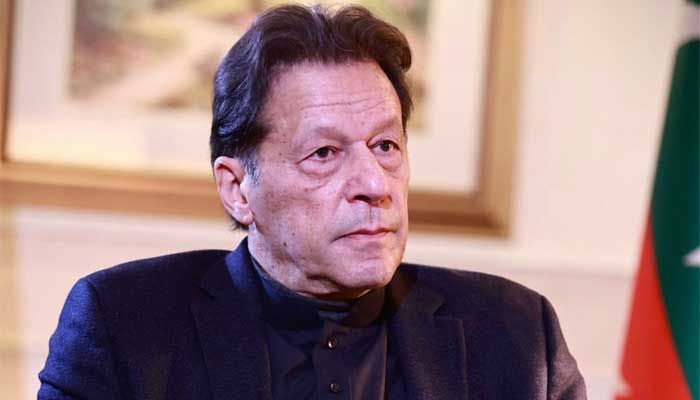
Lahore: Punjab Minister for Information and Culture Azma Bokhari has strongly reacted to the statements made by Pakistan Peoples Party spokespersons, saying they should choose their words carefully and learn to respect their elders. She remarked that it was ironic that “those born out of a blackmailing mandate are now taunting us.”

Azma Bokhari said PPP leaders repeatedly mock a person old enough to be their father by making faces and chanting “Raiwind, Raiwind.” She questioned whether they do not consider it disrespectful when their own leader ridicules someone of a father’s age. She further said that PPP leaders had collectively turned Raiwind into a subject of mockery and routinely insult senior individuals through their gestures and remarks.

The Punjab Information Minister warned that if such abusive and disrespectful language continued, it would be met with an appropriate response. She added that Bilawal Bhutto is not some divine figure beyond criticism.

Azma Bokhari further said that Bilawal Bhutto repeatedly mentions the names of Punjab’s cities in his speeches to spread falsehoods and misleading propaganda. She questioned whether his conduct was not both laughable and lacking in seriousness.

Similar Posts

  • | |

    Punjab allocates Rs12.52bn for local polls after 1…

    The Punjab government has taken a major step towards holding long-delayed local government elections, approving Rs12.52 billion for the polls that could finally restore elected local councils across the province after an 11-year gap. The decision was taken during the 36th meeting of the Punjab Cabinet, chaired by Chief Minister Maryam Nawaz. The allocation signals that the provincial government is preparing for a fresh local election process after years of political, legal and administrative delays. Punjab last held local government elections in 2015, during the tenure of former chief minister Shehbaz Sharif. Polling was conducted in phases between October and December that year, while elected councils formally assumed office in 2017 following indirect elections for mayors and chairpersons. However, the local government system subsequently faced repeated disruptions. The Pakistan Tehreek-i-Insaf government dissolved the elected local bodies in April 2019 before their scheduled completion. Although the Supreme Court later ordered their restoration, the councils eventually completed their term on December 31, 2021. Under Article 140A of the Constitution and the Elections Act, local government elections are required within 120 days after the expiry of local councils. This meant Punjab’s next elections were due in April 2022. Yet successive governments repeatedly changed local government laws, forcing the Election Commission of Pakistan (ECP) to restart key preparations. Polls Could Be Held by November The latest development has raised hopes that Punjab may finally see local elections later this year. PILDAT President Ahmad Bilal Mehboob welcomed the cabinet’s decision to allocate funds, describing it as a positive indication that the electoral process could move forward. He said the ECP had completed the demarcation and delimitation process and dealt with objections, making it possible for the commission to announce an election schedule after August 17. According to Mehboob, if there is no “unseen factor”, local government elections could be held in Punjab by November 2026. The move could also have wider political implications. Asked whether the PML-N government’s decision might ease pressure surrounding demands for the creation of new provinces, Mehboob said provincial restructuring remained a complex issue. However, he noted that holding local elections could, to some extent, reduce the pressure for new provinces by strengthening grassroots representation. For millions of Punjab residents, the key question now is whether the latest budget allocation will finally translate into polling stations, elected councils and a functioning local government system after years of waiting.

  • | | | |

    Malala expresses grief over Swat attack, calls for…

    Nobel Peace Prize laureate Malala Yousafzai has expressed deep sorrow over the recent suicide attack in Swat, urging authorities to ensure the protection of civilians and prevent the region from falling back into violence. In a statement, Malala said she was deeply saddened by the suicide bombing in her hometown of Swat, describing the incident as a tragic reminder of the suffering the region has endured over the years. She noted that the attack claimed the lives of more than a dozen people, including police personnel, and said she could understand the pain and grief being experienced by the families of the victims. Malala extended her heartfelt condolences to those who lost their loved ones and prayed for strength and patience for the bereaved families. She also expressed hope for the speedy recovery of those injured in the attack. Emphasising the importance of public safety, Malala called on the authorities to take all necessary measures to protect the lives and property of citizens and ensure lasting peace and security in the region. Reflecting on Swat’s past, she said the girls of the valley have always dreamed of living in peace, free from fear and violence. She added that her prayers are with the people of Swat and expressed hope that they would never again be forced to live under the shadow of the Taliban. Malala said the people of Swat deserve a peaceful future where children can pursue their education, families can live without fear, and communities can rebuild their lives in a secure environment.

  • |

    Punjab health survey data sparks security concerns

    By Kashif Malik ​LAHORE – A potential threat to national integrity has surfaced under the guise of a health census, sounding alarm bells in the corridors of power and security agencies. According to sources, the Department of Health and Population, in collaboration with the World Bank, has allegedly granted global organizations access to the complete data of Punjab’s 125.8 million population and sensitive institutions under the multi-billion rupee ‘Community Outreach Initiative (COI)’ program. Sources revealed that Secretary Health and Population Nadia Saqib facilitated the inclusion of this sensitive information into the app, bypassing standard security protocols. ​For this mega digital drive, 60,000 Community Health Inspectors (CHIs) have been equipped with modern digital tablets for fieldwork. Across the province, these inspectors are not only gathering detailed personal data—including names of heads of households, employment, professions, vehicles, agricultural landholdings, and individual family member details—but are also generating and uploading online ‘Polygon’ locations through satellite mapping. This system will effectively provide the World Bank with unhindered access down to every street and building across the province. Sources disclosed that alongside the general populace, sensitive institutions and military cantonments have also been marked in this digital drive, posing a profound and critical security risk to national defense and integrity. The biggest revelation to surface is that the inclusion of polygon locations via geo-tagging was carried out at the behest of an international NGO. Furthermore, the software responsible for collecting this highly sensitive national data of over 120 million citizens was handed over to a third-party private vendor rather than a government entity, with the vendor’s identity and contract details being kept strictly confidential. ​ According to security and defense experts, granting any foreign entity, NGO, or private vendor access to the detailed profiling of over 120 million individuals, along with satellite and polygon mapping of the country’s defense and sensitive installations, is tantamount to compromising national sovereignty. Following these sensational revelations, deep concern has spread through security circles, prompting urgent demands for an immediate security audit of the project.

  • | |

    Maryam Nawaz orders faster rollout of clean drinki…

    Punjab Chief Minister Maryam Nawaz has directed authorities to accelerate efforts to ensure the supply of safe drinking water to citizens across the province, calling it one of her government’s highest priorities. Chairing a meeting of the Punjab Clean Water Authority, the chief minister instructed officials to speed up projects aimed at improving access to clean drinking water in both urban and rural areas. Maryam Nawaz said the Punjab Clean Water Authority should be reorganized and strengthened on the model of the province’s Suthra Punjab initiative. She stressed that inefficiency, delays, and negligence would not be tolerated in implementing public welfare projects. She also directed officials to ensure the repair, maintenance, and smooth operation of existing water filtration plants. In addition, she ordered the installation of new filtration plants wherever needed to improve public access to safe drinking water. During the meeting, participants agreed to seek the services of an international consultancy to help modernize the province’s water supply system. They also approved the introduction of advanced Japanese and Chinese water filtration technologies to improve the quality and efficiency of clean water projects. According to the Punjab government spokesperson, the Punjab Clean Water Authority will undergo restructuring and be upgraded on modern lines. The authority will also be equipped with the latest filtration technology to strengthen its capacity and improve service delivery across the province. The provincial government says the initiative is part of broader efforts to improve public health and ensure reliable access to clean and safe drinking water for communities throughout Punjab.

  • | | |

    Ministers seek PM’s approval for prices of 52 vi…

    ISLAMABAD: The federal health ministry has sought an urgent meeting with Prime Minister Shehbaz Sharif to obtain approval for the pricing of 52 newly registered life-saving medicines. Health Minister Syed Mustafa Kamal and Finance Minister Senator Muhammad Aurangzeb are expected to attend the meeting along with Federal Health Secretary Muhammad Aslam Ghauri and Drug Regulatory Authority of Pakistan (DRAP) Chief Executive Officer Dr Obaidullah. Officials said the health ministry has contacted the prime minister’s adviser, Tauqeer Shah, requesting an early appointment for the delegation. The Cabinet Committee on Drug Pricing had already approved prices for the 52 medicines during its meeting on July 24. However, the medicines cannot be legally marketed in Pakistan until the federal cabinet gives its final approval. After cabinet approval, DRAP will be able to issue notifications fixing the maximum retail prices of the medicines, allowing pharmaceutical companies to formally launch the products in the regulated market. Health ministry officials said the proposed meeting with the prime minister is aimed at obtaining his support for placing the pricing decision before the federal cabinet at the earliest. The delegation is also expected to raise the issue of hardship cases involving several essential medicines. Manufacturers and importers of these medicines have requested price adjustments, arguing that continued production or imports at the existing prices have become increasingly difficult. A senior health ministry official said the government was concerned because several registered medicines remained unavailable in the regulated market despite their prices having been approved by the drug pricing committee. The official said the delegation would brief the prime minister on the situation and seek immediate action to prevent further shortages. Among the medicines facing supply pressure are essential products such as influenza vaccines and morphine used in cancer treatment, along with other drugs whose manufacturers have reported difficulties in maintaining supplies at existing prices. The Cabinet Committee on Drug Pricing, chaired by Finance Minister Muhammad Aurangzeb, approved the 52 pricing cases after reviewing recommendations submitted by DRAP’s Drug Pricing Committee and Policy Board. All 52 cases forwarded by the Drug Pricing Committee and endorsed by the DRAP Policy Board were approved by the cabinet committee. However, the committee’s decision is not the final step in the process. The federal cabinet must endorse the recommendations before DRAP can officially notify the maximum retail prices. The medicines covered by the proposed pricing decision are used to treat a range of serious and chronic conditions. They include medicines for cancer, diabetes, haemophilia, Parkinson’s disease, autoimmune disorders, blood-clotting conditions and severe infections. Some are also used in intensive-care units and emergency treatment. Officials believe timely approval could help bring the newly registered medicines into the regulated market and improve availability for patients requiring specialised treatment.

  • | |

    Khanewal farmers protest delay in lease letters

      KHANEWAL: Eleven farmers selected under Punjab Chief Minister Maryam Nawaz Sharif’s “Apna Khet, Apna Rozgar” initiative have protested over the delay in receiving lease letters for approximately 950 kanals of agricultural land in Chak 63/10-R. The farmers allege that the transfer process is being delayed because of the influence of an influential local figure who, they claim, is supporting people occupying the land. The affected farmers recently held a demonstration outside the Revenue Department office at the District Complex in Khanewal. They demanded that the authorities issue their lease documents immediately and complete the process of handing over the land allotted to them through the government’s official balloting process. According to the protesting farmers, nearly 950 kanals of agricultural land in Chak 63/10-R was designated for lease to 11 deserving applicants who were selected through a formal draw under the provincial government’s scheme. However, they claimed that the land has remained in the possession of alleged illegal occupants for almost 40 years. The farmers said the occupants had earlier approached the Lahore High Court and obtained a stay order regarding the disputed property. They claimed that the relevant bench of the Lahore High Court dismissed the stay order on August 3, 2026, which, according to them, removed a major legal hurdle in the way of implementing the government’s allotment decision. Despite the dismissal of the stay, the protesting farmers alleged that the Punjab Revenue Department and the Khanewal district administration had not yet issued the required lease letters. They further alleged that the individuals occupying the land had the support of an influential political figure in the area. The farmers claimed that political pressure was contributing to the delay and preventing the concerned departments from completing the formalities required for the transfer of the land. The applicants also pointed out that their names and allotment information are already available on the Punjab government’s official online portal for the “Apna Khet, Apna Rozgar”scheme. They questioned why the authorities had not issued the lease documents despite their successful selection through balloting and the reported dismissal of the court stay. The Additional Deputy Commissioner (Revenue), Khanewal, was contacted to obtain the administration’s position on the matter, including the delay in issuing the lease letters, the current legal status of the disputed land and the allegations of political interference. However, an official response from the ADCR was not available at the time of filing the report. The administration’s version will be included once an official response is received. The affected farmers have appealed to Chief Minister Maryam Nawaz Sharif, Deputy Commissioner Khanewal Dr Hina Arshad Commissioner Multan Aamir Karim and the Senior Member Board of Revenue Punjab to take immediate notice of the issue. They demanded that the lease letters be issued without further delay and that possession of the allotted land be handed over to the successful applicants according to the balloting results, government policy and applicable legal procedures. The protesters also urged the provincial government to ensure transparent implementation of the “Apna Khet, Apna Rozgar” scheme and prevent any political or external influence from affecting the rights of successful applicants.

Leave a Reply

Your email address will not be published. Required fields are marked *