alleged belgian gang
| | | | |

Alleged Belgian Gang Boss Wanted for Murder Nabbed in in Patong

Patong –

Thai immigration police have arrested a Belgian national wanted under an INTERPOL Red Notice for attempted murder and organized crime, ending his brief hideout in Phuket.

Immigration Officers told the Phuket Express that they detained the suspect , identified only as Mr. Reid (alias), outside his condominium in Patong. The arrest followed a request from Belgian authorities, who had flagged him as a fugitive gang leader facing charges of attempted murder, illegal possession of firearms, and directing a criminal organization.

Investigators traced the suspect’s movements after he entered Thailand via Phuket International Airport on May 21st, 2026, with permission to stay until August 18th. Intelligence revealed he had taken refuge in a Patong condominium, prompting police to stake out the location until he appeared.

Upon confirming his identity, officers revoked his immigration status under Sections 12 and 36 of Thailand’s Immigration Act (1979), citing national security concerns. He was taken into custody without issue and is now awaiting deportation to Belgium.

The original version of this article appeared on our sister website, The Phuket Express, owned by our parent company TPN media.

Similar Posts

  • | | |

    ‘We will all take to the streets’ says Mahira …

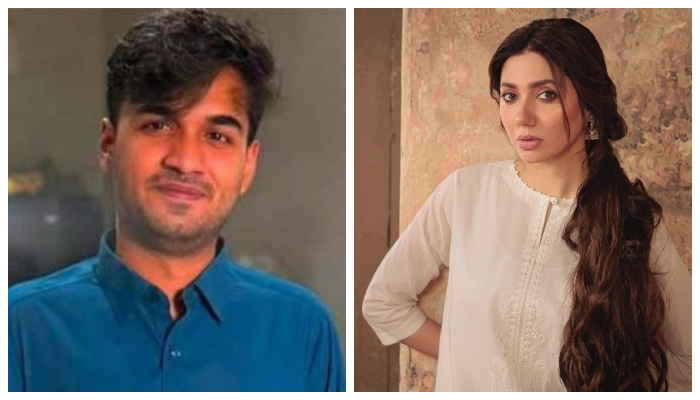
    KARACHI: Pakistani actress Mahira Khan has publicly voiced her concern over the death of Karachi businessman Mir Raza, expressing support for lawyer and activist Jibran Nasir, who has been speaking about the case. Mahira reacted to a recent statement by Nasir circulating on social media, praising his efforts and calling for an end to what she described as injustice. In her comment, the actress said, “Jibran Nasir, you are doing an excellent job. We will all take to the streets against this injustice.” She further urged that the situation should not be allowed to continue, writing, “All this nonsense should end now.” The case has attracted widespread public attention following the exhumation of Mir Raza. An initial medical report reportedly stated that he had sustained a gunshot wound to the back, while signs of alleged torture were also found on his body. The report further mentioned suspected fractures to his right thigh and jaw, along with blood stains on tissues in the lower part of his body. Meanwhile, investigators have reportedly found additional evidence during the probe. According to details emerging from the investigation, forensic examination of Raza’s shirt indicated that acid may have been thrown on his hands and face, allegedly in an attempt to conceal his identity. Nasir has also stated that Mir Raza’s family did not agree to the formation of a judicial commission and has called for the matter to be investigated through the appropriate legal process. The case continues to generate concern on social media, with calls for a transparent investigation and accountability for those responsible.

  • | |

    NCCIA launches probe into social media campaign ag…

      The National Cyber Crime Investigation Agency (NCCIA) has launched an investigation into an alleged social media campaign aimed at damaging the reputation of Sindh Senior Minister Sharjeel Inam Memon and his son. According to NCCIA officials, the agency has received a formal complaint from Sharjeel Inam Memon regarding the alleged defamatory content circulating on various social media platforms. The complaint was received by the Deputy Director of the NCCIA’s Karachi Zone, who has initiated the process of investigating the matter. Officials said the agency is currently working to identify individuals allegedly involved in operating social media accounts, creating content and disseminating posts that are claimed to have harmed the reputation of the senior provincial minister and his son. The investigation will focus on tracing the origin of the posts, identifying the people responsible for creating and publishing the material, and determining how the content was circulated and amplified across social media platforms. NCCIA officials said the agency has contacted around 10 major social media platforms, including Facebook, WhatsApp, X, and Instagram, as part of its investigation. The platforms have reportedly been asked to provide relevant information about the accounts and individuals involved in spreading the alleged defamatory posts. The agency has also sought details of accounts that allegedly played a role in making the posts viral. Investigators are attempting to determine whether the content was originally posted by a particular account and subsequently shared or promoted by other users. In addition, the NCCIA has requested data relating to social media accounts from which the allegedly objectionable posts were later deleted. Officials are seeking information that could help investigators identify the users behind such accounts, even where the original content is no longer publicly available. The development comes amid growing concerns over the use of social media platforms to circulate unverified, misleading or allegedly defamatory material against public figures. With social media allowing information to spread rapidly across multiple platforms, cybercrime investigators increasingly rely on digital records and platform data to trace the origins of online content. The NCCIA’s investigation is expected to examine the digital trail associated with the alleged campaign, including the accounts involved in creating, sharing and circulating the material. Investigators may also examine the extent to which the content was distributed and whether multiple accounts were coordinated in spreading it. The complaint reportedly alleges that the social media campaign was intended to damage the honour and reputation of Sharjeel Inam Memon and his son. However, the allegations remain part of the ongoing investigation, and any responsibility for the content will ultimately depend on the findings of the relevant authorities. The agency’s request for information from social media platforms is aimed at obtaining additional evidence that could assist in identifying the people behind the accounts and determining the circumstances surrounding the creation and distribution of the posts. The NCCIA has not yet disclosed the identities of any suspects or announced arrests in connection with the case. Further action is expected after investigators receive and analyse the requested information from the social media platforms. The case highlights the increasing role of cybercrime authorities in addressing complaints involving online harassment, defamation and the alleged misuse of social media. The investigation will determine whether the content in question violated relevant laws and whether those responsible can be identified and proceeded against under the applicable legal framework.

  • Former FATA, Balochistan students protest over medical seats

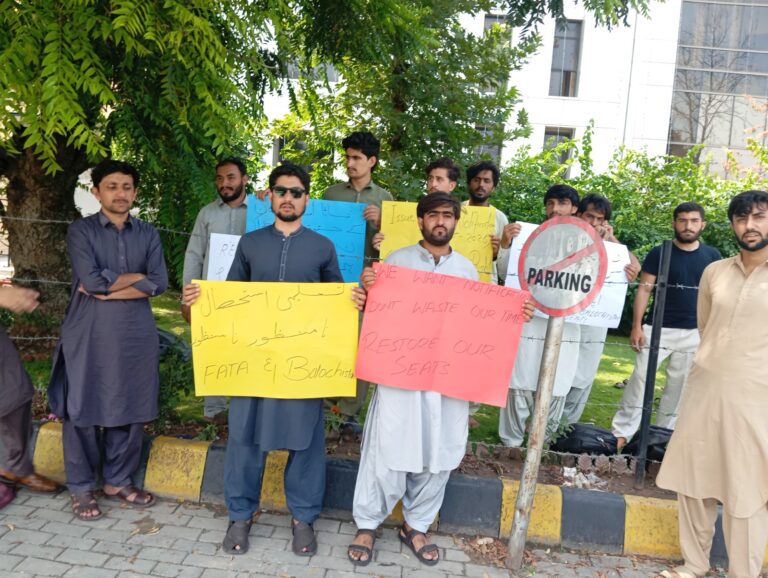
    Islamabad: Students from former FATA and Balochistan have been protesting outside the Pakistan Medical and Dental Council (PMDC) for around a week, stating their medical and dental seat issue remains unresolved despite repeated meetings, provincial proposals and a PMDC decision allowing increased intake in public medical colleges. Protesters say they expected hundreds of seats under a federal education programme but are still waiting for a clear notification covering their admissions. Among the protesting students named are Usman Afridi, Allah Yar and Shafi ud Din. Muhammad Rehan, a student from South Waziristan, said the federal government through the Higher Education Commission had been providing medical and dental education opportunities to students from former FATA and Balochistan. He said 333 MBBS and BDS seats had been provided each year under the programme in previous years. Rehan claimed that the same number of seats had not been made available to students this time. According to his account, PMDC initially told the students that it did not hold a separate quota of 333 seats and that provincial governments would have to identify available seats before PMDC could consider approval. Students then approached the governments and medical education authorities in Khyber Pakhtunkhwa and Balochistan. Rehan said Khyber Pakhtunkhwa identified 375 additional seats while Balochistan proposed another 36 medical seats. He said the students expected PMDC to approve these seats for their current admission session but the matter had still not been settled. Official documents in the file support that Khyber Medical University submitted a proposal for a major increase in seats for students from former FATA. The KMU proposal listed additional seats in several public medical colleges. It proposed 50 additional seats each at Saidu Medical College, Gomal Medical College, Bannu Medical College, Bacha Khan Medical College, Nowshera Medical College, Gajju Khan Medical College and KMU Institute of Medical Sciences. It also proposed 25 additional seats at KMU Institute of Dental Sciences. The total proposed increase under the KMU plan was 375 seats. Khyber Medical University said the colleges proposed for increased intake had been examined for faculty, infrastructure, teaching hospitals, equipment and other requirements. KMU stated that the institutions were capable of supporting the proposed increase and asked PMDC to approve the seats for the relevant session. Balochistan also submitted a separate proposal for 36 additional MBBS seats. According to the document, Bolan Medical College was proposed for 21 additional seats. Five seats each were proposed at Jhalawan Medical College, Loralai Medical College and Kech Medical College. The Balochistan Health Department said the proposal would support educational equality and help address the shortage of medical professionals in underserved regions. The combined proposals from Khyber Pakhtunkhwa and Balochistan therefore amount to 411 additional seats. However, whether all of those seats must be reserved specifically for students from former FATA and Balochistan is a central issue in the dispute. Students say they were expecting a fixed quota under the HEC programme. PMDC documents in the file show a somewhat different arrangement. PMDC approved an increase in student intake capacity across recognised public medical colleges, subject to inspections and compliance with its standards. The regulator said colleges seeking increased intake would have to meet requirements on infrastructure, faculty and accreditation. It also made clear that the increased intake was not a relaxation of minimum medical education standards. The PMDC decision further stated that where the approved capacity of a public medical college is increased, the relevant provincial or regional government may reserve an appropriate quota within those additional seats for students under the HEC scholarship programme for former FATA and Balochistan. The document says the provincial government and HEC would determine the method for nomination, allocation and admission under the quota. The PMDC notification therefore does not state in the provided text that every province must reserve a fixed number of 333 or 300 seats. Instead, it allows provincial governments to earmark an appropriate quota from approved enhanced capacity. This difference appears to be at the heart of the current dispute. Students say they were promised a specific number of seats. The formal PMDC notification in the provided documents speaks more broadly about increased capacity and allows provinces to determine an appropriate HEC quota within that capacity. Rehan also claimed that a PMDC Council meeting had agreed to approve 300 seats for students of former FATA and Balochistan. He said students were later repeatedly told that a notification would be issued soon but it did not come in the form they expected. He also claimed that students have recordings of conversations with senior PMDC officials regarding promises about the notification. These claims are statements made by the protesting student and the provided documents do not independently establish the contents of the alleged recordings. Official PMDC documents do confirm that the Council approved increased intake capacity in recognised public medical colleges across Pakistan. The decision stated that expanding capacity would give more deserving students access to medical education and strengthen Pakistan’s future health workforce. However, this approval remained subject to PMDC assessment and compliance with required standards. An earlier Khyber Pakhtunkhwa meeting regarding former FATA students also shows that the issue had been under discussion for some time. The meeting reviewed an overall capacity figure of 333 seats and discussed how additional opportunities could be created for students from former FATA. Officials were told that PMDC was willing in principle to consider increased seats if the required documents and formal requests were completed. KMU was directed to survey medical colleges and submit the required information to PMDC. The meeting record dacuments also states that the support initiative for former FATA students was described as continuing until 2031. Students are now demanding that PMDC issue a clear decision and allow the enhanced seats to apply to their current admission session. They argue that provincial governments and universities have already carried out the work required to identify additional capacity and that further delay could cost them an academic year.

  • | |

    NAB chairman grilled over bureau’s performance

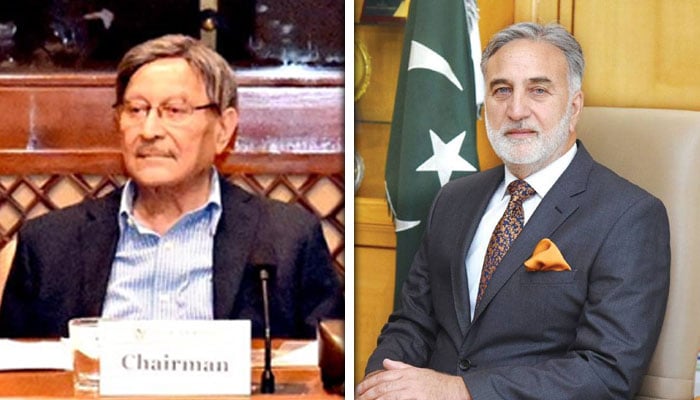
    A meeting of the Senate Standing Committee on Law and Justice was held under the chairmanship of Senator Farooq H Naek, where National Accountability Bureau (NAB) Chairman Nazir Ahmed Butt appeared before the committee on its instructions. During the meeting, Senator Farooq H Naek remarked that the NAB chairman had perhaps appeared before the committee for the first time. In response, Nazir Ahmed Butt said that it was his first appearance before the committee as NAB chairman. He added that he had appeared before the committee several times while performing his previous responsibilities. The NAB chairman said he had been assigned the responsibility in 2023. He recalled that ministers he met during his tenure repeatedly complained that the bureaucracy was afraid to make decisions and was therefore reluctant to work. During the meeting, NAB Director General Operations briefed the committee on the bureau’s powers and performance. The official said NAB had received 505,799 complaints since its establishment. He said NAB also operates as an investigative agency under the Anti-Money Laundering Act, 2010. According to the briefing, NAB has so far completed 12,147 inquiries, conducted 7,339 investigations and filed 4,105 references. The DG Operations further told the committee that NAB had been allocated Rs22.556 billion over the past three-and-a-half years. Despite the expenditure, the bureau reported significantly higher recoveries during the same period. The committee was informed that NAB had recovered Rs1.069 trillion over the past three-and-a-half years. The briefing highlighted the bureau’s role in investigating corruption, financial crimes and other cases falling under its legal mandate. The committee members discussed NAB’s powers, investigations, recoveries and its overall performance during the meeting. The NAB chairman and officials responded to questions from the committee and provided details about the bureau’s operations and financial performance.

  • | |

    Karachi court acquits Anmol alias Pinky in three d…

    KARACHI: An Additional District and Sessions Court in Karachi has acquitted Anmol alias Pinky in three drug cases registered at Gizri Police Station. The court announced the decision on Thursday after hearing arguments from the defence. Pinky was arrested by Karachi police in May during a joint operation with a civil agency at an apartment in the Garden area. Police had accused her of operating an organised narcotics supply network in Karachi. Investigators alleged that the network was involved in processing and distributing cocaine and had links with other major cities, including Lahore and Islamabad. According to police, the three cases against Pinky were registered at Gizri Police Station in 2020, 2021 and 2022. She had remained a fugitive in the cases before her arrest. During Thursday’s hearing, Pinky’s defence counsel argued that two other accused persons in the cases had already been acquitted. The lawyer told the court that co-accused Ali and Fehmida were acquitted in 2024. He argued that Pinky had subsequently been implicated on the basis of statements attributed to the acquitted co-accused. The defence maintained that after the acquittal of the two co-accused, there was insufficient legal basis to convict Pinky in the cases. The court accepted the defence arguments and acquitted her in all three cases. Before her acquittal, investigators had made several allegations about Pinky’s alleged role in the narcotics trade. Police claimed she supplied drugs to customers in affluent areas of Karachi, including DHA and Clifton. Investigators also alleged that she personally prepared cocaine and used female riders and online platforms to facilitate deliveries. Police further claimed that her alleged network extended beyond Karachi to cities including Lahore and Islamabad. During interrogation, investigators attributed statements to Pinky regarding the quality and sale of cocaine. Police alleged that two categories of cocaine were being sold through the network at different prices. Pinky, however, made separate allegations during interrogation. She claimed she was being pressured to name politicians and members of the entertainment industry. She also alleged that she had been subjected to physical mistreatment during questioning and accused an investigation officer of threatening her.

  • | | | |

    Trump signs new orders to restrict birthright citi…

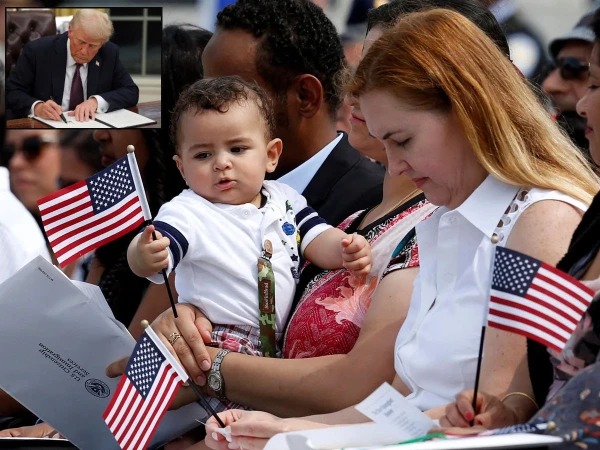
    US President Donald Trump has signed two new executive orders aimed at restricting birthright citizenship and curbing birth tourism, reviving one of the most contentious immigration debates in the United States despite a recent Supreme Court ruling that upheld constitutional protections for children born on American soil. The latest executive actions were announced at the White House, where President Trump defended his administration’s renewed effort to limit automatic US citizenship for certain children born in the country. He argued that the policy should have been implemented years ago and vowed to pursue a different legal path after the courts rejected an earlier attempt. The move comes only weeks after the US Supreme Court ruled that Trump’s previous executive order seeking to end automatic birthright citizenship was inconsistent with the Constitution. The court reaffirmed that the 14th Amendment continues to guarantee citizenship to individuals born in the United States. Under the first executive order, the administration seeks to expand the categories of foreign parents whose US-born children would not automatically qualify for American citizenship. According to the White House, the order targets cases involving parents linked to foreign terrorist organizations, individuals working for foreign governments, those accused of immigration fraud, or people residing in certain US territories where automatic citizenship rules differ. The second executive order focuses on birth tourism, a practice in which pregnant women travel to the United States on tourist or visitor visas to give birth so their children can obtain US citizenship. The Trump administration argues that the practice exploits America’s immigration laws and places an unnecessary burden on public resources. President Trump claimed that hundreds of thousands of children obtain US citizenship each year through birth tourism. However, independent estimates from the Migration Policy Institute suggest that approximately 22,000 to 26,000 births annually are linked to birth tourism. Official US government data also recorded around 9,600 births to foreign mothers in 2024. White House Deputy Chief of Staff and Homeland Security Adviser Stephen Miller defended the new policy, saying some visitors misuse tourist visas with the primary intention of securing citizenship for their children. He argued that existing immigration law gives the president authority to impose entry restrictions in specific circumstances. Legal experts, however, remain skeptical about the long-term viability of the new measures. Gabriel Chin, a law professor at the University of California, Davis School of Law, said that while the president may have authority to regulate entry into the United States, citizenship for children born on US soil is protected by the Constitution. He noted that the Supreme Court has already addressed the issue, making it likely that the latest executive orders will face fresh legal challenges. The renewed effort is expected to trigger another high-profile court battle over immigration policy and the constitutional limits of presidential authority, ensuring that the debate over birthright citizenship remains at the center of US politics.

Leave a Reply

Your email address will not be published. Required fields are marked *