police general samran
| | | |

Police General Samran Orders Expanded Nominee Crackdown as 250+ Officers Raid 18 Locations in Chiang Mai to Dismantle Foreign Nominee Network Involving 633 Million Baht in Assets

Chiang Mai, Thailand – July 20th, 2026

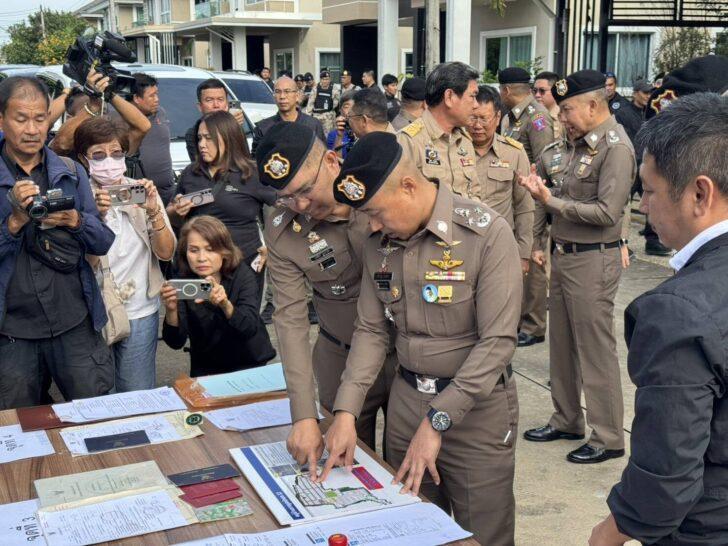
In a major escalation of Thailand’s nationwide campaign against illegal foreign business ownership, Police General Samran Nuanma (known as “บิ๊กราญ” or “Big Ra”), Deputy Commissioner-General of the Royal Thai Police, ordered the expansion of Operation “Dismantling Foreign Nominee Networks Phase 5” in Chiang Mai province.

On July 20th, more than 250 officers from multiple agencies conducted coordinated raids on 18 locations linked to 31 cases, targeting suspected nominee arrangements where Thai citizens act as fronts for foreigners to illegally own or control businesses and land. The operation uncovered assets valued at approximately 633 million baht.

Scale of the Screening and Findings
Authorities had previously reviewed all 33,144 companies registered in Chiang Mai province. Of these, 4,741 had foreign shareholders, and 1,591 showed indicators of nominee arrangements. After further preliminary screening, investigators focused on 31 companies with the biggest red flags:

– 16 companies where Thai nationals were used as nominee shareholders.
– 15 companies where foreigners held shares exceeding legal limits, along with ownership or control of 29 land plots totaling about 20 rai (roughly 8 acres), valued at 633 million baht.

Arrest warrants were issued for 22 individuals (including 2 Thais and foreigners from Myanmar, India, the UK, and China). Five people (2 Indians and 3 Myanmar nationals) have been arrested so far.

One notable cluster involved four nominee companies operating in the area of Village No. 12, Moo 8, Tambon Chai Sathan. Thai nominees in these cases reportedly lent their national ID cards and house registration documents for company registration and land transactions, often for small payments or under false pretenses (such as “for social security or salary purposes”).

In several instances, nominees claimed they had no knowledge of the companies’ actual operations or foreign controllers. One Thai nominee had been in prison since late 2021 yet continued to appear as a shareholder and director in multiple companies registered after his incarceration. Investigators are examining these arrangements for violations of the Foreign Business Act B.E. 2542 (1999) and land ownership restrictions.

This Chiang Mai operation builds on earlier efforts in the province, including the June 2026 “Protect Chiang Mai – Dismantle Nominee Networks” operation, which involved around 188 officers and uncovered evidence of nominee shareholding, companies without proper registered offices, and violations related to hotels and immigration rules.

The crackdown follows the “Koh Phangan model,” a multi-agency approach first applied in tourist-heavy areas to reclaim economic sovereignty, ensure fair competition for Thai businesses, and prevent circumvention of laws prohibiting foreigners from directly owning certain businesses (especially in restricted sectors) or land. Similar operations have been conducted or expanded in provinces such as Chonburi as we covered here, Phuket, Krabi, Phang Nga, and Surat Thani.

Police General Samran said that the goal is to dismantle networks, protect the Thai economy, and create a level playing field for legitimate foreign investment that complies with Thai law. The Royal Thai Police have pledged to continue these operations nationwide and encourage the public to report suspected cases to local police stations or the 1599 hotline (available 24 hours).

Investigations into the 18 raided locations in Chiang Mai are ongoing, with further arrests, asset seizures, and legal actions expected as evidence is processed. The operation is part of Thailand’s intensified efforts to regulate foreign business activities in popular tourist and investment destinations while upholding legal ownership rules.

Thai authorities continue to stress that legitimate foreign investment remains welcome when conducted transparently and in accordance with the law.

For the original version of this article, please visit The Pattaya News.

Similar Posts

  • | |

    Mir Raza murder case raises questions over investi…

    The father of young Karachi businessman Mir Raza has raised serious questions over the investigation into his son’s murder. He alleged that the case was being influenced. He claimed that signs of interference by the Sindh government were visible in the investigation. Lawyers protested at the City Court on Tuesday over the failure to arrest the suspects in the case. Mir Raza’s father, Mir Hussain, also spoke during the protest. He questioned the removal of Dr Usama from the case. According to Mir Hussain, Dr Usama was removed so that he would not be able to answer questions about the matter. He also questioned the preparation of the post-mortem report. He asked why the report was allegedly prepared on the basis of photographs. Mir Hussain questioned whether any pressure was involved in the preparation of the report. He demanded that the circumstances surrounding the post-mortem be properly examined. The victim’s father further criticised the police investigation. He said the police’s alleged incompetence in his son’s case was now evident. The protest was held as the suspects in the murder case remained at large. The lawyers demanded progress in the investigation and the arrest of those responsible. Mir Hussain called for transparency in the investigation. He said the family wanted answers regarding every aspect of the case.

  • | | |

    Govt moves SC against Imran’s hospital transfer

    A request for an early hearing has been filed in the Supreme Court against its August 18 order concerning the transfer of PTI founder Imran Khan from Adiala Jail to a private hospital. The application was filed by the Islamabad Chief Commissioner, who has asked the Supreme Court to urgently hear a review petition challenging its earlier directions regarding Imran Khan. In the review petition, the petitioner has sought a review, amendment and withdrawal of the August 18 order. The petition specifically challenges the direction to transfer the PTI founder from Adiala Jail to a private hospital. The application also challenges the court’s directions concerning his medical examination and treatment by a medical panel. According to the petition, the matter is not limited to the provision of medical facilities. It also involves questions relating to the legal and constitutional jurisdiction of the court and the authorities concerned. The review petition raises legal questions regarding the scope of judicial jurisdiction following the 27th Constitutional Amendment. It also refers to Article 175(2) of the Constitution and relevant prison laws. The petitioner has argued that the Supreme Court’s August 18 order was subject to a specific timeline, making an early hearing of the review petition necessary. The Islamabad administration has therefore requested the apex court to take up the matter on an urgent basis and reconsider the directions concerning Imran Khan’s transfer, medical examination and treatment. The development comes as authorities seek legal clarification over the implementation of the Supreme Court’s directions concerning the PTI founder’s medical care while he remains in custody.

  • |

    Lahore High Court rules abused women retain dower rights following divorce

    The Lahore High Court has ruled that a woman who seeks a divorce on the grounds of her husband’s cruelty, abuse, or marital misconduct is not automatically deprived of her right to receive her unpaid dower, known as haq mehr. Delivering the judgment, Justice Mohsin Akhtar Kayani dismissed a petition filed by a man challenging lower court decisions in Toba Tek Singh that awarded 50 percent of a deferred dower to his former wife, Nisha Shahid. The petitioner argued that under family law provisions, the court lacked a legal basis to grant dower following a khula dissolution. However, the High Court drew a clear distinction between a standard khula, where a woman seeks separation solely due to personal incompatibility, and a judicial dissolution triggered by a husband’s mistreatment. The court clarified that abuse encompasses physical violence as well as psychological, emotional, verbal, and economic misconduct, noting that a wife is not required to present formal medical reports or police filings to establish her claim. The ruling directed Family Courts to assess the underlying causes of a marital breakdown rather than stripping a woman of her dower rights purely because the separation is categorized as a khula. Additionally, the Lahore High Court recommended that the Punjab government and the Law and Justice Commission of Pakistan update relevant family laws to ensure clear determinations of fault in dower disputes.

  • | | |

    Pakistan targets $1.5bn hybrid rice market in Chin…

    Pakistan has a major opportunity to increase its hybrid rice exports to China and could potentially secure exports worth up to $1.5 billion, according to industry experts. The opportunity has emerged as China looks for alternative sources of non-Basmati rice amid a decline in rice trade with India. Pakistani exporters believe the changing market conditions could allow the country to expand its presence in China. Shahzad Ali Malik, founding chairman of the Rice Exporters Association of Pakistan (REAP) and CEO of Guard Agricultural Research and Services, said Pakistan should move quickly to take advantage of the situation. He said Pakistan had a competitive edge because local farmers already grow Chinese hybrid rice varieties. With a coordinated strategy between the government and private sector, Pakistan could significantly increase its exports to the Chinese market. China is expected to remain one of the world’s largest rice importers. Its rice import demand for 2025-26 has been estimated at around 3.1 million tonnes. India had previously been an important supplier of non-Basmati rice to China. However, changes in Chinese import requirements and non-tariff restrictions have affected Indian rice shipments. This has created an opening for other suppliers. Pakistan is considered well placed to benefit because it already produces both Basmati and non-Basmati rice. Pakistan also has surplus stocks of several non-Basmati varieties. These include Chinese hybrid rice and IRRI varieties that are used in China for food processing and strategic food reserves. The hybrid rice segment offers particular potential. Pakistan uses hybrid seed parent lines imported from China. This could make it easier for Pakistani producers and Chinese buyers to maintain compatibility in varieties and quality standards. Pakistan also has an advantage in the non-GMO segment. Industry representatives believe this could strengthen the country’s position as Chinese buyers become more selective about imported rice. The Pakistan-China Free Trade Agreement could further support exports. Existing trade links and CPEC-related logistics may also help Pakistani exporters reduce transportation time and improve their competitiveness. The changing market could benefit both exporters and farmers. Lower competition from India may increase demand for Pakistani rice and could improve prices. Chinese buyers may also seek long-term contracts and assured supplies. Such arrangements could provide farmers with greater market certainty and encourage investment in rice production. However, industry experts say Pakistan must improve its export systems to take full advantage of the opportunity. The government and private sector will need to work together on contract farming, seed quality, certification and food safety requirements. Chinese authorities have strict standards for food safety and pesticide residues. Pakistani exporters will therefore need to ensure that rice consistently meets the required specifications. Seed companies can also play an important role. Improved hybrid seeds could increase yields per acre while helping farmers produce rice of consistent quality. Logistics will be another key factor. Industry representatives believe Pakistan’s ports and CPEC-linked infrastructure could help shorten delivery times and reduce costs. Rice is one of Pakistan’s most important export commodities and ranks second after textiles. An increase in rice exports could generate additional foreign exchange and provide greater economic opportunities for farmers, particularly in Punjab and Sindh. Malik estimated that Pakistan could increase its overall rice exports to around $5 billion within three to five years if the necessary planning, investment and policy support are provided. He also proposed establishing a Pakistan-China Rice Export Task Force. The proposed body could include rice exporters, seed companies and relevant government authorities. The task force could develop a long-term export strategy, coordinate with Chinese buyers and address regulatory and logistical challenges.

  • | |

    Quetta blast attack: One citizen killed, Four inju…

    A deadly explosion in Quetta claimed the life of one citizen and injured four others, including a child, after an attack occurred on Patel Road, according to initial reports from police officials.  The incident created panic in the area as emergency teams and law enforcement agencies rushed to the scene following the blast. Rescue officials shifted the injured victims to a nearby hospital for medical treatment, while security personnel cordoned off the area and began collecting evidence. Police officials confirmed that one person lost his life in the attack, while four people sustained injuries. Among the injured was a child who was reportedly present with family members near the site of the explosion. One injured victim, identified as Abrar Ahmed, said he had come to a hospital on Patel Road for medical treatment. He stated that he was leaving the hospital with his family when the explosion occurred, leaving him seriously injured. Another injured person, Wazir Khan, shared his account of the incident, saying he was returning home with friends after completing work at a workshop when he was caught in the blast. He said he lost consciousness after the explosion and regained awareness later at the hospital. Security agencies launched an investigation into the incident to determine the nature of the attack and identify those responsible. Officials are examining evidence collected from the site and reviewing available information as part of the investigation process. Authorities have expressed their commitment to maintaining security and preventing such attacks against civilians. Security officials have also urged citizens to remain alert and cooperate with law enforcement agencies during investigations. Quetta has witnessed several security incidents in the past, and law enforcement agencies have continued operations to counter militant activities and improve public safety across the province. The attack has renewed concerns over the targeting of civilian areas and the need for enhanced security measures. Further details regarding the investigation and the identities of those responsible are expected as authorities continue their probe. The government and security institutions have reiterated that efforts will continue to ensure peace and stability in Balochistan while taking action against elements involved in violence.

  • | | | |

    PTI seeks immediate hospital transfer for Imran Kh…

    The Pakistan Tehreek-e-Insaf (PTI) has demanded the immediate transfer of party founder Imran Khan to a hospital after a medical report highlighted concerns over his blood pressure and anxiety. The demand came after a report from Adiala Jail authorities was submitted to the Supreme Court. The report contains details of Imran Khan’s latest medical condition and recommendations for his care. PTI leaders held a press conference on Monday and expressed concern over the former prime minister’s health. They called for him to be moved to a hospital where he could receive specialised medical treatment. PTI Chairman Barrister Gohar Ali Khan said Imran Khan’s elevated blood pressure was a serious concern. He demanded that the former prime minister receive the best available medical care. Gohar said Imran Khan should also be given access to his personal doctors. He demanded that his family members and lawyers should be allowed to meet him. The PTI chairman said access to Imran Khan had remained restricted for months. He claimed that party representatives had repeatedly approached the courts seeking permission for meetings. According to Gohar, the PTI had approached the high court around 25 times and the Supreme Court around 15 times over the issue. He described meetings with family members, doctors and lawyers as Imran Khan’s fundamental legal right. He urged the judiciary to address the matter and ensure that the former prime minister received appropriate medical attention. Gohar said the party’s concerns would not end until Imran Khan was provided proper medical treatment and regular access to his family and legal team. He also criticised what he described as a prolonged dispute over access to the PTI founder. Gohar said the situation had continued since October and called for an end to what he termed a “cat and mouse game”. The PTI’s demands came shortly before the Supreme Court was scheduled to hear matters concerning Imran Khan. The jail report had recommended increasing family interaction to help manage his anxiety and blood pressure. It also contained details of his medical examinations and treatment. PTI leaders argued that the reported health concerns should be treated seriously and that hospitalisation would ensure closer medical supervision. The party has also continued to call for access to Imran Khan’s personal physicians, saying they should be allowed to assess his condition independently. The issue of Imran Khan’s health has become a major political and legal point of contention. PTI leaders have repeatedly raised concerns over his medical care and restrictions on meetings.

Leave a Reply

Your email address will not be published. Required fields are marked *