top national thailand
| | | |

Top National Thailand Stories From the Past Week: Bangkok Pub Fire Death Toll Reaches 34, and More

Here is a look at the top NATIONAL Thailand stories, chosen by our Pattaya News/TPN National team, from last week, Monday, July 13th to Sunday, July 19th.

They are not in any particular level of importance but are listed in the order of date of publication.

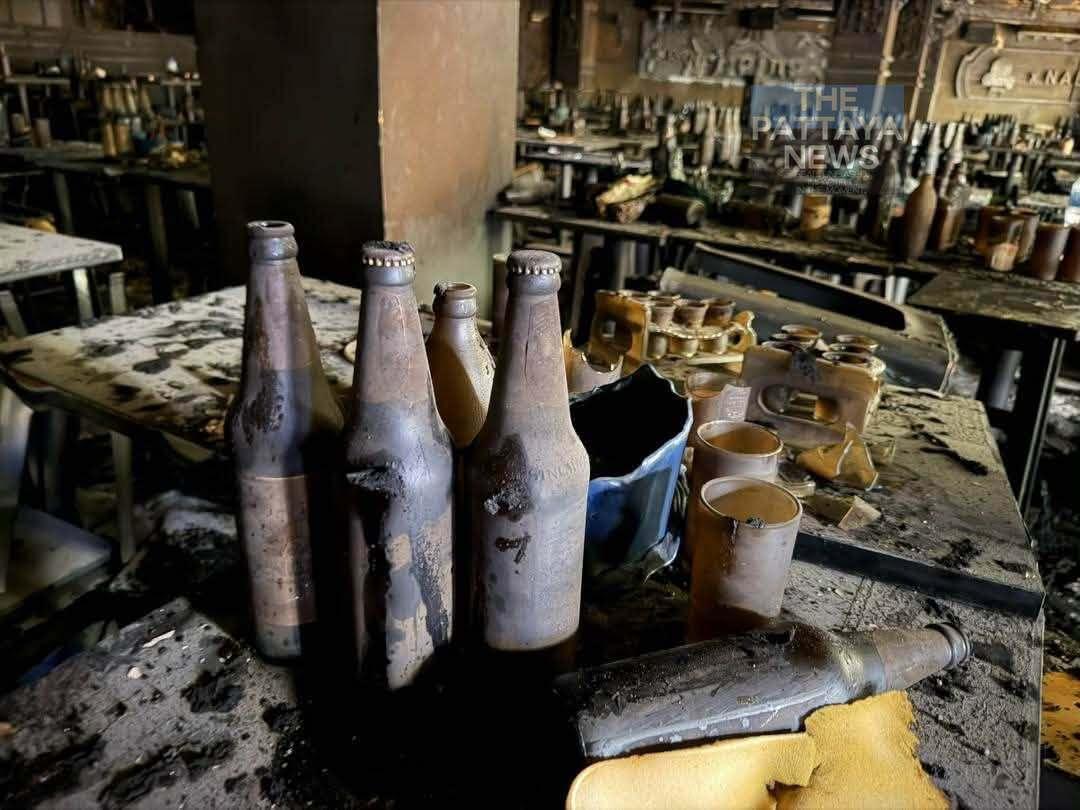
  1. A massive fire ripped through a well-known beer pub and restaurant in Bangkok’s Chatuchak district late on Sunday night, killing at least 27 people initially and injuring many others, according to initial reports from Thai emergency services and local media.

Deadly Fire at Popular Bangkok Pub Kills at Least 27 People, Prime Minister Visits Scene

A massive fire tore through the Rong Beer Na Ladprao in Bangkok’s Chatuchak district late on Sunday, July 12th, 2026, around 11:57 p.m., killing at least 34 people and injuring dozens more.

Bangkok Bar Fire Update: Death Toll Reaches 30 as Investigation Probes Licensing Violations, Blocked Exits, and Safety Lapses at Rong Beer Na Ladprao

2. Thailand’s Minister of Tourism and Sports, Surasak Phancharoenworakul, introduced rising star Rattikan Amlai, better known as Nene Royal, to Prime Minister Anutin Charnvirakul at Government House this morning.

Phuket Youth ‘Ne Ne’ Receives Prime Minister’s Backing to Shine on America’s Got Talent Stage

3. Thai Tourist Police have issued a public warning after arresting an Indian national accused of scamming tourists in Pattaya by pretending to read fortunes and extorting money for “rituals” to ward off bad luck.

Tourist Police Warn of Indian Scammers Preying on Tourists with Fake Fortune-Telling in Pattaya, One Suspect Already Arrested

4. Senior police officials and the Chonburi governor launched a major operation on July 17th, 2026, to dismantle foreign nominee networks, raiding 41 locations in the eastern province, targeting real estate holdings valued at more than 5 billion baht, and arresting four foreign nationals, as they say the nominee crackdown in Chonburi as begun in force, focused on large land and property holdings to start.

Police Crack Down on Foreign Nominee Networks in Chonburi, Seizes Assets Worth Over 5 Billion Baht, Arrest Four Russians

5. A calm-looking man walked into a gold shop inside a Pattaya shopping mall on Friday evening, tried on a gold necklace, and casually walked out with it after quietly telling the employee, “Don’t make any noise.

Pattaya Gold Shop Robbery: CCTV Captures Images of Suspect Who Snatched Gold Necklace Worth Over 120,000 Baht

Police have arrested a 34-year-old man who robbed a gold shop in a Pattaya shopping mall on Thursday evening, stealing a gold necklace valued at more than 120,000 baht.

Pattaya Gold Shop Robber Arrested After Stealing Gold Necklace Worth 120,000 Baht to Pay Gambling Debts

6. The Governor of Phuket, Mr. Chotnarin Kerdsom, presented a certificate of honor to Rattikan Amloy, better known as “Nene Royal” or Praew, recognizing her outstanding musical talent and international achievements.

‘Ne Ne’ Honored for Musical Achievements from Phuket Governor 

7. Cyber police have arrested a 26‑year‑old man in downtown Phuket who, despite having only a primary school education, taught himself advanced hacking techniques using AI chatbots.

Wanted Hacker Arrested in Phuket Who Tried to Erase Warrants and Stole 200,000 Baht via Gaming Website Hack 

8. Thai immigration police have arrested a Belgian national wanted under an INTERPOL Red Notice for attempted murder and organized crime, ending his brief hideout in Phuket.

Alleged Belgian Gang Boss Wanted for Murder Nabbed in in Patong

That’s all for this week, as always thanks for your support.

For the original version of this article, please visit The Pattaya News.

Similar Posts

  • | |

    Pakistan announces public holiday for Eid Milad-un…

    The federal government has announced a public holiday across Pakistan on the occasion of Eid Milad-un-Nabi ﷺ. Prime Minister Shehbaz Sharif has approved the holiday for 12 Rabi-ul-Awwal. The government has also issued an official notification confirming the decision. According to the notification, Wednesday, August 26, 2026, will be observed as a public holiday across the country. Government offices and institutions covered by the notification will remain closed on the day. The holiday will allow people to observe Eid Milad-un-Nabi ﷺ and participate in religious gatherings and other activities. Eid Milad-un-Nabi ﷺ is observed every year on 12 Rabi-ul-Awwal to commemorate the birth of Prophet Muhammad ﷺ. Special religious programmes, processions and gatherings are held in different parts of Pakistan on the occasion. The announcement of the public holiday comes as preparations for the religious occasion continue across the country. Authorities are also expected to make security and traffic arrangements for major gatherings and processions.

  • | |

    16 militants killed in Balochistan operation

    Security forces have killed 16 militants during intelligence-based operations in several areas of Balochistan, according to security sources. The operations are being carried out under Operation Al-Azm following a series of terrorist attacks in the province. Authorities said several militant hideouts and ambush positions were destroyed during the ongoing action. Security personnel also recovered weapons, ammunition and explosive material from the targeted locations. Operations are continuing in areas including Killi Kundi Umrani, Khad Kocha and Mastung, where security forces are targeting militant networks blamed for recent attacks. The latest operations followed an attack on the Mangi Dam Police Station, after which security forces launched a separate campaign named Operation Shaban. The security situation in Mastung also came under renewed focus after unidentified armed men attacked a vehicle on a national highway. A district and sessions judge and his security guard were killed in the attack, while an additional sessions judge and another person were seriously injured. Security sources said counterterrorism operations would continue across Balochistan until militant infrastructure is dismantled and law and order is restored. The state refers to militants linked to the banned Balochistan Liberation Army (BLA) and other groups operating in the province as Fitna al-Hindustan. Chief of Defence Forces and Chief of Army Staff Field Marshal Syed Asim Munir recently reiterated the military’s determination to eliminate militant networks in Balochistan. He said targeted operations against Fitna al-Khawarij and Fitna al-Hindustan would continue until terrorism and those supporting it were eliminated. The latest operation comes amid a broader rise in militant violence in Pakistan, particularly in Balochistan and Khyber-Pakhtunkhwa. A United Nations Security Council assessment has also highlighted continuing threats from militant groups in the region. The report pointed to attacks claimed by the BLA against Pakistani security forces and infrastructure linked to the China-Pakistan Economic Corridor. The UN assessment also raised concerns about militant groups obtaining modern weapons and equipment through cross-border smuggling and illegal markets. It noted the reported use of advanced rifles, night-vision equipment, thermal imaging systems, sniper weapons and drones by the Tehreek-e-Taliban Pakistan. The report further cited assessments that the BLA and TTP have maintained coordination in some areas, including through shared resources and training networks.

  • | |

    Pakistan’s HIV crisis deepens as child infection…

      Islamabad: Pakistan is facing a growing HIV crisis, with an estimated 369,000 people living with the virus while only about 84,400 cases are formally registered, according to a government Task Force report. Health experts and concerned citizens have warned that the real situation may be much worse because the country still lacks reliable and complete disease data. The warning came during a National Dialogue on HIV and AIDS organised by Lok Sehat, where doctors, public health experts, medical organisations, civil society groups and representatives of communities affected by HIV discussed the growing problem. Lok Sehat Convener Dr Zafar Mirza said the government must stop trying to control the disease by controlling or hiding data. He demanded that reliable information about HIV and other blood-borne diseases should be made available and that the government should take greater financial responsibility for HIV, tuberculosis, and malaria instead of depending heavily on international donors. The issue has become more serious because HIV infections are increasingly being reported among children and people outside the groups traditionally considered at higher risk. The Task Force report estimates that 369,000 people are living with HIV in Pakistan, but only around 84,400 cases are formally registered and about 60,789 people are receiving antiretroviral treatment. The report says the recent appearance of HIV among children in low-risk rural communities points to serious weaknesses in infection control, blood safety, healthcare regulation, and medical management. The situation in Taunsa Tehsil of Dera Ghazi Khan has raised particular concern. The Task Force report says 127 children were confirmed to have HIV during a five-month period between December 2024 and April 2025. Around 79 percent of those children were below five years of age, with the median age only three years. Investigations largely ruled out transmission from mothers because nearly all mothers of the infected children tested negative for HIV. The report identified unsafe blood transfusions and contaminated injection practices as major drivers of the Taunsa outbreak. It also found problems involving blood donor screening, unregulated healthcare providers, reuse of disposable syringes, excessive use of injections, poor sterilisation and weak infection prevention systems. Dr Zafar Mirza said repeated use of syringes and needles was a major suspected route of HIV transmission among people receiving healthcare. He called for proper training of healthcare workers and public awareness so patients and families understand the importance of using new syringes and needles. He also urged doctors to avoid unnecessary injections when oral medicines are medically suitable. The problem is not limited to one area. Former National AIDS Control Programme and IHRA chief Dr Quaid Saeed said 13 HIV outbreaks had been reported in Pakistan during the last 18 years, but only two, including the outbreaks in Jalalpur Jattan and Ratodero, had been extensively investigated. He called for proper investigations into every outbreak. The Task Force report also says the Ratodero outbreak in Sindh in 2019 affected more than 1,000 people, most of them children under 12. Investigations linked the outbreak to contaminated syringes, unsafe injections, unregulated blood transfusions, quackery and serious weaknesses in infection prevention and control. Experts also raised concerns about the treatment of people living with HIV. Dr Zafar Mirza said stigma remains a serious problem, including within parts of the medical profession. He said there had been cases where doctors refused to treat patients after learning that they had HIV. He stressed that HIV does not spread through ordinary contact such as shaking hands or being near an infected person. He called for stronger public awareness through television, newspapers and social media to correct false beliefs and reduce discrimination against patients. In Islamabad, infectious diseases expert Dr. Naseem Akhtar said many of the HIV cases seen at her centre involved people who inject drugs, deportees, transgender persons, men who have sex with men, and female sex workers. She said some cases had also been found among children. Dr Asma Naseem said the situation in Karachi was also worrying, particularly because of a rise in HIV cases among children. She said children with HIV were being brought to the Sindh Institute of Urology and Transplantation with kidney failure, describing the trend as highly concerning. The experts said weak regulation of healthcare facilities was another major part of the problem. Dr. Zafar Mirza called for stronger healthcare commissions, blood transfusion authorities, and other regulators, along with better funding, trained staff, and modern technology. The government Task Force has recommended nationwide surveillance of syringes, stronger regulation of medical devices, and a phased move towards auto-disable syringes. It has also proposed tougher action against unsafe medical practices. Another major recommendation is the creation of a national real-time HIV surveillance dashboard. The system would collect information from treatment centres, blood transfusion centres, provincial disease surveillance units and other health facilities so that new cases could be reported quickly at the national level. The Task Force has also proposed stronger testing and care for children, including early infant diagnosis, trained counsellors and paediatric HIV specialists in areas facing outbreaks. It has recommended social protection for children living with HIV, including support for medicines, nutrition, education, transport and psychological care. The proposed reforms also include stronger laws, mandatory reporting of HIV cases and outbreaks, better sharing of health data between provinces and agencies, and accountability for public and private healthcare providers where negligence contributes to disease transmission. The government report says a high-level National HIV Technical Working Group is also proposed, with experts including Maj. Gen. (R) Dr. Azhar Mehmood Kayani, Dr. Zafar Mirza, Dr. Abdul Wali Khan, Dr. Amjad Mahmood, Dr. Adnan Khan, Dr. Huma Qureshi, Dr. Hasan Abbas Zaheer, Brig. Dr. Nuzhat Mushahid, Dr. Saira Afzal, Dr. Fatima Mir, Dr. Saba Jamal, Dr. Rana Jawad Asghar and Dr. Khalid Rehman. Dr Zafar Mirza also raised concern over Pakistan’s dependence on international funding. During the briefing, he said that around 90 percent of spending on HIV, tuberculosis and malaria over the previous five years had come through the Global Fund. He argued that Pakistan should gradually take full

  • | |

    Flash floods hit DG Khan, hundreds rescued

    By MIR Hunbal Birmani   DG Khan: Heavy rains in the Sulaiman Range have caused flash flooding in several small and large hill torrents in Sakhi Sarwar and adjoining areas, creating difficulties for tourists returning from Mubarki, Yakbai and other tourist destinations, as well as travellers and residents of tribal areas, in crossing the waterways. Taking notice of the situation, Deputy Commissioner and Senior Commandant Dera Ghazi Khan Muhammad Usman Khalid directed an immediate rescue operation under the supervision of Political Assistant Koh-e-Sulaiman Ameer Taimoor. The Border Military Police (BMP) mobilised its personnel and vehicles and reached various routes affected by the hill torrents to rescue stranded tourists, travellers, women, children and residents of tribal areas, along with their belongings, and shift them to safe locations. On the instructions of Deputy Commissioner Muhammad Usman Khalid, BMP personnel also helped private vehicles and motorcycles cross the flooded hill torrents. At some locations, motorcycles and luggage were carried on their shoulders to help people reach safer places. During the rescue operation, the valuable belongings and vehicles of tourists and travellers were also safely moved to secure locations. The BMP team also transported a woman who was on her way to hospital for delivery in an official vehicle. Due to the timely actions of the district administration and the BMP, hundreds of tourists, travellers and local residents were rescued from difficulties caused by the flash floods and shifted to safe places Deputy Commissioner Muhammad Usman Khalid said that, in accordance with the special instructions of Punjab Chief Minister Maryam Nawaz Sharif, all necessary arrangements had been completed in view of the monsoon rains. Teams of the district administration, Border Military Police, Baloch Levies and other relevant departments had been deployed at important routes near the hill torrents to ensure an immediate response to any emergency situation. He urged citizens and tourists to avoid going near hill torrents during rainfall and to follow the instructions issued by the administration. “The protection of the lives and property of the people is the top priority of the district administration,” he said. While on other hand , Senior officials on Thursday visited hill torrent structures and flood-prone areas in Rajan pur district to review the situation and preparedness measures. The visit was conducted by commissioner Dera Ghazi Khan ch.Ashfaq , Chief Engineer Irrigation, Dera Ghazi Khan, the Superintending Engineer Irrigation, Additional Deputy Commissioner Revenue Rajan pur, Assistant Commissioners of Jam pur and Rajan pur, the In-charge of Rescue 1122, and other relevant officials. The officials inspected the Kaha Hill Torrent siphon at RD-145 and Pull Pathan Camp at Tayyab Drain. According to officials, a peak discharge of 40,000 cusecs was recorded at Darrah, the originating point of the Kaha Hill Torrent, yesterday. However, a major portion of the floodwater dissipated during its passage, and only around 2,000 cusecs had reached RD-145 so far. The Irrigation Department has established eight camps in the area, equipped with the necessary machinery, equipment and manpower to deal with any emergency situation. Teams of the District Administration Rajan pur, Irrigation Department and Rescue 1122 are actively monitoring the situation and remain vigilant.

  • | | |

    Why are thousands protesting Sindh’s major civil…

    HYDERABAD: A civil service examination meant to open the door to prestigious government jobs in Sindh has instead triggered months of protests, legal battles and allegations of irregularities, with unsuccessful candidates demanding that the entire process be scrapped and conducted again. The controversy centres on the Combined Competitive Examination 2024 (CCE-24) conducted by the Sindh Public Service Commission (SPSC). More than 4,300 candidates appeared in the written examination, which consisted of 10 papers. Yet when the results were announced on May 6, only 70 candidates were declared successful. The examination is particularly important because successful candidates can be appointed to Grade 16 and 17 positions, including assistant commissioners, assistant directors and section officers. For many candidates, the unusually low pass rate immediately raised questions. Why did the results trigger protests? The protesters’ concerns intensified when detailed marks certificates were uploaded following the announcement. Candidates noticed what they described as apparent inconsistencies in the marks sheets. One example involved Criminology, an optional subject carrying 100 marks in a single paper, which appeared in some detailed certificates as two papers carrying 200 marks. Candidates said a similar issue was visible in Environmental Science. Farman Ali, one of the campaign leaders, said candidates initially believed the discrepancy could simply be a technical mistake. However, after finding similar problems in other subjects, they began demanding an explanation from the commission. The SPSC, meanwhile, has maintained that the examination was conducted according to the applicable rules. Its spokesperson, Hifzullah Kaka, declined to comment on the disputed issues while the matter remained before the courts. Protests spread across Sindh Following the results, social media quickly filled with allegations that the examination process had been manipulated to benefit selected candidates. The Sindh Students Action Committee subsequently organised protests, while candidates began a sit-in outside the SPSC headquarters on Hyderabad’s Thandi Sarak. A larger rally was held on May 13, drawing students from different parts of Sindh. The following day, MQM-P lawmaker Maaz Mahboob submitted a resolution in the Sindh Assembly, expressing concern over alleged irregularities, merit violations and a lack of transparency. Protesters later launched the Movement for Restoration of Meritocracy, demanding broader reforms in public recruitment. The campaign has since spread beyond Hyderabad, with protests reported in Nawabshah, Ghotki, Qambar, Umerkot, Islamkot and Gambat. How did the controversy reach the courts? The dispute soon moved into the courtroom. The Sindh High Court suspended the CCE-24 results and directed the SPSC to produce the complete examination record. The court also halted further appointments and proceedings based on the disputed results. The SPSC challenged the Sindh High Court’s interim orders before the newly established Federal Constitutional Court, arguing that the examination had been conducted fairly, transparently and under the Sindh Public Service Commission Act, 2022, and Recruitment Management Regulations, 2023. On July 16, the federal court suspended the Sindh High Court’s interim orders concerning the inquiry, interviews and rechecking of failed candidates. The development allowed the SPSC to proceed with interviews of the 70 successful candidates. Protesters refuse to back down Despite the legal developments, unsuccessful candidates say their concerns remain unresolved. They are demanding that CCE-24 be cancelled and a fresh examination conducted. They are also calling for the resignation of SPSC Chairman Muhammad Rizwan and commission members, along with an independent judicial inquiry into SPSC examinations and recruitments for Grade 16 and 17 posts over the past five years. At the heart of the dispute is a question that extends beyond one examination: can young candidates trust the system responsible for deciding who gets a government career? For thousands of applicants who spent years preparing for the competitive examination, the answer remains uncertain. As the court proceedings continue, protesters remain camped outside the SPSC headquarters, insisting that their campaign will continue until they receive what they consider a transparent and credible resolution.

  • |

    Lahore family death mystery solved, Police reveal …

    LAHORE: Police have claimed to have solved the mystery surrounding the deaths of a US national and her three children in a private housing society in Lahore, saying forensic evidence indicates the woman fatally poisoned her children before taking her own life. Addressing a press conference on Friday, Lahore DIG Investigation Zeeshan Raza said forensic findings and the investigation suggest the woman mixed potassium cyanide into ice cream and gave it to her three children on July 17 before consuming the poisoned dessert herself. According to investigators, the woman had recently arrived in Lahore from the United States with her husband and children. Police said the investigation revealed she had been suffering from mental health problems and had allegedly searched online for methods of suicide before the incident. The DIG further stated that investigators believe the woman also attempted to serve the poisoned ice cream to her husband, but he did not consume it. Police said the investigation included forensic analysis, digital evidence and interviews with family members. Authorities also conducted a polygraph examination of the husband as part of the inquiry before concluding that he was not involved in the deaths. During the investigation, police traced the source of the chemical allegedly used in the incident. Officials said the woman had arranged for the parcel containing the chemical to be delivered to a friend’s residence instead of her own address. As part of the probe, police arrested two additional suspects, including the owner of an online chemical business and a delivery rider. Investigators allege the shop owner illegally sold potassium cyanide online and received Rs138,540 for the transaction. Police said both suspects will face legal proceedings for their alleged role in supplying the hazardous chemical. Investigators added that a comprehensive case file is being prepared in coordination with prosecutors to ensure the accused are prosecuted under the relevant laws. The case shocked the country after the woman and her three children were found dead under mysterious circumstances earlier this month. Authorities say the investigation relied on forensic evidence and digital records to reconstruct the sequence of events. The incident has also renewed concerns about the online sale of highly toxic chemicals and highlighted the importance of stronger oversight, as well as greater awareness and access to mental health support for individuals experiencing severe psychological distress.

Leave a Reply

Your email address will not be published. Required fields are marked *