maryam says pmln
| |

Maryam says PML-N remains most popular party

LAHORE: Punjab Chief Minister Maryam Nawaz has said the Pakistan Muslim League-Nawaz (PML-N) continues to enjoy strong public support in Punjab, across Pakistan and in Azad Jammu and Kashmir, attributing the party’s popularity to its development agenda and governance.

She made the remarks during a meeting with Members of the Punjab Assembly, Asif Malik and Zafar Abbas Khan, who discussed political developments, constituency matters and ongoing development projects in Khushab.

During the meeting, the lawmakers briefed the chief minister on issues being faced by residents of their constituency. Maryam assured them that the provincial government would take steps to resolve public problems and continue implementing development initiatives across the district.

The lawmakers congratulated the chief minister on the party’s performance in Azad Jammu and Kashmir and appreciated the Punjab government’s decision to introduce electric bus services in Khushab. They also thanked her for providing electric buses to Azad Jammu and Kashmir, saying the initiative had improved public transport and benefited thousands of commuters.

Maryam said Punjab was leading the country in development and governance, adding that improvements had been made in multiple sectors, including public services and law and order. She expressed confidence that the province and the country would continue progressing under the leadership of PML-N President Nawaz Sharif.

The lawmakers praised the provincial government’s development record, saying the electric bus service had become a popular facility for daily passengers travelling between General Bus Stand Khushab, Garot Chowk, Mitha Tiwana and Mangwal.

Separately, on the occasion of Police Martyrs Day, the chief minister paid tribute to police personnel who lost their lives in the line of duty. She praised their sacrifices in the fight against terrorism, extremism and crime, and acknowledged the courage and resilience of their families.

Maryam said the Punjab government was committed to supporting the families of fallen police officers by providing educational opportunities, healthcare, housing and other welfare facilities for their children.

She added that the government was strengthening the Punjab Police by providing modern weapons, improved communication systems, protective equipment and bulletproof vehicles to enhance law enforcement capabilities.


Similar Posts

  • “We broke wall of fear today”: Swat peace rally defies suicide attack

    SWAT: Hundreds of people gathered in Swat on Friday for a peace rally to condemn the recent suicide bombing in Kabal and to demand lasting peace in the region. Tribal elders from the Swat Qaumi Jirga, political leaders, and local residents joined the demonstration, sending a clear message that violence would not stop them from raising their voices for peace. Speaking at Nishat Chowk in Mingora, participants said they would continue to come out onto the streets until peace is fully restored. They declared that suicide attacks and acts of terrorism would not force them into silence. Addressing the rally, speakers said Pashtun regions have suffered from terrorism for more than four decades. They urged the state to review its security policies and ensure the people of the region can live in peace and safety. The speakers expressed deep sorrow over the loss of lives in the Kabal suicide bombing, describing the attack as an attempt to sabotage peace and destabilize the region. They said such efforts would no longer succeed. They also said the bombing was intended to frighten people and discourage participation in the peace movement, but insisted the public would not be intimidated. “We broke the wall of fear today,” participants said. “We will keep coming out until our dream of peace becomes a reality.” Mukhtiar Khan Yousafzai, a leader of the Swat Qaumi Jirga, said terrorists wanted to create fear so that their supporters could achieve their goals. “Around 20 people were martyred in this attack, but even if a thousand people were killed, the people of Swat would still stand up for peace,” he said. Former Mingora City Mayor Shahid Ali said a single terrorist attack damages the economy of the entire Khyber Pakhtunkhwa province, especially its tourism industry. He said Swat is a valley blessed with natural beauty and valuable resources, which, according to him, are targeted by those who want instability. He added that families, including children, would continue to join peaceful demonstrations because they would never accept a return to violence. Speakers also recalled the sacrifices made by the people of Swat for Pakistan’s stability, saying many families lost their homes and livelihoods during years of conflict. They stressed that the people were no longer willing to endure another period of unrest. Authorities put strict security measures in place for the rally. Walk-through gates were installed at entry points, and a heavy police presence was deployed throughout the venue.

  • |

    Millions flock to Spain, Iceland for rare total solar eclipse

    A total solar eclipse is set to darken skies across parts of Europe on August 12, drawing millions of travellers to witness the rare event. Spain and Iceland have emerged as the top destinations for eclipse chasers this week. This marks the first time the path of totality has crossed mainland Europe since August 1999. The rarity of a total eclipse passing over such densely populated regions has sparked massive international interest. Hundreds of thousands of visitors have been flocking to Spain to experience the celestial event alongside local residents. What makes Spain’s viewing especially unique is that totality will occur just before sunset, with the Sun hanging low on the western horizon. As a result, millions across northern Spain, Zaragoza and the Balearic Islands will witness a dramatic “sunset eclipse”. This will mark the first total solar eclipse visible from mainland Spain in more than a century. Spain’s Secretary of State for Science, Juan Cruz, expressed excitement over the milestone. He said he hopes the event inspires a new generation of astrophysicists, calling it a genuinely special moment for the country. Spanish authorities are preparing for roughly six million visitors travelling across the eclipse’s path. The scale of anticipated tourism reflects just how rare and significant this celestial event is considered. Iceland has also been swept up in the excitement, expecting around 80,000 visitors for the occasion. The path of totality will stretch across western Iceland and eastern Greenland, offering viewers a dramatic backdrop of rugged fjords under late-afternoon Arctic light. Visitors along Iceland’s westernmost coast will experience totality at 5:44 pm local time, as the Moon’s shadow moves steadily eastward. Those in the far western regions will see totality last up to two minutes and 13 seconds, while other areas will experience a shorter period of darkness. NASA is also playing a role in the event, deploying a high-altitude WB-57 aircraft from Iceland to track the Moon’s shadow. Additional NASA-funded teams will launch specialised weather balloons to study how the sudden darkness and cooling affects the lower atmosphere. With millions gathered across two very different landscapes, this eclipse is shaping up to be one of the most significant astronomical events of the decade.

  • | | | |

    NAB clarifies Rs500 million jurisdiction threshold

    ISLAMABAD: The National Accountability Bureau (NAB) has internally clarified that inflation-based adjustments to the value of liabilities cannot be used retrospectively to bring older, lower-value corruption cases under its jurisdiction. The clarification follows the enforcement of the National Accountability (Amendment) Act 2026 on March 5. NAB has issued internal guidance for prosecutors and investigators to ensure a uniform legal position on the revised Rs500 million threshold. Under the amended law, an offence falls within NAB’s jurisdiction when it involves corruption or misconduct involving at least Rs500 million. The law also links the financial threshold to annual inflation indicators issued by the Pakistan Bureau of Statistics, with the adjustment taking effect from July 1, 2026. However, NAB’s internal interpretation distinguishes between the statutory jurisdictional threshold and the inflation-adjusted value of liabilities. The Rs500 million figure remains the basic test for determining jurisdiction. Inflation adjustment is applied only after the actual liability involved in a case has been finally determined. The guidance identifies three situations based on when the alleged offence occurred. For offences committed before July 2022, the original amount involved will be assessed according to the year in which the offence took place. No inflation adjustment will be applied retrospectively. If the final liability is Rs500 million or more, NAB will retain jurisdiction. If it is below Rs500 million, the case will fall outside NAB’s jurisdiction and may be transferred to the ordinary courts. For offences committed after July 2022, the Rs500 million threshold will initially determine NAB’s jurisdiction. Once an inquiry or investigation establishes the final amount involved, the relevant inflation index for the year in which the case reaches its final stage will be applied if the original liability is at least Rs500 million. The final reference will therefore contain both the original liability and its inflation-adjusted value. If the original liability is below Rs500 million, no inflation adjustment will be made and NAB’s jurisdiction will cease. The third category concerns continuing offences that began before July 2022 but continued after that date. Such cases will be treated in the same manner as offences committed after July 2022. The guidance further states that once the original liability has been finally established and the inflation-adjusted amount has been calculated, the resulting figure will be considered final. It will not be repeatedly revised on the basis of inflation increases in subsequent years. According to the internal legal position, linking the financial threshold to inflation was intended to keep the threshold realistic and relevant over time and prevent inflation from reducing its practical value. NAB has also clarified that the amendment was not intended to retrospectively expand the bureau’s jurisdiction or disadvantage accused persons. The 2026 amendments made another significant change by expanding provisions concerning the transfer of cases falling outside NAB’s jurisdiction. The relevant provision now extends to pending appeals as well, whereas the earlier framework was primarily limited to inquiries, investigations and trials.

  • |

    Prisoner dies by suicide in Muzaffargarh jail

      A convicted murderer allegedly died by suicide inside Muzaffargarh District Jail, prompting authorities to launch an investigation into the incident. According to police, Shahid Iqbal Gabol, a resident of Alipur, had been serving a life sentence after a court convicted him of murdering his wife. Jail authorities said Gabol was also receiving treatment for a mental health condition during his imprisonment. Police said Gabol allegedly used a bedsheet to make a noose and hung himself from a grill inside the prison. Jail staff discovered him and informed the relevant authorities. Police from City Police Station said they have begun legal proceedings to determine the circumstances surrounding the death. Meanwhile, prison officials have launched an internal inquiry to establish whether any negligence by jail staff contributed to the incident and to identify those responsible, if any. Authorities are expected to examine the circumstances leading up to the death, including the prisoner’s mental health treatment and the security measures in place at the time of the incident.

  • Thai Tourism Braces for Impact of Mideast War

    BANGKOK — Thai tourism should brace for an influx of foreigners seeking a safe haven amid growing geopolitical conflict, similar to the surge experienced during the Russia-Ukraine War a few years ago, according to industry leaders who see both opportunities and challenges emerging from the current Middle East crisis, the Bangkok Post reported. Thai authorities […]

  • |

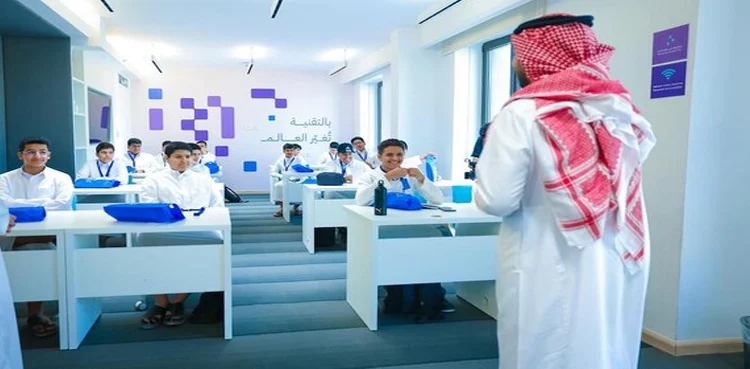
    Saudi Arabia introduces major education reforms under new school law

    Saudi Arabia has approved the executive regulations for its new General Education Law, introducing wide ranging reforms that will reshape the country’s education system from nursery through Grade 12. The new legislation creates a comprehensive legal framework for public and private education and is designed to support the goals of Saudi Arabia’s Vision 2030 by improving educational quality, expanding opportunities and strengthening oversight across the sector. One of the most notable changes allows private schools to decide whether boys and girls can study together, while public schools will continue to separate male and female students after the early childhood stage. The move marks a significant shift in education policy for the Kingdom and gives private institutions greater flexibility in organizing their academic programmes. The law also establishes a new General Education Affairs Council that will oversee key education policies. The council will be chaired by the Minister of Education and include representatives from several government ministries, the Education and Training Evaluation Commission and the private sector. Officials say the body will help coordinate education reforms and ensure that policies are aligned with national development goals. Compulsory education will continue for children between the ages of six and 15. The Ministry of Education will have the authority to take legal action against parents or guardians who prevent children from attending school or who contribute to students leaving education before completing the compulsory stage. Officials say the measure is intended to improve school attendance and reduce dropout rates. Arabic will remain the main language of instruction throughout the general education system. However, schools will be allowed to teach in another language when appropriate, giving educational institutions greater flexibility while preserving the country’s cultural and linguistic identity. The legislation also confirms that classroom teaching will remain the primary method of education across all grade levels. At the same time, the Ministry of Education plans to expand digital learning by developing programmes that include live online classes, self paced learning and other flexible educational options. Regulations will also be introduced for lifelong learning certificates to encourage continuous education beyond traditional schooling. Students will have access to more diverse educational pathways under the new framework. The ministry will be able to introduce specialized academic and vocational tracks designed to better prepare students for future careers and meet the changing demands of the labor market. The law places greater emphasis on supporting students with disabilities by requiring schools to provide suitable educational services, assistive technology and assessment methods that match individual learning needs. It also strengthens programmes for gifted students through specialized schools, enrichment centers, improved identification systems, teacher training and partnerships with universities and research institutions. Private schools will face stricter quality standards under the reforms. Educational institutions must obtain accreditation from the Education and Training Evaluation Commission or another internationally recognized accreditation body approved by Saudi authorities. The Ministry of Education will oversee licensing procedures, ownership transfers, school operations and the introduction of international curricula while ensuring that subjects related to national identity remain part of every approved curriculum. The new rules also introduce a clearer process for education licences. Applications must receive a written decision within 30 days, and institutions whose applications are rejected will have the right to appeal. The government says these measures are intended to improve transparency and encourage investment in the education sector. Private and nonprofit education providers will also benefit from a more defined regulatory framework. Under certain conditions, the ministry may provide financial assistance, staffing support or other resources to eligible institutions as part of efforts to expand educational services under Vision 2030. Teachers will have broader professional responsibilities under the new law. They will be expected to follow approved curricula, meet the learning needs of individual students, encourage creativity and innovation, identify gifted learners, uphold national values and participate in continuous professional development programmes. The legislation also introduces stricter disciplinary procedures for teachers, administrators and private schools that violate regulations. Authorities will have the power to temporarily remove staff from duty while investigations are carried out. Serious violations could result in dismissal and permanent disqualification from working in the education sector. Private schools that fail to comply with the law may receive warnings, face financial penalties, lose the right to admit new students or have their operating licences revoked. If a licence is cancelled, the school must ensure that enrolled students are able to complete the academic year without disruption at the owner’s expense.

Leave a Reply

Your email address will not be published. Required fields are marked *