|

Hasina vows Bangladesh return despite death sentence

Former Bangladesh prime minister Sheikh Hasina has announced that she intends to return to Bangladesh from self-imposed exile in India in December, despite facing a death sentence following her conviction in a crimes against humanity case.

Speaking through an audio message at an event in New Delhi marking the second anniversary of the 2024 uprising, Hasina said she was determined to return to her country regardless of the risks. She stated that serving the people remained her responsibility and that fear would not prevent her from going back.

Hasina has been living in India since August 2024, when a student-led protest movement forced her from office after weeks of nationwide unrest. She was later convicted in absentia by a Bangladeshi court over allegations linked to the violent crackdown on demonstrators during the protests. She has consistently denied the charges.

According to a United Nations report, nearly 1,400 people were killed during the 2024 unrest. Bangladesh has repeatedly requested Hasina’s extradition from India, but New Delhi has not handed her over.

In her address, Hasina also demanded that the ban on her Awami League party be lifted and called for the release of political prisoners. She maintained that the party should be allowed to resume its political activities.

Meanwhile, Bangladesh officially inaugurated the July Mass Uprising Memorial Museum in Dhaka to commemorate the 2024 protests. The museum has been established in Hasina’s former official residence and contains photographs, audio and video recordings, personal belongings of victims and historical records documenting the events of the uprising.

Prime Minister Tarique Rahman inaugurated the museum alongside interim government leader and Nobel Peace Prize laureate Muhammad Yunus, whose administration took office after Hasina’s removal from power. The museum also highlights allegations of political repression during Hasina’s years in office.

Similar Posts

  • |

    Hong Kong democracy activist allowed to remain in UK after deportation scare

    Former Hong Kong opposition leader Wu Chi-wai has been granted permission to stay in the United Kingdom for six months after initially facing the possibility of deportation upon arriving at Heathrow Airport. The decision ends several days of uncertainty and allows the veteran pro-democracy activist to reunite with his family after years of separation. Wu arrived in London last Wednesday but was detained by UK Border Force officers for nearly 10 hours. Speaking to BBC Chinese, he said officials initially refused him entry and later informed him that he would only be allowed to remain in the country for one week before reporting back to the airport for deportation. However, the situation changed on Monday when UK authorities approved his entry under standard visitor rules, allowing him to stay in the country for up to six months. The 63-year-old is one of Hong Kong’s best known pro-democracy figures and formerly led the now dissolved Democratic Party. He was also among the group widely known as the Hong Kong 47, prominent activists and politicians prosecuted under Hong Kong’s national security law. Wu was released from prison in June after serving more than five years on convictions related to subversion and other charges. Wu said the trip was mainly intended to reunite with his wife and son, who moved to the United Kingdom in 2022 and 2023. During his imprisonment, he said their contact was limited to monthly phone calls and letters, making the visit especially meaningful after years apart. Before leaving Hong Kong, Wu said he sought advice from staff at the British Consulate General regarding his travel plans. According to him, officials assured him there should be no problems entering the UK and said they would inform the UK Border Force about his criminal record and travel itinerary in advance. Wu said border officials questioned whether he was a genuine visitor travelling only to see his family. He also rejected media reports claiming that he intended to seek political asylum in Britain, insisting that he had no such plans. The rights group Hong Kong Watch welcomed the UK’s decision to allow Wu to remain in the country. Policy Director Megan Khoo said the outcome was the correct one and argued that Wu should never have faced the threat of being sent back to the city where he had been imprisoned. Wu entered Britain using a British National Overseas passport, a travel document available to many Hong Kong permanent residents born before the territory’s transfer from British to Chinese rule in 1997. Holders of the passport are generally allowed to visit the UK without a visa for up to six months. The UK introduced a special visa route for British National Overseas passport holders in 2021 following the crackdown on Hong Kong’s pro-democracy movement. The programme allows eligible applicants to live, work and study in Britain and eventually apply for citizenship after meeting residency requirements. Since the scheme began, more than 230,000 Hong Kong residents have received BNO visas, while nearly 170,000 have relocated to the United Kingdom, according to government figures. The UK Home Office declined to comment on Wu’s individual case but reaffirmed its support for the Hong Kong community living in Britain. Meanwhile, the Hong Kong government said it had not received any request for assistance from Wu or other Hong Kong residents regarding the matter.

  • | |

    Pakistan lights up in grand Independence Day celeb…

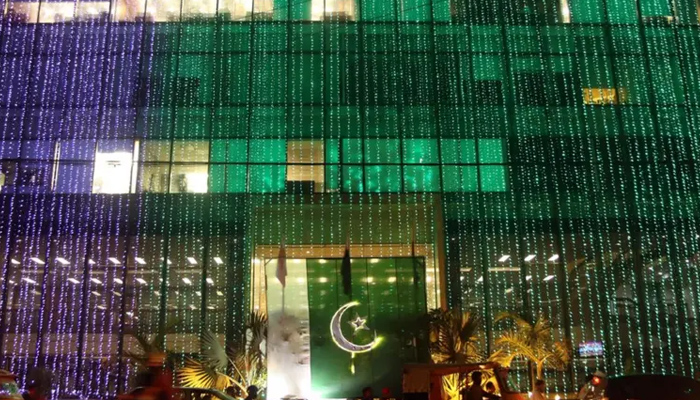
    Pakistan marked its 79th Independence Day with spectacular celebrations, dazzling fireworks and a vibrant display of national spirit across major cities, including Islamabad, Lahore, Karachi, Peshawar and Quetta. The festivities reached a major highlight in Islamabad with the inauguration of the newly built Victory Monument. President, Prime Minister and Field Marshal attended the ceremony, where the national flag was hoisted in the presence of service chiefs, federal ministers and foreign diplomats. Across the country, streets, homes, markets and public buildings were illuminated with colourful lights and decorated with Pakistan’s green-and-white flags. Citizens joined the celebrations with patriotic enthusiasm, while national songs echoed through cities and communities. Karachi took on a festive appearance as residents decorated their neighbourhoods and public spaces. The special Azadi Safari train also travelled from Karachi to Chhor as part of the Independence Day celebrations. Lahore witnessed colourful decorations and lively festivities, while Islamabad was illuminated with spectacular displays. In Peshawar, Quetta and Multan, people also celebrated the national day with great enthusiasm. The Punjab government organised a special Independence Day ceremony featuring performances by renowned singers, adding music and entertainment to the celebrations. From fireworks lighting up the night sky to the widespread display of national flags and patriotic songs, Pakistan’s Independence Day brought citizens together in a nationwide expression of pride, unity and love for the country.

  • | | |

    15-year-old boy killed in mazda truck accident in …

    A 15-year-old boy was killed after a Mazda truck collided with his motorcycle near Chamra Chowrangi in Karachi’s Korangi area on Wednesday. According to Express News, the teenage motorcyclist died at the scene following the collision. His body was shifted to Jinnah Hospital for the completion of legal and medical procedures. Rescue officials identified the deceased as 15-year-old Sagar, son of Rajab. Police said the teenager was riding the motorcycle himself when the accident occurred. Korangi Industrial Area SHO Hukam Dad said the incident took place after the motorcycle was struck by a Mazda truck. Police arrested the truck driver shortly after the accident and took the vehicle into custody. Authorities have launched a further investigation to determine the circumstances that led to the fatal collision. The teenager was a resident of Korangi, according to police. After the completion of the necessary legal procedures, his body was handed over to his family. The incident has once again raised concerns about road safety in Karachi, particularly involving heavy vehicles and young motorcyclists. Traffic accidents involving trucks and motorcycles can have devastating consequences because of the significant difference in size and weight between the vehicles. Police are continuing to investigate the case, while further details regarding the circumstances of the collision may emerge as the investigation progresses. The authorities are expected to examine the accident scene and other available evidence as part of the investigation. The arrest of the truck driver means the police can also record his statement and establish the events immediately before the collision. For Sagar’s family, the incident has resulted in the tragic loss of a teenager at a very young age. The case remains under investigation, and police will determine further legal action based on the findings.

  • | |

    Iran envoy questions UK leadership shift, links it…

    ISLAMABAD: Iran’s Ambassador to Pakistan, Reza Amiri Moqadam, has raised questions over the political developments in the United Kingdom, suggesting that the leadership transition in London coincided with a major shift in British policy towards Iran. Speaking on recent geopolitical developments, the ambassador claimed that former British Prime Minister Sir Keir Starmer came under intense political pressure after allegedly refusing to support the United States and Israel during the Iran conflict. According to Amiri Moqadam, Starmer was subsequently accused of incompetence and forced to step down. The Iranian envoy further alleged that Britain’s new prime minister moved swiftly after assuming office by granting military base access to the United States and recalling British diplomats from Iran, describing the rapid policy changes as noteworthy. Amiri Moqadam questioned whether the timing of Starmer’s departure and the immediate foreign policy decisions taken by the incoming government were merely coincidental, implying that the sequence of events deserved closer scrutiny. The remarks come amid heightened regional tensions and ongoing diplomatic friction involving Iran and Western powers, as Tehran continues to criticise what it describes as coordinated political and military pressure from the United States and its allies.

  • | | |

    Israel launches second strike in Syria within a we…

    DAMASCUS: Tensions in the region rose again after an Israeli drone strike near the Syrian capital Damascus injured several people, prompting Kuwait to strongly condemn the attack and call for international action to prevent further Israeli operations on Syrian territory. The strike reportedly targeted a civilian vehicle near a village southwest of Damascus. Several people were injured in the attack, according to reports, although the full extent of the casualties was not immediately clear. Kuwait’s Foreign Ministry condemned what it described as repeated Israeli aggression against Syrian territory and urged the international community, particularly the United Nations Security Council, to fulfil its responsibilities and work to stop further attacks. In a statement, the ministry said the targeting of a civilian vehicle had resulted in injuries among civilians. Kuwait called for an effective international response to what it described as continuing violations of Syria’s sovereignty. The incident is particularly significant because it marks the second Israeli attack in Syria within a week, raising concerns that the cycle of strikes could further aggravate tensions in an already volatile region. Israel, however, defended the latest operation. Israeli officials said the strike targeted what they described as “terrorists” and was carried out in response to an immediate threat faced by Israeli troops. The competing accounts highlight the broader security dispute surrounding Israel’s military operations in Syria. Israel has repeatedly said that its forces act to prevent threats from armed groups and to protect Israeli personnel and territory. Syrian and Arab officials, meanwhile, have frequently condemned such operations as violations of Syrian sovereignty. The latest strike comes at a time when the wider Middle East remains under intense pressure from overlapping conflicts and security crises. Any further escalation inside Syria could complicate efforts to maintain regional stability and increase diplomatic pressure on neighbouring countries. Kuwait’s appeal to the UN Security Council reflects growing calls from Arab states for greater international scrutiny of military operations on Syrian soil. The Kuwaiti ministry urged global powers to take concrete steps rather than allowing repeated attacks to continue unchecked. For residents near Damascus, the latest incident adds to concerns over the possibility of renewed violence. Although the immediate strike caused injuries rather than a large-scale loss of life, the frequency of military operations has raised fears that a wider confrontation could develop. With Israel maintaining that its actions are necessary for security and Arab governments calling for an end to attacks, Syria remains caught at the centre of a tense regional confrontation. The latest strike could therefore become another flashpoint in an increasingly fragile security environment.

  • | | | |

    Iran says Pakistan-Turkey-Saudi pact not aimed at Tehran

    Iran has said it has no reason to believe that the new security agreement between Pakistan, Turkey and Saudi Arabia is aimed against Tehran. Iranian Foreign Ministry spokesperson Esmaeil Baghaei said the agreement should not be viewed as a direct threat to Iran. He said the new regional security arrangement reflects a broader change in how countries in the Middle East are approaching their security needs. Baghaei said regional states are increasingly recognising that the United States cannot guarantee long-term security in the region. He also accused Washington of contributing to instability in the Middle East. He said regional security arrangements could help strengthen stability if they take into account the political and historical realities of the region. He also called for such arrangements to be broad and inclusive. Baghaei said Iran would not resume direct negotiations with the United States while Washington continues to violate an interim agreement between the two sides. Iran has also linked the reopening of the Strait of Hormuz to several demands from Washington. Iranian Foreign Minister Abbas Araghchi said Tehran and Oman were close to finalising an agreement on new shipping routes through the strategic waterway. He said the agreement was in its final stages. However, Araghchi stressed that an agreement with Oman would not automatically lead to the reopening of the strait. He said the United States would first need to meet several conditions set by Tehran. Iran is demanding compensation for damage caused by US attacks. It is also calling for an end to US military threats and sanctions against Iran. Iran has further demanded an end to attacks against its regional allies. Other demands include the removal of restrictions on Iranian shipping and the release of frozen Iranian assets. The Strait of Hormuz is a major international route for oil and gas shipments. Its prolonged closure has raised concerns over global energy supplies and shipping. Iran and the United States are currently not holding direct talks. Tehran says it will not enter direct negotiations while Washington continues to breach the interim agreement reached earlier this year. Messages between the two countries are being exchanged through intermediaries. Iran has also made a major change in its national security leadership. Former Revolutionary Guards commander Mohsen Rezaei has been appointed secretary of the Supreme National Security Council. Rezaei replaces Mohammad Bagher Zolghadr, who had been appointed to the position in March. No official reason was given for the change. The move, however, comes at a sensitive time for Iran as tensions with the United States and Israel remain high. Rezaei, 71, is a senior figure in Iran’s political and security establishment. He led the Islamic Revolutionary Guard Corps from 1981 to 1997. He served during much of the Iran-Iraq war. He later spent more than two decades as secretary of Iran’s Expediency Discernment Council. Rezaei also served as vice president for economic affairs from 2021 to 2023 under former President Ebrahim Raisi. Iran’s Supreme Leader Mojtaba Khamenei has also appointed Rezaei as his representative on the Supreme National Security Council. Zolghadr has been appointed as Khamenei’s political adviser. The Supreme National Security Council coordinates Iran’s security and foreign policy. It includes senior military, intelligence and government officials. Meanwhile, differences between the United States and Israel are reportedly growing over military operations across the region. Israeli broadcaster Channel 13 reported that Washington is pushing Israel to move toward ending fighting on three fronts. These include Gaza, Lebanon and Iran. US Central Command chief Admiral Brad Cooper reportedly conveyed the message during a visit to Israel. Washington wants progress toward reducing military operations and closing the three active fronts. Israeli officials, however, have indicated that they want to maintain freedom to act against Iran. Israeli military officials reportedly told their US counterparts that Israel intends to retain the ability to strike Iran if Tehran continues developing its nuclear programme or rebuilding its ballistic missile capabilities. Washington is also pushing for further Israeli withdrawals from positions in southern Lebanon. In Gaza, the United States is seeking progress toward a broader settlement. It is also supporting the deployment of a multinational force in the territory. Israeli security officials have reportedly objected to some US demands. These include reducing military operations and targeted killings in Gaza. The developments point to growing differences between Washington and Tel Aviv over how to manage conflicts involving Iran, Lebanon and Gaza. At the same time, the United States appears to be adopting a more cautious approach toward Iran. Tehran, however, continues to link the reopening of the Strait of Hormuz to major concessions from Washington.

Leave a Reply

Your email address will not be published. Required fields are marked *