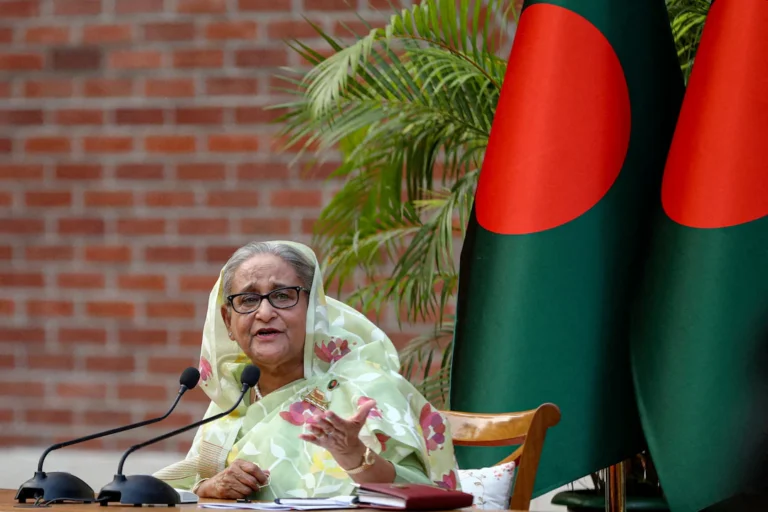
lahore police bar
| |

Lahore police bar women from stations after sunset

Lahore Police have directed that no woman should remain at any police station after sunset, introducing a new measure that officials say is aimed at ensuring the safety and dignity of women.

The directive was issued by Deputy Inspector General (DIG) Operations Muhammad Faisal Kamran during a crime review meeting with officers of the City Division. He instructed police personnel to treat women with respect and ensure that female complainants as well as women taken into custody are not kept at police stations after Maghrib.

According to the directive, police officers must adopt procedures that protect women’s privacy and dignity while dealing with complaints or investigations.

The decision comes in the wake of growing concerns over crimes against women and follows the arrest of a Lahore police Assistant Sub-Inspector (ASI) accused of sexually assaulting a 19-year-old woman with a mental health condition.

According to police, the woman had left her home and did not return for several hours. Her family later learned from a local resident that a plain-clothes police officer had taken her away on a motorcycle. The victim later alleged that the officer took her to another location and sexually assaulted her.

Following the allegations, police registered a case against the accused officer. DIG Investigation Syed Zeeshan Raza ordered an immediate and transparent investigation, directing investigators to proceed strictly on merit.

The incident also led to disciplinary action within the police department, with 78 police officials reportedly suspended as authorities launched an internal review of the case.

While police officials say the new directive is intended to safeguard women, some critics argue that restricting women’s presence at police stations does not address the root problem. They contend that law enforcement agencies should instead focus on ensuring police stations remain safe and accessible for women at all hours.

Similar Posts

  • |

    Right-wing party proposes armed forces intervention to halt Channel crossings

    Reform UK has proposed an extensive military-led framework aimed at completely stopping small boat migration across the English Channel. The policy proposal outlines leveraging combined military and intelligence tracking technology to create a heavily monitored sea border, alongside granting emergency powers to armed forces to intercept vessels and push them back toward French territory. The plan includes expanding detention facilities to enable immediate offshore or domestic processing and deportation without eligibility for standard asylum routes. To facilitate these changes, the party stated it would pursue major legal shifts, including withdrawing the United Kingdom from the European Convention on Human Rights and replacing current national human rights legislation with a new domestic framework. Critics and legal scholars have questioned the feasibility of the measures, pointing out potential conflicts with international maritime agreements and international law. Meanwhile, Prime Minister Andy Burnham stated his administration would maintain a relentless focus on tackling immigration networks through increased enforcement and cross-border security cooperation.

  • | | | |

    Hezbollah signals major u-turn, seeks talks with S…

    BEIRUT/DAMASCUS: In what analysts are describing as a significant policy shift, Hezbollah Secretary-General Naim Qassem has expressed readiness to meet Syria’s new leadership, signaling a potential reset in relations after years of political uncertainty following the fall of former president Bashar al-Assad. Speaking during a televised address, Qassem said Hezbollah seeks “positive, brotherly and cooperative” ties with Syria and has no objection to holding an official meeting with the country’s current leadership if both sides consider the timing appropriate. He added that there were no barriers to public engagement once mutual conditions were met. The remarks mark the first time Hezbollah’s chief has openly endorsed the possibility of direct contact with Syria’s post-Assad leadership, a move that could reshape political dynamics across the region. For years, Hezbollah played a key role in supporting Assad’s government during Syria’s prolonged civil war. Throughout the conflict, Syrian territory served as a vital corridor for the movement of weapons and logistical supplies from Iran to Lebanon, making Damascus a strategic partner for the Iran-backed Lebanese group. However, the regional landscape changed dramatically after Syria’s new government assumed power in December 2024. The political transition created uncertainty over the future of relations between Damascus and Hezbollah, with observers questioning whether the alliance forged during the civil war would survive under the country’s new leadership. Political analysts believe Qassem’s latest comments indicate Hezbollah is adapting to the changing realities of the Middle East. By signaling openness to dialogue, the group appears to be seeking a pragmatic relationship with Syria’s new rulers while protecting its broader regional interests. Experts say any formal meeting between Hezbollah and Syrian officials would carry implications extending beyond the two neighbors. Such engagement could influence Iran’s regional strategy, Lebanon’s internal political landscape, and the broader balance of power in the Middle East. While no timetable for talks has been announced, Qassem’s statement is widely viewed as an important diplomatic opening, suggesting that former rivals and long-time allies alike are reassessing their positions as the region enters a new political era.

  • | | |

    Rising fuel taxes add to motorists’ burden

    Consumers are facing a growing burden of taxes and other charges on petrol and high-speed diesel. Official documents show that the difference between the basic cost and retail price of petrol is Rs139.93 per litre. For high-speed diesel, the difference stands at Rs116.10 per litre. The documents show that the basic cost of one litre of petrol is Rs197.69. However, consumers are currently paying Rs327.62 per litre. Several taxes, levies and margins are included in the retail price. These charges significantly increase the amount paid by consumers at fuel stations. Petrol carries a petroleum levy of Rs80 per litre. A climate support levy of Rs5 is also imposed. The price also includes Rs21.24 in customs duty. An Inland Freight Equalisation Margin of Rs7.48 is charged per litre. Oil marketing companies receive a margin of Rs7.87 per litre. Dealers are paid a margin of Rs8.64 per litre. As a result, consumers pay Rs130.23 per litre in combined levies, taxes and margins on petrol. The situation is similar for high-speed diesel. Its basic cost is Rs264.76 per litre. However, its retail price has been fixed at Rs380.86 per litre. According to the documents, consumers pay around Rs116 per litre in levies, taxes and different margins on high-speed diesel. The petroleum levy on high-speed diesel is Rs74.28 per litre. The fuel also carries a climate support levy of Rs5 per litre. Customs duty accounts for another Rs15.68 per litre. The Inland Freight Equalisation Margin stands at Rs4.63. Oil marketing companies receive a margin of Rs7.87 per litre. Dealers receive Rs8.64 per litre as their margin. The figures show that taxes, levies and various margins form a significant portion of the final prices of both fuels. The additional charges directly affect motorists and consumers. They also increase transportation and operating costs for businesses that depend heavily on fuel. The rising cost of petrol and diesel can also put pressure on the prices of goods and services. Transport operators, traders and other businesses often pass higher fuel costs on to consumers.

  • | |

    25 family members swept into Muzaffargarh Canal, r…

    At least 25 members of a family reportedly fell into the Muzaffargarh Canal and were swept away by the strong current, triggering an urgent rescue operation. According to the available information, rescue teams have so far managed to recover five people from the canal. Efforts to locate and rescue the remaining family members are continuing. The incident has raised concerns over the difficult conditions faced by rescuers, particularly because of the canal’s flowing water. Calls have been made to the authorities to immediately reduce or temporarily stop the water flow in the canal to facilitate the search operation. Local residents and concerned citizens have urged the government and relevant departments to take emergency measures. They said controlling the water flow could help rescue teams search the canal more effectively and improve the chances of locating those still missing. Rescue personnel are continuing their search while families and local residents remain at the scene. The exact circumstances that led to so many members of the same family falling into the canal have not yet been established. Authorities are expected to provide further information as the rescue operation progresses. The number of people rescued, missing or recovered may change as search teams continue their efforts. The incident has also prompted appeals for public support. Residents have been asked to assist the affected family and share verified information about the rescue operation.

  • | |

    Makkah Defence pact aims at regional security not …

    Turkish Foreign Minister Hakan Fidan has said the recently signed defense agreement between Pakistan, Saudi Arabia and Turkey is designed to strengthen regional cooperation and security rather than target Iran. Speaking in Ankara, Fidan said the agreement follows the principle of collective defense reflected in Article 5 of the North Atlantic Treaty Organization (NATO), under which an attack on one member is treated as an attack on all. He explained that the new framework will include a ministerial committee and a general secretariat modeled partly on NATO’s structure. The secretariat is expected to be based in Saudi Arabia. Fidan also indicated that Egypt could potentially join the arrangement once outstanding technical matters are resolved, suggesting that the emerging security framework could expand beyond the three founding countries. The Turkish foreign minister stressed that the agreement should not be viewed as an alliance directed against any particular country. Instead, he described it as a mechanism intended to promote cooperation, strengthen defense capabilities and contribute to peace and stability across the region. The agreement, signed by Pakistan, Saudi Arabia and Turkey in Makkah, has attracted considerable attention across the Muslim world amid growing regional security concerns. Several Islamic countries and the Organisation of Islamic Cooperation have welcomed the initiative. Turkish President Recep Tayyip Erdogan has also said the agreement could enhance regional security while encouraging greater cooperation in the defense industry. The development marks another step in the long-standing strategic relations among Pakistan, Saudi Arabia and Turkey and could potentially reshape security cooperation in the wider Middle East and South Asian region.

  • |

    Bangladesh seeks India’s clarification over Hasina speech

    DHAKA: Bangladesh has asked India to clarify its position over a planned virtual address by former prime minister Sheikh Hasina, saying political activities by a fugitive could undermine efforts to improve relations between the two neighboring countries. The request comes ahead of an event scheduled for August 5 in New Delhi, where Hasina is expected to deliver a video address alongside her son, Sajeeb Wazed Joy, during a programme organized by the Foreign Correspondents’ Club of South Asia. Bangladesh’s State Minister for Foreign Affairs Shama Obaed Islam said Dhaka is committed to strengthening ties with India but believes New Delhi should clearly explain its stance regarding political activities by individuals wanted by Bangladeshi authorities. She said Bangladesh has repeatedly expressed concerns over Hasina and other leaders of the Awami League making political statements while residing in India. According to the minister, Dhaka does not want such activities to negatively affect the progress made in bilateral relations. The minister noted that the event is not being organized by the Indian government but added that Bangladesh is prepared to raise the matter through diplomatic channels if required. India’s Ministry of External Affairs had not issued an official response to the remarks at the time of reporting. Relations between Bangladesh and India have remained under strain since Hasina left Bangladesh in August 2024 following a student-led uprising that ended her tenure in office. Although both countries have recently indicated a willingness to rebuild diplomatic engagement, the issue of Hasina’s stay in India continues to be a sensitive matter. Bangladesh has formally requested Hasina’s extradition to face legal proceedings. In 2025, she was sentenced to death in absentia over crimes against humanity linked to the 2024 crackdown on anti-government protests. Hasina has rejected the verdict, describing it as politically motivated and without legal validity. Despite the legal cases against her, Hasina has said she intends to return to Bangladesh in the future, while her planned virtual appearance has once again brought the issue of her presence in India into the diplomatic spotlight.

Leave a Reply

Your email address will not be published. Required fields are marked *